
Kirjahaku
Etsi kirjoja tekijän nimen, kirjan nimen tai ISBN:n perusteella.
1000 tulosta hakusanalla Andrew Chugg

Andrew M. Greeley's Blackie Ryan stories are reviewed and explicated in this study of the author's novels featuring the delightful and leprechaun like detective. The book surveys detective fiction in which the unique, irrestible, and sometimes irrepressible Blackie Ryan, who is sometimes, but not always, a persona for the author, appears. A composite portrait of Blackie is drawn for the reader. The themes—both sociological and religious—that occur in the fiction are highlighted and explored, as are the various literary devices that the author employs to create his stories. The book includes a "Foreword" written by Andrew M. Greeley, world renowned sociologist, priest, and Professor of Social Science at the university of Chicago.


Andrew's Digital Adventure
Fai Seyed Aghamiri
House of Hope Counselling and Psychotherapy Centre
2025
pokkari

Andrew's Digital Adventure
Fai Seyed Aghamiri
House of Hope Counselling and Psychotherapy Centre
2025
sidottu

Andrew's Digital Adventure
Fai Seyed Aghamiri
House of Hope Counselling and Psychotherapy Centre
2025
pokkari
Nine-year-old Andrew and his adventurous sister, Alice, love exploring the world around them. One day, Andrew stumbles upon something worrying while playing with his friend's tablet - images that confuse and bother him. As curiosity turns into secrecy, Andrew finds himself trapped in feelings of shame and guilt, which hurt his relationships with friends and family.When his parents discover his secret, they sit down with Andrew and Alice to discuss the dangers of adult content and the importance of talking to each other. Together, they learn valuable lessons about being online safely, promising to stay alert and support one another.Join Andrew and Alice on a journey of discovery, courage and responsibility as they navigate the complexities of online life. This heart-warming tale empowers children to say NO to adult content, embrace digital safety and foster trust within their families. Perfect for young readers, Andrew's Digital Adventure is a cautionary tale that highlights the importance of using technology wisely and supporting one another through challenges.

Dr. Andrew Lowman is an Australian Eye Specialist who has made it his goal in life to restore sight to those who would otherwise endure life with poor eyesight or blindness.Medical facilities are not easily accessed in the wide-open spaces and isolation of the outback where the air is hot, flies are plenty and life is tough for those on the land.Thanks to the Royal Flying Doctor Service, Andrew and his team are flown in to a cattle station near Bourke, NSW, where they conduct a regular clinic for the Aboriginals and others on the land in the area. Their time is divided between two stations and the town of Bourke itself. Andrew and his team follow this routine every second week giving the outback a service it wouldn't otherwise receive.Meet the team: Dr. Andrew (Drew) Lowman - Eye SpecialistDr. Cameron (Cam) O'Brien - Anaesthetist with a reputation for being a playboy.Dr. of Nursing - Dr. Ruby Waters - An Aboriginal woman who grew up in Bourke and wants to give back to the people.Nurse Allison (Ally) Sykes - Works out of Dubbo with the RFDS and is having a difficult pregnancy.Nurse Linda Freemont - A nurse with the RFDS - first in Broken Hill, then in Dubbo. She replaces Allison when she is forced to resign due to difficulties with her pregnancy.Dr. James Rigon - A qualified Doctor and Pilot with the RFDS.Dr. Finn McAllister - Also a qualified Doctor and Pilot with the RFDS.Drew is smitten with Linda from the time she arrives but could a relationship work?Join the team as they deal with emergencies, rescue a young boy and celebrate recognition.Become a part of the outback - the land, they call home.Follow the lives of the characters as each story unfolds.ANDREW'S OUTBACK LOVE - Book 1 in the Australian Outback Series.



What happens when the political ideas and constitutional interpretations of one generation are replaced by those of another? This process has occurred throughout American history down to the present day as ""we the people"" change our minds about how we govern ourselves. Depicting a monumental clash of generations, Gerard Magliocca reminds us once again how our Constitution remains a living document. Magliocca reinterprets the legal landmarks of the Jacksonian era to demonstrate how the meaning of the Constitution evolves in a cyclical and predictable fashion. He highlights the ideological battles fought by Jacksonian Democrats against Federalists and Republicans over states' rights, presidential authority, the scope of federal power, and other issues. By doing so he shows how presidential politics, Supreme Court decisions, and congressional maneuverings interweave, creating a recurrent pattern of constitutional change. Magliocca builds on the view that major changes in American political and constitutional development occur generationally - in roughly thirty-year intervals - and move from dominant regime to the emergence of a counter-regime. Focusing on a period largely neglected in studies of such change, he offers a lucid introduction to the political and legal history of the antebellum era while tracing Jackson's remarkable consolidation of power in the executive branch. The Jacksonian movement grew out of discontent over the growth of federal power and the protection given Native Americans at the expense of frontier whites, and Magliocca considers such issues to support his argument. He examines Jackson's defeat of the Bank of the United States, shows how his clash with the Marshall Court over the Cherokee ""problem"" in Worcester v. Georgia sparked the revival of abolitionist culture and foreshadowed the Fourteenth Amendment, and also offers a new look at Dred Scott, M'Culloch v. Maryland, judicial review, and presidential vetoes. His analysis shows how the interaction of reformers and conservatives drives change and how rough-and-tumble politics shapes our Republic more than the creativity of judicial decisions. Offering intriguing parallels between Jackson and George W. Bush regarding the scope of executive power, Magliocca has produced a rich synthesis of history, political science, and law that revives our understanding of an entire era and its controversies, while providing a model of constitutional law applicable to any period.

Andrew Jackson and the Constitution
University Press of Kansas
2007
nidottu
What happens when the political ideas and constitutional interpretations of one generation are replaced by those of another? This process has occurred throughout American history down to the present day as “we the people” change our minds about how we govern ourselves. Depicting a monumental clash of generations, Gerard Magliocca reminds us once again how our Constitution remains a living document. Magliocca reinterprets the legal landmarks of the Jacksonian era to demonstrate how the meaning of the Constitution evolves in a cyclical and predictable fashion. He highlights the ideological battles fought by Jacksonian Democrats against Federalists and Republicans over states’ rights, presidential authority, the scope of federal power, and other issues. By doing so he shows how presidential politics, Supreme Court decisions, and congressional maneuverings interweave, creating a recurrent pattern of constitutional change. Magliocca builds on the view that major changes in American political and constitutional development occur generationally—in roughly thirty-year intervals—and move from dominant regime to the emergence of a counter-regime. Focusing on a period largely neglected in studies of such change, he offers a lucid introduction to the political and legal history of the antebellum era while tracing Jackson’s remarkable consolidation of power in the executive branch. The Jacksonian movement grew out of discontent over the growth of federal power and the protection given Native Americans at the expense of frontier whites, and Magliocca considers such issues to support his argument. He examines Jackson’s defeat of the Bank of the United States, shows how his clash with the Marshall Court over the Cherokee “problem” in Worcester v. Georgia sparked the revival of abolitionist culture and foreshadowed the Fourteenth Amendment, and also offers a new look at Dred Scott, M’Culloch v. Maryland, judicial review, and presidential vetoes. His analysis shows how the interaction of reformers and conservatives drives change and how rough-and-tumble politics shapes our Republic more than the creativity of judicial decisions. Offering intriguing parallels between Jackson and George W. Bush regarding the scope of executive power, Magliocca has produced a rich synthesis of history, political science, and law that revives our understanding of an entire era and its controversies, while providing a model of constitutional law applicable to any period.

Andrew Lloyd Webber
MUSIC SALES LTD
2000
nidottu

Andrew Young was one of the most original, inventive and paradoxical poets of the twentieth-century. C.S. Lewis called him, 'A modern Marvell and a modern marvel', and Philip Larkin remarked that, 'His works are in no danger of being forgotten'. Regarded as 'a major poet' by academic scholars, Young's prestige in this critical biography is taken one step further and declared a 'great' poet. Dr Richard Ormrod criticises and analyses Andrew Young's poetry to establish this greatness, especially in his lengthy masterpiece, Out of the World and Back. It also explores his fascinating life and personality: a wry, whimsical, erudite, complex man; a theist and a pantheist; an ironist and wordsmith; and a fervent naturalist, less at ease with people. Anyone interested in, or studying twentieth-century poetry at any level, will find this book invaluable and its claims challenging. Lovers of plants, birds and animals will be stunned by Young's deeply observant, unsentimental nature poetry, and by the two witty and engaging prose 'flower' books, A Prospect of Flowers and A Retrospect of Flowers - both hardy perennials.

One of Britain's foremost TV practitioners, Andrew Davies is the creator of programmes such as 'A Very Peculiar Practice', 'To Serve Them All My Days', 'Pride and Prejudice', 'Othello' and 'The Way We Live Now'. Although best known for his adaptations of the work of writers such as Jane Austen and George Eliot, he has written numerous original drama series, single plays, films, stage plays and books. This volume offers a critical appraisal of Davies’s work, and assesses his contribution to British television.Cardwell also explores the conventional notions of authorship and auteurism which are challenged by Davies’s work. Can we identify Davies as the author of the varied texts attributed to him? If so, does an awareness of his authorial role aid our interpretation and evaluation of those texts? How does the phenomenon of adaptation affect the issue of authorship? How important is ‘the author’ to television? This book will appeal to both an academic readership, and to the many people who have taken pleasure in Davies’s work.
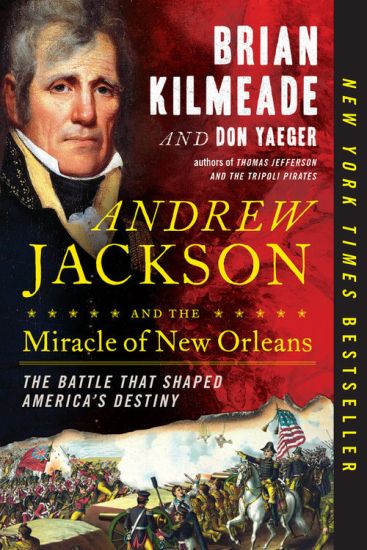
Another history pageturner from the authors of the #1 bestsellers George Washington's Secret Six and Thomas Jefferson and the Tripoli Pirates. The War of 1812 saw America threatened on every side. Encouraged by the British, Indian tribes attacked settlers in the West, while the Royal Navy terrorized the coasts. By mid-1814, President James Madison's generals had lost control of the war in the North, losing battles in Canada. Then British troops set the White House ablaze, and a feeling of hopelessness spread across the country. Into this dire situation stepped Major General Andrew Jackson. A native of Tennessee who had witnessed the horrors of the Revolutionary War and Indian attacks, he was glad America had finally decided to confront repeated British aggression. But he feared that President Madison's men were overlooking the most important target of all: New Orleans. If the British conquered New Orleans, they would control the mouth of the Mississippi River, cutting Americans off from that essential trade route and threatening the previous decade's Louisiana Purchase. The new nation's dreams of western expansion would be crushed before they really got off the ground. So Jackson had to convince President Madison and his War Department to take him seriously, even though he wasn't one of the Virginians and New Englanders who dominated the government. He had to assemble a coalition of frontier militiamen, French-speaking Louisianans, Cherokee and Choctaw Indians, freed slaves, and even some pirates. And he had to defeat the most powerful military force in the world--in the confusing terrain of the Louisiana bayous. In short, Jackson needed a miracle. The local Ursuline nuns set to work praying for his outnumbered troops. And so the Americans, driven by patriotism and protected by prayer, began the battle that would shape our young nation's destiny. As they did in their two previous bestsellers, Kilmeade and Yaeger make history come alive with a riveting true story that will keep you turning the pages. You'll finish with a new understanding of one of our greatest generals and a renewed appreciation for the brave men who fought so that America could one day stretch "from sea to shining sea."
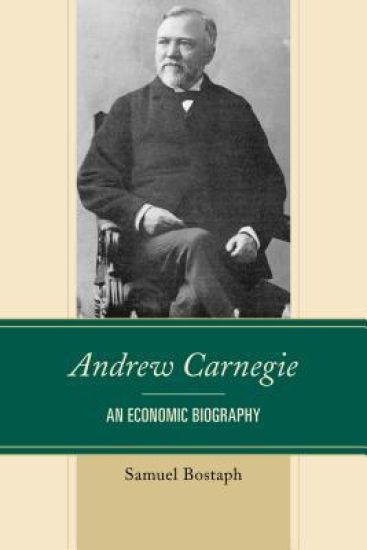
This biography of Andrew Carnegie emphasizes the economic dimension of his career in industry. It examines his life as a dynamic innovator during the period when the steel industry rapidly expanded and the United States became a major industrial power. Carnegie rose from a poverty-stricken Scottish childhood to a position of international industrial leadership, philanthropy, and peace advocacy, by means of intelligence, entrepreneurship, ambition, tenacity, guile, and ruthless determination. It is shown that Carnegie excelled as an economic actor. His alertness to expected profit opportunities, and success in coping with the uncertainties of the marketplace, made him a major influence on the growth of many of the most important industries of late-nineteenth century United States and world economies. His contribution to the better coordination of the actions of both demanders and suppliers in those industries by managerial, technological, and institutional innovations is emphasized. It is also argued that those profit-seeking actions and innovations occurred in the context of political policies and social institutions that produced a tremendous mal-investment of resources. This mal-investment was a result of protective tariffs, the stimulus and waste of war, and government subsidization of the railroad industry. Carnegie’s role in this massive diversion of resources from other uses to those from which he personally benefitted is also emphasized. Lastly, Carnegie’s actions in giving away the great personal fortune that he accumulated as he built his business empire are examined and their economic implications assessed.

This new study of Andrew Marvell offers a state-of-the-art guide to one of the most intriguing and elusive poets of the seventeenth century. Hero to the eighteenth century for his published defences of parliamentary government and religious toleration, Marvell was friend and defender of Milton, underground author of satires against the Restoration court, paradoxically, promoted by T.S. Eliot for a diametrically opposite set of qualities and achievements – poise, detachment, an ethos both world-excluding and hypercivilised, not to mention the most perfect poems we have on “the figure in the landscape”. Annabel Patterson, known for her ability to make serious scholarship engaging, explains how Marvell’s complex personality and beliefs produce these contradictory responses. The book provides comprehensive introductions to Marvell’s different self-representations, and places the most famous poems, such as The Garden and Horatian Ode, in the dialectic they lose when read only in anthologies.