

Kirjahaku
Etsi kirjoja tekijän nimen, kirjan nimen tai ISBN:n perusteella.
1000 tulosta hakusanalla Andrew Merrifield

Available in paperback for the first time, these three volumes represent the definitive biography of Andrew Jackson. Volume One covers the role Jackson played in America's territorial expansion, bringing to life a complex character who has often been seen simply as a rough-hewn country general. Volume Two traces Jackson's senatorial career, his presidential campaigns, and his first administration as President. The third volume covers Jackson's reelection to the presidency and the weighty issues with which he was faced: the nullification crisis, the tragic removal of the Indians beyond the Mississippi River, the mounting violence throughout the country over slavery, and the tortuous efforts to win the annexation of Texas.

Available in paperback for the first time, these three volumes represent the definitive biography of Andrew Jackson. Volume One covers the role Jackson played in America's territorial expansion, bringing to life a complex character who has often been seen simply as a rough-hewn country general. Volume Two traces Jackson's senatorial career, his presidential campaigns, and his first administration as President. The third volume covers Jackson's reelection to the presidency and the weighty issues with which he was faced: the nullification crisis, the tragic removal of the Indians beyond the Mississippi River, the mounting violence throughout the country over slavery, and the tortuous efforts to win the annexation of Texas.

Available in paperback for the first time, these three volumes represent the definitive biography of Andrew Jackson. Volume One covers the role Jackson played in America's territorial expansion, bringing to life a complex character who has often been seen simply as a rough-hewn country general. Volume Two traces Jackson's senatorial career, his presidential campaigns, and his first administration as President. The third volume covers Jackson's reelection to the presidency and the weighty issues with which he was faced: the nullification crisis, the tragic removal of the Indians beyond the Mississippi River, the mounting violence throughout the country over slavery, and the tortuous efforts to win the annexation of Texas.
The towering figure who remade American politics the champion of the ordinary citizen and the scourge of entrenched privilege The Founding Fathers espoused a republican government, but they were distrustful of the common people, having designed a constitutional system that would temper popular passions. But as the revolutionary generation passed from the scene in the 1820s, a new movement, based on the principle of broader democracy, gathered force and united behind Andrew Jackson, the charismatic general who had defeated the British at New Orleans and who embodied the hopes of ordinary Americans. Raising his voice against the artificial inequalities fostered by birth, station, monied power, and political privilege, Jackson brought American politics into a new age. Sean Wilentz, one of America's leading historians of the nineteenth century, recounts the fiery career of this larger-than-life figure, a man whose high ideals were matched in equal measure by his failures and moral blind spots, a man who is remembered for the accomplishments of his eight years in office and for the bitter enemies he made. It was in Jackson's time that the great conflicts of American politics urban versus rural, federal versus state, free versus slave crystallized, and Jackson was not shy about taking a vigorous stand. It was under Jackson that modern American politics began, and his legacy continues to inform our debates to the present day."

Andrew Johnson: The American Presidents Series: The 17th President, 1865-1869
Annette Gordon-Reed
TIMES BOOKS
2011
sidottu
A Pulitzer Prize-winning historian recounts the tale of the unwanted president who ran afoul of Congress over Reconstruction and was nearly removed from office Andrew Johnson never expected to be president. But just six weeks after becoming Abraham Lincoln's vice president, the events at Ford's Theatre thrust him into the nation's highest office. Johnson faced a nearly impossible task--to succeed America's greatest chief executive, to bind the nation's wounds after the Civil War, and to work with a Congress controlled by the so-called Radical Republicans. Annette Gordon-Reed, one of America's leading historians of slavery, shows how ill-suited Johnson was for this daunting task. His vision of reconciliation abandoned the millions of former slaves (for whom he felt undisguised contempt) and antagonized congressional leaders, who tried to limit his powers and eventually impeached him. The climax of Johnson's presidency was his trial in the Senate and his acquittal by a single vote, which Gordon-Reed recounts with drama and palpable tension. Despite his victory, Johnson's term in office was a crucial missed opportunity; he failed the country at a pivotal moment, leaving America with problems that we are still trying to solve.

In the most simple, straightforward language, this mother tells the heart's story: the love for her son which had to continue without that son; the embrace of speechless grief and of a murmuring, speaking community; the deep, spiritual events that occurred for her and her family when one son took his life. It is the author's intent that reading this will be an experience which enhances life; one which will help make the encounter with grief not only more bearable, but actually growth-producing. Readers will find here therapy, catharsis, understanding, and even fresh grounding for faith, hope, and love--hope, being at such times and momentarily, "the greatest of these."

Andrew Jackson Higgins and the Boats that Won World War II
Jerry E. Strahan
Louisiana State University Press
1998
nidottu
Andrew Jackson Higgins is perhaps the most forgotten hero of the Allied victory. He designed the LCVP (landing craft vehicle, personnel) that played such a vital role in the invasion of Normandy as well as the first effective tank landing craft. During the war, New Orleans- based Higgins Industries produced over twenty thousand boats, including lightning-fast PT boats and the twenty-seven-foot airborne lifeboat. Higgins dedicated himself to providing Allied soldiers with the finest landing craft in the world, and he fought the Bureau of Ships, the Washington bureaucracy, and the powerful eastern shipyards to succeed. Jerry Strahan's biography of Higgins reveals a colorful, controversial character- hard fisted, hard swearing, and hard drinking- who was an outsider to New Orleans' elite social circles. He was also, however, a hardworking boatbuilder who became a major industrialist with a worldwide reputation- even Hitler was aware of Higgins, calling him ""the new Noah.

Andrew D. Lytle's Baton Rouge
Louisiana State University Press
2008
sidottu
Andrew David Lytle produced thousands of photographic images in the sixty years during which he lived in Baton Rouge and operated Lytle Studio. His heirs, alas, reportedly shattered his glass-plate negatives by dropping them down a dry well soon after his death, not realizing their value. Andrew D. Lytle's Baton Rouge preserves some of the only images that remain, a vintage treasure for contemporary viewers. These 120 photographs give entrée into life in Louisiana's capital city from the 1860s through the early 1900s. They compose the largest extant collection of photos created in a professional studio in nineteenth-century Baton Rouge. Together they capture the day-to-day existence of the community, fleeting moments of great importance, and long-term changes over time, revealing not only the perceptions of the photographer but also the self-perceptions of his subjects.In a superb introductory overview of the collection, Mark E. Martin recounts Lytle's life and career within the context of Baton Rouge history and culture, noting advances in camera and printing technologies. Martin then discusses the photographs thematically, beginning with Baton Rouge's occupation by Federal forces during the Civil War. Thousands of northern soldiers and sailors came through the city during that time, and Lytle, a native of Ohio, photographed them in his studio, on the riverfront, in camps, on boats and ships, and from a bird's-eye view atop buildings. This work brought Lytle fame fifty years later when select images were published in The Photographic History of the Civil War along with the claim that Lytle had been a secret agent, a ""camera spy,"" for the Confederacy. Martin exposes the impossibility of this popular belief, which nonetheless persisted well into the twentieth century.Over the years Lytle Studio, which Andrew's son Howard eventually joined, produced commercial images of the Louisiana State Penitentiary, the forestry industry, railways and waterways, LSU sports teams, outdoor landscapes, and individuals. Andrew Lytle was more than a studio photographer, though. A husband, father, and grandfather, he took an active role in the community as an entrepreneur; volunteer firefighter,'member of religious, social, and fraternal organisations; and participant in local theatrical productions and other entertainments. His photography provides in many cases the only visual record of the life and times of Baton Rouge and its people in that period.Much of what is depicted in Andrew D. Lytle's Baton Rouge remains central to the city's vitality today: politics, family, home, commerce and industry, social events, parades, LSU sports, and the riverfront (now with levees). Readers will find here a priceless glimpse at a bygone world, yet one still recognizable.

Many Americans view Andrew Jackson as a frontiersman who fought duels, killed Indians, and stole another man's wife. Historians have traditionally presented Jackson as a man who struggled to overcome the obstacles of his backwoods upbringing and helped create a more democratic United States. In his compelling new biography of Jackson, Mark R. Cheathem argues for a reassessment of these long-held views, suggesting that in fact ""Old Hickory"" lived as an elite southern gentleman. Jackson grew up along the border between North Carolina and South Carolina, a district tied to Charleston, where the city's gentry engaged in the transatlantic marketplace. Jackson then moved to North Carolina, where he joined various political and kinship networks that provided him with entrée into society. In fact, Cheathem contends, Jackson had already started to assume the characteristics of a southern gentleman by the time he arrived in Middle Tennessee in 1788.After moving to Nashville, Jackson further ensconced himself in an exclusive social order by marrying the daughter of one of the city's cofounders, engaging in land speculation, and leading the state militia. Cheathem notes that through these ventures Jackson grew to own multiple plantations and cultivated them with the labor of almost two hundred slaves. His status also enabled him to build a military career focused on eradicating the nation's enemies, including Indians residing on land desired by white southerners. Jackson's military success eventually propelled him onto the national political stage in the 1820s, where he won two terms as president. Jackson's years as chief executive demonstrated the complexity of the expectations of elite white southern men, as he earned the approval of many white southerners by continuing to pursue Manifest Destiny and opposing the spread of abolitionism, yet earned their ire because of his efforts to fight nullification and the Second Bank of the United States.By emphasising Jackson's southern identity - characterized by violence, honor, kinship, slavery, and Manifest Destiny - Cheathem's narrative offers a bold new perspective on one of the nineteenth century's most renowned and controversial presidents.
Winner of the 2013 Tennessee History AwardMany Americans view Andrew Jackson as a frontiersman who fought duels, killed Indians, and stole another man's wife. Historians have traditionally presented Jackson as a man who struggled to overcome the obstacles of his backwoods upbringing and helped create a more democratic United States. In his compelling new biography of Jackson, Mark R. Cheathem argues for a reassessment of these long-held views, suggesting that in fact ""Old Hickory"" lived as an elite southern gentleman. Jackson grew up along the border between North Carolina and South Carolina, a district tied to Charleston, where the city's gentry engaged in the transatlantic marketplace. Jackson then moved to North Carolina, where he joined various political and kinship networks that provided him with entrance into society. In fact, Cheathem contends, Jackson had already started to assume the characteristics of a southern gentleman by the time he arrived in Middle Tennessee in 1788.After moving to Nashville, Jackson further ensconced himself in an exclusive social order by marrying the daughter of one of the city's cofounders, engaging in land speculation, and leading the state militia. Cheathem notes that through these ventures Jackson grew to own multiple plantations and cultivated them with the labor of almost two hundred slaves. His status also enabled him to build a military career focused on eradicating the nation's enemies, including Indians residing on land desired by white southerners. Jackson's military success eventually propelled him onto the national political stage in the 1820s, where he won two terms as president. Jackson's years as chief executive demonstrated the complexity of the expectations of elite white southern men, as he earned the approval of many white southerners by continuing to pursue Manifest Destiny and opposing the spread of abolitionism, yet earned their ire because of his efforts to fight nullification and the Second Bank of the United States.By emphasising Jackson's southern identity - characterized by violence, honor, kinship, slavery, and Manifest Destiny - Cheathem's narrative offers a bold new perspective on one of the nineteenth century's most renowned and controversial presidents.
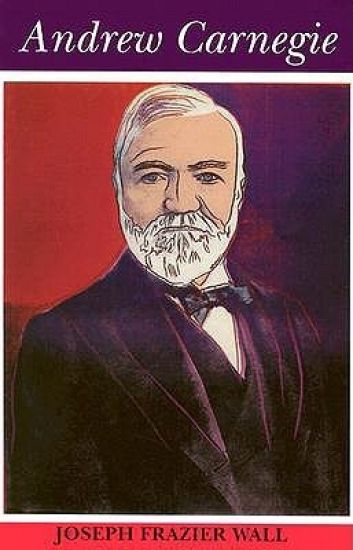
Authoritative portrait of the industrial magnate focuses on his contributions to industry, education, politics, and philanthropy

This richly detailed biography of Andrew Jackson Donelson (1799-1871) sheds new light on the political and personal life of this nephew and namesake of Andrew Jackson. A scion of a pioneering Tennessee family, Donelson was a valued assistant and trusted confidant of the man who defined the Age of Jackson. One of those central but background figures of history, Donelson had a knack for being where important events were happening and knew many of the great figures of the age. As his uncle's secretary, he weathered Old Hickory's tumultuous presidency, including the notorious ""Petticoat War.""Building his own political career, he served as US chargé d'affaires to the Republic of Texas, where he struggled against an enigmatic President Sam Houston, British and French intrigues, and the threat of war by Mexico, to achieve annexation. As minister to Prussia, Donelson enjoyed a ringside seat to the revolutions of 1848 and the first attempts at German unification. A firm Unionist in the mold of his uncle, Donelson denounced the secessionists at the Nashville Convention of 1850. He attempted as editor of the Washington Union to reunite the Democratic party, and, when he failed, he was nominated as Millard Fillmore's vice-presidential running mate on the Know Nothing party ticket in 1856. He lived to see the Civil War wreck the Union he loved, devastate his farms, and take the lives of two of his sons.

Andrew Young: Civil Rights Ambassador explores the rising influence of race in foreign relations as it examines the contributions of this African American activist, politician, and diplomat to U.S. foreign policy. Young used his positions as a member of the United States House of Representatives (1973D77), U.S. permanent representative to the United Nations (1977D79), and mayor of Atlanta during the 1980s to further the cause of race in diplomatic affairs and to bring an emphasis to United States relations with Africa. Author Andrew DeRoche begins his study of Young by looking at his formative years as a top assistant to Martin Luther King in the 1960s. It was during this period that Young developed his philosophy and his tactics. Young was committed to working for racial justice around the globe and he was willing to meet with all sides in any conflict. One of the few books that focuses on the influence of race in U.S. foreign policy, Andrew Young: Civil Rights Ambassador is informative reading for those interested in diplomatic history and African American history.

Andrew Wyeth, Christina's World, and the Olson House
Michael K. Komanecky; Otoyo Nakamura
Rizzoli International Publications
2011
sidottu
An extraordinary private collection of watercolors and drawings by Andrew Wyeth depicting the subjects memorialized in his legendary painting Christina's World, one of the best-known works of American art. This book presents rarely seen watercolors and drawings Andrew Wyeth made of his friend Christina Olson, her brother Alvaro, and the weathered Maine farmstead where they lived. It features moving portraits and serene interior and exterior views of the house and the surrounding land, now memorialized in Wyeth's 1948 tempera painting Christina's World, one of the most famous paintings in the history of American art and now in the Museum of Modern Art, New York. Some forty-five works from the collection of the Marunuma Art Park in Japan, rarely shown before in the United States, are accompanied by works from the Farnsworth as well as by historical photographs of Wyeth, the Olsons, and the house. Otoyo Nakamura writes about the history of this collection of Wyeth works, and Michael Komanecky addresses the place of the Olson farm in Wyeth's career over three decades, and how Christina's World and the Olson House have inspired pilgrimages for fans of Wyeth's work. Despite its isolated location and seasonal schedule, Olson House draws thousands of visitors each year from around the world. The Olson House, acquired by the Farnsworth Art Museum in 1991, has been recommended for National Landmark status.

Andrew Wyeth at Kuerner Farm
William L. Coleman; Allison Slaby
RIZZOLI INTERNATIONAL PUBLICATIONS
2025
sidottu
This intimate look at Wyeth s decades-long connection to Kuerner Farm and the people there reveals not only the source of many of the artist s most deeply resonant paintings but the secrets that have given his deceptively simple art its mysterious pull on the popular imagination for generations. As Wyeth became one of the country s most celebrated artists, he continued to return to the farm, the Kuerners, and to the enigmatic Helga Testorf, creating timeless portraits from an experience of deep looking and charting a way toward unearthing from the ordinary, the extraordinary.

Andrew Wyeth is an essential introduction to the enduring masterworks of this profoundly popular American artist. Published on the occasion of the centennial of the artist s birth, this handsome book highlights works spanning the entirety of the artist s seven-decade career painting the landscapes and people he knew in Chadds Ford, Pennsylvania, where he lived, and in Maine, where he summered. Many of his most important landscapes and portraits were created in and around his Chadds Ford studio, now part of the Brandywine River Museum of Art, with which Andrew Wyeth was intimately connected since its founding in 1971. A short introduction provides an overview of his life, and descriptive captions contextualize some fifty of the artist s finest and most beloved paintings, including Pennsylvania Landscape (1942), Wind from the Sea (1947), Christina s World (1948), Trodden Weed (1951), Roasted Chestnuts (1956), Braids (1977), and Pentecost (1989). Readers will also be treated to works previously unseen, such as Betsy s Beach (2006) and Crow Tree (2007).

Perhaps nowhere else is Andrew Wyeth s highly distinctive style more palpable, or moving, than in Snow Hill. His masterful tempera painting of 1989 provides a visual and poetic summary of the Chadds Ford, Pennsylvania, residents who had provided artistic inspiration at key points in Wyeth s career. With the figures depicted in a snowy landscape high above Kuerner Farm, a property of great personal significance to the painter, this enigmatic composition resonates with an elegiac air. Among Wyeth s most popular works, Snow Hill in some ways encapsulates the spirit of his entire career.