Kirjahaku
Etsi kirjoja tekijän nimen, kirjan nimen tai ISBN:n perusteella.
1000 tulosta hakusanalla Arthur Robert Harding
This work has been selected by scholars as being culturally important and is part of the knowledge base of civilization as we know it.This work is in the public domain in the United States of America, and possibly other nations. Within the United States, you may freely copy and distribute this work, as no entity (individual or corporate) has a copyright on the body of the work.Scholars believe, and we concur, that this work is important enough to be preserved, reproduced, and made generally available to the public. To ensure a quality reading experience, this work has been proofread and republished using a format that seamlessly blends the original graphical elements with text in an easy-to-read typeface.We appreciate your support of the preservation process, and thank you for being an important part of keeping this knowledge alive and relevant.
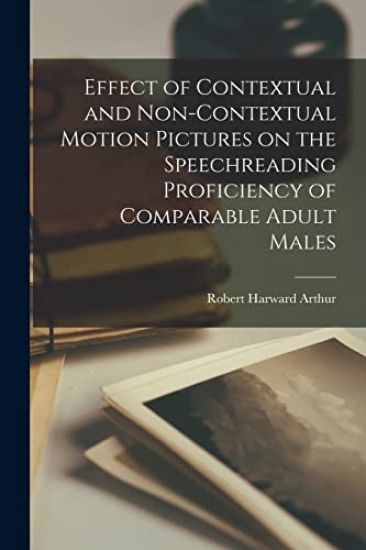
Effect of Contextual and Non-contextual Motion Pictures on the Speechreading Proficiency of Comparable Adult Males
Robert Harward Arthur
Hassell Street Press
2021
nidottu

Letters From Mesopotamia in 1915 and January, 1916
Robert Stafford Arthur Palmer
Anson Street Press
2025
pokkari
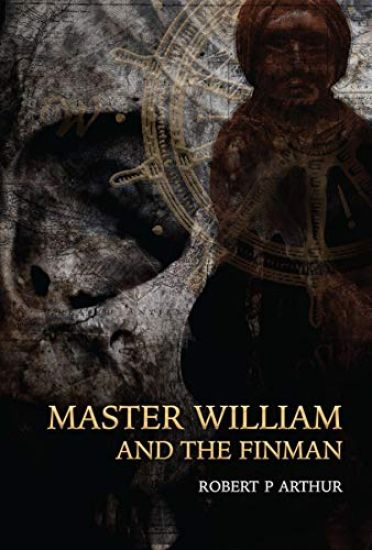
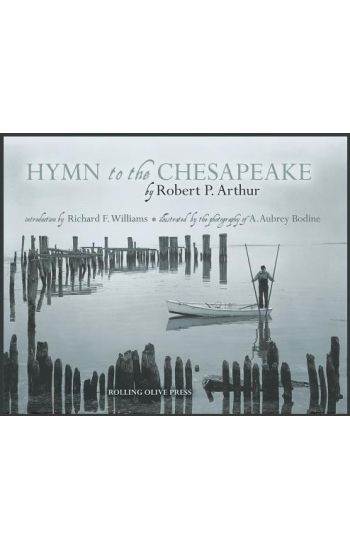
In the golden age of piracy, twelve-year-old Master William, of the rocky islands of the Okneys, leaves his dead mother, thought to be a Selkie, to sail the sea lanes of the world and evade conscription in the British Navy. He is followed by a Finman, a mythical sorcerer of the sea, who proctors him by blowing him through time and space, if need be, for a secret end. Young William must travel to the age of the most notorious female pirate of history, the older Anne Bonny, to achieve his destiny among such rogues as Blackbeard, Henry Morgan, and Calico Jack Rackham.Like the author's internationally acclaimed Hymn to the Chesapeake, Master William displays the author's encyclopedic knowledge of the sea combined with his stunning gift for lyrical language.

Robert Nozick und Arthur Schopenhauer. Zwei "Ultraminimalstaatler" im Vergleich
Anonymous
Grin Publishing
2016
pokkari
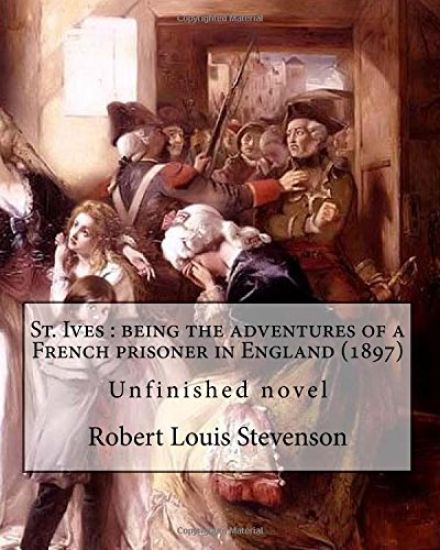
St. Ives: being the adventures of a French prisoner in England (1897). By: Robert Louis Stevenson, and Arthur Quiller-Couch: Unf
Arthur Quiller-Couch; Robert Louis Stevenson
Createspace Independent Publishing Platform
2017
nidottu
St. Ives: Being The Adventures of a French Prisoner in England (1897) is an unfinished novel by Robert Louis Stevenson. It was completed in 1898 by Arthur Quiller-Couch. The book plot concerns the adventures of the dashing Viscomte Anne de Keroual de St. Ives, a Napoleonic soldier enlisted as a private under the name Champdivers, after his capture by the British. The book is available on Project Gutenberg in both its incomplete and complete form (for the story as completed by Arthur Quiller-Couch look for "The Works of Robert Louis Stevenson volume twenty."). Sir Arthur Thomas Quiller-Couch (21 November 1863 - 12 May 1944) was a Cornish writer who published using the pseudonym Q. Although a prolific novelist, he is remembered mainly for the monumental publication The Oxford Book Of English Verse 1250-1900 (later extended to 1918) and for his literary criticism. He influenced many who never met him, including American writer Helene Hanff, author of 84, Charing Cross Road and its sequel, Q's Legacy. His Oxford Book of English Verse was a favourite of John Mortimer's fictional character Horace Rumpole.... Robert Louis Balfour Stevenson (13 November 1850 - 3 December 1894) was a Scottish novelist, poet, essayist, and travel writer. His most famous works are Treasure Island, Kidnapped, Strange Case of Dr Jekyll and Mr Hyde, and A Child's Garden of Verses. A literary celebrity during his lifetime, Stevenson now ranks as the 26th most translated author in the world. His works have been admired by many other writers, including Jorge Luis Borges, Bertolt Brecht, Marcel Proust, Arthur Conan Doyle, Henry James, Cesare Pavese, Emilio Salgari, Ernest Hemingway, Rudyard Kipling, Jack London, Vladimir Nabokov, J. M. Barrie, and G. K. Chesterton, who said of him that he "seemed to pick the right word up on the point of his pen, like a man playing spillikins" Stevenson was born at 8 Howard Place, Edinburgh, Scotland, on 13 November 1850, to Thomas Stevenson (1818-87), a leading lighthouse engineer, and his wife Margaret Isabella (born Balfour; 1829-97). He was christened Robert Lewis Balfour Stevenson. At about age 18, Stevenson was to change the spelling of "Lewis" to "Louis", and in 1873, he dropped "Balfour". Lighthouse design was the family's profession: Thomas's father (Robert's grandfather) was the famous Robert Stevenson, and both of Thomas's brothers (Robert's uncles) Alan and David, were in the same field. 9] Indeed, even Thomas's maternal grandfather, Thomas Smith, had been in the same profession. However, Robert's mother's family were not of the same profession. Margaret's natal family, the Balfours, were gentry, tracing their lineage back to a certain Alexander Balfour who had held the lands of Inchyra in Fife in the fifteenth century. Margaret's father, Lewis Balfour (1777-1860), was a minister of the Church of Scotland at nearby Colinton, and her siblings included the physician George William Balfour and the marine engineer James Balfour. Stevenson spent the greater part of his boyhood holidays in his maternal grandfather's house. "Now I often wonder," wrote Stevenson, "what I inherited from this old minister. I must suppose, indeed, that he was fond of preaching sermons, and so am I, though I never heard it maintained that either of us loved to hear them."
Textiles and Sculpture by Arthur B. Davies (1862-1928); Paintings by Robert Loftin Newman (1827-1912); `
Whitney Museum of American Art
Hassell Street Press
2021
nidottu
Textiles and Sculpture by Arthur B. Davies (1862-1928); Paintings by Robert Loftin Newman (1827-1912); `
Whitney Museum of American Art
Hassell Street Press
2023
sidottu
This exhibition catalog showcases the work of two important American artists of the late nineteenth and early twentieth centuries. Davies was a prominent figure in the American modernist movement and is best known for his colorful, abstract paintings. Newman was a self-taught visionary artist who created intricate, dreamlike landscapes. The catalog includes full-color reproductions of the artists' work as well as critical essays by leading art historians. This is an essential resource for anyone interested in American art and culture.This work has been selected by scholars as being culturally important, and is part of the knowledge base of civilization as we know it.This work is in the "public domain in the United States of America, and possibly other nations. Within the United States, you may freely copy and distribute this work, as no entity (individual or corporate) has a copyright on the body of the work.Scholars believe, and we concur, that this work is important enough to be preserved, reproduced, and made generally available to the public. We appreciate your support of the preservation process, and thank you for being an important part of keeping this knowledge alive and relevant.
![Prospectus and Specimen of an Intended National Work by William and Robert Whistlecraft ... Intended to Comprise the Most Interesting Particulars Relating to King Arthur and His Round Table. [By John Hookham Frere.]](/covers/9781241148911.jpg)
Prospectus and Specimen of an Intended National Work by William and Robert Whistlecraft ... Intended to Comprise the Most Interesting Particulars Relating to King Arthur and His Round Table. [By John Hookham Frere.]
William Whistlecraft; John Frere
British Library, Historical Print Editions
2011
pokkari
![Leaves from a Diary in Lower Bengal. by C. S., Retired [I.E. Arthur Lloyd Clay]. with Maps and Illustrations from Sketches by the Author, Including Etchings by Robert Farren.](/covers/9781241512460.jpg)
Leaves from a Diary in Lower Bengal. by C. S., Retired [I.E. Arthur Lloyd Clay]. with Maps and Illustrations from Sketches by the Author, Including Etchings by Robert Farren.
C S; Arthur Lloyd Clay
British Library, Historical Print Editions
2011
pokkari
Title: Leaves from a Diary in Lower Bengal. By C. S., Retired i.e. Arthur Lloyd Clay]. With maps and illustrations from sketches by the author, including etchings by Robert Farren.Publisher: British Library, Historical Print EditionsThe British Library is the national library of the United Kingdom. It is one of the world's largest research libraries holding over 150 million items in all known languages and formats: books, journals, newspapers, sound recordings, patents, maps, stamps, prints and much more. Its collections include around 14 million books, along with substantial additional collections of manuscripts and historical items dating back as far as 300 BC.The GEOGRAPHY & TOPOGRAPHY collection includes books from the British Library digitised by Microsoft. Offering some insights into the study and mapping of the natural world, this collection includes texts on Babylon, the geographies of China, and the medieval Islamic world. Also included are regional geographies and volumes on environmental determinism, topographical analyses of England, China, ancient Jerusalem, and significant tracts of North America. ++++The below data was compiled from various identification fields in the bibliographic record of this title. This data is provided as an additional tool in helping to insure edition identification: ++++ British Library S., C.; Clay, Arthur Lloyd; 1896. xii. 282 p.; 8 . ORW.1986.a.3024
![Prospectus and Specimen of an Intended National Work, by William and Robert Whistlecraft ... Intended to Comprise the Most Interesting Particulars Relating to King Arthur and His Round Table. [By John Hookham Frere.] Second Edition.](/covers/9781241030278.jpg)
Prospectus and Specimen of an Intended National Work, by William and Robert Whistlecraft ... Intended to Comprise the Most Interesting Particulars Relating to King Arthur and His Round Table. [By John Hookham Frere.] Second Edition.
William Whistlecraft; John Frere
British Library, Historical Print Editions
2011
pokkari
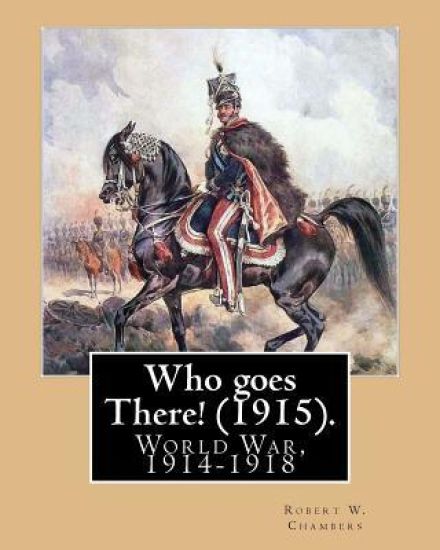
Who goes There! (1915). By: Robert W. Chambers, illustrated By: A. I. Keller (Arthur Ignatius Keller (1866 - 1924)).: World War, 1914-1918
A. I. Keller; Robert W. Chambers
Createspace Independent Publishing Platform
2016
nidottu
Robert William Chambers (May 26, 1865 - December 16, 1933) was an American artist and fiction writer, best known for his book of short stories entitled The King in Yellow, published in 1895.He was born in Brooklyn, New York, to William P. Chambers (1827-1911), a corporate and bankruptcy lawyer, and Caroline Smith Boughton (1842-1913). His parents met when Caroline was twelve years old and William P. was interning with her father, Joseph Boughton, a prominent corporate lawyer. Eventually the two formed the law firm of Chambers and Boughton which continued to prosper even after Joseph's death in 1861. Robert's great-grandfather, William Chambers (birth unknown), a lieutenant in the British Royal Navy, was married to Amelia Saunders, (1765-1822), the great grand daughter of Tobias Saunders, of Westerly, Rhode Island. The couple moved from Westerly, to Greenfield, Massachusetts and then to Galway, New York, where their son, also William Chambers, (1798-1874) was born. The second William graduated from Union College at the age of 18, and then went to a college in Boston, where he studied to be a doctor. Upon graduating, he and his wife, Eliza P. Allen (1793-1880), a direct descendant of Roger Williams, the founder of Providence, Rhode Island were among the first settlers of Broadalbin, New York. His brother was architect Walter Boughton Chambers. Robert was first educated at the Brooklyn Polytechnic Institute, and then entered the Art Students' League at around the age of twenty, where the artist Charles Dana Gibson was his fellow student. Chambers studied at the cole des Beaux-Arts, and at Acad mie Julian, in Paris from 1886 to 1893, and his work was displayed at the Salon as early as 1889. On his return to New York, he succeeded in selling his illustrations to Life, Truth, and Vogue magazines. Then, for reasons unclear, he devoted his time to writing, producing his first novel, In the Quarter (written in 1887 in Munich). His most famous, and perhaps most meritorious, effort is The King in Yellow, a collection of Art Nouveau short stories published in 1895. This included several famous weird short stories which are connected by the theme of a fictitious drama of the same title, which drives those who read it insane.E. F. Bleiler described The King in Yellow as one of the most important works of American supernatural fiction..... Arthur Ignatius Keller (1866 - 1924) A. I. Keller was born July 4th, 1866. He was the son of Matilda and Adam Keller, a designer and engraver who recognized and encouraged his son's artistic talent. Arthur's father was his first teacher. By the age of seventeen, he began his formal training at the National Academy of Design in New York, studying under Professor Lemuel Wilmarth. In 1890 Keller traveled to Munich, Germany to study under Ludwig von Loeffiz. After two years of study he returned to the United States. His father had tried to persuade Arthur to remain in Europe to study in France, as the influence of impressionism was gaining in popularity. But Arthur did not wish to experiment with a genre that was so different from the classical styles that he was developing.
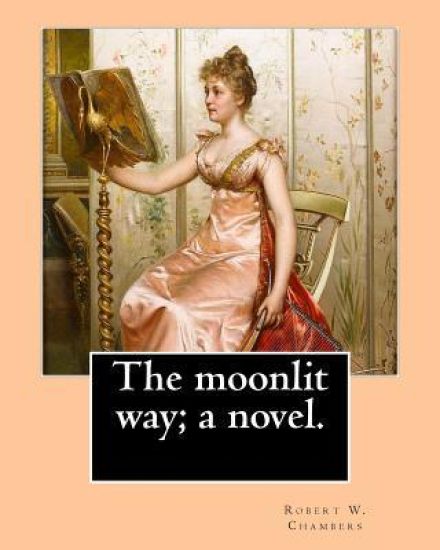
The moonlit way; a novel. By: Robert W. Chambers, illustrated By: A. I. Keller: Arthur Ignatius Keller (1866 - 1924)
A. I. Keller; Robert W. Chambers
Createspace Independent Publishing Platform
2016
nidottu
Robert William Chambers (May 26, 1865 - December 16, 1933) was an American artist and fiction writer, best known for his book of short stories entitled The King in Yellow, published in 1895.He was born in Brooklyn, New York, to William P. Chambers (1827-1911), a corporate and bankruptcy lawyer, and Caroline Smith Boughton (1842-1913). His parents met when Caroline was twelve years old and William P. was interning with her father, Joseph Boughton, a prominent corporate lawyer. Eventually the two formed the law firm of Chambers and Boughton which continued to prosper even after Joseph's death in 1861. Robert's great-grandfather, William Chambers (birth unknown), a lieutenant in the British Royal Navy, was married to Amelia Saunders, (1765-1822), the great grand daughter of Tobias Saunders, of Westerly, Rhode Island. The couple moved from Westerly, to Greenfield, Massachusetts and then to Galway, New York, where their son, also William Chambers, (1798-1874) was born. The second William graduated from Union College at the age of 18, and then went to a college in Boston, where he studied to be a doctor. Upon graduating, he and his wife, Eliza P. Allen (1793-1880), a direct descendant of Roger Williams, the founder of Providence, Rhode Island were among the first settlers of Broadalbin, New York. His brother was architect Walter Boughton Chambers. Robert was first educated at the Brooklyn Polytechnic Institute, and then entered the Art Students' League at around the age of twenty, where the artist Charles Dana Gibson was his fellow student. Chambers studied at the cole des Beaux-Arts, and at Acad mie Julian, in Paris from 1886 to 1893, and his work was displayed at the Salon as early as 1889. On his return to New York, he succeeded in selling his illustrations to Life, Truth, and Vogue magazines. Then, for reasons unclear, he devoted his time to writing, producing his first novel, In the Quarter (written in 1887 in Munich). His most famous, and perhaps most meritorious, effort is The King in Yellow, a collection of Art Nouveau short stories published in 1895. This included several famous weird short stories which are connected by the theme of a fictitious drama of the same title, which drives those who read it insane.E. F. Bleiler described The King in Yellow as one of the most important works of American supernatural fiction.It was also strongly admired by H. P. Lovecraft and his circle... Arthur Ignatius Keller (1866 - 1924).A. I. Keller was born July 4th, 1866. He was the son of Matilda and Adam Keller, a designer and engraver who recognized and encouraged his son's artistic talent. Arthur's father was his first teacher. By the age of seventeen, he began his formal training at the National Academy of Design in New York, studying under Professor Lemuel Wilmarth. In 1890 Keller traveled to Munich, Germany to study under Ludwig von Loeffiz. After two years of study he returned to the United States. His father had tried to persuade Arthur to remain in Europe to study in France, as the influence of impressionism was gaining in popularity. But Arthur did not wish to experiment with a genre that was so different from the classical styles that he was developing. In a letter dated 1891 Arthur replied to his father, "This I positively know, namely, I hardly would ever think of entering the Art School in Paris. In fact, I'm already thinking of leaving for good to develop that grain of art which I have sowed here."....