Kirjojen hintavertailu. Mukana 12 390 323 kirjaa ja 12 kauppaa.

Kirjahaku

Etsi kirjoja tekijän nimen, kirjan nimen tai ISBN:n perusteella.

1000 tulosta hakusanalla Augustus Maverick

Augustus H. Strong and the Dilemma of Historical Consciousness
At the end of the nineteenth century, Augustus Strong emerged as one of the most influential church leaders and theologians in America. But, as Grant Wacker reveals in this masterful study, Strong also proved to be as tragic a figure as he was influential. Strong was forced to choose between conceptual worlds that were, to him, equally incompatible and compelling. Strong wrestled with how the critical study of history, exemplified in the method commonly called ""historicism"" (or ""historical consciousness""), can be reconciled with the many ahistorical assumptions embedded in the claims of traditional Christianity. Is the notion of human sinfulness, for example, simply an artifact of time and place? Or does it carry an underlying truth that endures, independent of the biblical context and interpretation of classic Christian thinkers? Strong acquired a historical awareness considered rare among conservative scholars. Despite cultivating this historical sensibility, he struggled with its implications. In the end, Wacker writes, Strong ""clung to the conviction that the faith once delivered unto the fathers somehow stands above the vicissitudes of history, even as he became increasingly conscious that all things human are fragile creations of time and place."" This edition, complete with a new preface, reveals why Strong remains relevant today. Strong, though a man of his time, illustrates the perennial conflict created by competing interests of theology and history, a conflict that still torments those who seek to be faithful to the obligations of both the church and academy.
Augustus H. Strong and the Dilemma of Historical Consciousness
At the end of the nineteenth century, Augustus Strong emerged as one of the most influential church leaders and theologians in America. But, as Grant Wacker reveals in this masterful study, Strong also proved to be as tragic a figure as he was influential. Strong was forced to choose between conceptual worlds that were, to him, equally incompatible and compelling. Strong wrestled with how the critical study of history, exemplified in the method commonly called ""historicism"" (or ""historical consciousness""), can be reconciled with the many ahistorical assumptions embedded in the claims of traditional Christianity. Is the notion of human sinfulness, for example, simply an artifact of time and place? Or does it carry an underlying truth that endures, independent of the biblical context and interpretation of classic Christian thinkers? Strong acquired a historical awareness considered rare among conservative scholars. Despite cultivating this historical sensibility, he struggled with its implications. In the end, Wacker writes, Strong ""clung to the conviction that the faith once delivered unto the fathers somehow stands above the vicissitudes of history, even as he became increasingly conscious that all things human are fragile creations of time and place."" This edition, complete with a new preface, reveals why Strong remains relevant today. Strong, though a man of his time, illustrates the perennial conflict created by competing interests of theology and history, a conflict that still torments those who seek to be faithful to the obligations of both the church and academy.
Augustus T. Poopernickle: Gussy, the Goldfish and the Guppies

Augustus T. Poopernickle: Gussy, the Goldfish and the Guppies

Stacy I. Tyler

Createspace Independent Publishing Platform
2018
nidottu
Loveable, but clumsy Augustus is at again in Book Two of the Augustus T. Poopernickle series. This time, his uncle brings him a new pet and Augustus takes up a new sport. He always seems to be in the middle of an embarrassing situation, but always comes out of it with his head held high. Join Augustus as he makes new friends and takes another trip to his least favorite place, the dreaded emergency room.
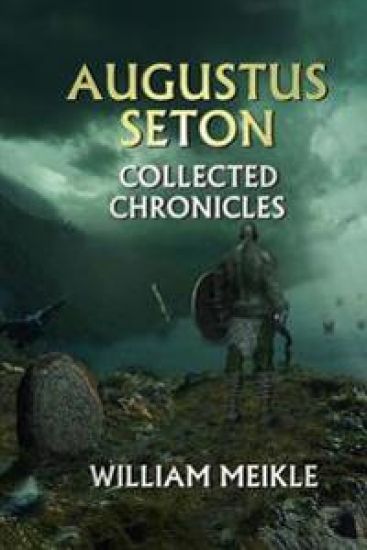
Augustus Seton Collected Chronicles

Augustus Seton Collected Chronicles

William Meikle

Createspace Independent Publishing Platform
2015
pokkari
High magic, swordfighting and a taste of what Scotland was like before perfect teeth, nice hair and clean kilts became the order of the day in OUTLANDER.Scottish sorcerer and swordsman, AUGUSTUS SETON lives in Stirling in the late 16th C and is, usually, in the service of the King, fighting the good fight against the dark things of the world in between the drinking and wenching.This omnibus edition collects all 12 of the Augustus Seton stories. The late 1590s were a time of turmoil. Scotland was on the verge of many changes that would shape its future, from religious reformation, to the union of the crowns with England. But in many ways the country was still rooted in its medieval past, and fear of witches and demons was still a large part of everyday life. Seton confronts demons, both internal and external, as he wanders on the fringes of history.
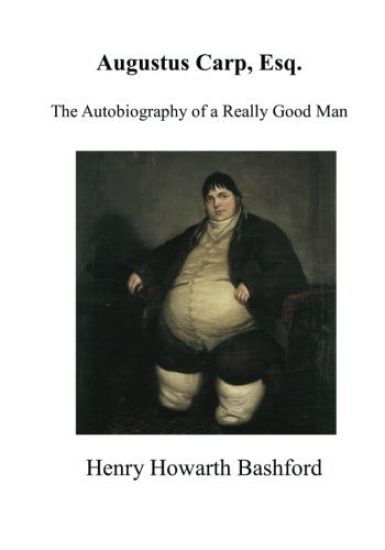
Augustus Carp, Esq.: The Autobiography of a Really Good Man

Augustus Carp, Esq.: The Autobiography of a Really Good Man

Henry Howarth Bashford

Createspace Independent Publishing Platform
2016
nidottu
Augustus Carp, Esq.The Autobiography of a Really Good ManBy Henry Howarth BashfordThe ClassicAugustus Carp, Esq., By Himself: Being the Autobiography of a Really Good Man is a satire, originally anonymous, first published in the United Kingdom in May 1924 and, later that year, by Houghton Mifflin in the United States. The author was an English physician, Sir Henry Howarth Bashford (1880-1961), and the illustrations were by "Robin" (Marjorie Blood). It is customary, I have noticed, in publishing an autobiography to preface it with some sort of apology. But there are times, and surely the present is one of them, when to do so is manifestly unnecessary. In an age when every standard of decent conduct has either been torn down or is threatened with destruction; when every newspaper is daily reporting scenes of violence, divorce, and arson; when quite young girls smoke cigarettes and even, I am assured, sometimes cigars; when mature women, the mothers of unhappy children, enter the sea in one-piece bathing-costumes; and when married men, the heads of households, prefer the flicker of the cinematograph to the Athanasian Creed - then it is obviously a task, not to be justifiably avoided, to place some higher example before the world.For some time - I am now forty-seven - I had been feeling this with increasing urgency. And when not only my wife and her four sisters, but the vicar of my parish, the Reverend Simeon Whey, approached me with the same suggestion, I felt that delay would amount to sin. That sin, by many persons, is now lightly regarded, I am, of course, only too well aware. That its very existence is denied by others is a fact equally familiar to me. But I am not one of them. On every ground I am an unflinching opponent of sin. I have continually rebuked it in others. I have strictly refrained from it in myself. And for that reason alone I have deemed it incumbent upon me to issue this volume.
Augustus Caesar: the Great Emperor

Augustus Caesar: the Great Emperor

Caius T. Suetonius

Createspace Independent Publishing Platform
2016
nidottu
Augustus Caesar, was the first Emperor. He is considered as the founder of Rome Empire. "The name of Augustus was the title of honour given by the Romans to the emperor Caius Julius Cassar Octavianus, or, as he was originally designated, Caius Octavius. This title was intended to be hereditary in his family, but all the succeeding Caesars or emperors of Rome continued to adopt it, long after they had ceased to be connected with the first Augustus by blood. The era of Augustus formed an illustrious epoch in Roman history, and was distinguished for its splendid attainments in arts and arms, and more especially in literature. The Romans in later times looked back to the age of Augustus with great complacency, as the most prosperous and the most distinguished in their annals. (Encyclop dia Britannica)
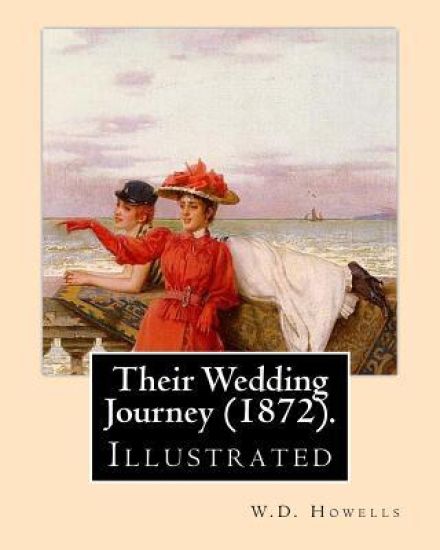
Their Wedding Journey (1872), BY W. D. Howells, Augustus Hoppin illustrated: With an additional chapter on Niagara revisited, Augustus Hoppin (1828-18
William Dean Howells (March 1, 1837 - May 11, 1920) was an American realist novelist, literary critic, and playwright. Nicknamed "The Dean of American Letters", he was particularly known for his tenure as editor of the Atlantic Monthly as well as his own prolific writings, including the Christmas story "Christmas Every Day", and the novels The Rise of Silas Lapham and A Traveler from Altruria. Augustus Hoppin (1828-1896) was an American book illustrator, born in Providence, R. I.. He graduated at Brown University in 1848 and was admitted to the bar, but soon gave up the law and went abroad to study art. Upon his return he devoted himself to drawing on wood and to the illustration of books, in which he was successful. His pictures in Nothing to Wear (1857), Poliphar Papers (1853), and The Autocrat of the Breakfast Table (1858) are widely known. He published several volumes of sketches and novels, among the latter Recollections of Auton House (1881) and Married for Fun (1885).
Augustus: First Emperor of Rome

Augustus: First Emperor of Rome

Adrian Goldsworthy

BASIC BOOKS
2026
sidottu
"Superb....Augustus is a first-rate popular biography by a skilled and knowing hand." (Washington Post) Caesar Augustus created the Roman Empire and forever associated the name Caesar with power. Heir to Julius Caesar, he thrust himself into the middle of Roman politics at its most violent period, facing off against Brutus, and eventually Antony and Cleopatra. He was a military dictator who schemed and killed his way to power and then brought the Romans peace and prosperity after all the chaos, laying the foundations of the famous Pax Romana. In this definitive and critically acclaimed biography, eminent historian Adrian Goldsworthy illuminates the political and private lives of Rome's first emperor in more depth than ever before. Weaving together tales of military victories, political marriages, and senatorial power struggles, Goldsworthy portrays Augustus as he really was--at once noble and manipulative, giving and tyrannical, clever and cruel. Meticulously researched and approachably written, Augustus is the most detailed extant biography of Caesar Augustus, a man whose legacy continues on today.
Augustus, the Hairy Zummabeest!

Augustus, the Hairy Zummabeest!

Clifford James Hayes

Createspace Independent Publishing Platform
2017
pokkari
FULL SELECTION OF BOOKS AT: www.hayesdesign.co.uk/books Fans of quirky, irreverent humour will squeal with delight at Augustus, The Hairy Zummabeest Bored beyond belief during her dull and utterly endless summer vacation, Bobbie's life gets turned upside-down by a visit from a friendly monster named Augustus. Soon they're both on an adventure like no other, in the Land of Hairy Make-Believe. But what will happen to Augustus when the holidays come to an end?Augustus The Hairy Zummabeest is a great introduction to the bonkers mind of occasional author Clifford James Hayes. If you're not a frenzied, foaming-at-the-mouth fan of his books yet, you soon will be
Their Wedding Journey (1872). By: W.D.Howells, illustrated By: Augustus Hoppin: Augustus Hoppin (1828-1896) was an American book illustrator, born in
William Dean Howells ( March 1, 1837 - May 11, 1920) was an American realist novelist, literary critic, and playwright, nicknamed "The Dean of American Letters". He was particularly known for his tenure as editor of The Atlantic Monthly, as well as for his own prolific writings, including the Christmas story "Christmas Every Day" and the novels The Rise of Silas Lapham and A Traveler from Altruria. Early life and family: William Dean Howells was born on March 1, 1837 in Martinsville, Ohio (now known as Martins Ferry, Ohio) to William Cooper Howells and Mary Dean Howells, the second of eight children. His father was a newspaper editor and printer who moved frequently around Ohio. In 1840, the family settled in Hamilton, Ohio, where his father oversaw a Whig newspaper and followed Swedenborgianism.Their nine years there were the longest period that they stayed in one place. The family had to live frugally, although the young Howells was encouraged by his parents in his literary interests. He began at an early age to help his father with typesetting and printing work, a job known at the time as a printer's devil. In 1852, his father arranged to have one of his poems published in the Ohio State Journal without telling him. Early career: In 1856, Howells was elected as a clerk in the State House of Representatives. In 1858, he began to work at the Ohio State Journal where he wrote poetry and short stories, and also translated pieces from French, Spanish, and German. He avidly studied German and other languages and was greatly interested in Heinrich Heine. In 1860, he visited Boston and met with writers James Thomas Fields, James Russell Lowell, Oliver Wendell Holmes, Sr., Nathaniel Hawthorne, Henry David Thoreau, and Ralph Waldo Emerson. He became a personal friend to many of them, including Henry Adams, William James, Henry James, and Oliver Wendell Holmes, Jr. In 1860 Howells wrote Abraham Lincoln's campaign biography Life Of Abraham Lincoln and subsequently gained a consulship in Venice. He married Elinor Mead on Christmas Eve 1862 at the American embassy in Paris. She was a sister of sculptor Larkin Goldsmith Mead and architect William Rutherford Mead of the firm McKim, Mead, and White. Among their children was architect John Mead Howells.............. Augustus Hoppin (1828-1896) was an American book illustrator, born in Providence, R. I.. He graduated at Brown University in 1848 and was admitted to the bar, but soon gave up the law and went abroad to study art. Upon his return he devoted himself to drawing on wood and to the illustration of books, in which he was successful. His pictures in Nothing to Wear (1857), Poliphar Papers (1853), and The Autocrat of the Breakfast Table (1858) are widely known. He published several volumes of sketches and novels, among the latter Recollections of Auton House (1881) and Married for Fun (1885).