Kirjojen hintavertailu. Mukana 12 468 698 kirjaa ja 12 kauppaa.

Kirjahaku

Etsi kirjoja tekijän nimen, kirjan nimen tai ISBN:n perusteella.

1000 tulosta hakusanalla Barbara Raue

Kingsville Ontario Book 1 in Colour Photos: Saving Our History One Photo at a Time

Kingsville Ontario Book 1 in Colour Photos: Saving Our History One Photo at a Time

Barbara Raue

Createspace Independent Publishing Platform
2016
nidottu
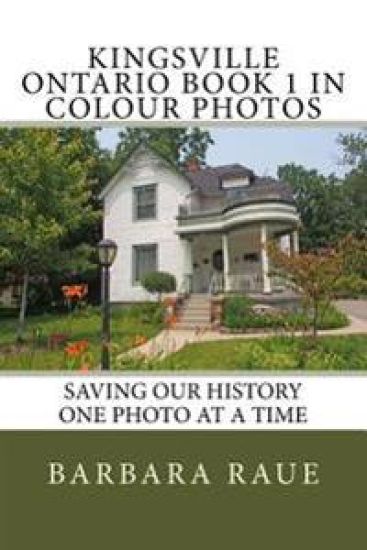
Kingsville is located in Essex County in southwestern Ontario, west of the Leamington, south of Lakeshore, southeast of Essex. It is primarily an agricultural community nestled along the north shore of Lake Erie. The terrain is generally flat, and consists of a mixture of various rocks, sand and clay. The town is about 570 feet above sea level.Kingsville is home to the Jack Miner Bird Sanctuary. Jack Miner was awarded The Order of the British Empire (OBE) for his achievements in conservation in the British Empire. Jack Miner is considered "the father of the conservation movement on the continent".The Town of Kingsville is rich in history and Victorian era architecture.
Kingsville Ontario Book 2 and Area in Colour Photos: Saving Our History One Photo at a Time
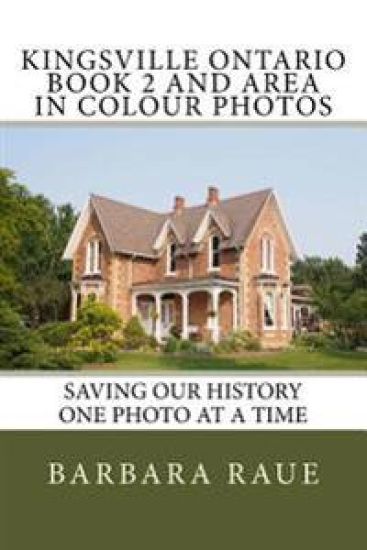
Kingsville is located in Essex County in southwestern Ontario, west of the Leamington, south of Lakeshore, southeast of Essex. It is primarily an agricultural community nestled along the north shore of Lake Erie. The terrain is generally flat, and consists of a mixture of various rocks, sand and clay. The town is about 570 feet above sea level.Kingsville is home to the Jack Miner Bird Sanctuary. Jack Miner was awarded The Order of the British Empire (OBE) for his achievements in conservation in the British Empire. Jack Miner is considered "the father of the conservation movement on the continent".The Town of Kingsville is rich in history and Victorian era architecture.Leamington is a located in Essex County, Ontario. It includes Point Pelee, the southernmost point of mainland Canada. Leamington became the home of the H. J. Heinz factory in 1908. The Heinz products were shipped from Leamington mostly to the United States. Ketchup and baby food were the main products. Leamington is known as the "Tomato Capital of Canada". The Heinz Company closed its plant in Leamington in 2014.Leamington was incorporated as a village in 1876. The community was named after Royal Leamington Spa in England. It was a crossroads hamlet with about 300 residents and was first known for its lumber products. There were several docks, and fish were plentiful in Lake Erie and sturgeon could be speared from the shore; fish was the cheapest food available. Leamington once had many tobacco farms but now they are gone.Blytheswood is a small community located in Essex County, in southwestern Ontario. The village is at the intersection of Highway 77 and Concession 8. Blytheswood's more recognized businesses are the Jones Popcorn family farm and Setterington's farm supply depot. Blytheswood and the surrounding area of Leamington are experiencing a boom in greenhouse development for agricultural products.King's Highway 77, commonly referred to as Highway 77, is a provincially maintained highway in the Canadian province of Ontario. One of three highways within Essex County, Highway 77 serves to interconnect Highway 3 near Leamington with Highway 401 near Tilbury.Due to the flat topography of Essex County, the land use surrounding Highway 77 is almost entirely agricultural. Soil conditions in Essex are ideal for farming. Many streams have been diverted to irrigate the farmland to either side of the highway. Highway 77 begins at the Leamington Bypass, north of the city of the same name. The western section of Highway 3 shares its eastern terminus with Highway 77; from there it travels west towards Windsor. Several greenhouses are visible near the southern end of the highway, a small percentage of the 610 hectares (1,500 acres) of land occupied by them in the Leamington area.The highway runs seven miles north through Mount Carmel and Blytheswood to the village of Staples, passes through Comber. Highway 401 provides access to Windsor and the United States to the west, and to the town of Tilbury and city of Chatham-Kent to the east. To the north, the road continues as Essex County Road 35 to Stoney Point on the shores of Lake Huron.Tilbury is located in the municipality of Chatham-Kent and is 26.5 kilometres southwest of Chatham and 57 kilometres east of Windsor on Highway 401.The nearby townships of Tilbury West in Essex County and Tilbury East in Kent County were named for the port of Tilbury in the English county of Essex. A settlement, called Henderson after the local postmaster, was established with the construction of the Canada Southern Railway in 1875. The name of the post office was changed to Tilbury Centre and later to Tilbury. Tilbury is famous for its murals which depict part of its history.
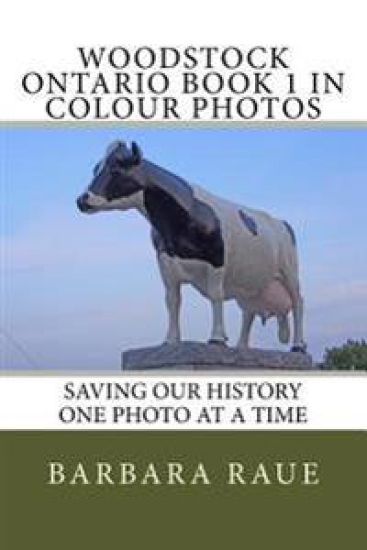
Woodstock Ontario Book 1 in Colour Photos: Saving Our History One Photo at a Time

Woodstock Ontario Book 1 in Colour Photos: Saving Our History One Photo at a Time

Barbara Raue

Createspace Independent Publishing Platform
2016
nidottu
Woodstock is located in the heart of South Western Ontario, at the junction of highways 401 and 403, 50 km east of London and 60 km west of Kitchener. Woodstock is the largest municipality in Oxford County, a county known for its rich farmland, and for its dairy and cash crop farming. As well as being "The Dairy Capital of Canada", Woodstock also has a large industrial base, much of which is related to the auto manufacturing industry.In 1792, Sir John Graves Simcoe became Lieutenant Governor of Upper Canada and made plans for the development of the interior of Upper Canada. He envisioned a series of town sites linked by a military road and a system of rivers and canals, providing inland access during an era when commerce and settlements depended on major waterways. London, Chatham, Dorchester and Oxford were designated town sites with London as the defensible capital. The military road stretching from Burlington Bay through Woodstock to London provided an overland supply route for the safe movement of troops and settlers. Simcoe named this road Dundas Street after Henry Dundas, Viscount Melville, Secretary of State for War and the Colonies. To speed development in the sparsely populated interior of the province, Simcoe granted whole townships to land companies who were obligated to bring in settlers.Simcoe passed through the area now known as Woodstock and noted it a suitable "Town Plot" and settlement began here in 1800.In the 1830s, a different group of immigrants were encouraged to settle in Oxford to ensure this community's loyalty to the British crown. British naval and army officers placed on half-pay looked to the colonies for a new career at the conclusion of military service. The first to arrive was Alexander Whalley Light, a retired colonel who came to Oxford County in 1831. He was joined by Philip Graham in 1832, a retired captain of the Royal Navy, and Captain Andrew Drew, on half-pay from the Royal Navy, arrived in Woodstock to make preparations for his superior, Rear-Admiral Henry Vansittart, also on half-pay. Half-pay officers went to considerable lengths to clear their chosen parcels of land.Admiral Vansittart commissioned Colonel Andrew Drew to build a church (Old St. Paul's) in a new area of Oxford that was known as the "Town Plot". The men later quarreled, which led to the construction of a second church known as "New St. Paul's".
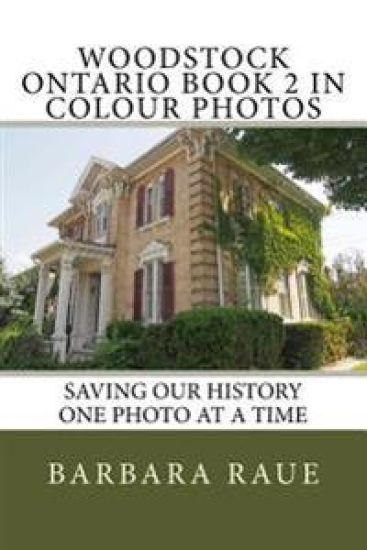
Woodstock Ontario Book 2 in Colour Photos: Saving Our History One Photo at a Time

Woodstock Ontario Book 2 in Colour Photos: Saving Our History One Photo at a Time

Barbara Raue

Createspace Independent Publishing Platform
2016
nidottu
Woodstock is located in the heart of South Western Ontario, at the junction of highways 401 and 403, 50 km east of London and 60 km west of Kitchener. Woodstock is the largest municipality in Oxford County, a county known for its rich farmland, and for its dairy and cash crop farming. As well as being "The Dairy Capital of Canada", Woodstock also has a large industrial base, much of which is related to the auto manufacturing industry.In 1792, Sir John Graves Simcoe became Lieutenant Governor of Upper Canada and made plans for the development of the interior of Upper Canada. To speed development in the sparsely populated interior of the province, Simcoe granted whole townships to land companies who were obligated to bring in settlers.Settlement began in Woodstock in 1800. The early settlers were American immigrants from New York State. Increased immigration from Great Britain followed in the 1820s and 1830s, including the half pay officers Henry Vansittart and Andrew Drew.Light Street memorializes A. W. Light, the first of the military officers to arrive in the area. He was a retired colonel, had published several books, and had many ideas and much enthusiasm for the settlement at the west end.
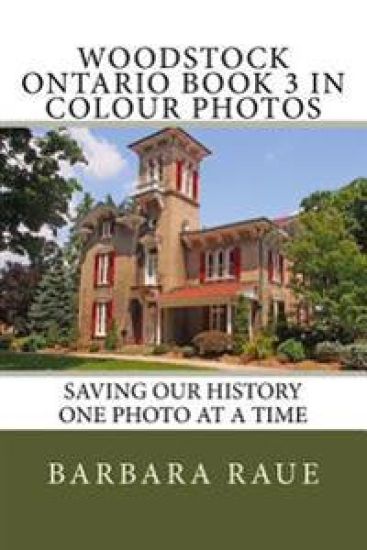
Woodstock Ontario Book 3 in Colour Photos: Saving Our History One Photo at a Time

Woodstock Ontario Book 3 in Colour Photos: Saving Our History One Photo at a Time

Barbara Raue

Createspace Independent Publishing Platform
2016
nidottu
Woodstock is located in the heart of South Western Ontario, at the junction of highways 401 and 403, 50 km east of London and 60 km west of Kitchener. Woodstock is the largest municipality in Oxford County, a county known for its rich farmland, and for its dairy and cash crop farming. As well as being "The Dairy Capital of Canada", Woodstock also has a large industrial base, much of which is related to the auto manufacturing industry.In 1792, Sir John Graves Simcoe became Lieutenant Governor of Upper Canada and made plans for the development of the interior of Upper Canada. To speed development in the sparsely populated interior of the province, Simcoe granted whole townships to land companies who were obligated to bring in settlers.Settlement began in Woodstock in 1800. The early settlers were American immigrants from New York State. Increased immigration from Great Britain followed in the 1820s and 1830s, including the half pay officers Henry Vansittart and Andrew Drew.By 1833 Nathaniel Hill had cleared thirteen acres in the area where Vansittart Avenue meets Dundas. He built the Royal Oak Hotel which burned down in 1852 and was replaced by a brick structure. Most of the big houses were built in the 1870s and 1880s with some replacing more modest structures and some built on undeveloped land. The trees that line Vansittart Avenue were probably planted in the 1880s. Vansittart Avenue was designed, and still remains, as a living monument to the Victorian ideal of gracious living.
Thamesford Ontario and Area in Colour Photos: Saving Our History One Photo at a Time
Oxford County is located in the heart of Southwestern Ontario and is made up of eight lower tier Municipalities. Zorra Township is located at the north-west corner of Oxford County. It is a rural municipality, and was formed in 1975 through the amalgamation of East Nissouri, West Zorra and North Oxford townships. The township includes the communities of Banner, Bennington, Brooksdale, Brown's Corners, Cody's Corners, Dicksons Corners, Dunn's Corner, Embro, Golspie, Granthurst, Harrington, Harrington West, Holiday, Kintore, Lakeside, Maplewood, McConkey, Medina, Rayside, Thamesford, Uniondale, Youngsville, and Zorra Station. Kintore, Medina, Thamesford and Uniondale are included in this book of photos.Thamesford is located on the western boundary of Oxford County, half way between London and Woodstock on Highway 2 (County Road 68) and between St. Mary's and Ingersoll on Highway 19.Thames Centre is a municipality in Middlesex County east of the City of London. It was formed on January 1, 2001, when the townships of West Nissouri and North Dorchester were amalgamated. Communities in the township include: Avon, Belton, Cherry Grove, Crampton, Cobble Hill, Derwent, Devizes, Dorchester, Evelyn, Fanshawe Lake, Friendly Corners, Gladstone, Harrietsville, Kelly Station, Mossley, Nilestown, Oliver, Putnam, Salmonville, Silvermoon, Thorndale, Three Bridges, and Wellburn.Putnam is included in this book of photos.
St. Marys Ontario Book 1 in Colour Photos: Saving Our History One Photo at a Time

St. Marys Ontario Book 1 in Colour Photos: Saving Our History One Photo at a Time

Barbara Raue

Createspace Independent Publishing Platform
2016
nidottu
St. Marys is a town in southwestern Ontario located southwest of Stratford at the junction of the Thames River and Trout Creek. The north branch of the Thames River flows through St. Marys and is the heart of the town. St. Marys' early economic success depended on the mills, powered by the water in this river. The town's prosperity was also helped by the presence of accessible limestone, taken in blocks from the riverbed and from quarries along the riverbanks. The name "Stonetown" is an apt moniker for St. Marys, as the town is filled with unique architecture featuring locally-quarried limestone. The stone buildings reveal much about the town's history, and the development of the town can be witnessed in the architecture. John Grieve Lind (1867-1947) was closely associated with the start of the St. Mary's Cement Company. St. Marys was chosen as the location for the plant because of its abundance of limestone, clay and water, it was on two national railway lines, and it had access to hydro-electric power from Niagara Falls. The plant opened in 1912. Once the cement plant was in operation, Lind turned his attention to parks and recreation. He purchased the seven acre Cadzow Park on Church Street South and build Cadzow Pool. Lind Park now contains a statue of Arthur Meighen, Canada's ninth prime minister.
St. Marys Ontario Book 2 in Colour Photos: Saving Our History One Photo at a Time

St. Marys Ontario Book 2 in Colour Photos: Saving Our History One Photo at a Time

Barbara Raue

Createspace Independent Publishing Platform
2016
nidottu
St. Marys is a town in southwestern Ontario located southwest of Stratford. It is known as Stonetown and is set in a beautiful valley beside the majestic Thames River. St. Marys' early economic success depended on the mills powered by the water in this river. The town's prosperity was also helped by the presence of accessible limestone, taken in blocks from the riverbed and from quarries along the riverbanks. The term "Stonetown" is an apt moniker for St. Marys, as the town is filled with unique architecture featuring locally-quarried limestone. The stone buildings reveal much about the town's history, and the development of the town can be witnessed in the architecture. John Grieve Lind (1867-1947) was closely associated with the start of the St. Mary's Cement Company. St. Marys was chosen as the location for the plant because of its abundance of limestone, clay and water, it was on two national railway lines, and it had access to hydro-electric power from Niagara Falls. The plant opened in 1912.Once the cement plant was in operation, Lind turned his attention to parks and recreation. He purchased the seven acre Cadzow Park on Church Street South and built Cadzow Pool. Lind Park now contains a statue of Arthur Meighen, Canada's ninth prime minister.From stunning architecture to picturesque views, St. Marys has a special character all of its own.
St. Marys Ontario Book 3 in Colour Photos: Saving Our History One Photo at a Time

St. Marys Ontario Book 3 in Colour Photos: Saving Our History One Photo at a Time

Barbara Raue

Createspace Independent Publishing Platform
2016
nidottu
St. Marys, known as Stonetown, is set in a beautiful valley beside the majestic Thames River. It is a town in southwestern Ontario located southwest of Stratford. St. Marys' early economic success depended on the mills powered by the water in this river. From stunning architecture to picturesque views, St. Marys has a special character all of its own. In 1858, the Grand Trunk Railway reached the small village of St. Marys from Toronto. The line went west to Sarnia and then, on the other side of the border, from Port Huron to Chicago. When the railway builders arrived in St. Marys in the mid-1850s, the major challenge for both structural engineers and contractors was the erection of two high railway bridges. One was needed to cross the Thames River. The other took a spur line to London across Trout Creek. Both required a row of massive stone pillars to support the girders and tracks. These became landmarks in St. Marys and are still known as the Sarnia Bridge and the London Bridge. Today, VIA Rail continues to operate the line to London while the line to Sarnia was abandoned in 1989. In 1995, the Town of St. Marys purchased the Sarnia Bridge from the Canadian National Railway. The old railway line was transformed into a walking trail for everyone to enjoy.
St. Marys Ontario Book 4 in Colour Photos: Saving Our History One Photo at a Time

St. Marys Ontario Book 4 in Colour Photos: Saving Our History One Photo at a Time

Barbara Raue

Createspace Independent Publishing Platform
2016
nidottu
St. Marys, known as Stonetown, is set in a beautiful valley beside the majestic Thames River. It is a town in southwestern Ontario located southwest of Stratford. St. Marys' early economic success depended on the mills powered by the water in this river. From stunning architecture to picturesque views, St. Marys has a special character all of its own. John Grieve Lind (1867-1947) was closely associated with the start of the St. Mary's Cement Company. St. Marys was chosen as the location for the plant because of its abundance of limestone, clay and water, it was on two national railway lines, and it had access to hydro-electric power from Niagara Falls. The plant opened in 1912.Once the cement plant was in operation, Lind turned his attention to parks and recreation. He purchased the seven acre Cadzow Park on Church Street South and built Cadzow Pool. Lind Park now contains a statue of Arthur Meighen, Canada's ninth prime minister.
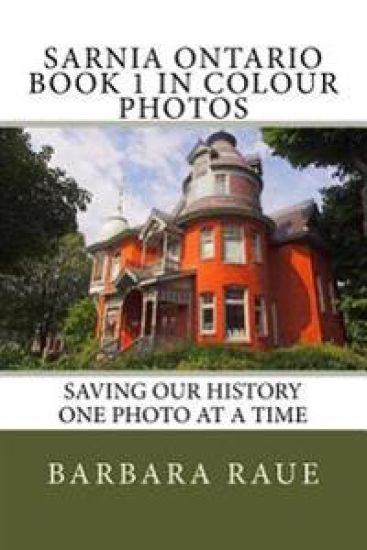
Sarnia Ontario Book 1 in Colour Photos: Saving Our History One Photo at a Time

Sarnia Ontario Book 1 in Colour Photos: Saving Our History One Photo at a Time

Barbara Raue

Createspace Independent Publishing Platform
2016
nidottu
Sarnia is a city in Southwestern Ontario located on the eastern bank of the junction between the Upper and Lower Great Lakes where Lake Huron flows into the St. Clair River, which forms the Canada-United States border, directly across from Port Huron, Michigan.. It is the largest city on Lake Huron. The city's natural harbor first attracted the French explorer LaSalle, who named the site "The Rapids" when he had horses and men pull his forty-five-ton barque "Le Griffon" up the almost four-knot current of the St. Clair River in August 1679. This was the first time anything other than a canoe or other oar-powered vessel had sailed into Lake Huron.Captain Richard Emeric Vidal (1784-1854), one of the founders of Sarnia nurtured the little settlement for twenty years from his first visit in 1834. His wife, Charlotte Penrose Mitton (1790-1873) lived her last forty years in Sarnia and three streets bear her name (Charlotte, Penrose, and Mitton Streets).Paul Blundy was born in Sarnia in 1918. He served in the Royal Canadian Navy in World War II. Following the war, he co-founded the McKenzie & Blundy Funeral Home. Paul served four years as a member of the Hydro-electric Commission, twenty years as a member of Sarnia City Council, eight of them as mayor. During his time on City Council, he was a strong advocate for the redevelopment of the waterfront. From 1977 to 1981, he served as M.P.P. for Sarnia. He died in 1992.
Sarnia Ontario Book 2 in Colour Photos: Saving Our History One Photo at a Time

Sarnia Ontario Book 2 in Colour Photos: Saving Our History One Photo at a Time

Barbara Raue

Createspace Independent Publishing Platform
2016
nidottu
Sarnia is a city in Southwestern Ontario located on the eastern bank of the junction between the Upper and Lower Great Lakes where Lake Huron flows into the St. Clair River, which forms the Canada-United States border, directly across from Port Huron, Michigan. It is the largest city on Lake Huron. The name "Sarnia" is Latin for Guernsey, which is a British Channel Island.The city's natural harbor first attracted the French explorer LaSalle, who named the site "The Rapids" when he had horses and men pull his forty-five-ton barque "Le Griffon" up the almost four-knot current of the St. Clair River in August 1679. This was the first time anything other than a canoe or other oar-powered vessel had sailed into Lake Huron.The Sarnia port remains an important center for lake freighters and oceangoing ships carrying cargoes of grain and petroleum products. The natural port and the salt caverns that exist in the surrounding areas, together with the oil discovered in nearby Oil Springs in 1858 led to the massive growth of the petroleum industry in this area. Because Oil Springs was the first place in Canada and North America to drill commercially for oil, the knowledge that was acquired there led to oil drillers from Sarnia traveling the world teaching other nations how to drill for oil.
Petrolia Ontario in Colour Photos: Saving Our History One Photo at a Time

Petrolia Ontario in Colour Photos: Saving Our History One Photo at a Time

Barbara Raue

Createspace Independent Publishing Platform
2016
nidottu
Petrolia is a town in Ontario twenty minutes from Sarnia, and fifty minutes from London.Following the discovery of oil at Oil Springs in 1857, prospectors extended their search to the entire township of Enniskillen. At the site of Petrolia, which contained two small settlements with post offices named Durance and Ennis, a well was brought into production in 1860. The following year a small refinery was opened and the Durance Post Office renamed "Petrolea". In 1865-66, the drilling of the King well established Petrolia as the major oil producing center in Canada and its population soared from about three hundred to two thousand three hundred. Oil men from Petrolia travelled to the far reaches of the world (Gobi Desert, Arctic, Iran, Indonesia, the United States, Australia, Russia, and over eighty other countries) teaching others how to find and extract crude oil. Some oil fields in the area are still operational to this day.Oil enticed people to come here, but Petrolia was created, nurtured, and sustained by hardworking visionaries, shopkeepers, builders, drillers, laborers, and leaders.
Welland Ontario Book 1 in Colour Photos: Saving Our History One Photo at a Time

Welland Ontario Book 1 in Colour Photos: Saving Our History One Photo at a Time

Barbara Raue

Createspace Independent Publishing Platform
2016
nidottu
Welland is located in the centre of Niagara. Within a half-hour, residents can travel to Niagara Falls, Niagara-on-the-Lake, St. Catharines, Port Colborne or Buffalo. It has been traditionally known as the place where rails and water meet, referring to the railways from Buffalo to Toronto and Southwestern Ontario, and the waterways of the Welland Canal and Welland River, which played a great role in the city's development. The city is separated by the Welland River and Welland Canal which links Lake Erie and Lake Ontario. The city was first settled in 1788 by United Empire Loyalists. Welland, because of its proximity to the Sir Adam Beck hydroelectric station at Niagara Falls, was historically known for its steel, automotive, and textile industries. Manufacturing firms were the biggest employers in Welland, with companies like Union Carbide, United Steel, Plymouth Cordage Company, three drop forges, a cotton mill, and the Atlas Steel Company, as well as general manufacturing plants, influencing the shaping of early Welland.The Plymouth Cordage Company was the first major industrial company to open a plant in Welland in 1906. It was a rope making company with headquarters in Plymouth, Massachusetts; it became the largest manufacturer of rope and twine in the world. Plymouth binder twine was popular among farmers to package farm crops such as grass, wheat and straw, and was the inspiration for the naming of the Plymouth brand of automobiles first produced in 1928. Many workers who relocated to Welland from the company's operations in Plymouth were of Italian origin. To minimise the potential effects of cultural and language barriers, Plymouth Cordage sent four foremen to Welland: one was Italian, one was French, one was German and one was English.
Welland Ontario Book 2 in Colour Photos: Saving Our History One Photo at a Time

Welland Ontario Book 2 in Colour Photos: Saving Our History One Photo at a Time

Barbara Raue

Createspace Independent Publishing Platform
2016
nidottu
Welland, named after the Welland River in England, is located in the center of Niagara. Within a half-hour, residents can travel to Niagara Falls, Niagara-on-the-Lake, St. Catharines, Port Colborne or Buffalo. It has been traditionally known as the place where rails and water meet, referring to the railways from Buffalo to Toronto and Southwestern Ontario, and the waterways of the Welland Canal and Welland River, which played a great role in the city's development. The city was first settled in 1788 by United Empire Loyalists. Welland, because of its proximity to the Sir Adam Beck hydroelectric station at Niagara Falls, was historically known for its steel, automotive, and textile industries. Manufacturing firms were the biggest employers in Welland, with companies like Union Carbide, United Steel, Plymouth Cordage Company, three drop forges, a cotton mill, and the Atlas Steel Company, as well as general manufacturing plants, influencing the shaping of early Welland.The Plymouth Cordage Company was the first major industrial company to open a plant in Welland in 1906. It was a rope making company with headquarters in Plymouth, Massachusetts; it became the largest manufacturer of rope and twine in the world. Plymouth binder twine was popular among farmers to package farm crops such as grass, wheat and straw, and was the inspiration for the naming of the Plymouth brand of automobiles first produced in 1928. Many workers who relocated to Welland from the company's operations in Plymouth were of Italian origin. To minimise the potential effects of cultural and language barriers, Plymouth Cordage sent four foremen to Welland: one was Italian, one was French, one was German and one was English. The city is separated by the Welland River and Welland Canal which links Lake Erie and Lake Ontario. The Welland Canal is a ship canal and has been involved in the history of the area ever since the First Welland Canal was extended to reach Lake Erie in 1833. Traversing the Niagara Peninsula from Port Weller to Port Colborne, the canal forms a key section of the St. Lawrence Seaway, enabling ships to ascend and descend the Niagara Escarpment and bypass Niagara Falls. About 40,000,000 tonnes of cargo are carried through the Welland Canal annually by traffic of about 3,000 ocean and Great Lakes vessels. The original canal and its successors allowed goods from Great Lakes ports such as Cleveland, Detroit, and Chicago, as well as heavily industrialized areas of the United States and Ontario, to be shipped to the port of Montreal or to Quebec City, where they were reloaded onto ocean-going vessels for international shipping.Prior to the Welland By-Pass project, the Welland Canal cut through the centre of Welland. As a result, a very prominent split was created between the east side and the west side of the city. The west side grew primarily to the north and became the most affluent, while the east side expanded south. The Welland By-Pass project, started in 1967 and finished in 1973, provided a new, shorter alignment for the Welland Canal by removing it from downtown Welland to the outskirts of the city. With the completion of the bypass, the east end of Welland became a man-made island, lying between the new and old canal channels. The old alignment of the canal was renamed the Welland Recreational Waterway with the purpose of developing several recreational facilities and tourist attractions along its shores.In 1914, a local business called Empire Cotton Mills was bought by a Quebec-based company. They brought in twenty francophone families to work in the mill, giving a start to a French-speaking community still very alive in the city today. The Atlas Steel Co. was founded in the 1920s. Roy H. Davis and partners bought the Welland plant from its American shareholders in 1928. Gun barrels were produced here during the Second World War.
Kingston Ontario Book 1 in Colour Photos: Saving Our History One Photo at a Time

Kingston Ontario Book 1 in Colour Photos: Saving Our History One Photo at a Time

Barbara Raue

Createspace Independent Publishing Platform
2016
nidottu
In October 1783, at Carleton Island, Captain William Redford Carleton of the King's Royal Regiment of New York, met with the local Mississauga Indians led by the elderly Mynass. Crawford, acting for the British government, purchased from the Mississaugas for some clothing, ammunition and colored cloth, a large tract of land east of the Bay of Quinte. In September 1783, Deputy Surveyor-General John Collins was despatched to Cataraqui by Governor Haldimand to lay out townships for Loyalist settlers. By the end of the year, the front concessions of four townships stretching from Cataraqui to the Bay of Quinte had been surveyed. A fifth township was laid out the following summer. The land was subsequently settled by United Empire Loyalists and Britain's allies who had been forced to leave their homes in the new United States.Earl Street has a wide range of homes, some originally built for factory workers and others for the wealthy. They include a variety of frame, stone, stone and brick, and all-brick homes. They have different rooflines, porches, trim, chimneys, windows and transoms.The Kingston Custom House was built 1856-59 for the government of the united Canadas. The symmetrical composition of the two-storey ashlar building, surmounted by a restrained cornice and parapet, draws on the British classical tradition. The orderly design is achieved through repeated use of semi-circular forms for doors and windows. The Custom House and the nearby Post Office are fine examples of the architectural quality of mid-nineteenth century administrative buildings.
Kingston Ontario Book 2 in Colour Photos: Saving Our History One Photo at a Time

Kingston Ontario Book 2 in Colour Photos: Saving Our History One Photo at a Time

Barbara Raue

Createspace Independent Publishing Platform
2016
nidottu
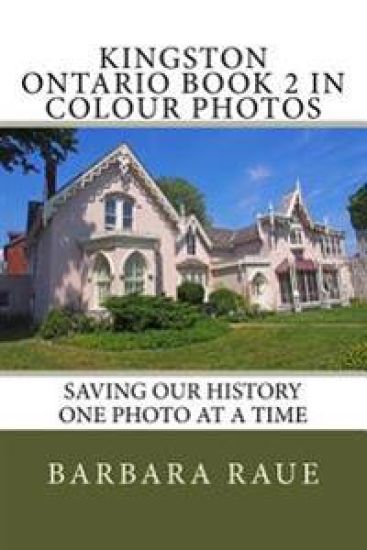
Kingston, a city since 1846Kingston was successively an Indian encampment, a French fort and trading post, a United Empire Loyalist settlement and a British garrison town. Kingston owed its continuing military and commercial importance to its strategic position at the head of the St. Lawrence River and the foot of the Great Lakes. From 1841-1844, Kingston was the capital of the United Province of Canada. Late in the nineteenth century, Kingston declined as a port and transportation centre; it has become a city of institutions and service industries - recreation, education, military, penal and health care.The largest Loyalist Corps in the Northern Department during the American Revolution, the King's Royal Regiment of New York, was raised on June 19, 1776 under the command of Sir John Johnson. Originally composed of one battalion with ten companies, a second battalion was added in 1780. The regiment known as the "Royal Yorkers" participated in the bitter war fought on the colonial frontier, conducting raids against settlements in New York and employed in garrison duty. When active campaigning ceased in 1783, the regiment assumed various responsibilities, notably the establishment of a base in Kingston in preparation for the settlement of the Loyalists.In 1846 Edward Horsey designed and built Elizabeth Cottage (Page 32) as his architectural office and home for his wife Jane and their seven children. The Gothic Revival style was novel for Kingston House at this time. His design features lacy verge boards and strong finials accenting the parapeted front wall (low wall at edge of roof), quatrefoils, crenellations, a variety of decorative window types, including oriel, pointed-arch, and bay windows enlivened with label moldings and tracery. Below the oriel window is a verandah with openwork buttresses as posts.