A sixth grader whose life is plagued by poverty and bullies meets a girl who is actually (to his surprise) kind to him. The two sixth graders go on adventures in the woods, soon finding a house that will change their lives more than they could have ever guessed....
Near-death experiences offer a glimpse not only into the nature of death but also into the meaning of life. They are not only useful tools to aid in the human quest to understand death but are also deeply meaningful, transformative experiences for the people who have them. In a unique contribution to the growing and popular literature on the subject, philosophers John Martin Fischer and Benjamin Mitchell-Yellin examine prominent near-death experiences, such as those of Pam Reynolds, Eben Alexander and Colton Burpo. They combine their investigations with critiques of the narratives' analysis by those who take them to show that our minds are immaterial and heaven is for real. In contrast, the authors provide a blueprint for a science-based explanation. Focusing on the question of whether near-death experiences provide evidence that consciousness is separable from our brains and bodies, Fischer and Mitchell-Yellin give a naturalistic account of the profound meaning and transformative effects that these experiences engender in many. This book takes the reality of near-death experiences seriously. But it also shows that understanding them through the tools of science is completely compatible with acknowledging their profound meaning.
Derivatives were responsible for one of the worst financial meltdowns we have ever seen, one from which we have not yet fully recovered. However, they are likewise capable of generating some of the most incredible wealth we have ever seen. This book asks how we might ensure the latter while avoiding the former. Looking past the usual arguments for the regulation or abolition of derivative finance, it asks a more probing question: what kinds of social institutions and policies would we need to put in place to both avail ourselves of the derivative's wealth production and make sure that production benefits all of us? To answer that question, the contributors to this book draw upon their deep backgrounds in finance, social science, art, and the humanities to create a new way of understanding derivative finance that does justice to its social and cultural dimensions. They offer a two-pronged analysis. First, they develop a social understanding of the derivative that casts it in the light of anthropological concepts such as the gift, ritual, play, dividuality, and performativity. Second, they develop a derivative understanding of the social, using financial concepts such as risk, hedging, optionality, and arbitrage to uncover new dimensions of contemporary social reality. In doing so, they construct a necessary, renewed vision of derivative finance as a deeply embedded aspect not just of our economics but our culture.
Derivatives were responsible for one of the worst financial meltdowns we have ever seen, one from which we have not yet fully recovered. However, they are likewise capable of generating some of the most incredible wealth we have ever seen. This book asks how we might ensure the latter while avoiding the former. Looking past the usual arguments for the regulation or abolition of derivative finance, it asks a more probing question: what kinds of social institutions and policies would we need to put in place to both avail ourselves of the derivative's wealth production and make sure that production benefits all of us? To answer that question, the contributors to this book draw upon their deep backgrounds in finance, social science, art, and the humanities to create a new way of understanding derivative finance that does justice to its social and cultural dimensions. They offer a two-pronged analysis. First, they develop a social understanding of the derivative that casts it in the light of anthropological concepts such as the gift, ritual, play, dividuality, and performativity. Second, they develop a derivative understanding of the social, using financial concepts such as risk, hedging, optionality, and arbitrage to uncover new dimensions of contemporary social reality. In doing so, they construct a necessary, renewed vision of derivative finance as a deeply embedded aspect not just of our economics but our culture.
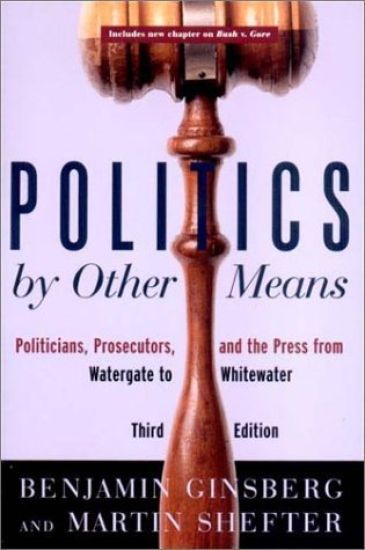
In a far–reaching shift of the political landscape, contenders now seek to discredit or take hostage their opponents rather than to expand the electorate or otherwise compete for votes. In this new edition, which includes a full chapter on the politics of Bush v. Gore, the authors discuss the long-term significance of the decline of electoral competition: voters are increasingly alienated, the government's effectiveness is weakened, and the democratic process is threatened.
Following France’s crushing defeat in June 1940, the Nazis moved forward with plans to reorganize a European continent now largely under Hitler’s heel. While Germany’s military power would set the agenda, several among the Nazi elite argued that permanent German hegemony required something more: a pan-European cultural empire that would crown Hitler’s wartime conquests. At a time when the postwar European project is under strain, Benjamin G. Martin brings into focus a neglected aspect of Axis geopolitics, charting the rise and fall of Nazi-fascist “soft power” in the form of a nationalist and anti-Semitic new ordering of European culture.As early as 1934, the Nazis began taking steps to bring European culture into alignment with their ideological aims. In cooperation and competition with Italy’s fascists, they courted filmmakers, writers, and composers from across the continent. New institutions such as the International Film Chamber, the European Writers Union, and the Permanent Council of composers forged a continental bloc opposed to the “degenerate” cosmopolitan modernism that held sway in the arts. In its place they envisioned a Europe of nations, one that exalted traditionalism, anti-Semitism, and the Volk. Such a vision held powerful appeal for conservative intellectuals who saw a European civilization in decline, threatened by American commercialism and Soviet Bolshevism.Taking readers to film screenings, concerts, and banquets where artists from Norway to Bulgaria lent their prestige to Goebbels’s vision, Martin follows the Nazi-fascist project to its disastrous conclusion, examining the internal contradictions and sectarian rivalries that doomed it to failure.
Compelling, engaging, relevant, transformational. The poetry of SpiritMan skillfully, artistically, and intelligently, delivers impassioned truths on matters of life, light, and love. This book of poetry is a compilation of spirituality, philosophy, science, ecology, and daily experiences with messages integrated into the poems that touch the mind, the heart, and the soul of the reader. At various points, the information is quite clear and succinct. There are also points inter-suspended within deliberate spaces that allow readers to individually interpret meaning. Within their personal interpretation, specific passages will reveal intimate life wisdom in the experience of the reader.
The Dreyfus Affair of the 1890s and the violent controversies that surrounded it appeared to pass two very different judgments on the France of the Third Republic. The outcome o the trial- Captain Dreyfus convicted without guilt and the real traitor acquitted despite guilt- demonstrated without question the extraordinary hypocrisy of the military justice system. But the furor raised by Dreyfus' conviction and the agitation for his release suggested that the injustice of the courts' verdict was uncharacteristic of French society; that for France as a nation the rendering of justice was paramount, even at the expense of disgracing both the military and a conspiring government.In The Hypocrisy of Justice in the Belle Epoque, Benjamin Martin examines the events of three sensational criminal cases to reveal that the willful mangling of justice that occurred in the Dreyfus trial was far from rare in the Third Republic France. He finds, in fact, that justice in the Belle Epoque was ""hypocritical in the extreme,"" with the outcome of trials easily tainted by the power and influence of politics, money, and illicit sex. At times, justice deviated so far from the ideal that its goal was not the strict application of the law or even the discovery of the truth, but rather the imposition of a system of rewards and punishments meted out in accordance with a capricious vision of social utility.Martin begins with the case of Marguerite Steinheil, the wife of an artist of only middling talent. A strikingly beautiful woman, she presided over a famous salon and was the lover of influential politicians. When she was tried for the brutal murders of her husband and her mother, Marguerite defended herself with a flurry of extravagant stories and unlikely counter-accusations. Even so, she was found innocent of all charges, and the crimes were left unsolved.The second trial considered is that of Thérése Humbert, a young woman who used an apparently innate talent for elaborate deception in rising from poverty to the upper reaches of Parisian society. With the aid of her husband and her brothers, Thérése created a series of specious lawsuits over an illusory American legacy. Then, playing on the greed of dozens of investors, she skillfully manipulated the French courts to perpetrate a fraud that would last for twenty years, yield millions, and make her salon one of the most dazzling in Europe until the day when the ruse was finally found out.The third case is that of Henriette Caillaux, the wife of an important leader in the Radical party. She admitted shooting Gaston Calmette, the influential newspaper editor who had been carrying out a campaign of vilification against her husband. But when she was tried for the murder in 1914, Henriette was found innocent and allowed to go free.The sensational trials of Marguerit Steinheil, Thérése Humbert, and Henriette Caillaux mirrored in many the stalemate society of the Belle Epoque itself. By examining the hypocrisy of justice in the Third Republic, Benjamin Martin uncovers the vast extent of that society's corruption, the amorality and sordidness that were cloaked only partially by the mantle of respectability.
Although victorious in the First World War, the French of the Third Republic soon learned the devastating price of success. The grave loss of life and incredibly harsh conditions during and after the war shook survivors to the core. The extraordinary suffering would eventually bring about the collective failure of national nerve in the 1930s that led to the appeasement at Munich and the collapse before German invasion in June 1940. But during the Après Guerre- the half decade following World War I- the French held out hope for a return to the ideal conditions of the Belle Epoque, a hope that gradually gave way to disillusionment.Benjamin Martin's close examination of the aftershocks felt by the French and their world at war's end is a story masterfully told and thoroughly gripping. Using astute analysis and the cultivation of detail to paint a fresco of French society, Martin vividly describes the period's changes, remainders, exultations, fears, lives, deaths, addictions, crimes, figures grand and small, significant and not, remembered or forgotten. Through compelling character sketches of the great politicians of the day, including Georges Clemenceau, Raymond Poincaré, and Aristide Briand, Martin reveals the inner workings of French political life and its role in society as political figures sought to make sense of the tumultuous times.The collective portrait builds to overwhelming sadness. More than 1.3 million Frenchmen had been killed in the war, nearly one in three of those aged eighteen to forty-two. Material damage was estimated to total 55 billion francs. Inflation, hardly known in France during the nineteenth century, soared, while the franc declined disastrously against other currencies. Professionals and rentiers- the social groups that had provided the political and intellectual leadership of the Third Republic before 1914- were struck disproportionately hard by both the war and its aftermath. The new demands of feminism and of changing moral codes, a growing fascination with suicide and drugs, and, above all, the utter strangeness of the postwar world left many in anomie. A devastated France was left to face Germany essentially alone as the United States refused to ratify the Versailles Treaty, Great Britain exhibited early interest in restoring trade with Germany, and one-time ally Russia collapsed into Bolshevism. As Martin shows, French frustration reached a climax in 1923 with the occupation of Germany's Ruhr Valley as a means of compelling the payment of reparations. The failure of this Ruhr incursion meant the end of serious efforts to control Germany.France and the Après Guerre, 1918- 1924 shows in convincing detail that the men who had won the war had lost the peace. Their struggle, and that of French society, makes a captivating and moving story.
When Benjamin Martin's latest report from the front of French fallibility does not read like a tragedy, whose end is foreordained, it reads like a melodrama: sensational doings punctuated by catchy melodies like 'L'Internationale' and 'La Marseillaise.' In both cases it reads well.... French life in the run-up to World War II was a gangrenous decomposition, to be followed by still worse. The country's leaders found nary a pratfall that they could avoid. They chose a semblance of peace above honor and ended up with neither.... In spite of a masterful prologue, successful synthesis, elegant concision and lucid presentation (or perhaps thanks to them), the reader can't help sharing the nation's shames. A tribute to the historian's talent."" -- Eugen Weber, Phi Beta Kappa Key Reporter.At the beginning of 1938, containment of Nazi Germany by a coalition of eastern and western democracies without resorting to war was still a distinct possibility. By the end of 1938, however, Germany was much stronger, the western democracies stood alone, and war was all but certain. The primary cause for these developments, argues Benjamin F. Martin, was the foreign and domestic policies adopted by the French government and embraced by the French people. In a riveting account of the dark days leading up to France's defeat and occupation, Martin reveals a great and civilized nation committing a kind of suicide in 1938. Using movies, novels, newspapers, and sensational court cases, Martin weaves an absorbing tale of France's collective fear and melancholy during this troubled prewar period.
Title: A History of England under the Norman Kings. ... To which is prefixed an epitome of the early history of Normandy. Translated from the German ... by B. Thorpe, with considerable additions and corrections by the translator.Publisher: British Library, Historical Print EditionsThe British Library is the national library of the United Kingdom. It is one of the world's largest research libraries holding over 150 million items in all known languages and formats: books, journals, newspapers, sound recordings, patents, maps, stamps, prints and much more. Its collections include around 14 million books, along with substantial additional collections of manuscripts and historical items dating back as far as 300 BC.The HISTORY OF BRITAIN & IRELAND collection includes books from the British Library digitised by Microsoft. As well as historical works, this collection includes geographies, travelogues, and titles covering periods of competition and cooperation among the people of Great Britain and Ireland. Works also explore the countries' relations with France, Germany, the Low Countries, Denmark, and Scandinavia. ++++The below data was compiled from various identification fields in the bibliographic record of this title. This data is provided as an additional tool in helping to insure edition identification: ++++ British Library Lappenberg, Johann Martin; Thorpe, Benjamin; 1857 8 . 09505.m.24.
From the cramped quarters of New York City in 1922, childcare pioneers Ettie and Henry Schacht looked to the expansive woodlands of Connecticut for their school and found a perfect location in the town of Quaker Hill. The Schachts purchased 500 acres of farmland complete with two large but old farmhouses and an unused dairy barn. Over the years, a number of cabins, camp buildings, and farm and support facilities were added to the property, and in 1942, the program blossomed into a coveted and ambitious year-round boarding school. The Schachts inspired various specialized programs, including a special education school and residential and foster care programs. In addition, the founders established an ambitious outdoor education facility, its setting surrounded by an adventure challenge course, farm sanctuary, log cabin, and nature center. Celebrating its centennial anniversary, Waterford Country School's innovative and successful Children and Residential Experiences (CARE) program continues to work around the clock to meet the special needs of children and families at risk.