Kirjojen hintavertailu. Mukana 11 627 220 kirjaa ja 12 kauppaa.

Kirjahaku

Etsi kirjoja tekijän nimen, kirjan nimen tai ISBN:n perusteella.

1000 tulosta hakusanalla Benjamin Walters

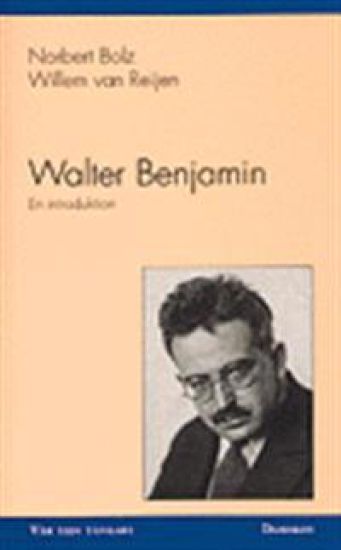
Walter Benjamin : en introduktion

Walter Benjamin : en introduktion

Bolz; van Reijen

Bokförlaget Daidalos
1994
pokkari
I den förtjänstfulla serien Vår tids tänkare av filosofiförlaget Daidalos har turen nu kommit till Walter Benjamin ... ett glosarium i sista delen ett utmärkt hjälpmedel. För detta och hela översättningen över huvud förtjänar William Fovet en eloge. En ingående jämförelse med den tyska originalutgåvan från 1991 visar att han på ett närmast mirakulöst sätt har åstadkommit en adekvat transformering av en mycket komplex text till läsbar svenska. /Fritz Joachim Sauer, Upsala Nya Tidning
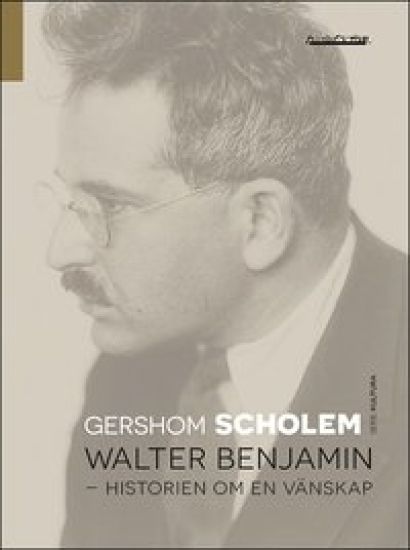
Walter Benjamin : historien om en vänskap

Walter Benjamin : historien om en vänskap

Gershom Scholem; Gustav Sjöberg

h:ström - Text Kultur AB
2023
nidottu
Gershom Scholem var en brådmogen tonåring när han 1915 träffade Walter Benjamin, som blev hans nära vän och intellektuella mentor. Walter Benjamin - historien om en vänskap är Scholems ömsinta, men på intet sätt sentimentala, redogörelse för deras livslånga och komplexa vänskap. Boken är såväl en hyllning av hans väns egensinniga geni som en klagosång över de destruktiva inre och yttre krafter som kulminerade i Benjamins självmord 1940 på flykt undan fascisterna. Det är svårt att inte drabbas av den omsorg och intelligens med vilka de båda vännerna öppnar sig för och befruktar varandras tänkande. Marxism och metafysik, Europa och Palestina, krigshets och pacifism - allt avhandlas i ett sällsamt hängivet dialogiskt utbyte. Scholems livfulla minnesbok, publicerad 1975, utgör än idag en oöver­träffad introduktion till Walter Benjamin. På en och samma gång översiktlig, initierad och personlig i sina reflexioner över Benjamins liv och skrifter är den ett ovärderligt dokument om en av 1900-talets mest inflytelserika tänkare. Här presenteras Walter Benjamin - historien om en vänskap för första gången på svenska, i översättning av Christian Nilsson och med en inledning av Gustav Sjöberg."Det är inte bara ett djupt känt dokument utan också en visserligen mycket personlig men ändå ganska heltäckande beskrivning av Benjamins mångfacetterade författarskap. Boken kom ut för snart ett halvsekel sedan och ger en helt oersättlig bild av människan bakom texten." - Carl Rudbeck, Axess"Boken är en unik biografisk skildring där Scholems livfulla blick modereras av den äldre mannens vetskap. Ingen annan har kunnat skriva denna bok.Att den nu finns på svenska är därför en stor sak. Kännaren Christian Nilssons översättning är njutbart ledig både balanserad och destillerad vilket ger en fin värme åt framställningen som med tanke på tidsavståndet av trettiofem år är förunderligt detaljerad." - Mikael van Reis, Göteborgs-Posten"Walter Benjamin är en bok om ett gripande människoöde i en mörk tid, ett spännande intellektuellt äventyr men framför allt ett ömsint porträtt av en god vän." - David Björklund, BTJ"För den som hyser minsta intresse för judisk-europeisk historia, filosofi och teologi är den oumbärlig." - Nydahls Occident
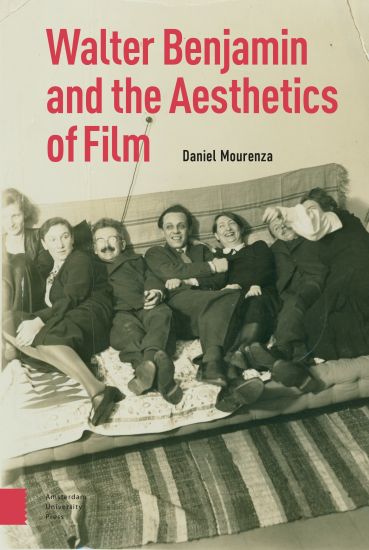
Walter Benjamin and the Aesthetics of Film

Walter Benjamin and the Aesthetics of Film

Daniel Mourenza

Amsterdam University Press
2020
sidottu
Walter Benjamin is today regarded as one of the leading thinkers of the twentieth century. Often captured in pensive pose, his image is now that of a serious intellectual. But Benjamin was also a fan of the comedies of Adolphe Menjou, Mickey Mouse, and Charlie Chaplin. As an antidote to repressive civilization, he developed, through these figures, a theory of laughter. Walter Benjamin and the Aesthetics of Film is the first monograph to thoroughly analyse Benjamin’s film writings, contextualizing them within his oeuvre whilst also paying attention to the various films, actors, and directors that sparked his interest. The book situates all these writings within Benjamin’s ‘anthropological materialism’, a concept that analyses the transformations of the human sensorium through technology. Through the term ‘innervation’, Benjamin thought of film spectatorship as an empowering reception that, through a rush of energy, would form a collective body within the audience, interpenetrating a liberated technology into the distracted spectators. Benjamin’s writings on Soviet film and German cinema, Charlie Chaplin, and Mickey Mouse are analysed in relation to this posthuman constellation that Benjamin had started to dream of in the early twenties, long before he began to theorize about films.
Religion Around Walter Benjamin

Religion Around Walter Benjamin

Brian Britt

Pennsylvania State University Press
2022
sidottu
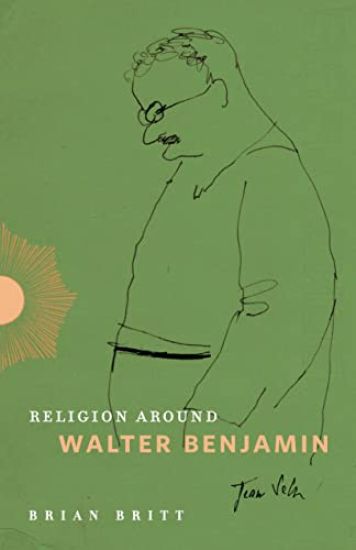
This book shows how institutional religion and the religiosity of political and cultural life provide a necessary dimension to Walter Benjamin, one of the twentieth century’s greatest thinkers. Lived religion surrounded Benjamin, whose upper-middle-class Jewish family celebrated Christmas and Hanukkah in Berlin as the turmoil of war, collapsing empires, and modern urban life gave rise to the Nazi regime that would destroy most of Europe’s Jews, including Benjamin himself. Documenting the vitality and diversity of religious life that surrounded Benjamin in Germany, France, and beyond, Brian Britt shows the extent to which religious communities and traditions, especially those of Christians, influenced his work. Britt surveys and analyzes the intellectual, cultural, and social contexts of religion in Benjamin’s world and broadens the religious frame around discussions of his work to include lived religion—the daily practices of ordinary people. Seeing religion around Benjamin requires looking at forms of life and institutions that he rarely discussed. As Britt shows, dramatic changes in religious practices, particularly in Berlin, reflected broader political and cultural currents that would soon transform the lives of all Europeans.An original perspective on the religious context of a thinker who habitually raised questions about the survival of religion in modernity, Religion Around Walter Benjamin contributes to wider discussions of religious tradition and secular modernity in religious and cultural studies. It provides a foundational overview and introduction to the context of Benjamin’s writing that will be appreciated by scholars and students alike.
Religion Around Walter Benjamin

Religion Around Walter Benjamin

Brian Britt

Pennsylvania State University Press
2022
pokkari
This book shows how institutional religion and the religiosity of political and cultural life provide a necessary dimension to Walter Benjamin, one of the twentieth century’s greatest thinkers. Lived religion surrounded Benjamin, whose upper-middle-class Jewish family celebrated Christmas and Hanukkah in Berlin as the turmoil of war, collapsing empires, and modern urban life gave rise to the Nazi regime that would destroy most of Europe’s Jews, including Benjamin himself. Documenting the vitality and diversity of religious life that surrounded Benjamin in Germany, France, and beyond, Brian Britt shows the extent to which religious communities and traditions, especially those of Christians, influenced his work. Britt surveys and analyzes the intellectual, cultural, and social contexts of religion in Benjamin’s world and broadens the religious frame around discussions of his work to include lived religion—the daily practices of ordinary people. Seeing religion around Benjamin requires looking at forms of life and institutions that he rarely discussed. As Britt shows, dramatic changes in religious practices, particularly in Berlin, reflected broader political and cultural currents that would soon transform the lives of all Europeans.An original perspective on the religious context of a thinker who habitually raised questions about the survival of religion in modernity, Religion Around Walter Benjamin contributes to wider discussions of religious tradition and secular modernity in religious and cultural studies. It provides a foundational overview and introduction to the context of Benjamin’s writing that will be appreciated by scholars and students alike.
Just Language: Walter Benjamin, German-Jewish Exile, and the Critique of Linguistic Violence
Just Language revisits the Weimar period and its representation in the postwar years to explore narratives of linguistic resistance in the works of Walter Benjamin, Theodor W. Adorno, Hannah Arendt, and Paul Celan. How did this generation of exile writers grapple with their experiences of oppression and persecution? How did they create a language of resistance during the decades that prepared the Third Reich and the Shoah? Facing the devastations of World War I, the book explores how Walter Benjamin analyzed language's ability to radically break the cyclical violence of war and examines his opposition to expansionism and imperialism in Weimar education and culture. Based on Benjamin's analysis, Johann en traces the postwar responses of Hannah Arendt and Paul Celan. While Arendt proposed strategies of metaphorical thinking to counteract the formation of totalitarianism, Celan mobilized silence as a poetic counterforce against oppression and erasure. Just Language argues that every linguistic act and practice, no matter how small or marginalized, entails the ethical task of opposing the normalization and institutionalization of political violence. By tracing how Benjamin and his interlocutors struggled against German fascism, Johann en presents a memory-based critique of linguistic violence, opening a dialogue between German-Jewish writers and today's debates on non-discrimination, propaganda, and social justice.
Just Language: Walter Benjamin, German-Jewish Exile, and the Critique of Linguistic Violence
Just Language revisits the Weimar period and its representation in the postwar years to explore narratives of linguistic resistance in the works of Walter Benjamin, Theodor W. Adorno, Hannah Arendt, and Paul Celan. How did this generation of exile writers grapple with their experiences of oppression and persecution? How did they create a language of resistance during the decades that prepared the Third Reich and the Shoah? Facing the devastations of World War I, the book explores how Walter Benjamin analyzed language's ability to radically break the cyclical violence of war and examines his opposition to expansionism and imperialism in Weimar education and culture. Based on Benjamin's analysis, Johann en traces the postwar responses of Hannah Arendt and Paul Celan. While Arendt proposed strategies of metaphorical thinking to counteract the formation of totalitarianism, Celan mobilized silence as a poetic counterforce against oppression and erasure. Just Language argues that every linguistic act and practice, no matter how small or marginalized, entails the ethical task of opposing the normalization and institutionalization of political violence. By tracing how Benjamin and his interlocutors struggled against German fascism, Johann en presents a memory-based critique of linguistic violence, opening a dialogue between German-Jewish writers and today's debates on non-discrimination, propaganda, and social justice.
The Late Walter Benjamin

The Late Walter Benjamin

John Schad

Continuum Publishing Corporation
2012
sidottu
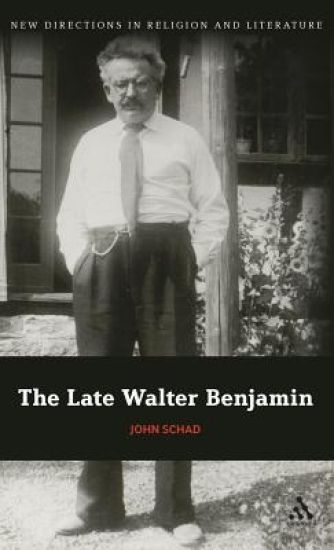
This fully-annotated documentary novel explores the life and thought of Walter Benjamin, imaginatively examining its implications in the political context of a post-War London estate. A startling critical-creative examination of one of the 20th Century's leading thinkers, "The Late Walter Benjamin" is a documentary novel that juxtaposes the life and death of Walter Benjamin with the days, hours and minutes of a working-class council estate on the edge of London in post-war Austerity England. The novel centres on one particular tenant who claims to be Walter Benjamin, and only ever uses words written by Benjamin, apparently oblivious that the real Benjamin committed suicide 20 years earlier whilst fleeing the Nazis. Initially set in the sixties, the text slips back to the early years of the estate and to Benjamin's last days, as he moves across Europe seeking ever-more desperately to escape the Third Reich. Through this fictional narrative, John Schad explores not only the emergence of Benjamin's thinking from a politicised Jewish theology forced to confront the rise of Nazism but also the implications of his utopian Marxism, forged in exile, for the very different context of a displaced working class community in post-war Britain. This series aims to showcase new work at the forefront of religion and literature through short studies written by leading and rising scholars in the field. Books will pursue a variety of theoretical approaches as they engage with writing from different religious and literary traditions. Collectively, the series will offer a timely critical intervention to the interdisciplinary crossover between religion and literature, speaking to wider contemporary interests and mapping out new directions for the field in the early twenty-first century.
The Late Walter Benjamin

The Late Walter Benjamin

John Schad

Continuum Publishing Corporation
2012
nidottu
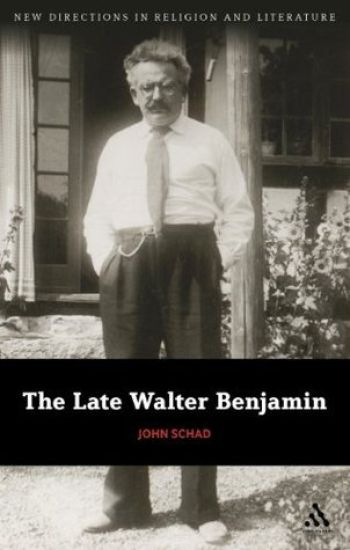
This fully-annotated documentary novel explores the life and thought of Walter Benjamin, imaginatively examining its implications in the political context of a post-War London estate. A startling critical-creative examination of one of the 20th Century's leading thinkers, "The Late Walter Benjamin" is a documentary novel that juxtaposes the life and death of Walter Benjamin with the days, hours and minutes of a working-class council estate on the edge of London in post-war Austerity England. The novel centres on one particular tenant who claims to be Walter Benjamin, and only ever uses words written by Benjamin, apparently oblivious that the real Benjamin committed suicide 20 years earlier whilst fleeing the Nazis. Initially set in the sixties, the text slips back to the early years of the estate and to Benjamin's last days, as he moves across Europe seeking ever-more desperately to escape the Third Reich. Through this fictional narrative, John Schad explores not only the emergence of Benjamin's thinking from a politicised Jewish theology forced to confront the rise of Nazism but also the implications of his utopian Marxism, forged in exile, for the very different context of a displaced working class community in post-war Britain. This series aims to showcase new work at the forefront of religion and literature through short studies written by leading and rising scholars in the field. Books will pursue a variety of theoretical approaches as they engage with writing from different religious and literary traditions. Collectively, the series will offer a timely critical intervention to the interdisciplinary crossover between religion and literature, speaking to wider contemporary interests and mapping out new directions for the field in the early twenty-first century.
The Palgrave Walter Benjamin Handbook

The Palgrave Walter Benjamin Handbook

Springer International Publishing AG
2025
sidottu
Walter Benjamin is one of the most influential authors in contemporary humanities, exerting a deep fascination for students and garnering scholarly interest in a variety of fields, such as history of philosophy, literature, film and media studies, political science, religion, architecture, art and history. This Handbook provides students and scholars with a guide to Walter Benjamin’s work that explores each of these areas in depth while also giving the reader a chance to discover connections to other areas of thought. In order to do justice to the complexity of Benjamin’s thinking, this volume includes international scholars from a variety of academic disciplines, and is organized such that a dialogue emerges between them. Each section presents an argument for the integration of its subject into the whole, demonstrating that what might seem specialized and esoteric actually intersects with the problems and questions of the other sections.
Darstellung bei Walter Benjamin

Darstellung bei Walter Benjamin

Jan Urbich

de Gruyter
2011
sidottu
This study is dedicated to the comprehensive explanation of what is probably Walter Benjamin's most difficult text, the Erkenntniskritische Vorrede (critical foreword) to his Ursprung des deutschen Trauerspiels (Origin of German Tragic Drama). The thorough analytical commentary exposes the historical and systematic terminological constructions of this text and places them within the context of the discourse on presentation since the 18th century. For the first time Benjamin's premarxist philosophy and literary theory are seen as an independent contribution to a philosophy of literary representation with potential for problem-solving up to the present day.
Approaches to Walter Benjamin’s «The Arcades Project»
Walter Benjamin is one of the most important figures of modern culture. The authors focus within this book on Benjamin as a philosopher, or rather as a critic of modernism entangled in tradition (mainly Jewish), but also as a writer. Philosophical and philological readings are accompanied by essays presenting the complex biography of Benjamin and numerous, often unexpected, parallels which indicate traces of his reflections in works of other artists. In consequence, «The Arcades Project», which can be described as Benjamin’s opus vitae, is not only a picturesque history of Parisian arcades of the mid-19th century. It is also a polyphonic text, composed of quotations, commentaries and footnotes, a discussion of the sense of history and the literary work of art that surprises with its meandering quality.