Kirjojen hintavertailu. Mukana 11 627 067 kirjaa ja 12 kauppaa.

Kirjahaku

Etsi kirjoja tekijän nimen, kirjan nimen tai ISBN:n perusteella.

1000 tulosta hakusanalla Bill Griffeth

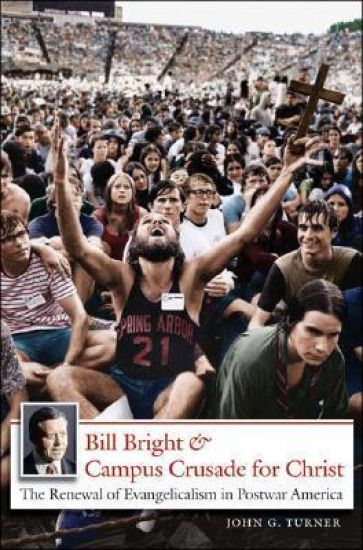
Bill Bright and Campus Crusade for Christ

Bill Bright and Campus Crusade for Christ

Turner John G.

The University of North Carolina Press
2008
nidottu
Marketing Jesus to modern America.Founded as a local college ministry in 1951, Campus Crusade for Christ has become one of the world's largest evangelical organizations, today boasting an annual budget of more than $500 million. Nondenominational organizations like Campus Crusade account for much of modern evangelicalism's dynamism and adaptation to mainstream American culture. Despite the importance of these ""parachurch"" organizations, says John Turner, historians have largely ignored them.Turner offers an accessible and colorful history of Campus Crusade and its founder, Bill Bright, whose marketing and fund-raising acumen transformed the organization into an international evangelical empire. Drawing on archival materials and more than one hundred interviews, Turner challenges the dominant narrative of the secularization of higher education, demonstrating how Campus Crusade helped reestablish evangelical Christianity as a visible subculture on American campuses. Beyond the campus, Bright expanded evangelicalism's influence in the worlds of business and politics. As Turner demonstrates, the story of Campus Crusade reflects the halting movement of evangelicalism into mainstream American society: its awkward marriage with conservative politics, its hesitancy over gender roles and sexuality, and its growing affluence.
Bill and Pete

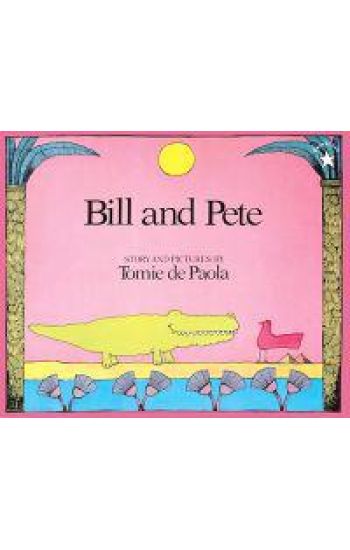
Bill and Pete

Tomie dePaola

Turtleback Books
1996
sidottu
The adventures of William Everett, a crocodile, and his friend, Pete, a bird toothbrush, reveal how William came to be called Bill and include an encounter with the Bad Guy from Cairo
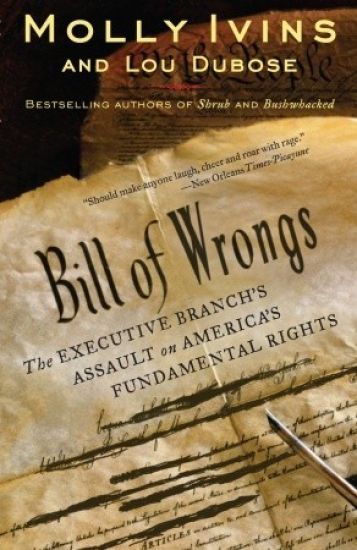
Bill of Wrongs: The Executive Branch's Assault on America's Fundamental Rights
In this, her final and perhaps greatest book, Molly Ivins launches a counterattack on the executive branch's shredding of our cherished Bill of Rights. From illegal wiretaps and the unlawful imprisonment of American citizens to the creeping influence of religious extremism on our national agenda and the erosion of the checks and balances that prevent a president from seizing unitary powers, Ivins and her longtime collaborator, Lou Dubose, describe the attacks on America's vital constitutional guarantees. With devastating humor and keen eyes for deceit and hypocrisy, they show how severe these incursions have become, and they ask us all to take an active role in protecting the Bill of Rights. Praise for Bill of Wrongs "Should make anyone laugh, cheer and roar with rage."-New Orleans Times-Picayune " Molly Ivins is] wonderfully direct about the costs of our lost civil liberties. . . . Ivins' voice-in all its drawling, acerbic, storytelling, fearless glory-is stilled now. . . . But her message lives on. And every thoughtful American ought to be listening."-The Buffalo News"With her characteristic acerbic humor, Ivins and colleague Dubose dissect the myriad attacks the Bush administration has made on the Bill of Rights and how ordinary citizens have fought back."-Booklist "Ivins' own description of the book is spot-on: 'a hopeful and gladsome romp through some serious terrain."-The New York Observer "A truly compelling read . . . filled with devastating humor and razor-sharp commentary."-Austinist
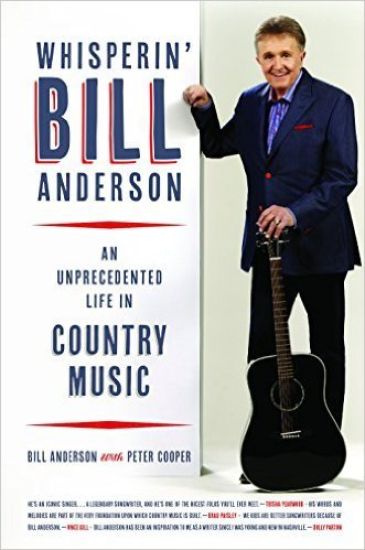
Whisperin' Bill Anderson

Whisperin' Bill Anderson

Bill Anderson

University of Georgia Press
2016
sidottu
Whisperin’ Bill: An Unprecedented Life in Country Music presents a revealing portrait of Bill Anderson, one of the most prolific songwriters in the history of country music. Mega country music hits like "City Lights," (Ray Price), "Tips Of My Fingers," (Roy Clark, Eddy Arnold, Steve Wariner), "Once A Day," (Connie Smith), "Saginaw, Michigan," (Lefty Frizzell), and many more flowed from his pen, making him one of the most decorated songwriters in music history. But the iconic singer, songwriter, performer, and TV host came to a point in his career where he questioned if what he had to say mattered anymore. Music Row had changed, a new generation of artists and songwriters had transformed the genre, and the Country Music Hall of Fame member and fifty-year Grand Ole Opry star was no longer relevant. By 1990, he wasn’t writing anymore. Bad investments left him teetering at bankruptcy’s edge. His marriage was falling apart. And in Nashville, a music town where youth often carries the day, he was a museum piece—only seen as a nostalgia act, waving from the stage of the Grand Ole Opry. Anderson was only in his fifties when he assumed he had climbed all the mountains he was intended to scale. But in those moments plagued with self-doubt, little did he know, his most rewarding climb lie ahead. A follow-up to his 1989 autobiography, this honest and revealing book tells the story of a man with an unprecedented gift, holding on to it in order to share it.Known as “Whisperin’ Bill” to generations of fans for his soft vocalizations and spoken lyrics, Anderson is the only songwriter in country music history to have a song on the charts in each of the past seven consecutive decades. He has celebrated chart-topping success as a recording artist with eighty charting singles and thirty-seven Top Ten country hits, including “Still,” "8 x 10", "I Love You Drops," and “Mama Sang A Song.” A six-time Song of the Year Award-winner and BMI Icon Award recipient, Anderson has taken home many CMA and ACM Award trophies and garnered multiple GRAMMY nominations. His knack for the spoken word has also made him a successful television host, having starred on “The Bill Anderson Show,” “Opry Backstage,” “Country’s Family Reunion,” and others. Moreover, his multi-faceted success extends far beyond the country format with artists like James Brown, Aretha Franklin, Dean Martin, and Elvis Costello recording his songs. Today, thanks to the support of musical peers and a few famous friends who believed in him, Anderson continues to forge the path of lyrical integrity in music, harnessing his ability to craft a song that tells a familiar story, grabs you by the heart and moves you. Modern day examples include "Whiskey Lullaby" (Brad Paisley and Allison Krauss), "Give It Away" (George Strait), "A Lot of Things Different" (Kenny Chesney), and "Which Bridge to Cross" (Vince Gill).A product of a long-gone Nashville, Anderson worked to reinvent himself, and this biography documents Anderson’s fifty-plus-year career—a career he once thought unattainable. Richly illustrated with black-and-white photos of Anderson interacting with the superstars of American music, including such legends as Patsy Cline, Vince Gill, and Steve Wariner, this book highlights Anderson’s trajectory in the business and his influence on the past, present, and future of this dynamic genre.
Whisperin' Bill Anderson

Whisperin' Bill Anderson

Bill Anderson

University of Georgia Press
2017
pokkari
Whisperin’ Bill: An Unprecedented Life in Country Music presents a revealing portrait of Bill Anderson, one of the most prolific songwriters in the history of country music. Mega country music hits like "City Lights," (Ray Price), "Tips Of My Fingers," (Roy Clark, Eddy Arnold, Steve Wariner), "Once A Day," (Connie Smith), "Saginaw, Michigan," (Lefty Frizzell), and many more flowed from his pen, making him one of the most decorated songwriters in music history. But the iconic singer, songwriter, performer, and TV host came to a point in his career where he questioned if what he had to say mattered anymore. Music Row had changed, a new generation of artists and songwriters had transformed the genre, and the Country Music Hall of Fame member and fifty-year Grand Ole Opry star was no longer relevant. By 1990, he wasn’t writing anymore. Bad investments left him teetering at bankruptcy’s edge. His marriage was falling apart. And in Nashville, a music town where youth often carries the day, he was a museum piece—only seen as a nostalgia act, waving from the stage of the Grand Ole Opry. Anderson was only in his fifties when he assumed he had climbed all the mountains he was intended to scale. But in those moments plagued with self-doubt, little did he know, his most rewarding climb lie ahead. A follow-up to his 1989 autobiography, this honest and revealing book tells the story of a man with an unprecedented gift, holding on to it in order to share it.Known as “Whisperin’ Bill” to generations of fans for his soft vocalizations and spoken lyrics, Anderson is the only songwriter in country music history to have a song on the charts in each of the past seven consecutive decades. He has celebrated chart-topping success as a recording artist with eighty charting singles and thirty-seven Top Ten country hits, including “Still,” "8 x 10", "I Love You Drops," and “Mama Sang A Song.” A six-time Song of the Year Award-winner and BMI Icon Award recipient, Anderson has taken home many CMA and ACM Award trophies and garnered multiple GRAMMY nominations. His knack for the spoken word has also made him a successful television host, having starred on “The Bill Anderson Show,” “Opry Backstage,” “Country’s Family Reunion,” and others. Moreover, his multi-faceted success extends far beyond the country format with artists like James Brown, Aretha Franklin, Dean Martin, and Elvis Costello recording his songs. Today, thanks to the support of musical peers and a few famous friends who believed in him, Anderson continues to forge the path of lyrical integrity in music, harnessing his ability to craft a song that tells a familiar story, grabs you by the heart and moves you. Modern day examples include "Whiskey Lullaby" (Brad Paisley and Allison Krauss), "Give It Away" (George Strait), "A Lot of Things Different" (Kenny Chesney), and "Which Bridge to Cross" (Vince Gill).A product of a long-gone Nashville, Anderson worked to reinvent himself, and this biography documents Anderson’s fifty-plus-year career—a career he once thought unattainable. Richly illustrated with black-and-white photos of Anderson interacting with the superstars of American music, including such legends as Patsy Cline, Vince Gill, and Steve Wariner, this book highlights Anderson’s trajectory in the business and his influence on the past, present, and future of this dynamic genre.
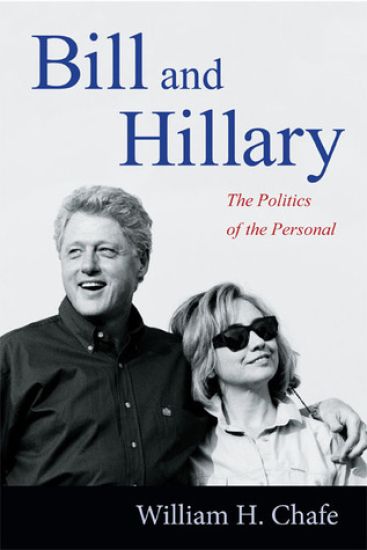
Bill and Hillary

Bill and Hillary

William H. Chafe

Duke University Press
2013
pokkari
In Bill and Hillary, one of our preeminent historians, William H. Chafe, boldly argues that the trajectory of the Clintons' political lives can be understood only through the prism of their personal relationship. From the day they first met at Yale Law School, Bill and Hillary were inseparable, even though their relationship was inherently volatile. The personal dynamic between them would go on to determine their political fates. Hillary was instrumental in Bill's triumphs as Arkansas's governor, and she saved his presidential candidacy in 1992 by standing with him during the Gennifer Flowers sex scandal. He responded by delegating to her powers that no other First Lady had ever exercised. Always tempestuous, their relationship had as many lows as highs, from near divorce to stunning electoral and political successes. Chafe's penetrating insights-into subjects such as health care, Kenneth Starr, welfare reform, and the extent to which the Lewinsky scandal finally freed Hillary to become a politician in her own right-add texture and depth to our understanding of the Clintons' experience together. Bill and Hillary is the definitive account of the Clintons’ relationship and its far-reaching impact on American political life.
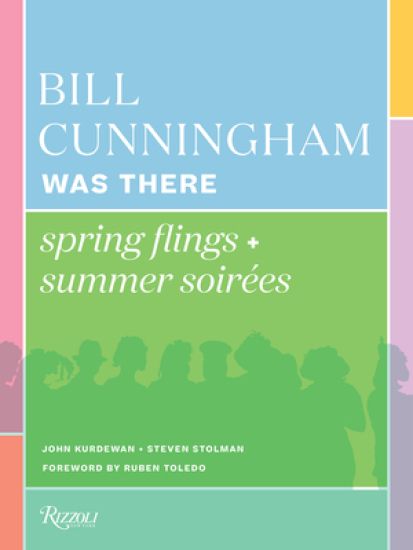
Bill Cunningham Was There

Bill Cunningham Was There

John Kurdewan; Steven Stolman

Rizzoli International Publications
2021
sidottu
Bill Cunningham (1929-2016) embraced the colors, carefree beauty, and escapism of spring outings and summer parties as both a photographer and an astute fashion documentarian. His camera captured the showstopping hats and dresses worn by society ladies at the annual Central Park Conservancy luncheons, the gorgeous gowns sweeping the dance floors of tented galas in Newport and the Hamptons, and the authentic vintage outfits sported by young attendees at summertime jazz and swing-dance festivals. For decades, Cunningham s two weekly columns for the Times remained at the top of every fashionista s go-to list, presenting not only a comprehensive chronicle of the looks of the day but also an insider s view of the glamorous parties and philanthropic events that are part of the social whirl. This celebration of Cunningham s genius for capturing magical moments with extraordinary style provides a heartfelt insiders tribute to one of photojournalism s greatest legends.
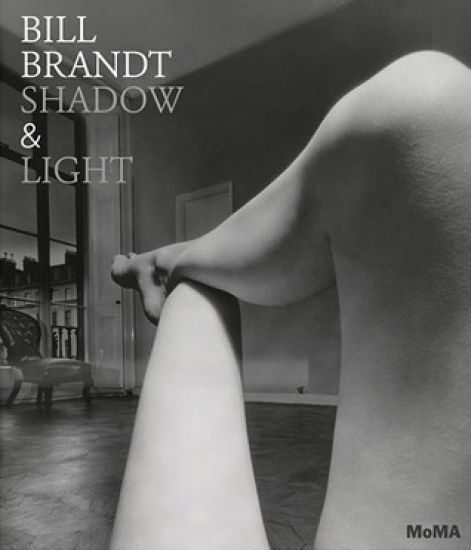
Bill Brandt: Shadow and Light

Bill Brandt: Shadow and Light

Sarah Hermanson Meister; Lee Ann Daffner

Museum of Modern Art
2013
sidottu
Bill Brandt was the preeminent British photographer of the twentieth century, a founding father of photography's modernist tradition whose half-century-long career defies neat categorization. This publication presents the photographer's entire oeuvre, with special emphasis on his investigation of English life in the 1930s and his innovative late nudes. The Museum of Modern Art has been exhibiting and collecting Brandt's photographs since the late 1940s, and has recently more than doubled its collection of vintage prints of his work, which forms the core of this selection. An essay by Sarah Hermanson Meister, Curator in the Department of Photography at MoMA, sets the artist's life and work in the context of twentieth-century photographic history. With rich duotone illustrations that highlight the special characteristics of Brandt's prints, this volume is an invaluable resource to students and scholars alike. Lee Ann Daffner, the Museum's Andrew W. Mellon Foundation Conservator of Photographs, contributes an illustrated glossary of Brandt's retouching techniques, enhancing the appreciation of Brandt's printing processes. The book also includes a generously illustrated appendix of Brandt's published photo-stories during the Second World War.Bill Brandt (1904-1983) moved to London from Germany in 1934 and quickly began his investigation of British society, resulting in what would become his signature publications: The English at Home (1936) and A Night in London (1938). He continued to photograph in London throughout World War II, contributing regularly to Picture Post and Harper's Bazaar. His postwar career expanded to include portraits and landscapes, and the celebrated series of nudes that remain his crowning achievement. His other major books include Camera in London (1948), Literary Britain (1951) and Perspective of Nudes (1961). Brandt died in London in 1983.
Bill Clinton at the Church of Baseball

Bill Clinton at the Church of Baseball

Chris Birkett

MERCER UNIVERSITY PRESS
2023
nidottu
Bill Clinton at the Church of Baseball reveals how the President of the United States deployed the mythology of America's national pastime in the exercise of political power. It demonstrates how he exploited the intimate relationship between two sacred, but fallible American institutions, the presidency and Major League Baseball, to shape some of the most fiercely contested debates of the 1990s. This is a story of the game's connections with national identity, heroism, race, and traditional American values, and how they were used by Clinton in his battles over affirmative action, welfare reform, and ethics in public life. It climaxes in the summer of 1998, when an epic home run chase between two baseball ""gods,"" Mark McGwire and Sammy Sosa, acted as the cultural counterpoint to a more toxic drama simultaneously playing out in the public arena--the constitutional crisis and national moral spasm induced by a sex scandal involving the President and a White House intern. As the reality of impeachment closed in, Clinton sought to divert attention from his own moral failings by invoking an idealistic vision of a game, which itself was being corrupted by the use of performance enhancing drugs. Drawing on newly released documents from the Clinton archive, and original interviews with former White House staffers, this study reveals that by embracing the quasi-religious ideals of the national pastime, Clinton sought to address the anxieties of those who yearned for normality in an unsettled world, and to validate his troubled leadership at times of personal crisis and political peril.