

Kirjahaku
Etsi kirjoja tekijän nimen, kirjan nimen tai ISBN:n perusteella.
1000 tulosta hakusanalla Brian D. Meeks

Statistical Removal of Shadow for Applications to Gait Recognition
Brian D Hockersmith
Hutson Street Press
2025
sidottu

New Drugs, Fair Prices addresses the important question of how we might get the innovative new medicines we need at prices we can afford. Today, this debate is impassioned but sterile. One side calls for price controls, discounting their impact on investment in innovation. The other points to miraculous new therapies, disregarding their affordability and social inequity. This polarized argument creates more heat than light, threatening the social contract between the industry and society on which pharmaceutical innovation depends. This ground-breaking book takes a wholly new perspective on the issue and raises the debate to a more informed and productive level. Drawing on interviews with more than 70 experts across the pharmaceutical innovation world and combining a diverse literature from scientific, political, economic and business domains, it describes how a sustainable and affordable supply of new medicines is possible only by balancing pharmaceutical innovation’s complex, adaptive ecosystem. By considering how each of the ecosystem’s seven habitats work and interact with the others, it makes a comprehensive set of recommendations for achieving that ecosystem balance. The core message of New Drugs, Fair Prices is important to anyone who ever has needed or will ever need a medicine: we can have a sustainable supply of new medicines that are both innovative and affordable if we manage the pharmaceutical innovation ecosystem intelligently.

New Drugs, Fair Prices addresses the important question of how we might get the innovative new medicines we need at prices we can afford. Today, this debate is impassioned but sterile. One side calls for price controls, discounting their impact on investment in innovation. The other points to miraculous new therapies, disregarding their affordability and social inequity. This polarized argument creates more heat than light, threatening the social contract between the industry and society on which pharmaceutical innovation depends. This ground-breaking book takes a wholly new perspective on the issue and raises the debate to a more informed and productive level. Drawing on interviews with more than 70 experts across the pharmaceutical innovation world and combining a diverse literature from scientific, political, economic and business domains, it describes how a sustainable and affordable supply of new medicines is possible only by balancing pharmaceutical innovation’s complex, adaptive ecosystem. By considering how each of the ecosystem’s seven habitats work and interact with the others, it makes a comprehensive set of recommendations for achieving that ecosystem balance. The core message of New Drugs, Fair Prices is important to anyone who ever has needed or will ever need a medicine: we can have a sustainable supply of new medicines that are both innovative and affordable if we manage the pharmaceutical innovation ecosystem intelligently.
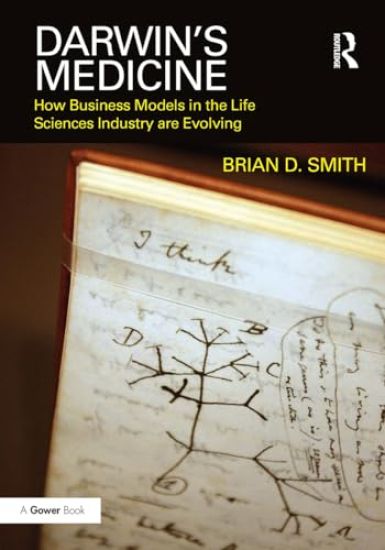
Darwin?€?s Medicine is the sequel to Brian D. Smith?€?s influential and critically acclaimed Future of Pharma (Gower, 2011). Whereas the earlier book predicted the evolution of the pharmaceutical market and the business models of pharmaceutical companies, Darwin?€?s Medicine goes much deeper into the drivers of industry change and how leading pharmaceutical and medical technology companies are adapting their strategies, structures and capabilities in practice. Through the lens of evolutionary science, Professor Smith explores the speciation of new business models in the Life Sciences Industry. This sophisticated and highly original approach offers insights into: The mechanisms of evolution in this exceptional industry;The six great technological and social shifts that are shaping its landscape;The emergence of 26 distinct, new business models; andThe lessons that enable firms to direct and accelerate their own evolution.These insights map out the industry?€?s complex, changing landscape and provide an invaluable guide to those firms seeking to survive and thrive in this dynamic market. The book is essential reading for anyone working in or studying the pharmaceutical, medical technology and related sectors. It provides a unique and novel way of making sense of the transformation we can see going on around us and a practical, focused approach to managing a firm?€?s evolutionary trajectory.?€€
Grief 2 Growth: Planted, Not Buried. How to Survive and Thrive After Life's Greatest Challenges
Brian D. Smith
Independently Published
2019
nidottu
Grief. We avoid talking about it. We avoid thinking about it. However, every one of us who lives long enough will experience it. Since you are reading this, you are likely experiencing grief at this moment. It is also likely you've given little thought as to how you were going to cope with grief when it came to you, and the pain caught you off guard.In Grief 2 Growth, Brian Smith explores what grief is, what you can expect while in grief, and how you can best cope with the universal human experience of grief. Grief is not an emotion. Grief is a container for a myriad of emotions that ebb and flow. Rather than a linear process, grief is more like a dance. Once Brian has explained what grief is and what you can expect from grief, Brian gives simple, practical methods for coping. You can do more than deal with grief. You can transform your pain into an opportunity for growth. When a great tragedy befalls us, we can see ourselves as either planted or buried. Being buried means we are done. Being planted means, we are in a position where growth is about to take place. Brian's approach to handling grief is rooted in a firm understanding of who we are as spiritual beings having a human experience.About The AuthorBrian became well acquainted with grief in 2015 after the sudden passing of his fifteen-year-old daughter Shayna. Brian first learned how to survive for the sake of his wife and surviving daughter. Brian studied in depth the nature of life and death and how to progress through grief. Currently, Brian does volunteer work with organizations dedicated to helping parents heal from the passing of a child. Brian also operates a life coaching and small business consulting practice. You can find Brian at www.grief2growth.com.iversal human experience of grief. Grief is not an emotion, grief is a container for a myriad of emotions that ebb and flow (credit to R. Glenn Kelly for this insight). Once he has explained what grief is and what you can expect from grief, Brian gives simple, practical methods you can use to not only cope with grief but to transform your grief into an opportunity for growth. When a great tragedy befalls us, we can see ourselves as either planted or buried. Brian's approach to handling grief is rooted in a firm understanding of who we are as spiritual beings having a human experience.About The AuthorBrian became well acquainted with grief in 2015 after the sudden passing of his fifteen-year-old daughter Shayna. After turning inward to learn how to survive for the sake of his wife and daughter, Brian turned outward. Brian studied in depth the nature of life and death and how to progress through grief. Turning outward, Brian does volunteer work with organizations dedicated to helping parents heal from the passing of a child and in a life coaching and small business consulting practice.
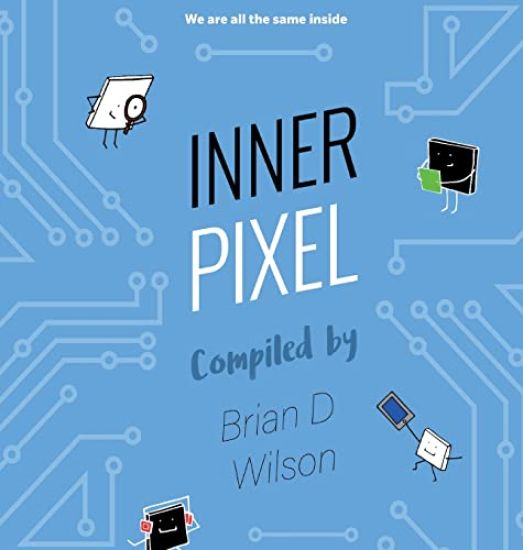
Inner Pixel by Brian Wilson is a creative and timely story about harmony and friendship between those who don't look the same.Set in the computer world, Inner Pixel explores the relationship between pixels of different colors. The story is narrated by Peter Pixel. He's a black pixel who realizes that he's invisible on the screen without others' help.Combining with pixels of various colors, Peter uncovers some of the science behind pixel technology. He learns how computers create onscreen colors and how it takes teamwork to generate the images we see on our computers, tablets, and cellphones. Beyond the science, Inner Pixel is a story with a simple message that no matter what color we are, we're all the same inside, and that's what matters.Written in perfect rhyme, Inner Pixel is an engaging bedtime story for young children and early readers alike. It will also provide teachers with an ideal starting point for discussions and curriculum work in the classroom.In Inner Pixel, Brian Wilson has created a charming book with a timeless message for the tech-savvy kids of today. And the book dovetails neatly with his previous work in the field of computer education.In 2008, Brian was the creator of patchX.org, a program set-up to provide much-needed computer access to underprivileged children and those with disabilities. By distributing renovated home computers and introducing youngsters to technical skills like computer programming and graphic design, patchX.org opened up a wealth of possibilities to hundreds of children in our increasingly technological world.

Menacing Face Worth Millions: A Life of Charles Bronson is the first definitive biography of legendary screen actor Charles Bronson. Charles Bronson was the silver screen legend who forever changed America's - and the world's - idea of the leading man's looks: a poverty-stricken young man who became one of the most popular, highly-paid film stars of his day. No movie that Charles Bronson ever made can equal the reclusive life he led and the contradictions of his own hidden self. In this definitive retelling of Bronson's life - the first fully documented biography of the star - Brian D'Ambrosio looks at the vigilante tough guy's life and legacy and explores the events and issues that made him emblematic of his time.


This book argues that Putin's strategy for rebuilding the state was fundamentally flawed. Taylor demonstrates that a disregard for the way state officials behave toward citizens - state quality - had a negative impact on what the state could do - state capacity. Focusing on those organizations that control state coercion, what Russians call the 'power ministries', Taylor shows that many of the weaknesses of the Russian state that existed under Boris Yeltsin persisted under Putin. Drawing on extensive field research and interviews, as well as a wide range of comparative data, the book reveals the practices and norms that guide the behavior of Russian power ministry officials (the so-called siloviki), especially law enforcement personnel. By examining siloviki behavior from the Kremlin down to the street level, State Building in Putin's Russia uncovers the who, where and how of Russian state building after communism.

This book discusses key figures in history in the context of their time, takes students on a carefully-formulated, chronological journey through the build-up of psychology from ancient times to the present, and seeks to draw students into the way science is done, rather than merely presenting them with historical fact. Students will learn not only the ‘what’, but the ‘why’ of the history of psychology and will acquire the necessary background historical material to fully understand those concepts. Organized around a series of paradigms—a shift from scholasticism to rationalism or empiricism, and a shift from idealism to materialism—the book seeks to portray psychology as an on-going, evolving process, rather than a theory.

This book discusses key figures in history in the context of their time, takes students on a carefully-formulated, chronological journey through the build-up of psychology from ancient times to the present, and seeks to draw students into the way science is done, rather than merely presenting them with historical fact. Students will learn not only the ‘what’, but the ‘why’ of the history of psychology and will acquire the necessary background historical material to fully understand those concepts. Organized around a series of paradigms—a shift from scholasticism to rationalism or empiricism, and a shift from idealism to materialism—the book seeks to portray psychology as an on-going, evolving process, rather than a theory.

By any standard, the pharmaceutical industry's history has been a successful one. In addition to its profits and shareholder dividends, it has been seen by investors as relatively low risk and, largely, counter-cyclical to stock market trends. However, that important contribution appears to be petering out, with significant global implications for employees, shareholders, governments and patients. This is not just caused by the economic crisis. Long before this, several distinct but related streams of evidence emerged that now point to the stalling of the pharmaceutical industry. The Future of Pharma examines the causes of the industry's potential decline and offers a convincing and rigorous analysis of the options open to it. What emerges is a landscape defined, on the one hand, by the changing marketplace of mass-market consumers, institutional healthcare systems and wealthy individuals; and on the other by the alternate sources of commercial value - innovative therapies; super-efficient processes, supply chains and operations; and closer customer relations and increasingly tailored health services. The challenges to the pharmaceutical industry now and in the medium and long-term are very significant. Brian Smith's highly readable research findings are a wake-up call and a first step forward for anyone concerned with the future of the industry; whether executive, customer, policymaker or investor.

This book, first published in 1990, is a study of both the specific syntactic changes in the more recent stages of Greek and of the nature of syntactic change in general. Guided by the constraints and principles of Universal Grammar, this hypothesis of this study allows for an understanding of how these changes in Greek syntax occurred and so provides insight into the mechanism of syntactic change. This title will be of interest to students of language and linguistics.

This book, first published in 1990, is a study of both the specific syntactic changes in the more recent stages of Greek and of the nature of syntactic change in general. Guided by the constraints and principles of Universal Grammar, this hypothesis of this study allows for an understanding of how these changes in Greek syntax occurred and so provides insight into the mechanism of syntactic change. This title will be of interest to students of language and linguistics.


A Comparison of Advect Cloud Model and Fifth-Generation Mesoscale Model Total Fractional Cloud Forecasts
Brian D Pukall
Biblioscholar
2012
pokkari
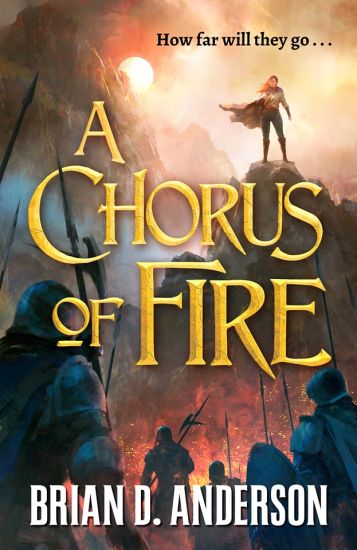
A Chorus of Fire is the second installment of the Sorcerer's Song fantasy adventure series from Brian D. Anderson, bestselling author of The Godling Chronicles and Dragonvein. A shadow has moved across Lamoria. Whispers of the coming conflict are growing louder; the enemy becoming bolder. Belkar's reach has extended far into the heart of Ralmarstad and war now seems inevitable. Mariyah, clinging to the hope of one day being reunited with Lem, struggles to attain the power she will need to make the world safe again. But a power like this is not easily acquired and will test the limits of her mind and body. She will need to look deep inside herself to find the strength to achieve what even the Thaumas of old could not. Lem continues his descent into darkness, serving a man he does not trust in the name of a faith which is not his own. Only Shemi keeps his heart from succumbing to despair, along with the knowledge that he has finally found Mariyah. But Lem is convinced she is being held against her will, and compelled to do the bidding of her captors. He is determined to free her, regardless the cost. Their separate roads are leading them to the same destination. And once they arrive they will have to confront more than the power of Belkar. They will have to face themselves and what Lamoria has forced them to become.
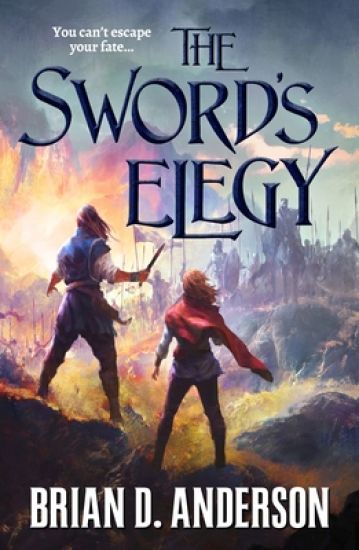
The doom of humankind has at last been realized. Belkar's prison is broken and his army is on the move. The nations of Lamoria, unaware of the greater danger, look to repel the aggression of Ralmarstad. Mariyah and Lem, certain that only the magic of the Bards can save them, desperately search for that lost knowledge. They need friends and allies to complete their task, but those are in short supply. For while peril often brings out the best in us, it can also bring out the worst. In the end, it is not great power, terrible armies, or mighty warriors that will influence the course of fate, but two lovers and the unbreakable bond they share. All questions are answered. All mysteries revealed. And even Belkar will learn that fate, once tempted, cannot be denied.