Kirjahaku
Etsi kirjoja tekijän nimen, kirjan nimen tai ISBN:n perusteella.
1000 tulosta hakusanalla Brian H Appleton
In H.M.S. Surprise, British naval officer Jack Aubrey and surgeon Stephen Maturin face near-death and tumultuous romance in the distant waters ploughed by the ships of the East India Company. Tasked with ferrying a British ambassador to the Sultan of Kampong, they find themselves on a prolonged voyage aboard a Royal Navy frigate en route to the Malay Peninsula. In this new sphere, Aubrey is on the defensive, pitting wits and seamanship against an enemy who enjoys overwhelming local superiority. But somewhere in the Indian Ocean lies the prize that could secure him a marriage to his beloved Sophie and make him rich beyond his wildest dreams: the ships sent by Napoleon to attack the China Fleet.
Proof of Life: Comics & Stories by Fernando H. Ramirez
Brian Farrens; Fernando H. Ramirez
Createspace Independent Publishing Platform
2017
nidottu
A most entertaining volume of memoir from a legend of science fiction. A writer’s life can be exciting, unexpected, routine, lonely – and sometimes all on the same day! Brian Aldiss recounts the highs and lows of his professional career in this entertaining and revealing book. Here are his adventures with publishers, booksellers, agents, other authors, and readers. Here are some of the complex questions of what makes and sustains a successful modern writer. The tales he tells are wry, witty, informative – beginning with his first job at the Oxford bookshop that was to be the setting for his first book of fiction, The Brightfount Diaries, and ending as he undergoes one of the most gruelling experiences of a writer’s life: the publication of a new novel, in this case his brilliant Forgotten Life.
The story of the air-cooled 'big' Kawasaki bikes in definitive detail, researched and written in Japan with the full co-operation of the Kawasaki factory. This series of models put the Kawasaki company on the map during the sixties and seventies, helping it to survive a difficult era that saw hundreds of Japanese motorcycle makers reduced to just four. Successful immediately, these models defended Kawasaki's honour on the tracks as well as in the showrooms, handing the company numerous world championship titles. The series was recently revived as part of a retro boom, and a new machine has been launched, delivering the same thrill and charm as its predecessors.
As a hybrid regime, Hong Kong has been governed by a state-business alliance since the colonial era. However, since the handover in 1997, the transformation of Hong Kong’s political and socio-economic environment has eroded the conditions that supported a viable state-business alliance. This state-business alliance, which was once a solution for Hong Kong’s governance, has now become a political burden, rather than a political asset, to the post-colonial Hong Kong state. This book presents a critical re-examination of the post-1997 governance crisis in Hong Kong under the Tung Chee-hwa and Donald Tsang administrations. It shows that the state-business alliance has failed to function as an organizational machinery for supporting the post-colonial state, and has also served to generate new governance problems. Drawing upon contemporary theories on hybrid regimes and state capacity, this book looks beyond the existing opposition-centered explanations of Hong Kong’s governance crisis. By establishing the causal relationship between the failure of the state-business alliance and the governance crisis facing the post-colonial state, Brian C. H. Fong broadens our understanding of the governance problems and political confrontations in post-colonial Hong Kong. In turn, he posits that although the state-business alliance worked effectively for the colonial state in the past, it is now a major problem for the post-colonial state, and suggests that Hong Kong needs a realignment of a new governing coalition.Hong Kong’s Governance under Chinese Sovereignty will enrich and broaden the existing literature on Hong Kong’s public governance whilst casting new light on the territory’s political developments. As such, it will be welcomed by students and scholars interested in Chinese politics, Hong Kong politics, and governance.
Strategic Responsiveness
Scott H Ainsworth; Brian M Harward; Kenneth W Moffett
THE UNIVERSITY OF MICHIGAN PRESS
2025
nidottu
Because the constitutional separation of powers often leads to delay or obstruction rather than coordinated policymaking, U.S. presidents are increasingly acting unilaterally to move policy. With the issuance of executive orders, signing statements, and policy memoranda, unilateralism has become a defining feature of the American presidency. Can Congress effectively use checks and balances to counter presidential unilateralism? Strategic Responsiveness takes a theoretically developed and empirically oriented approach— situated within legal and historical contexts—to explore the system of separated powers. The authors find that Congress is not as weak as many perceive it to be and show how members of Congress often anticipate individualized policy loss and choose to respond. These policy struggles shape the constitutional order as surely as broad, statutory constraints might. While the aggrandizement of the presidency and the usurpation of congressional control are not countered, ordinary policy losses are. For members and senators, presidential overreach is fine as long as the policy wins continue, but policy losses may motivate members to reassert congressional prerogatives in policymaking through increased oversight. Strategic Responsiveness reveals how profoundly important policy-level disputes are in the politics of maintaining a particular constitutional order.
Strategic Responsiveness
Scott H Ainsworth; Brian M Harward; Kenneth W Moffett
THE UNIVERSITY OF MICHIGAN PRESS
2025
sidottu
Because the constitutional separation of powers often leads to delay or obstruction rather than coordinated policymaking, U.S. presidents are increasingly acting unilaterally to move policy. With the issuance of executive orders, signing statements, and policy memoranda, unilateralism has become a defining feature of the American presidency. Can Congress effectively use checks and balances to counter presidential unilateralism? Strategic Responsiveness takes a theoretically developed and empirically oriented approach— situated within legal and historical contexts—to explore the system of separated powers. The authors find that Congress is not as weak as many perceive it to be and show how members of Congress often anticipate individualized policy loss and choose to respond. These policy struggles shape the constitutional order as surely as broad, statutory constraints might. While the aggrandizement of the presidency and the usurpation of congressional control are not countered, ordinary policy losses are. For members and senators, presidential overreach is fine as long as the policy wins continue, but policy losses may motivate members to reassert congressional prerogatives in policymaking through increased oversight. Strategic Responsiveness reveals how profoundly important policy-level disputes are in the politics of maintaining a particular constitutional order.
Crystal-Field Engineering of Solid-State Laser Materials
Brian Henderson; Ralph H. Bartram
Cambridge University Press
2005
pokkari
This book is concerned with the underlying science and design of laser materials. It emphasizes the principles of crystal–field engineering and discusses the basic physical concepts that determine laser gain and nonlinear frequency conversion in optical crystals. A concise review of the essential underlying science is presented, and the predictive capabilities of crystal-field engineering are developed to show how modification of the symmetry and composition of optical centres can improve laser performance. Applications of the principles of crystal-field engineering to a variety of optical crystals are also discussed in relation to the performances of laser devices. This book will be of considerable interest to physical, chemical and material scientists and to engineers involved in the science and technology of solid state lasers. It will be used by senior undergraduate and postgraduate students as well as by established scientists.
Crystal-Field Engineering of Solid-State Laser Materials
Brian Henderson; Ralph H. Bartram
Cambridge University Press
2000
sidottu
This book is concerned with the underlying science and design of laser materials. It emphasizes the principles of crystal–field engineering and discusses the basic physical concepts that determine laser gain and nonlinear frequency conversion in optical crystals. A concise review of the essential underlying science is presented, and the predictive capabilities of crystal-field engineering are developed to show how modification of the symmetry and composition of optical centres can improve laser performance. Applications of the principles of crystal-field engineering to a variety of optical crystals are also discussed in relation to the performances of laser devices. This book will be of considerable interest to physical, chemical and material scientists and to engineers involved in the science and technology of solid state lasers. It will be used by senior undergraduate and postgraduate students as well as by established scientists.
First compiled in 1929 as a pioneer work by the late G.H. Baillie, this directory of watchmakers and clock makers of the past soon established itself as the standard reference source and has been used ever since by watchmakers and clockmakers, collectors, dealers, museums, historians, and libraries the world over. The list of makers has more than doubled, having been thoroughly updated and revised by Brian Loomes in this twenty-first century edition, and now contains information on about 90,000 makers working between the late 16th and early 20th centuries. As well as the makers and retailers of clocks and watches, the list includes makers of scientific instruments, sundials, and barometers. Working dates include dates and places of birth, apprenticeship, freedom, marriage and death, as well as movement between different locations, and monograms. It is a unique and essential work of reference.
In his address to the Communist Party in 1986, Mikhail Gorbachev blamed the Party for the disastrous state of his country. Within five years, the Party had been outlawed, he had been deposed, the Soviet Union had disintegrated, and its economy was in chaos. It is within this framework that the freely debated proposals to change a system of education inherited in 1917 from Czarist Russia are re-examined. During the Communist regime ideology had prevented realistic reform to the system. Under glasnost, open debate was encouraged for the first time. This book reveals the course taken by these debates and the conflicts between the personalities involved. Competing groups formulated new concepts of education. New child-centered aims were to replace those associated with the creation of a New Soviet Man. New school types and curriculums would allow pupils to specialize in either the sciences or the humanities. History teaching was to be liberalized, religious studies allowed and scientific materialism downgraded. Private and religious schools could be set up for the first time since 1917. Educational institutions could charge for a range of services, and major educational changes were agreed upon. The authors analyze these changes in light of an enormous amount of literature. In discussions with leading members of the Party (before its demise); educationalists, principals and teachers, and local authorities, the authors gained a comprehensive view of the policies before the collapse of the Soviet Union and after. But has the system changed? The authors, who have been visiting Soviet and Russian schools for more than 30 years, examine substantive changes in schools that previously had seemed old-fashioned and analyze Gorbachev's educational legacy.
U.S. railroads have improved their productivity, but increasing freight volume threatens performance - degrading capacity constraints. This report describes the current state of railroad capacity and performance for freight transportation. The public consequences of private investment decisions justify a public role in addressing concerns about railroads, but better data and analysis are needed to inform transportation policymaking.U.S. railroads have improved their productivity, but increasing freight volume threatens to cause performance - degrading capacity constraints. This report describes the current state of railroad capacity and performance for freight transportation.
As a hybrid regime, Hong Kong has been governed by a state-business alliance since the colonial era. However, since the handover in 1997, the transformation of Hong Kong’s political and socio-economic environment has eroded the conditions that supported a viable state-business alliance. This state-business alliance, which was once a solution for Hong Kong’s governance, has now become a political burden, rather than a political asset, to the post-colonial Hong Kong state. This book presents a critical re-examination of the post-1997 governance crisis in Hong Kong under the Tung Chee-hwa and Donald Tsang administrations. It shows that the state-business alliance has failed to function as an organizational machinery for supporting the post-colonial state, and has also served to generate new governance problems. Drawing upon contemporary theories on hybrid regimes and state capacity, this book looks beyond the existing opposition-centered explanations of Hong Kong’s governance crisis. By establishing the causal relationship between the failure of the state-business alliance and the governance crisis facing the post-colonial state, Brian C. H. Fong broadens our understanding of the governance problems and political confrontations in post-colonial Hong Kong. In turn, he posits that although the state-business alliance worked effectively for the colonial state in the past, it is now a major problem for the post-colonial state, and suggests that Hong Kong needs a realignment of a new governing coalition.Hong Kong’s Governance under Chinese Sovereignty will enrich and broaden the existing literature on Hong Kong’s public governance whilst casting new light on the territory’s political developments. As such, it will be welcomed by students and scholars interested in Chinese politics, Hong Kong politics, and governance.
US-China Rivalry offers a holistic analysis of the unfolding of US-China competition in the Indo-Pacific, using a novel theory called neo-offensive realism. It synthesises quantitative and qualitative data to examine the intensification of US-China competition across the Indo-Pacific in recent years, with a focus on why the competition is intensifying under the interplay of system-level and unit-level forces; where the competition is unfolding across states and quasi-states in the region; how the competition is conducted through economic and military influence mechanisms; and whither the competition is developing in the future.
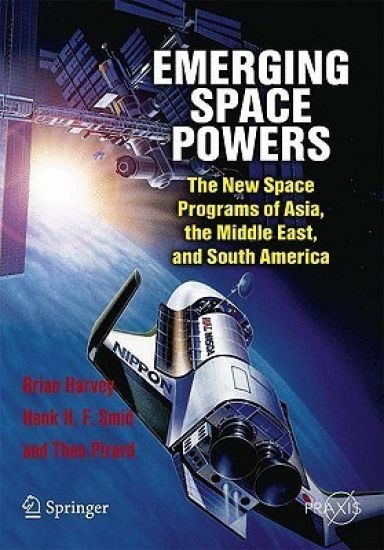
This work introduces the important emerging space powers of the world. Brian Harvey describes the origins of the Japanese space program, from rocket designs based on WW II German U-boats to tiny solid fuel 'pencil' rockets, which led to the launch of the first Japanese satellite in 1970. The next two chapters relate how Japan expanded its space program, developing small satellites into astronomical observatories and sending missions to the Moon, Mars, comet Halley, and asteroids. Chapter 4 describes how India's Vikram Sarabhai developed a sounding rocket program in the 1960s. The following chapter describes the expansion of the Indian space program. Chapter 6 relates how the Indian space program is looking ahead to the success of the moon probe Chandrayan, due to launch in 2008, and its first manned launching in 2014. Chapters 7, 8, and 9 demonstrate how, in Iran, communications and remote sensing drive space technology. Chapter 10 outlines Brazil's road to space, begun in the mid-1960's with the launch of the Sonda sounding rockets. The following two chapters describe Brazil's satellites and space launch systems and plans for the future. Chapters 13 and 14 study Israel's space industry. The next chapters look at the burgeoning space programs of North and South Korea. The book ends by contrasting and comparing all the space programs and speculating how they may evolve in the future. An appendix lists all launches and launch attempts to date of the emerging space powers.
C.S. Lewis--An Annotated Bibliography and Resource
P H Brazier; Brian Horne
Pickwick Publications
2012
sidottu
Shibboleths: Our Uncecessary Beliefs
Brian Borgford; Deane H. Russell
Createspace Independent Publishing Platform
2017
nidottu
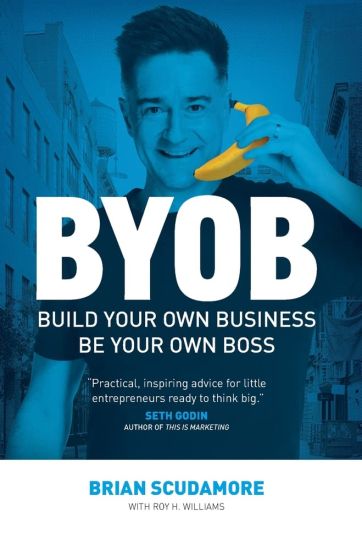
BYOB Build Your Own Business. Be Your Own Boss.Are you ready for the adventure of a lifetime? Buckle up: serial entrepreneur Brian Scudamore is your guide on the journey of entrepreneurship, taking you through inspiring stories, hilarious anecdotes, and just a few industry secrets so you can start your own startup - today."Brilliant. Absolutely brilliant "- Michael E. Gerber, author of the E-Myth books"For anyone looking for a master class on how to take the leap and build something great, Brian's guide will help them navigate the journey."- Guy Raz, creator of the How I Built This podcast"In BYOB: Build Your Own Business, Be Your Own Boss, Brian Scudamore challenges anyone with a dream of business ownership to dive in."- Verne Harnish, Founder, CEO, and author of Scaling Up"A roadmap for every aspiring entrepreneur. This will drive you from thinking to doing."- Jason Feifer, Editor in Chief of Entrepreneur magazine