

Kirjahaku
Etsi kirjoja tekijän nimen, kirjan nimen tai ISBN:n perusteella.
1000 tulosta hakusanalla Brigitte Dolman

YOU HAVE LIVED MANY TIMES represents a journey of discovery in the field of Past Life Regression under hypnosis. The book is based on the idea that the soul is eternal and travels through many lives in order to learn and teach lessons and ultimately evolve. YOU HAVE LIVED MANY TIMES focuses on several real past life regressions cases, recorded in the author's Hypnotherapy practice. The clients' regressions, some face-to-face, others group regressions or even distance regressions, are conducted under deep hypnosis.

Have you ever accidentally drunk called your ex-boyfriend's mum or let a misunderstanding run on for two years because you were too awkward to correct it and now people think you are a French exchange student?Well, that's Brigitte's life. It's okay though because she's concluded that if you don't laugh at yourself you'll cry, and at least laughing burns more calories. Relationships, jobs, love, sex, grief and insecurities, it's all in this book, spread out for you like a cheese platter. Grab a glass of wine, a bucket of ice cream and become best friends with Brigitte in this quick, hilarious read that will have you wondering: Is she talking about my life?
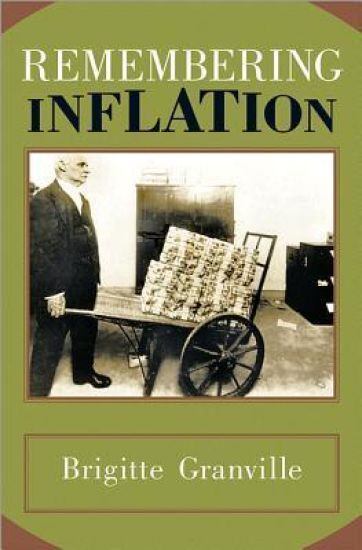
Today's global economy, with most developed nations experiencing very low inflation, seems a world apart from the "Great Inflation" that spanned the late 1960s to early 1980s. Yet, in this book, Brigitte Granville makes the case that monetary economists and policymakers need to keep the lessons learned during that period very much in mind, lest we return to them by making the same mistakes we made in the past. Granville details the advances in macroeconomic thinking that gave rise to the "Great Moderation"--a period of stable inflation and economic growth, which lasted from the mid-1980s through the most recent financial crisis. She makes the case that the central banks' management of monetary policy--hinging on expectations and credibility--brought about this period of stability, and traces the roots of this success back to the eighteenth-century foundations of modern monetary thought. Tackling fundamental questions such as the causes of inflation and its relation to unemployment and growth, the natural rate of inflation hypothesis, the fiscal theory of the price level, and the proper goals of central banks, the book aims above all to demonstrate the dangers of forgetting the role of credibility in establishing sound monetary policy. With the lessons of the past firmly in mind, Granville presents stimulating ideas and proposals about inflation-targeting principles, which provide tools for present-day monetary authorities dealing with the forces of globalization, mercantilism, and reserve accumulation.

Film, a latecomer to the realm of artistic media, alludes to, absorbs, and undermines the discourses of the other arts--literature and painting especially--in order to carve out a position for itself among them. Exposing the anxiety in film's relation to its rival arts, Brigitte Peucker analyzes central issues involved in generic boundary crossing as they pertain to film and situates them in a theoretical framework. The figure of the human body takes center stage in Peucker's innovative study, for it is through this figure that the conjunction of literary and painterly discourses persistently articulates itself. It is through the human body, too, that film's consciousness of itself as a hybrid text and as a "machine for simulation" makes itself deeply felt. In films ranging from Weimar cinema through Griffith, Hitchcock, and Greenaway, Peucker probes issues in aesthetics problematized by Diderot and Kleist, among others. She argues that the introduction of movement into visual representation occasioned by film brings with it an underlying tension suggestive of castration and death. Peucker goes on to demonstrate how the encounter between narrative and image is both gendered and sexualized, rendering film a "monstrous" hybrid. In a final section, she explores in specific cinematic texts the permeable boundary between the real and representation, suggesting how effects such as tableau vivant and trompe l'oeil figure sexuality and death. Originally published in 1995. The Princeton Legacy Library uses the latest print-on-demand technology to again make available previously out-of-print books from the distinguished backlist of Princeton University Press. These editions preserve the original texts of these important books while presenting them in durable paperback and hardcover editions. The goal of the Princeton Legacy Library is to vastly increase access to the rich scholarly heritage found in the thousands of books published by Princeton University Press since its founding in 1905.

Film, a latecomer to the realm of artistic media, alludes to, absorbs, and undermines the discourses of the other arts--literature and painting especially--in order to carve out a position for itself among them. Exposing the anxiety in film's relation to its rival arts, Brigitte Peucker analyzes central issues involved in generic boundary crossing as they pertain to film and situates them in a theoretical framework. The figure of the human body takes center stage in Peucker's innovative study, for it is through this figure that the conjunction of literary and painterly discourses persistently articulates itself. It is through the human body, too, that film's consciousness of itself as a hybrid text and as a "machine for simulation" makes itself deeply felt. In films ranging from Weimar cinema through Griffith, Hitchcock, and Greenaway, Peucker probes issues in aesthetics problematized by Diderot and Kleist, among others. She argues that the introduction of movement into visual representation occasioned by film brings with it an underlying tension suggestive of castration and death. Peucker goes on to demonstrate how the encounter between narrative and image is both gendered and sexualized, rendering film a "monstrous" hybrid. In a final section, she explores in specific cinematic texts the permeable boundary between the real and representation, suggesting how effects such as tableau vivant and trompe l'oeil figure sexuality and death. Originally published in 1995. The Princeton Legacy Library uses the latest print-on-demand technology to again make available previously out-of-print books from the distinguished backlist of Princeton University Press. These editions preserve the original texts of these important books while presenting them in durable paperback and hardcover editions. The goal of the Princeton Legacy Library is to vastly increase access to the rich scholarly heritage found in the thousands of books published by Princeton University Press since its founding in 1905.


Getting Over Growing Older: A Humorous Memoir of Discovering the Challenges of Aging
Brigitte Nioche
Brigitte Nioche
2016
nidottu
No matter how old you are, staying positive will keep you young.In our youth-oriented culture, growing older is a challenge for millions of baby boomers. In this down-to-earth guide, entrepreneur, fashion consultant, and former model Brigitte Nioche shares her personal experience of getting older, staying positive, and preparing for the challenges ahead.Through her charming, often self-effacing memoir, accentuated by cartoons from The New Yorker that spotlight the ups and downs of growing older, you'll learn how to embrace this chapter of your life as a new beginning that can open up a world filled with joy and happiness.To help you find your way, Brigitte shares: - her secrets for staying young and healthy, - advice on using makeup and clothing to look younger and feel better, - why you're never too old for sex, - ideas for staying connected in a changing world, - tips for maintaining a positive outlook as you age.If you are not ready to be old, it's time for Getting Over Growing Older.

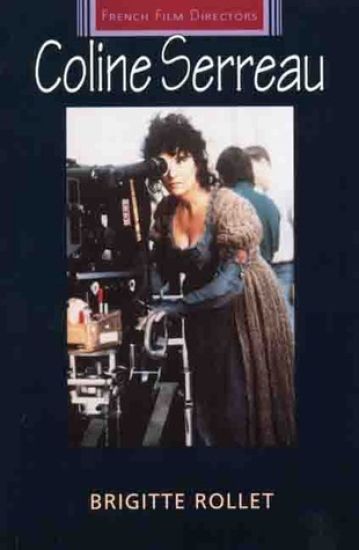
Coline Serreau became famous in 1985 when her third film, Trois hommes et un couffin (Three Men and a Baby), the most successful French film of the 1980s. She was already known in France for her major contribution to feminist documentaries with the acclaimed Mais qu'est-ce qu'elles veulent?, a series of interviews with French women made between 1975 and 1977. She is now a key figure in French cinema and drama, with international hits including Romuald et Juliette (1989) and La Crise (1992). This appraisal of her work situates her films within the social, cultural and political context of France since May 1968, and assesses th emajor impact of the women's movement on French society and culture. Politics and sexual politics, two key aspects of Serreau's films and plays, are thoroughly examined. This book also considers the cultural influences of her work, and provides an overview of her films and filmic skills. Special attention is given to comedy, the cinematographic genre favoured by Serreau and the French audience, which is apprehended from a historical and gendered perspective. The clarity of the style and the wide-ranging analysis of Serreau's films and filming techniques make this book relevant both to students of film and film enthusiasts.


A hoppy Mother's Day tale from the beloved Davy series When Davy's mom gets upset with him for being late for diner, he's determined to make things right with the perfect Mother's Day gift. But when Davy decides that the best gift of all would be five well-behaved bunnies, he has his work is cut out for him. Can he and his siblings clean up and mind their manners in time for the big day?

Davy and Santa save the day while celebrating the true spirit of Christmas When Davy s father says: Santa Claus likes us to share things and help each other, Davy takes it to heart. Soon Davy has fed all of the hungry animals and now his family will have to go hungry this Christmas. But on Christmas Eve, they hear a knock on the door. Could it be Santa Claus? Perhaps Davy and his family will have a merry Christmas after all "
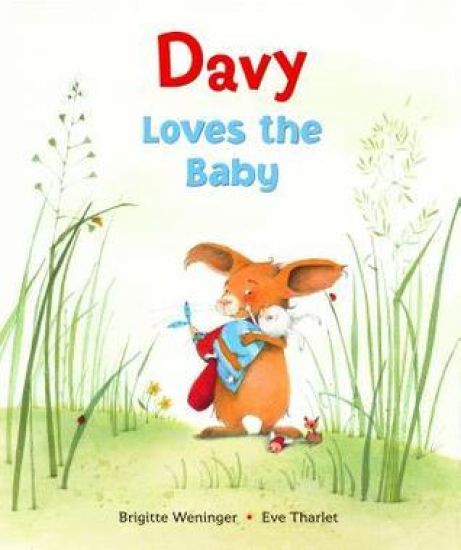
Davy finds a friend in his new baby sister When Davy s parents announce that they re having a baby, Davy is concerned since he s always been the baby of the family. And will there still be second helpings of blueberries with another mouth to feed? But Davy is pleasantly surprised at what happens when he holds his new baby sister for the first time."

Davy is counting the days until his birthday. It seems like such a long wait He is so excited, he can hardly sit still when Father Rabbit tells a story about a lucky little rabbit who had three wishes that all came true. Davy decides that if he had three wishes, he'd wish for someone who would tell him stories whenever he wanted, someone who would teach him new games, and someone who always had plenty of time to spend with him. Davy's birthday finally arrives and with it comes a big surprise present too big to be wrapped that makes all of Davy's wishes come true and his birthday the happiest one ever. This new adventure featuring Davy and the Rabbit family shows that love is the best gift of all."

Captivating short stories make each day of Advent a special treat and ones children will look forward to as they count down to Christmas.

When Davy hears about his friend Wendy Wildgoose's wonderful vacation at the beach, he wants to go too. But he and his family can't fly like geese and their wagon is too weak to carry their luggage, so the beach is out. But Davy takes the family on a wonderful trip that is just as fun