Kirjojen hintavertailu. Mukana 11 342 296 kirjaa ja 12 kauppaa.

Kirjahaku

Etsi kirjoja tekijän nimen, kirjan nimen tai ISBN:n perusteella.

1000 tulosta hakusanalla Bruce W. Perry

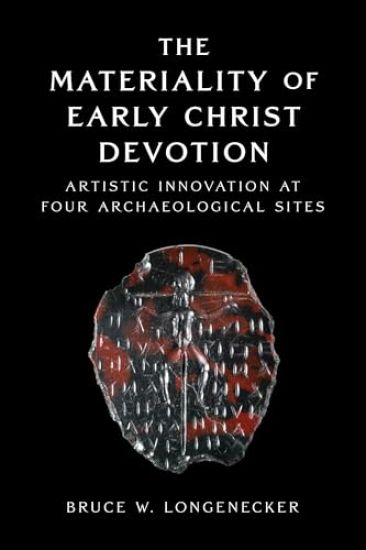
The Materiality of Early Christ Devotion

The Materiality of Early Christ Devotion

Bruce W. Longenecker

Baylor University Press
2025
sidottu
In the fourth and fifth centuries CE, Christian artistry began to flourish, as elite patrons sponsored decorative initiatives for basilica churches throughout the Mediterranean basin. But what about the first three centuries? Living prior to the Constantinian age of tolerance, did Christ followers of that period engage in artistic expressions that externalized their theological hopes and convictions? The question can best be answered by consulting the ancient material record itself. The study of the Greco-Roman world has increasingly taken a "material turn" with the recognition that the archaeological record is integral in shaping our understanding of ancient cultures and civilizations. Foregrounding the material data reanimates the lived experience of people on the ground. To what extent did early Christ followers leave their mark on the material record of the Roman world? This is the question Bruce Longenecker explores in The Materiality of Early Christ Devotion. An array of evidence from around the Mediterranean basin testifies to some fascinating ways that Christ followers expressed themselves in artistic media—gravestones, rings and gemstones, amulets, wall plaster, and mosaics. In particular, four archaeological sites allow us to see Christ followers giving life to their theological convictions in ways shaped by their localized situations. In Ostia and the aftermath of persecution, we glimpse a cautious but hopeful Christ devotion, with Christ followers creating cryptic artistic symbols within a public space. In Dura-Europos and the context of international embattlement, we encounter an ambitious and impassioned Christ devotion, as Christ followers used art to enhance their experiences of empowerment, illumination, and union with the divine. In Smyrna where numerical mysticism was fashionable, we discover a savvy and sapiential Christ devotion, with Christ followers embedding their devotion in artistic puzzles that exhibited the mystical and mathematical dimensions of their beliefs. In Pompeii, we catch sight of an embryonic Christ devotion that, like countless artistic artifacts from the town, displayed a simple hope for protection from evil forces and the insecurities of life. Building on the findings of archaeologists and historians, Longenecker's innovative interpretations offer fresh opportunities to see the diversity of localized forms of Christ devotion through the artistic ingenuity of pre-Constantinian Christ followers.
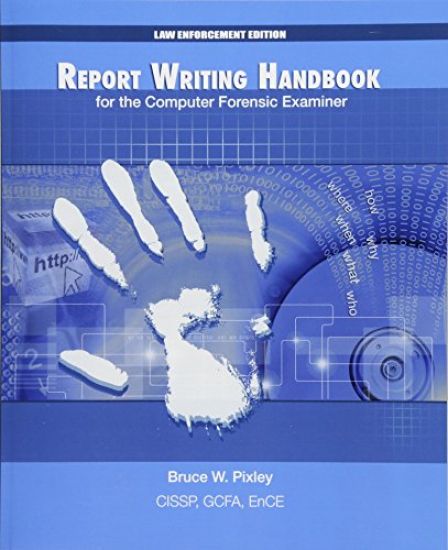
Report Writing Handbook for the Computer Forensic Examiner: Law Enforcement Edition

Report Writing Handbook for the Computer Forensic Examiner: Law Enforcement Edition

Bruce W. Pixley

Createspace Independent Publishing Platform
2014
nidottu
The Report Writing Handbook for the Computer Forensic Examiner is intended to be the student manual in a formal law enforcement report writing class, which is geared for computer forensic examiners who are tasked with writing an expert witness report and may be called to testify in trial. It starts off by laying the foundation of expert witness report writing. It demonstrates the difference between electronic discovery productions and writing an expert forensic report. The forensic report not only contains the basics that should be in any report, but also the expert's opinions, which are based on factual objective findings. This book contains the following sections: Starting Your Analysis There are many ways to start the analysis and this section provides some structure to help quickly triage the analysis. By "walking the path," the examiner can quickly pick up on how a person used the computer, which provides direction for follow-up analysis. Use of virtual environment software, such as VMware, can be an extremely valuable aid during the analysis and for providing a demonstrative exhibit. Case Study To help prepare for the report writing section, a sample case study is provided. This case walks through potentially relevant information that was discovered through the forensic analysis. Screenshots are used throughout the study to help provide a visual depiction and bring the case to life. Writing Your Report A sample format of an expert witness report is provided as a roadmap to prepare the expert report. The report writing process is completed by using the information from the case study. Inside The Courtroom At some point in the forensic examiner's career, the examiner may be called upon to testify in court. This section provides some helpful insight as to what to expect during trial and the types of questions may be asked during cross-examination. The Appendix of this handbook provides additional sample reports as guides to offer examples for organizing and formatting forensic reports. Additionally, it provides a case study to demonstrate timeline analysis, which can help to connect other events and people behind the keyboard.
The Mountain Nature of Things, Book One: A Smoky Mountain Version Based on Lucretius' On the Nature of Things
"On the Nature of Things" is the only known surviving book of Lucretius, the Roman philosopher poet or poet philosopher of the first century. This surviving didactic philosophical treatise, influenced by the philosophy of Epicurus, is an artistic work of poetry containing approximately 7,400 lines. From the fragments of the works of Epicurus and the school of Epicureanism, Lucretius espouses a life of peace and freedom from self-induced fear and how to live on less while surrounded by an abundance of friends. Epicureanism is often reduced to "eat, drink, and be merry." That is not a bad way to live but for both Epicurus and Lucretius such an approach towards life requires both a stare into the cold reality of a life that exists either without or the disappearance of the supernatural. The life style proposed by both is an embrace of the existential paradox of living in the midst of strife, love, peace, war and that the material world is all that one has to rely upon. A strictly materialist worldview calls for a backbone of flexible resistance, a cunning and uncanny wit, and a good drink surrounded by supportive friends who are doing the same. Though southern Appalachia is part of the Bible Belt, it includes a populous of mountain folk who recognize both Lucretius and Epicurus as kinfolk in world views and life lived. To those of the mountains who push the envelope of life lived, this work is dedicated.