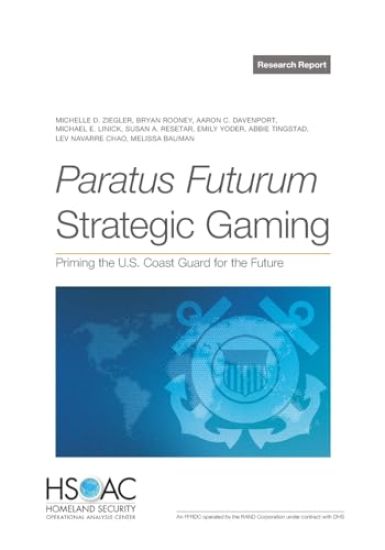
To prepare for challenges it could face in future decades, the U.S. Coast Guard (USCG) operates a strategic foresight initiative, Project Evergreen. Researchers designed an analytic game, Paratus Futurum, for the initiative in which players assess demand for USCG missions and the service's capacity to execute them in 2040 and beyond. This report documents the researchers' findings and recommendations for coming iterations of Paratus Futurum.
As of April 1st, 2013 the the Aruba employment laws has changed significantly.Important changes include: 7a Title: Civil Code of Aruba, Ordinance on outsourcing of workers and the new Labor Ordinance2013 which completely replaces the current Employement Ordinance. All and all the legal scene as of April 1st, 2013 will be a lot different than it is today. "Arubaanse Arbeidswetgeving en Aanverwante Regelgeving 2013" will contain the latest regulations. Just like the first 2 editions this work is intended primarily for the legal practice in Aruba and in the Hague at the Supreme Court, employers (organizations), employees (organizations), students from the law school(s) as well and all those with an interest or affinity with the Aruba labor. The editors are Lincoln D. Gomez and Bryan Coffie, both attorneys with http: //www.gobiklaw.com
What are the links between things as diverse as the prices of pork bellies, interest rates, and corporate stock? They are all being translated into risk and priced through the system of derivative markets. Financial derivatives are now the largest form of financial transaction in the world, and they are transforming in pervasive ways the lived experience of capitalist economies. Financial derivatives are anchoring the global financial system and challenging the conventional understanding of ownership, money and capital. These challenges are examined in this book, providing a significant reinterpretation of contemporary capitalism that will be of interest to both social scientists and conventional finance scholars.
What are the links between things as diverse as the prices of pork bellies, interest rates, and corporate stock? They are all being translated into risk and priced through the system of derivative markets. Financial derivatives are now the largest form of financial transaction in the world, and they are transforming in pervasive ways the lived experience of capitalist economies. Financial derivatives are anchoring the global financial system and challenging the conventional understanding of ownership, money and capital. These challenges are examined in this book, providing a significant reinterpretation of contemporary capitalism that will be of interest to both social scientists and conventional finance scholars.
Somehow, D James Bryan's holidays never go quite according to plan... 'Such is the messy confusion that embroils anything I touch in my life that the result of any vacation will, in all probability, culminate in a farce of epical proportions.' Matters aren't really helped by the fact that his friends spend much of their time drunk or stoned. His early ghost-hunting adventures are bad failures. He gets hopelessly lost in the highlands of Scotland. He goes on a trip to New York with a girl he detests. But, by these standards, the InterRail tour of Europe which he and a friend embark on goes like clockwork - all right, they get lost here and there, their tour guides are a pain, they never master the art of eating ice-cream - but otherwise it's a huge success, usefully helped along by the odd swig of absinthe.
The central role that bureaucracy plays in the policy process is played by individuals, namely, by subject matter experts and managers we call political executives. These executives do not play their role in a vacuum, of course, but in a context defined by three key forces—the organizational environment of bureaucracy itself; our governing philosophy stressing responsiveness, respect for individual rights, and accountability; and the demands of the people and the institutions those people have created to govern themselves. This book explores how these three forces collide and how the resulting collision shapes the way in which bureaucracy makes policy, as well as the final product of that policy making process. It provides an in-depth look at each of these forces, with chapters specifically devoted to how bureaucrats interpret their role in the policy process, how the organizational environment influences their ability to play that role, and, most of all, to the interactions between bureaucrats and the institutions of what we call the Constitutional government: the President, the Congress, and the courts. It does this, all the while reminding us that fitting bureaucracy into a society that views itself as self-governing is no easy task.
The central role that bureaucracy plays in the policy process is played by individuals, namely, by subject matter experts and managers we call political executives. These executives do not play their role in a vacuum, of course, but in a context defined by three key forces—the organizational environment of bureaucracy itself; our governing philosophy stressing responsiveness, respect for individual rights, and accountability; and the demands of the people and the institutions those people have created to govern themselves. This book explores how these three forces collide and how the resulting collision shapes the way in which bureaucracy makes policy, as well as the final product of that policy making process. It provides an in-depth look at each of these forces, with chapters specifically devoted to how bureaucrats interpret their role in the policy process, how the organizational environment influences their ability to play that role, and, most of all, to the interactions between bureaucrats and the institutions of what we call the Constitutional government: the President, the Congress, and the courts. It does this, all the while reminding us that fitting bureaucracy into a society that views itself as self-governing is no easy task.
This book presents a wide variety of immuno-gold techniques for use in virus diagnosis and research. Protocols are presented for state-of-the-art techniques, including in situ hybridization, freeze substitution, and the utilization of ultra-small probes and replicas for use by virologists and electron microscopists identifying and studying viruses, their components, and replication in cells. The procedures are described by eminent scientists and are pertinent to both experienced researchers and newcomers to this field who are interested in the localization of low antigenic mass structures.
This book is a fundamental guide to understanding plant structure offering plant scientists, plant biologists and horticulturalists in practice, academic life and in training. It includes a combination of concise scientific text and superb color photographs and drawings, focusing on structure at anatomical, histological and fine structure levels.
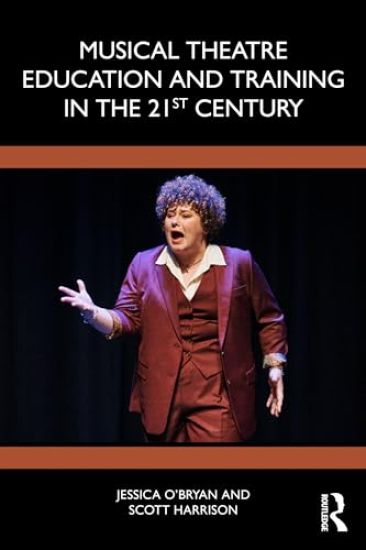
Musical Theatre Education and Training in the 21st Century presents a wide range of viewpoints on the musical theatre profession. It brings together research from the UK, US, Australia, and beyond, providing an essential resource for educators, students, and all those involved in training for musical theatre. The research draws on best practice from creatives, producers, practising artists, and the academy to reveal a multiplicity of approaches and educational pathways for consideration by performers, educators, institutions, and the profession.The book goes beyond the key elements of performance training in singing, dancing, and acting to explore adjacent creative and business skills, along with some of the more recent and challenging aspects of the profession such as diversity of representation both on and off stage, building safe working environments, and managing mental and physical health and wellbeing. The authors incorporate information from over 100 interviews with everyone from emerging performers to leading professionals, and explore the practicalities of pre-professional training, skills development, and curricular design, alongside the broader attributes required in preparation for the profession. This book offers vital insights into how musical theatre practitioners can best be prepared to make their way in the field now and in the future.
Musical Theatre Education and Training in the 21st Century presents a wide range of viewpoints on the musical theatre profession. It brings together research from the UK, US, Australia, and beyond, providing an essential resource for educators, students, and all those involved in training for musical theatre. The research draws on best practice from creatives, producers, practising artists, and the academy to reveal a multiplicity of approaches and educational pathways for consideration by performers, educators, institutions, and the profession.The book goes beyond the key elements of performance training in singing, dancing, and acting to explore adjacent creative and business skills, along with some of the more recent and challenging aspects of the profession such as diversity of representation both on and off stage, building safe working environments, and managing mental and physical health and wellbeing. The authors incorporate information from over 100 interviews with everyone from emerging performers to leading professionals, and explore the practicalities of pre-professional training, skills development, and curricular design, alongside the broader attributes required in preparation for the profession. This book offers vital insights into how musical theatre practitioners can best be prepared to make their way in the field now and in the future.
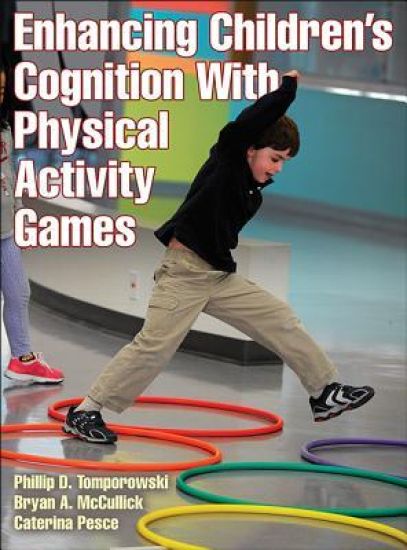
There are plenty of books that help you use or create games that develop children's physical skills, and it's now widely accepted that physical activity can have a positive effect on academic achievement. But this is the first book that shows you how to tailor physical activity games specifically to enhance children's cognitive abilities. Enhancing Children's Cognition with Physical Activity Games, written by three authorities in teacher education, exercise physiology, and sport science, shows you how to apply current concepts in child development, cognitive science, physical education, and teacher training to create movement-based learning experiences that benefit children both physically and mentally. You will be guided in creating environments that lend themselves to cognitive development and enhanced academic achievement. And you will understand not only how to create games to foster cognitive development but why such games are so useful in developing the whole child. Enhancing Children's Cognition with Physical Activity Games offers the following features: •Two chapters of sample games, one for preschoolers and kindergarteners, the other for elementary school children •Expert guidance in creating your own games for children ages 3 to 12, with an emphasis on developmental ranges of 3 to 7 and 7 to 12 •A practice-oriented model of teacher education that shows you how you can best develop and implement physical activity games that support both motor and cognitive development The book contains a running glossary to help teachers and students understand the terms used. It also discusses several models of 21st-century learning, highlighting the role that physical activity games play in a comprehensive education. Enhancing Children's Cognition With Physical Activity Games is equally useful for teachers working with children in school, before school, or after school and for program directors working with children in community programs. The authors link their application to research, creating a practical reference for professionals in the field, whatever their setting. The book is presented in three parts. Part I grounds you in the research that shows how physical activity affects children's mental development. You will learn how physical activity benefits children's cognition and academics, how movement games help children think and learn, and how to create a motivational environment where children want to learn. Part II helps you translate research into practice. You will explore how movements create mental maps and affect mental health, how to engage children in playful learning, and how to incorporate physical activity into your teaching and enhance your teaching models. You will also consider how to assess children at play—how to collect data and know when your program is being effective—and how to apply physical activity games in both the home and the community. In part III, you are supplied with games for preschoolers, kindergartners, and elementary school children. You'll find games that emphasize three principles: contextual interference, mental control, and discovery. Each chapter concludes with practical implications for teeachers, helping you to put into context the information you have come across in that chapter. Enhancing Children's Cognition with Physical Activity Games helps educators create, design, implement, and evaluate problem-solving games that foster children's mental engagement and thoughtful decision making. Kids are highly motivated by problem-solving games, and the cognitive skills they develop in solving those problems can be translated to their academic success.
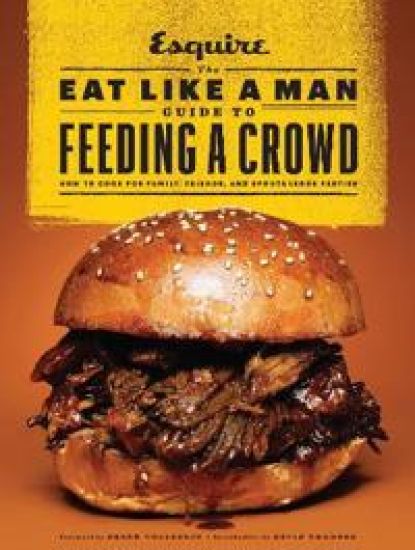
This welcome follow-up to Esquire's wildly popular Eat Like a Man cookbook is the ultimate resource for guys who want to host big crowds and need the scaled-up recipes, logistical advice and mojo to pull it off whether they're cooking breakfast for a houseful of weekend guests, producing an epic spread for the game or planning a BBQ that trumps all. With tantalising photos and about 100 recipes for lazy breakfasts, afternoon noshing, dinner spreads and late-night binges—including loads of favourites from chefs who know how to satisfy a crowd, such as Linton Hopkins, Edward Lee and Michael Symon—this is the only cookbook a man will ever need when the party is at his place.
This book is designed to be a valuable resource for all educators who seek to gain a better understanding of writing development, effective writing teaching practices, and meeting the instructional needs of struggling writers. Educators of all levels and career stages will then benefit from the extensive research provided in the book; and through its pages they will gain a thorough understanding of how to go about the process of developing proficient writers in their classrooms.