
Kirjahaku
Etsi kirjoja tekijän nimen, kirjan nimen tai ISBN:n perusteella.
1000 tulosta hakusanalla C Jenkin
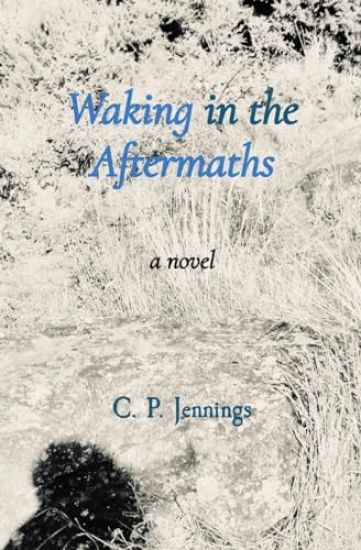
In Mist Hill, the Appalachian village of their childhood, the long-estranged Collins siblings Kate and Lynuel (the former a worldly success, the latter a local failure) reunite and confront the past when they encounter the Roma love-child of their dead father and experience the traumatic intrusion of world events on this isolated corner of the world.Waking in the Aftermaths brings to life the Collins siblings Kate and Lynuel, children from one of the 'better' families of the village of Mist Hill, WV, who in 1961 embark upon an adventure that misfires and drastically influences their life trajectories in opposite ways. Kate becomes a driven human rights activist and poet, worldly and respected, long married to a Moroccan professor; yet in spite of every appearance of success, Kate is tormented by her responsibility for what she believes happened in 1961. Her modus operandi is to push people away, hard. Lyn on the other hand is a substance abuser and petty thief (later reformed) who has to all intents never left home; the result of their childhood misadventure for him has been an overwhelming fatalism.In 2001, Kate returns to Mist Hill for a rare visit at the same time that the aftermath of September 11th engulfs her, her Moroccan, Muslim husband, and their child. These current troubles merge with the continuing aftermath of the traumatic event of her and Lyn's childhood. Meanwhile, across the road and the railroad tracks, on the edge of the river, an eccentric family of three women has restored and moved into one of the group of hovels formerly known as 'Gypsytown.' They are the remnants of the Stanleys and the Hearnes, Roma families who had once lived there. Arabella Stanley, the youngest, has a relationship to the same past that Lyn and Kate share, but they have yet to learn what that relationship is. As the Collins and Stanley/Hearne families meet and their individuals stories unwind and merge in this isolated mountain setting, the past is finally laid to rest - as much as it is possible for the past to be. Our three protagonists, Kate, Lyn and Arabella, learn how to truly shoulder the burdens each has been given.
Yankton Sioux Tribe of Indians V. U S U.S. Supreme Court Transcript of Record with Supporting Pleadings
Jennings C Wise
Gale, U.S. Supreme Court Records
2011
pokkari
Yankton Sioux Tribe of Indians V. U S U.S. Supreme Court Transcript of Record with Supporting Pleadings
Jennings C Wise
Gale, U.S. Supreme Court Records
2011
pokkari
Super V. Work U.S. Supreme Court Transcript of Record with Supporting Pleadings
Jennings C Wise
Gale, U.S. Supreme Court Records
2011
pokkari
The Philosophic History of Civilization: Showing the Spiritual and Material Factors Involved in the Evolution of Nations
Jennings C. Wise
Literary Licensing, LLC
2013
nidottu
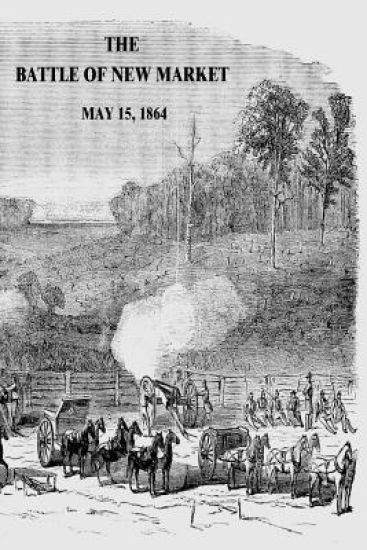
The Battle of New Market: May 15, 1864
Colonel Jennings C. Wise
Createspace Independent Publishing Platform
2015
nidottu
Between getting caught up in the wild life and glamour of New Orleans and trying to live right, I Won't Complain follows the life of a young girl facing opprobrious challenges. The decisions she makes unconsciously shapes who she is and who she is trying to become. She falls in love with an abuser and experiences several years of her life in a diffident state. Though death becomes a way of life all around her, she is determined to overcome all odds. With children in her bossom and aspirations in her heart she avoids the inevitable grasp of the "hood."
Summer Holidays in North East England. Illustrated with Photographs by Payne Jennings, Etc. (Descriptive Letterpress by C. Cotterell.).
Constance Cotterell; Payne Jennings
British Library, Historical Print Editions
2011
pokkari
Title: Summer Holidays in North East England. Illustrated with photographs by Payne Jennings, etc. (Descriptive letterpress by C. Cotterell.).Publisher: British Library, Historical Print EditionsThe British Library is the national library of the United Kingdom. It is one of the world's largest research libraries holding over 150 million items in all known languages and formats: books, journals, newspapers, sound recordings, patents, maps, stamps, prints and much more. Its collections include around 14 million books, along with substantial additional collections of manuscripts and historical items dating back as far as 300 BC.The HISTORY OF BRITAIN & IRELAND collection includes books from the British Library digitised by Microsoft. As well as historical works, this collection includes geographies, travelogues, and titles covering periods of competition and cooperation among the people of Great Britain and Ireland. Works also explore the countries' relations with France, Germany, the Low Countries, Denmark, and Scandinavia. ++++The below data was compiled from various identification fields in the bibliographic record of this title. This data is provided as an additional tool in helping to insure edition identification: ++++ British Library Cotterell, Constance; Jennings, Payne; 1895 xvi. 143 p.; 8 . 010358.e.32.
Humphrey Jennings and British Documentary Film: A Re-assessment
Philip C. Logan
Ashgate Publishing Limited
2011
sidottu
Humphrey Jennings ranks amongst the greatest film makers of twentieth century Britain. Although a relatively unknown figure to the wider public, his war-time documentaries are regarded by many (including Lord Puttnam, Lindsay Anderson and Mike Leigh) as amongst the finest films of their time. Groundbreaking both in terms of their technique and their interest in, and respect for, the everyday experiences of ordinary people, these films are much more than mere government propaganda. Instead, Jennings work offers an unparalleled window into the British home-front, and the hopes, fears and expectations of a nation fighting for its survival. Yet until now, Jennings has remained a shadowy figure; with his life and work lacking the sustained scholarly investigation and reassessment they deserve. As such film and social historians will welcome this new book which provides an up-to-date and thorough exploration of the relationships between Jennings life, ideas and films. Arguing that Jennings's film output can be viewed as part of a coherent intellectual exercise rather than just one aspect of the artistic interests of a wide ranging intellectual, Philip Logan, paints a much fuller and more convincing picture of the man than has previously been possible. He shows for the first time exactly how Jennings's artistic expression was influenced by the fundamental intellectual, social and cultural changes that shook British society during the first decades of the twentieth century. Combining biography, social history and international artistic thought, the book offers a fascinating insight into Jennings, his work, the wider British documentary film movement and the interaction between art and propaganda. Bringing together assessments of his tragically short life and his films this book is essential reading for anyone with an interest in British cinema or the social history of Britain in the 1930s and 40s.