Kirjahaku
Etsi kirjoja tekijän nimen, kirjan nimen tai ISBN:n perusteella.
1000 tulosta hakusanalla C. Stuart Chapman

Behaviour at work can no longer be stereotyped as global or local – modern or traditional – with very little in-between. Instead work behaviour is a complex interplay between Global and Local values. It takes place in a Glocality. Thus individual achievement co-exists with group aspirations, pay diversity takes place in a social context, teamwork reflects cultural narrative, and labour mobility is bound by community bias. Globalization and Culture at Work: Exploring their Combined Glocality breaks new ground by exploring such glocalities, and the implications they create for managing human potential better. The volume is essential reading for researchers, managers, culturalists and consultants of work behaviour alike.
Statistics for Business and Economics
Orlando Griego; Stuart C. Strother
Createspace Independent Publishing Platform
2009
nidottu

Glas aus Wien: Enigma in Crystal
Stuart C. Nickerson
Createspace Independent Publishing Platform
2010
nidottu

Psychology has focused more on personalities in poverty -- pathologizing -- than on contexts for poverty reduction (Pick & Sirkin, 2010). As a result, the discipline has inadvertently sequestered and isolated itself, and its potential contribution, from poverty reduction initiatives - globally and locally. In recent years, there have been major developments in both the scope and depth of psychological research on global development issues. Some of the key developments include significant advances in understanding of what motivates teachers in schools, on designing community interventions to promote health, and on managing the development of human “capacity” in aid and development projects. The Psychology of Poverty Reduction is poised to capture such advances in the understanding of ‘what works’ - and what does not.

Death With Dignity: Legalized Physician-Assisted Death in the United States 2011
Stuart C. Goldberg Esq
Createspace Independent Publishing Platform
2011
nidottu
Psychology has focused more on personalities in poverty -- pathologizing -- than on contexts for poverty reduction (Pick & Sirkin, 2010). As a result, the discipline has inadvertently sequestered and isolated itself, and its potential contribution, from poverty reduction initiatives - globally and locally. In recent years, there have been major developments in both the scope and depth of psychological research on global development issues. Some of the key developments include significant advances in understanding of what motivates teachers in schools, on designing community interventions to promote health, and on managing the development of human “capacity” in aid and development projects. The Psychology of Poverty Reduction is poised to capture such advances in the understanding of ‘what works’ - and what does not.
A Handbook for Testing Extra-Sensory Perception
C. E. Stuart; J. G. Pratt
Literary Licensing, LLC
2013
nidottu


The Good Work of Non-Christians, Empowerment, and the New Creation
Stuart C Weir; John C McDowell
Pickwick Publications
2016
sidottu

Utilising a wide range of archival correspondence and diaries, this monograph reconstructs the 1974-79 Labour government's policies in Northern Ireland. It covers the collapse of power-sharing in May 1974, the secret dialogue with the Provisional IRA during the 1975 ceasefire, the acquiescence of Labour ministers in continuing indefinite direct rule from Westminster, efforts to mitigate conflict through industrial investment, a major shift in security policy emphasizing the police over the army, the adaptation of republicans to the threat of these new measures and their own adoption of a 'Long War' strategy. In so doing, it sheds light on the challenges faced by British ministers, civil servants, soldiers and policemen and the reasons why the conflict lasted so long. It will be a key text for researchers and students of both British and Northern Irish politics.

Len the Time Travelling Chicken
Stuart C. Fawcett
Createspace Independent Publishing Platform
2016
nidottu

Mya and the Time Trap: When there's no escape...
Stuart C. Fawcett
Createspace Independent Publishing Platform
2016
nidottu
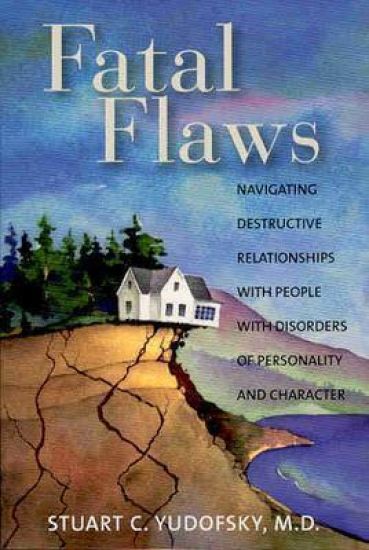
Featuring case vignettes from nearly 30 years of Dr. Yudofsky's clinical practice and incorporating the knowledge of gifted clinicians, educators, and research scientists with whom he has collaborated throughout that time, Fatal Flaws: Navigating Destructive Relationships With People With Disorders of Personality and Character uniquely captures the increasing body of clinical and research information about people with severe and persistent personality and character disorders. Covering the clinical course, treatment, genetics, biology, psychology, and destructive consequences of hysterical (histrionic), narcissistic, antisocial, paranoid, obsessive-compulsive, addictive, borderline, and schizotypal personality disorders, Fatal Flaws stands out in the literature for these powerful reasons: It is written for an unusually broad audience, from mental health students and trainees of all disciplines, to highly experienced clinicians, to patients who suffer from or are in destructive relationships with people with personality disorders. It is a hybrid-part psychiatric textbook for clinicians and part self-help manual for patients and clients with personality and character disorders. It is designed to supplement treatment by providing patients with practical, evidence-based information about personality disorders and character flaws. It is particularly valuable to patients who are in psychotherapy, in part, because they are entangled in destructive relationships with people with disorders of personality and/or character. It is written in the first person, with the author directly communicating with a patient who either has a personality or character disorder or is in an important relationship with a person who has such a disorder. It is useful for people who are uncertain whether they or their loved ones have personality or character disorders, and who want to know more about these conditions and their treatments before making a decision about securing the help of a mental health professional. Fatal Flaws: Navigating Destructive Relationships With People With Disorders of Personality and Character is a compelling volume that provides the essential information and a realistic sense of the clinical experience required to inform, orient, and support novice mental health professionals and seasoned practitioners alike as they face the ongoing challenges of treating patients or clients with personality or character disorders. An invaluable resource for those who wish practical and effective help in understanding and changing their destructive relationships with people who have severe and persistent disorders of personality and/or character.
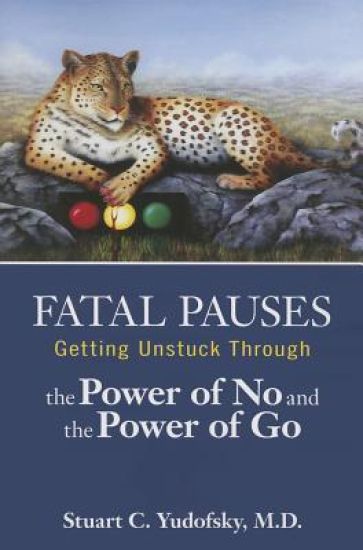
People can become stuck in many ways and for a wide variety of reasons, explains the author of Fatal Pauses, that rare book that both clinicians and general readers can benefit from and enjoy. Novelistic in its depictions of composite patients but clear-eyed in its analysis, the book offers a "3-D method" of addressing "stuck"-ness, which is defined as "not stopping something that is bad for us" or "not starting and staying with something that is good for us." The process of discovering why one is stuck, deciding to become unstuck, and then asserting the discipline required to do so is brought to vivid life by one of the most respected psychiatrists of our day. The book's structure is logical and engaging: • The Am I Stuck? Scale can be self-administered by general readers or administered by clinicians to their patients. This first chapter sets the stage for what follows.• The 3-D method of getting unstuck is presented in a systematic, easy-to-comprehend manner that begins with a brief overview and proceeds to more detailed instructions and insights.• Riveting case examples make up the heart of the book. They are not mere summaries but consist of thorough and detailed clinical descriptions that provide context, in addition to extensive dialogue and analysis. Several of these cases are divided into multiple chapters, providing a comprehensive clinical picture to help both mental health professionals and lay readers increase their understanding of being "stuck."• A range of categories or "stuck"-ness is addressed, including being trapped by career choices, limited by obesity, paralyzed by an unsatisfying marriage, incapacitated by addiction, and imprisoned by the need to please. Of special note is the case example of a young man whose interpersonal relationships have gradually, but progressively, become reduced to computer-based encounters. The author's examination of this individual's fixation on video games and virtual realities and his escape from this cyberprison through treatment is both timely and compelling.• Finally, the author provides an evolutionary and neurobiological overview of how we become "stuck," which helps the reader grasp the underpinnings of this behavior and learn how to become "unstuck." Written in a warm and disarming style, Fatal Pauses will find a home in clinicians' libraries,waiting rooms, and on family room bookshelves.
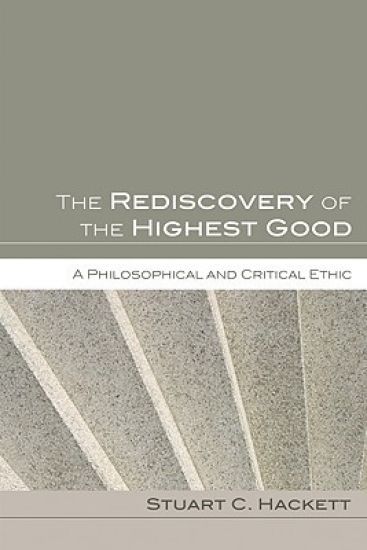

The Reconstruction of the Christian Revelation Claim: A Philosophical and Critical Apologetic
Stuart C. Hackett
Wipf Stock Publishers
2009
nidottu
Dr. Hackett provides, in digestible form, a comprehensive, systematic, and pervasively philosophical apologetic for the Christian revelation claim. Although the approach is seriously philosophical, the text is free as possible of the earmarks of technical scholarship--reflecting the author's aspiration to reach the common person who has a deep interest in such questions. Thus, although positions, arguments, and counter-arguments are discussed (of necessity), these are set forth without distracting encumbrances. Specifically, this book is designed as a substantial textbook for college and seminary courses in apologetics. In his thorough introduction, Philosophical Prolegomena, a firm base for the whole study is established by initiating the reader firmly in epistemology and the concept of revelation. The main divisions are: -- Christiainity and the Revelation Cosmos: A Philosophical Case for a Theistic Metaphysic. -- Christianity and the Revelational Person: An Historical / Critical Case for the Incarnation of God in Jesus Christ. -- Christianity and the Revelational Word: The Propositional Expression of Revelation in Scripture. Dr. Hackett includes on every page parallel marginal summaries and outlines to guide the reader and to facilitate ready reference.