Title: A Texas Scrap-Book. Made up of the history, biography, and miscellany of Texas and its people. Compiled by D. W. C. Baker. With plates, including portraits.]Publisher: British Library, Historical Print EditionsThe British Library is the national library of the United Kingdom. It is one of the world's largest research libraries holding over 150 million items in all known languages and formats: books, journals, newspapers, sound recordings, patents, maps, stamps, prints and much more. Its collections include around 14 million books, along with substantial additional collections of manuscripts and historical items dating back as far as 300 BC.The GENERAL HISTORICAL collection includes books from the British Library digitised by Microsoft. This varied collection includes material that gives readers a 19th century view of the world. Topics include health, education, economics, agriculture, environment, technology, culture, politics, labour and industry, mining, penal policy, and social order. ++++The below data was compiled from various identification fields in the bibliographic record of this title. This data is provided as an additional tool in helping to insure edition identification: ++++ British Library Baker, D W. C.; 1875 xii. 657 p.; 8 . 10412.ee.8.
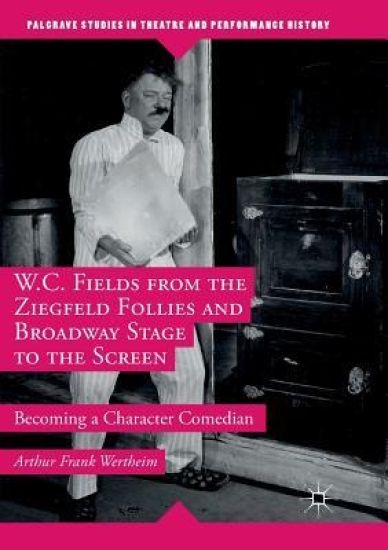
This book reveals how Fields became a character comedian while performing in Broadway’s most illustrious revue, the Ziegfeld Follies.As the first biography to use the recently opened Fields Papers at the Motion Picture Academy, the book explores how Fields years as a Follies entertainer portraying a beleaguered husband and a captivating conman became a landmark turning point in his career, leading to his fame as a masterful film comedian. The book also untangles a web of mysteries about Fields’s turbulent private life, from the heartrending stories about the tragic relationship with his calculating wife who refused to divorce him, to his estranged son controlled by his mother, to the seven-year extra-marital affair with a chorus girl that led to the birth of an unwanted child.This electrifying saga illuminates a complex dual personality, whirling from tenderness to brusqueness, who endured so much anguish in order to bring the gift of laughter to millions. Although vilified by Ziegfeld and assailed by demons, Fields survived the cutthroat rigors of Broadway show biz to become a legendary American iconoclast and cultural icon.
This book reveals how Fields became a character comedian while performing in Broadway’s most illustrious revue, the Ziegfeld Follies.As the first biography to use the recently opened Fields Papers at the Motion Picture Academy, the book explores how Fields years as a Follies entertainer portraying a beleaguered husband and a captivating conman became a landmark turning point in his career, leading to his fame as a masterful film comedian. The book also untangles a web of mysteries about Fields’s turbulent private life, from the heartrending stories about the tragic relationship with his calculating wife who refused to divorce him, to his estranged son controlled by his mother, to the seven-year extra-marital affair with a chorus girl that led to the birth of an unwanted child.This electrifying saga illuminates a complex dual personality, whirling from tenderness to brusqueness, who endured so much anguish in order to bring the gift of laughter to millions. Although vilified by Ziegfeld and assailed by demons, Fields survived the cutthroat rigors of Broadway show biz to become a legendary American iconoclast and cultural icon.
This work has been selected by scholars as being culturally important, and is part of the knowledge base of civilization as we know it. This work was reproduced from the original artifact, and remains as true to the original work as possible. Therefore, you will see the original copyright references, library stamps (as most of these works have been housed in our most important libraries around the world), and other notations in the work.This work is in the public domain in the United States of America, and possibly other nations. Within the United States, you may freely copy and distribute this work, as no entity (individual or corporate) has a copyright on the body of the work.As a reproduction of a historical artifact, this work may contain missing or blurred pages, poor pictures, errant marks, etc. Scholars believe, and we concur, that this work is important enough to be preserved, reproduced, and made generally available to the public. We appreciate your support of the preservation process, and thank you for being an important part of keeping this knowledge alive and relevant.
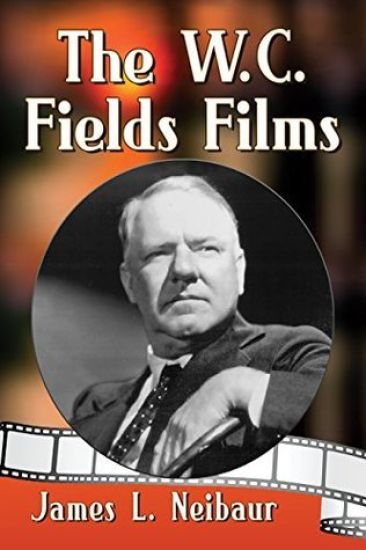
W.C. Fields was at the top among comedians during Hollywood's Golden Era of the 1930s and 1940s and has since remained a comic icon. Despite his character's misanthropic, child-hating, alcoholic tendencies, his performances were enduringly popular and Fields became personally defined by them. This critical study of his work provides commentary and background on each of his films, from the early silents through the cameos near the end of his life, with fresh appraisals of his well known classics. Pictures once believed to be lost that have been discovered and restored are discussed, and new information is given on some that remain lost.
This book explores the ways to teach the literary works of William Clark Falkner and William Faulkner to ESL (English as a Second Language) students in today’s digital environment. William Faulkner’s great-grandfather, William Clark Falkner, wrote romantic literary works, and William Faulkner critically uses the motifs of his great-grandfather’s works to establish his literary world. Applying Mikhail Bakhtin’s dialogical theory, this book theoretically explains how these two authors imagine the social formations of the American South differently in their literary works. The coined term, social combination—which is defined as the individuals’ mutual effort to have equal relationships for a certain time—is used as a key term to examine how these two authors depict the characters’ personal relationships. William Faulkner employs his characters’ social combination as a resistance against the American South’s romantic illusions that are represented by William Clark Falkner’s literary works. William Faulkner’s historical perspective is beneficial for today’s ESL students, who explore their new egalitarian formations in their digitally expanded world. The last part of this study outlines how an American literary teacher can connect the works of William Clark Falkner and William Faulkner when teaching ESL students by using today’s digital environment. Using three digital platforms—Moodle, WordPress, and Google Drive—a teacher composes egalitarian relationships among class members and inspires students’ autonomous discussion on these two authors’ works. Through these activities, ESL students are expected to comprehend that the literature of the American South is not only the historical development of the foreign region, but the phenomenon that is connected to their own social formations.
This book explores the ways to teach the literary works of William Clark Falkner and William Faulkner to ESL (English as a Second Language) students in today’s digital environment. William Faulkner’s great-grandfather, William Clark Falkner, wrote romantic literary works, and William Faulkner critically uses the motifs of his great-grandfather’s works to establish his literary world. Applying Mikhail Bakhtin’s dialogical theory, this book theoretically explains how these two authors imagine the social formations of the American South differently in their literary works. The coined term, social combination—which is defined as the individuals’ mutual effort to have equal relationships for a certain time—is used as a key term to examine how these two authors depict the characters’ personal relationships. William Faulkner employs his characters’ social combination as a resistance against the American South’s romantic illusions that are represented by William Clark Falkner’s literary works. William Faulkner’s historical perspective is beneficial for today’s ESL students, who explore their new egalitarian formations in their digitally expanded world. The last part of this study outlines how an American literary teacher can connect the works of William Clark Falkner and William Faulkner when teaching ESL students by using today’s digital environment. Using three digital platforms—Moodle, WordPress, and Google Drive—a teacher composes egalitarian relationships among class members and inspires students’ autonomous discussion on these two authors’ works. Through these activities, ESL students are expected to comprehend that the literature of the American South is not only the historical development of the foreign region, but the phenomenon that is connected to their own social formations.
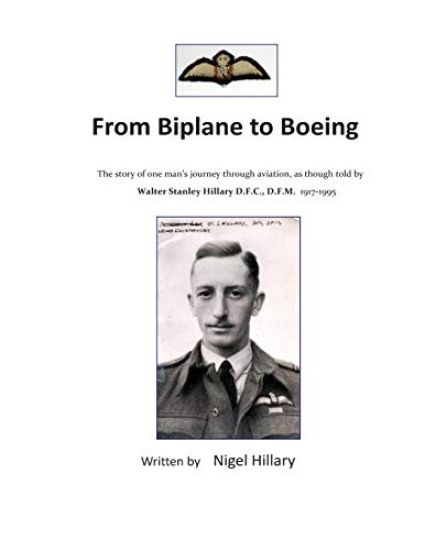
"From Biplane to Boeing" tells the story of my father's life in flying. The book is based almost entirely on his personal logbooks and notebooks which he maintained all the way through his career, logging the detail of every flight. Wing Commander Walter Hillary, DFC., DFM, was taught to fly by the Royal Air Force and went on to fly more than 80 missions with Bomber Command and with Transport. His war was in Europe, North Africa and Burma (now Myanmar). After World War II he pursued a career in Civil Aviation for over 30 years across Africa, flying passengers in Kenya, the Belgian Congo and Libya. The book is my personal tribute to my Dad. It provides evidence for the courage and adaptability of that whole generation.
Fields never got around to writing his autobiography, but at his death in 1946, he left behind a vast assortment of notes, outlines, scrapbooks, letters, scripts, scenarios, and photographs. Now his grandson, Ronald J. Fields, has edited and woven this wealth of previously unpublished material into a unique new portrait of the Great One--in his own words. This book establishes the true facts about W.C. Fields's early years: how, around 1895, he really got started juggling; how met his future wife Hattie; and how he felt about his incessant tours, triumphs, and film career.
Livre d'or des W.C. pour que chacune de tes incroyables pens es ne restent pas oubli es jamais dans les toilettes. Cahier noir, 90 pages blanches lign es.

![Buzz a Buzz; Or, the Bees. Done Freely Into English, by the Author of My Bee Book [I.E. W. C. Cotton] from the German.](/covers/9781241142001.jpg)
![A Sermon, Preached Before the University of Cambridge, by H. W. C-T, D.D., Andc. [I.E. H. W. Coulhurst] ... Translated, Into English Metre, by H. W. Hopkins.](/covers/9781241166779.jpg)
![A Texas Scrap-Book. Made up of the history, biography, and miscellany of Texas and its people. Compiled by D. W. C. Baker. [With plates, including portraits.]](/covers/9781241419769.jpg)
![Glimpses of Europe. [Short Sketches by Various Authors.] Edited by W. C. Procter. with One Hundred Illustrations.](/covers/9781241501327.jpg)


![Chief Incidents Of The Siege Of Derry [&c.] With A Preface By W. Guard](/covers/9781377112589.jpg)