Kirjojen hintavertailu. Mukana 12 083 983 kirjaa ja 12 kauppaa.

Kirjahaku

Etsi kirjoja tekijän nimen, kirjan nimen tai ISBN:n perusteella.

1000 tulosta hakusanalla CHARLES TO COPELAND

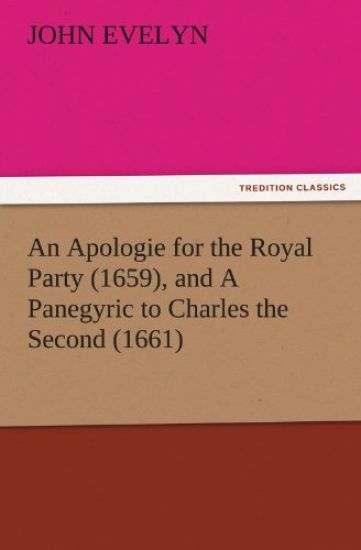
An Apologie for the Royal Party (1659), and A Panegyric to Charles the Second (1661) (Esprios Classics)
John Evelyn FRS (31 October 1620 - 27 February 1706) was an English writer, gardener and diarist. John Evelyn's diary, or memoir, spanned the period of his adult life from 1640, when he was a student, to 1706, the year he died. He did not write daily at all times. The many volumes provide insight into life and events at a time before regular magazines or newspapers were published, making diaries of greater interest to modern historians than such works might have been at later periods. Evelyn's work covers art, culture and politics, including the execution of Charles I, Oliver Cromwell's rise and eventual natural death, the last Great Plague of London, and the Great Fire of London in 1666.
The Genuine Letters of Baron Fabricius, Envoy From the Duke Administrator of Holstein to Charles XII of Sweden Comprehending his Entire Correspondence With the Duke Himself, Baron Goertz and With Count Reventlau
The 18th century was a wealth of knowledge, exploration and rapidly growing technology and expanding record-keeping made possible by advances in the printing press. In its determination to preserve the century of revolution, Gale initiated a revolution of its own: digitization of epic proportions to preserve these invaluable works in the largest archive of its kind. Now for the first time these high-quality digital copies of original 18th century manuscripts are available in print, making them highly accessible to libraries, undergraduate students, and independent scholars.Delve into what it was like to live during the eighteenth century by reading the first-hand accounts of everyday people, including city dwellers and farmers, businessmen and bankers, artisans and merchants, artists and their patrons, politicians and their constituents. Original texts make the American, French, and Industrial revolutions vividly contemporary.++++The below data was compiled from various identification fields in the bibliographic record of this title. This data is provided as an additional tool in helping to insure edition identification: ++++Bodleian Library (Oxford)N001859First published at Hamburg in German in 1759 as 'Zuverl ssige Geschichte Carl des Zw lften K nigs in Schweden, w hrend seines Aufenthalts in der T rkey, aus den noch ungedruckten franz sischen Staatsbriefen' and in French in 1760 as 'Anecdotes du sejour du roi de Suede a Bender; ou, lettres de Mr le Baron de Fabrice pour servir d'eclaircissement a l'histoire de Charles XII'.London: printed for T. Becket and P. A. Dehondt, 1761. xxviii,316p.; 8
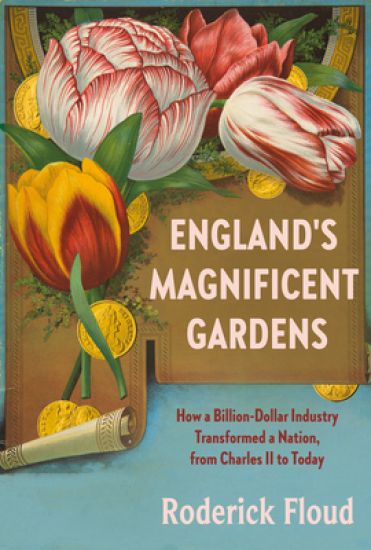
England's Magnificent Gardens: How a Billion-Dollar Industry Transformed a Nation, from Charles II to Today
An altogether different kind of book on English gardens--the first of its kind--a look at the history of England's magnificent gardens as a history of Britain itself, from the seventeenth-century gardens of Charles II to those of Prince Charles today. In this rich, revelatory history, Sir Roderick Floud, one of Britain's preeminent economic historians, writes that gardens have been created in Britain since Roman times but that their true growth began in the seventeenth century; by the eighteenth century, nurseries in London took up 100 acres, with ten million plants ( ) that were worth more than all of the nurseries in France combined. Floud's book takes us through more than three centuries of English history as he writes of the kings, queens, and princes whose garden obsessions changed the landscape of England itself, from Stuart, Georgian, and Victorian England to today's Windsors. Here are William and Mary, who brought Dutch gardens and bulbs to Britain; William, who twice had his entire garden lowered in order to see the river from his apartments; and his successor, Queen Anne, who, like many others since, vowed to spend little on her gardens and instead spent millions. Floud also writes of Frederick, Prince of Wales, the founder of Kew Gardens, who spent more than $40,000 on a single twenty-five-foot tulip tree for Carlton House; Queen Victoria, who built the largest, most advanced and most efficient kitchen garden in Britain; and Prince Charles, who created and designed the gardens of Highgrove, inspired by his boyhood memories of his grandmother's gardens. We see Sarah, Duchess of Marlborough, who created a magnificent garden at Blenheim Palace, only to tear it apart and build a greater one; Deborah, Duchess of Devonshire, the savior of Chatsworth's 100-acre garden in the midst of its 35,000 acres; and the gardens of lesser mortals, among them Gertrude Jekyll and Vita Sackville-West, both notable garden designers and writers. We see the designers of royal estates--among them, Henry Wise, William Kent, Humphrey Repton, and the greatest of all English gardeners, "Capability" Brown, who created the 150-acre lake of Blenheim Palace, earned millions annually, and designed more than 170 parks, many still in existence today. We learn how gardening became a major catalyst for innovation (central heating came from experiments to heat greenhouses with hot-water pipes); how the new iron industry of industrializing Britain supplied a myriad of tools (mowers, pumps, and the boilers that heated the greenhouses); and, finally, Floud explores how gardening became an enormous industry as well as an art form in Britain, and by the nineteenth century was unrivaled anywhere in the world.