
Kirjahaku
Etsi kirjoja tekijän nimen, kirjan nimen tai ISBN:n perusteella.
1000 tulosta hakusanalla Carson Clayborne
Kit Carson's Fight With The Comanche And Kiowa Indians, At The Adobe Walls On The Canadian River, November 25th, 1864
George Henry Pettis
Kessinger Pub
2007
pokkari
Kit Carson, The Prince Of The Gold Hunters: The Miser John Vernon, Discovering The Suicide Of His Wife, Who Had For Years Eluded His Pursuit (1849)
Charles E. Averill
KESSINGER PUBLISHING, LLC
2008
sidottu




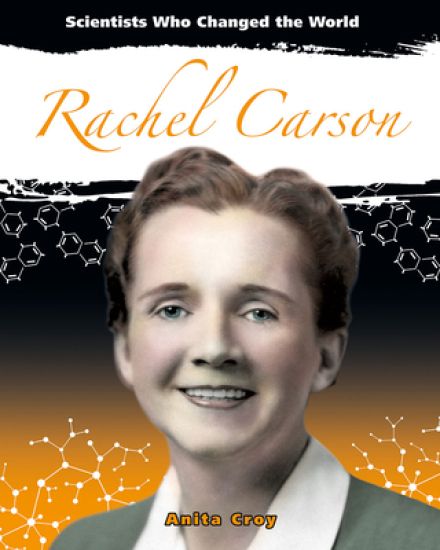
"The twentieth century was the only century in history when a single species, humans, had acquired significant power to change the nature of the whole world." This fascinating biography details the life and achievements of Rachel Carson, a scientist who made significant contributions to the field of biology. Carson's famous book called Silent Spring changed the world's understanding of the impact of human activities on the environment, helping to launch the modern environmental movement.
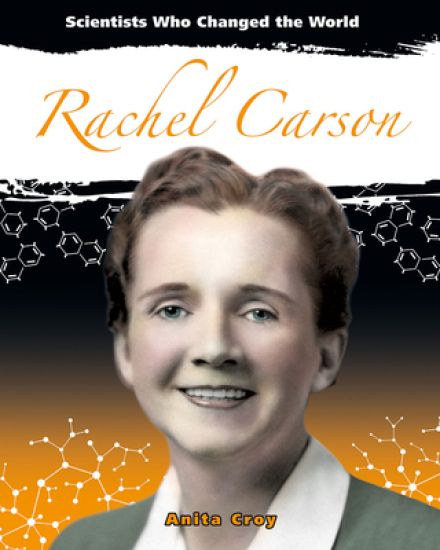
”The twentieth century was the only century in history when a single species, humans, had acquired significant power to change the nature of the whole world.” This fascinating biography details the life and achievements of Rachel Carson, a scientist who made significant contributions to the field of biology. Carson’s famous book called Silent Spring changed the world's understanding of the impact of human activities on the environment, helping to launch the modern environmental movement.
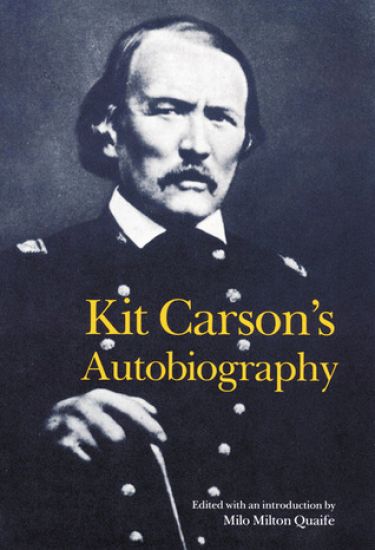
"Notice is hereby given to all persons, that Christopher Carson, a boy about 16 years old, small of his age, but thick-set; light hair, ran away from the subscriber, living in Franklin, Howard County, Missouri, to whom he had been bound to learn the saddler's trade. . . . One cent reward will be given to any person who will bring back the said boy.''This notice appeared in the Missouri Intelligencer of October 6, 1826, at about the same time that Kit Carson, in the humble role of "cavvy boy" in Bent's Santa Fé caravan, embarked upon his notable career. Thirty years later, a postgraduate of the University of the Wilderness, and for a decade past a national hero, he was persuaded to dictate to a literate friend his own story of his life to date.The account—as modest and undemonstrative as Carson's feats were remarkable—covers his life as a trapper, Indian fighter, guide, and buffalo hunter up to the fall of 1856. Among the high spots during these years were his trapping expedition to California with Ewing Young (1829–1831), his celebrated duel with Shunar at the Green River rendezvous of 1837, the three expeditions with John C. Frémont (1842, 1843–1844, 1845), his exploits in the Mexican War (l846–1848), and his service as an Indian agent.

Often portrayed by past historians as the greatest guide and Indian fighter in the West, Kit Carson (1809–68) has become in recent years a historical pariah—a brutal murderer who betrayed the Navajos, an unwitting dupe of American expansion, and a racist. Many historians now question both his reputation and his place in the pantheon of American heroes. In Kit Carson and the Indians, Tom Dunlay urges us to reconsider Carson yet again. To Dunlay, Carson was simply a man of the nineteenth century whose racial views and actions were much like those of his contemporaries.
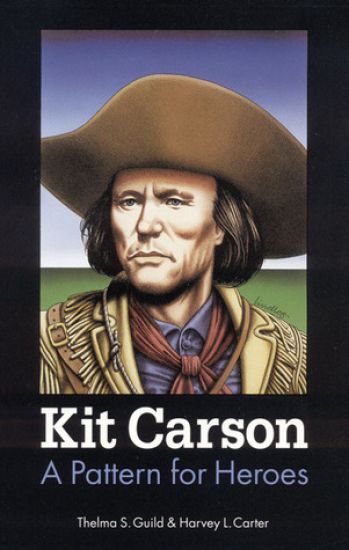
Kit Carson was shown on the cover of an old dime novel slaying six Indians with one hand while protecting a fair maiden with the other. Stories about him, mainly apocryphal, circulated well before his death in 1868 and have been handed down in a multitude of biographies. Now Harvey L. Carter joins with Thelma S. Guild to present the fullest, most authoritative biography of Kit Carson ever written. Carefully separating myth from fact, the authors draw on a wide variety of sources, published and unpublished, including private letters. Their scrupulous restoration of Kit Carson in his geographical and historical setting proves that scholarship can have entertaining results: Kit Carson: A Pattern for Heroes is a cracking good adventure story.
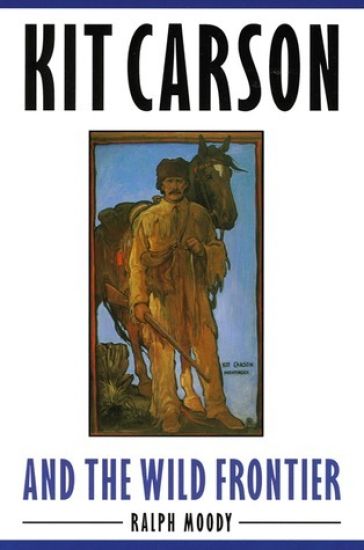
In 1826 an undersized sixteen-year-old apprentice ran away from a saddle maker in Franklin, Missouri, to join one of the first wagon trains crossing the prairie on the Santa Fe Trail. Kit Carson (1809–68) wanted to be a mountain man, and he spent his next sixteen years learning the paths of the West, the ways of its Native inhabitants, and the habits of the beaver, becoming the most successful and respected fur trapper of his time. From 1842 to 1848 he guided John C. Frémont’s mapping expeditions through the Rockies and was instrumental in the U.S. military conquest of California during the Mexican War. In 1853 he was appointed Indian agent at Taos, and later he helped negotiate treaties with the Apaches, Kiowas, Comanches, Arapahos, Cheyennes, and Utes that finally brought peace to the southwestern frontier. Ralph Moody’s biography of Kit Carson, appropriate for readers young and old, is a testament to the judgment and loyalty of the man who had perhaps more influence than any other on the history and development of the American West.

Volume 1 of Kit Carson Days shows Carson running away from his Missouri home at age fifteen in 1826. He joins a caravan headed toward Santa Fe and in the coming years shuttles between poverty and prosperity as a wrangler, teamster, and trapper. He lives all over the unplotted West, helping to open trails, harvesting fur, befriending mountain men, and fighting and trading with Indians. Carson's reputation grows after John C. Frémont engages him as guide in 1842. He proves indispensable to the Pathfinder in three expeditions and plays a part in the Bear Flag Rebellion. The first volume is an encyclopedia of activity in the West during the first part of the nineteenth century, bringing into play such figures as Ewing Young, William Ashley, Jim Bridger, Jedediah Smith, Thomas Fitzpatrick, Hugh Glass, John Colter, William Sublette, Marcus and Narcissa Whitman, William Bent, Stephen Kearny, President James K. Polk, John Sutter, and Nathaniel Wyeth. This revised edition includes vivid chapters on the mountain man, his character, habits, clothing, and equipment. Volume 2 begins with Carson carrying the news of the conquest of California across the country to Washington, D.C., stopping en route to see his wife in Taos, New Mexico. The older Carson consolidates his fame as a courier, scout, soldier, and Indian agent. Americans, avid for newfound gold, turn to him as an authority on trail lore, and the government recognizes his usefulness in dealing with "the Indian problem." Carson is seen against the larger background of incessant warfare in the Southwest after midcentury. He fights the Kiowas at Adobe Walls, chases the Apaches, and forces the Navajos into the Bosque Redondo. He fights in the Civil War and retires at fifty-eight—but dies two years later in 1868.
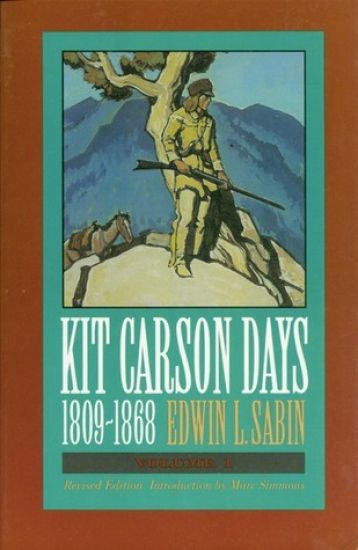
Volume 1 of Kit Carson Days shows Carson running away from his Missouri home at age fifteen in 1826. He joins a caravan headed toward Santa Fe and in the coming years shuttles between poverty and prosperity as a wrangler, teamster, and trapper. He lives all over the unplotted West, helping to open trails, harvesting fur, befriending mountain men, and fighting and trading with Indians. Carson's reputation grows after John C. Frémont engages him as guide in 1842. He proves indispensable to the Pathfinder in three expeditions and plays a part in the Bear Flag Rebellion. The first volume is an encyclopedia of activity in the West during the first part of the nineteenth century, bringing into play such figures as Ewing Young, William Ashley, Jim Bridger, Jedediah Smith, Thomas Fitzpatrick, Hugh Glass, John Colter, William Sublette, Marcus and Narcissa Whitman, William Bent, Stephen Kearny, President James K. Polk, John Sutter, and Nathaniel Wyeth. This revised edition includes vivid chapters on the mountain man, his character, habits, clothing, and equipment. Volume 2 begins with Carson carrying the news of the conquest of California across the country to Washington, D.C., stopping en route to see his wife in Taos, New Mexico. The older Carson consolidates his fame as a courier, scout, soldier, and Indian agent. Americans, avid for newfound gold, turn to him as an authority on trail lore, and the government recognizes his usefulness in dealing with "the Indian problem." Carson is seen against the larger background of incessant warfare in the Southwest after midcentury. He fights the Kiowas at Adobe Walls, chases the Apaches, and forces the Navajos into the Bosque Redondo. He fights in the Civil War and retires at fifty-eight—but dies two years later in 1868.
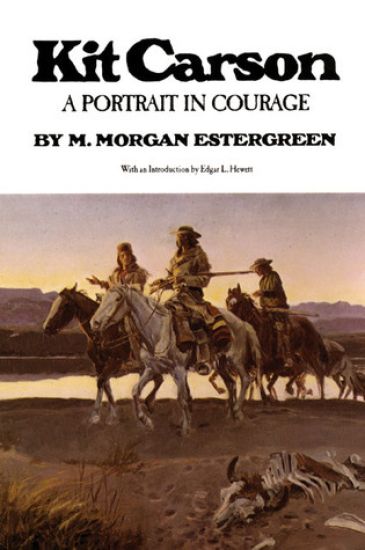
Doctor! Compadre! Adios!"" with these words passed a wiry little man who has become a legend of the Old West.Much has been written about Kit Carson, some of it truth, a great deal of it fiction. The two have been mixed all too often, resulting in an unfaithful and highly distorted picture of the Great Scout. Incorporating as its introduction a paper on the subject by the late Professor Edgar L. Hewett, M. Morgan Estergreen's Kit Carson is the long-awaited corrective to that picture.Born in the wilderness of Iredell County in Western North Carolina on December 24, 1809, Kit grew up on the frontier as it moved ever westward. In Missouri, he ran away from the saddlers to whom he had been apprenticed and joined a Santa Fe-bound caravan at Independence.Trader, interpreter, teamster, scout, trapper, guide, express rider, Indian agent, brevet brigadier general, Indian fighter - Kit Carson was all of these things and more. He was a faithful and devoted husband to Josefa, his second wife, a gentle and loving father to their seven children, and loyal and trusted friend to all who knew him. Modest and soft-spoken, he was a man of quite but fierce courage, a man who could be counted on when the chips were down.Based on the unpublished notes and other primary source materials of the late Blanche C. Grant, including interviews and letters from Kit's family and friends, Kit Carson is the story of Kit' life as he lived it, not as many wishful-thinking writers have imagined it to be.
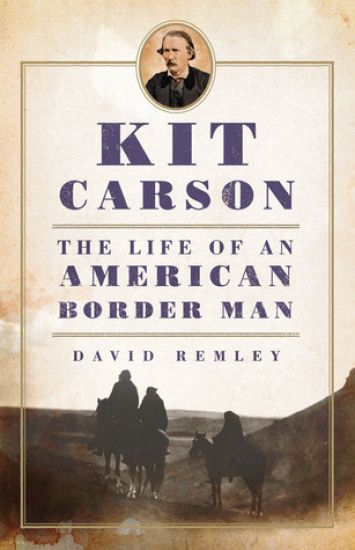
History has portrayed Christopher ""Kit"" Carson in black and white. Best known as a nineteenth-century frontier hero, he has been represented more recently as an Indian killer responsible for the deaths of hundreds of Navajos. Biographer David Remley counters these polarized views, finding Carson to be less than a mythical hero, but more than a simpleminded rascal with a rifle.Kit Carson: The Life of an American Border Man strikes a balance between prevailing notions about this quintessential western figure. Whereas the dime novelists exploited Carson's popular reputation, Remley reveals that the real man was dependable, ethical, and - for his day - relatively open-minded. Sifting through the extensive scholarship about Kit, the author illuminates the key dimensions of Carson's life, including his often neglected Scots-Irish heritage. His people's dire poverty and restlessness, their clannish rural life and sternly Protestant character, committed Carson, like his Scots-Irish ancestors, to loyalty and duty and to following his leader into battle without question.Remley also places Carson in the context of his times by exploring his controversial relations with American Indians. Although despised for the merciless warfare he led on General James H. Carleton's behalf against the Navajos, Carson lived amicably among many Indian people, including the Utes, whom he served as U.S. government agent. Happily married to Waa-Nibe, an Arapaho woman, until her death, he formed a lasting friendship with their daughter, Adaline.Remley sees Carson as a complicated man struggling to master life on America's borders, those highly unstable areas where people of different races, cultures, and languages met, mixed, and fought, sometimes against each other, sometimes together, for the possession of home, hunting rights, and honor.