
Kirjahaku
Etsi kirjoja tekijän nimen, kirjan nimen tai ISBN:n perusteella.
526 tulosta hakusanalla Cheyenne Meadows
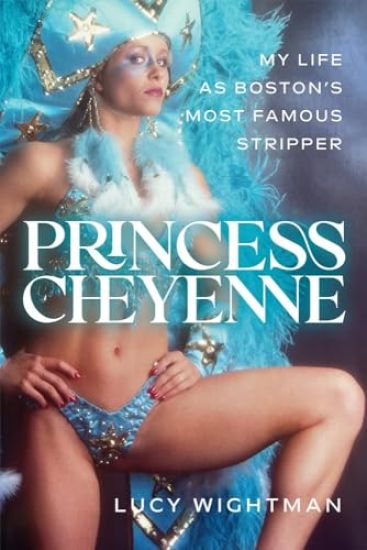
“Lucy Wightman's journey from the blue-blooded culture of Lake Forest, Illinois, to Boston's Combat Zone is an unflinching dive into a bygone era. It’s a complex character study and rare introspective look into the psyche of an intellectually gifted adult entertainer. At times Princess Cheyenne reads like a Pynchon novel, while at others it’s an inspiring paean to the pursuit of adult freedom, sexuality, and self-discovery.”—Dave Wedge, New York Times bestselling author of Riding with Evil, Boston Strong, and Blood & Hate: The Untold Story of Marvelous Marvin Hagler's Battle for GloryHow did a debutante from Lake Forest, Illinois, end up in Boston's notorious “Combat Zone” and become its most famous stripper? What led her to convert to Islam and get engaged to Cat Stevens? And how did she end up traveling and performing with Andy Kaufman and hosting a radio show for the sexually bewildered opposite Dr. Ruth? In 1977, an eighteen-year-old Lucy Johnson stripped out of her bellbottoms and Birkenstocks and was crowned the feature attraction at the Naked i Cabaret. Local and national media took note of her toney background and, for the next eleven years, she strutted her way into Beantown history as the "Socialite Stripper." In Princess Cheyenne, Lucy Wightman recounts her wild, Zeligesque life both in and out of the Naked i. Smart and uproarious, this is the untold story of a legendary performer whose stage name is synonymous with “The Zone,” Boston's most mythical district, and a fount of nostalgia and wonder to this day.
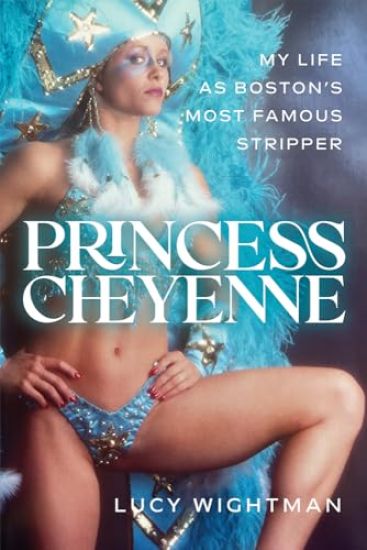
“Lucy Wightman's journey from the blue-blooded culture of Lake Forest, Illinois, to Boston's Combat Zone is an unflinching dive into a bygone era. It’s a complex character study and rare introspective look into the psyche of an intellectually gifted adult entertainer. At times Princess Cheyenne reads like a Pynchon novel, while at others it’s an inspiring paean to the pursuit of adult freedom, sexuality, and self-discovery.”—Dave Wedge, New York Times bestselling author of Riding with Evil, Boston Strong, and Blood & Hate: The Untold Story of Marvelous Marvin Hagler's Battle for GloryHow did a debutante from Lake Forest, Illinois, end up in Boston's notorious “Combat Zone” and become its most famous stripper? What led her to convert to Islam and get engaged to Cat Stevens? And how did she end up traveling and performing with Andy Kaufman and hosting a radio show for the sexually bewildered opposite Dr. Ruth? In 1977, an eighteen-year-old Lucy Johnson stripped out of her bellbottoms and Birkenstocks and was crowned the feature attraction at the Naked i Cabaret. Local and national media took note of her toney background and, for the next eleven years, she strutted her way into Beantown history as the "Socialite Stripper." In Princess Cheyenne, Lucy Wightman recounts her wild, Zeligesque life both in and out of the Naked i. Smart and uproarious, this is the untold story of a legendary performer whose stage name is synonymous with “The Zone,” Boston's most mythical district, and a fount of nostalgia and wonder to this day.
Lloyd Shaw and the Cheyenne Mountain Dancers
Dorothy Shaw; Enid Obee Cocke; Lloyd Shaw
Lloyd Shaw Foundation
2014
nidottu
The Great Sioux War of 1876-1877 is memorable to most Americans because of Lieutenant Colonel George A. Custer's last stand at the Battle of the Little Big Horn. But to the Lakotas (Western Sioux) and Northern Cheyennes who won that battle but lost the war, the experience of those fifteen months was truly a ""last stand"" - a cultural catastrophe that led to the reservation experience they had fought so long and hard to avoid.In writings about the history and import of the Great Sioux War, the perspectives of its Native American participants often are ignored and forgotten. In this volume Jerome A. Greene corrects that oversight by presenting a comprehensive overview of America's largest Indian war from the point of view of the Lakotas and Northern Cheyennes. A counterpoint to his earlier volume, which advances the military view of the skirmishes and battles - including the Little Big Horn - this book presents the Indians' report on the actions that ended their traditional way of life for all time. The accounts, by both men and women, afford fresh insights into the war.The Indian recollections provide personal, individualistic descriptions of significant events as the people struggled to protect their homelands, families, and tribal cultures. Most Sioux and Cheyenne accounts of the engagements remained within their own societies for many years. Those that were published during or soon after the war were colored by the defeat and often by mistranslation. This book presents a first-time compilation of the best of the Indians' recollections. The editor's introduction gives readers insight into the significance of Indian testimonial sources. Separate introductions place the Indians' accounts in the context of the war and enable readers to understand interrelationships among the events and thus gain a more complete appreciation of the war and its impact upon the Lakota and Cheyenne people.
Rare photographs document the lives of Cheyenne people during the early reservation yearsIn 1878 the Northern Cheyennes left what is now Oklahoma, where they had been incarcerated, and began an epic journey back to their homeland. They suffered great losses, but a small group of survivors reached its destination in southeastern Montana in 1879 and eventually won the right to a reservation there. A Northern Cheyenne Album presents a rare series of never-before-published photographs that document the lives of tribal people on the reservation during the early twentieth century - a period of rapid change.Reservation physician and expert photographer Thomas B. Marquis captured Northern Cheyenne life in numerous images taken from 1926 to 1935. After 1960, former tribal president John Woodenlegs and others interviewed tribal elders and, drawing on tape recordings, composed the photos' lively captions. Margot Liberty, editor of this volume, has added her own descriptions, filling in details of Northern Cheyenne culture and history from a scholar's viewpoint.A valuable record of an all-but-forgotten generation, this volume is also an inspiring tribute to the Northern Cheyenne elders whose resilience and adaptability helped ensure the future of their people.

The Northern Cheyenne Exodus in History and Memory
James N. Leiker; Ramon Powers
University of Oklahoma Press
2011
nidottu
The exodus of the Northern Cheyennes in 1878 and 1879, an attempt to flee from Indian Territory to their Montana homeland, is an important event in American Indian history. It is equally important in the history of towns like Oberlin, Kansas, where Cheyenne warriors killed more than forty settlers. The Cheyennes, in turn, suffered losses through violent encounters with the U.S. Army. More than a century later, the story remains familiar because it has been told by historians and novelists, and on film. In The Northern Cheyenne Exodus in History and Memory, James N. Leiker and Ramon Powers explore how the event has been remembered, told, and retold. They examine the recollections of Indians and settlers and their descendants, and they consider local history, mass-media treatments, and literature to draw thought-provoking conclusions about how this story has changed over time.The Cheyennes' journey has always been recounted in melodramatic stereotypes, and for the last fifty years most versions have featured ""noble savages"" trying to reclaim their birthright. Here, Leiker and Powers deconstruct those stereotypes and transcend them, pointing out that history is never so simple. ""The Cheyennes' flight,"" they write, ""had left white and Indian bones alike scattered along its route from Oklahoma to Montana."" In this view, the descendants of the Cheyennes and the settlers they encountered are all westerners who need history as a ""way of explaining the bones and arrowheads"" that littered the plains.Leiker and Powers depict a rural West whose diverse peoples - Euro-American and Native American alike - seek to preserve their heritage through memory and history. Anyone who lives in the contemporary Great Plains or who wants to understand the West as a whole will find this book compelling.
This book presents the incredible story behind a celebrated legend of the American West. It draws from the personal reflections of the four sisters. In 1874, a Cheyenne war party attacked the wagons of a family of settlers traveling through Kansas. Only four survived - all young girls who witnessed the slaughter of their parents and siblings before being carried off by the Indians. The girls were eventually set free, but not before their ordeal became a cause celebre of the Red River War. Grace E Meredith, a niece of one of the sisters, deftly uses their words and memories to craft a first-person narrative that makes for engaging reading.

Early Days Among the Cheyenne and Arapahoe Indians
John Homer 1846-1928 Seger
Hassell Street Press
2021
sidottu
This work has been selected by scholars as being culturally important and is part of the knowledge base of civilization as we know it.This work is in the public domain in the United States of America, and possibly other nations. Within the United States, you may freely copy and distribute this work, as no entity (individual or corporate) has a copyright on the body of the work.Scholars believe, and we concur, that this work is important enough to be preserved, reproduced, and made generally available to the public. To ensure a quality reading experience, this work has been proofread and republished using a format that seamlessly blends the original graphical elements with text in an easy-to-read typeface.We appreciate your support of the preservation process, and thank you for being an important part of keeping this knowledge alive and relevant.
Early Days Among the Cheyenne and Arapahoe Indians
John Homer 1846-1928 Seger
Hassell Street Press
2021
nidottu
Photographs of Cheyenne, Wyo
Hutson Street Press
2025
sidottu
Photographs of Cheyenne, Wyo
Hutson Street Press
2025
pokkari

Rehabilitation Program on the Cheyenne River Sioux Reservation
Elizabeth M. Clark; David W. Clark
Literary Licensing, LLC
2013
nidottu
When the rustlers are caught and turned lose by Sheriff Barlow, Mr. Payne decides a new sheriff is needed and asks Billy to run. To get his father-in-law off his back, Billy finally tells him he
All She Ever Wanted: Cheyenne's Story Continues
Candy J. Beard
Createspace Independent Publishing Platform
2008
nidottu
