Kirjojen hintavertailu. Mukana 12 595 353 kirjaa ja 12 kauppaa.

Kirjahaku

Etsi kirjoja tekijän nimen, kirjan nimen tai ISBN:n perusteella.

1000 tulosta hakusanalla Christa Wolf

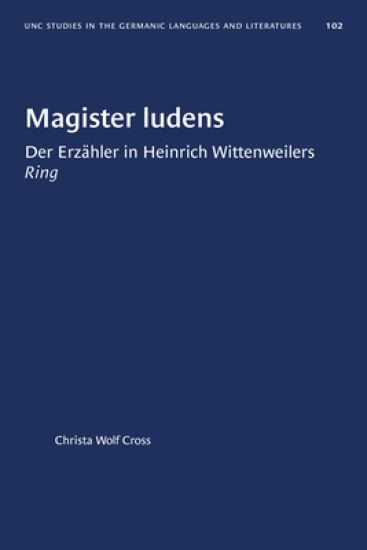
Magister Ludens

Magister Ludens

Christa Wolf Cross

The University of North Carolina Press
2020
pokkari
In this closely argued and admirably lucid study of the late medieval didactic epic Der Ring, Christa Wolf Cross analyzes the dynamics of the narrator-reader relationship. Wittenweiler's narrator presents himself at times as the omniscient and methodical teller of his tale, an authoritative teacher in command both of his material and his audience, and at other points as a playful master who feigns ignorance, appears to mock his own versifying, and challenges the reader to become vigilant to an extraordinary degree and to recognize that he must judge independently what to accept as Wittenweiler's teachings. Cross's investigation leads her to propound new answers to a number of questions that have long perplexed Wittenweiler scholars. While she has much to say to other specialists, her study addresses itself not to them alone but to a larger audience of students of medieval literature as well.
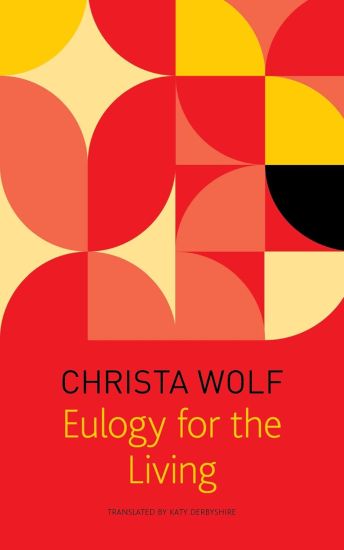
Eulogy for the Living – Taking Flight

Eulogy for the Living – Taking Flight

Christa Wolf; Katy Derbyshire; Gerhard Wolf

SEAGULL BOOKS LONDON LTD
2022
nidottu
A fragmentary work that stands as a testament to Wolf's skill as a thinker, storyteller, and memorializer of humanity’s greatest struggles. Christa Wolf tried for years to find a way to write about her childhood in Nazi Germany. In her 1976 book Patterns of Childhood, she explained why it was so difficult: “Gradually, over a period of months, the dilemma has emerged: to remain speechless or to live in the third person, these seem to be the options. One is impossible, the other sinister.” During 1971 and 1972 she made thirty-three attempts to start the novel, abandoning each manuscript only pages in. Eulogy for the Living, written over the course of four weeks, is the longest of those fragments. In its pages, Wolf recalls with crystalline precision the everyday details of her life as a middle-class grocer’s daughter, and the struggles within the family—struggles common to most families, but exacerbated by the rise of Nazism. And as Nazism fell, the Wolfs fled west, trying to stay ahead of the rampaging Red Army.
Landet som icke är

Landet som icke är

Christa Wolf; Martin Lagerholm

Lind Co
2022
sidottu
Christa Wolf (1929 2011) var en av de viktigaste tyska efterkrigsförfattarna. Från 1962, då hon slog igenom med romanen Der geteilte Himmel som handlar om Tysklands delning, var hon verksam som författare i DDR. Efter murens fall framkom att hon varit inofficiell medarbetare åt Stasi mellan 1959 och 1962. Wolf blev även själv övervakad av Stasi 1969 1989. I sina senare böcker skildrar hon tiden i DDR och efter murens fall. Lind & Co återutger nu Wolfs Landet som icke är (1979) som en av de två första titlarna i ny klassikerserie med kvinnliga författare.Landet som icke är skildrar ett fiktivt möte mellan två tyska diktare som båda skrev med livet som insats. En sommardag 1804 träffas 26-åriga Heinrich von Kleist, som innan han sju år senare tar sitt liv hinner skriva några av den tyska litteraturens viktigaste verk, och den något yngre Karolina von Günderrode, som just givit ut sin första diktsamling och två år senare frivilligt avslutar sitt liv. De båda unga författarna samtalar om dikten som både en självförverkligande och självförgörande kraft.
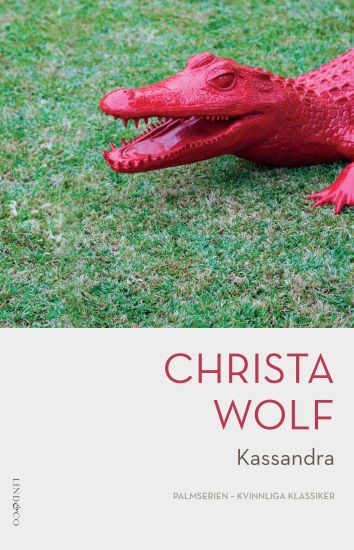
Kassandra

Kassandra

Christa Wolf; Svante Weyler

Lind Co
2024
sidottu
Jag fick en chock när jag insåg att kvinnor under de senaste 2000 åren inte utövat något politiskt inflytande. Vår kultur hämtar sina rötter ur den antika, och liksom den är den byggd på ett hierarkiskt system som utesluter kvinnan från makt och inflytande. Kulturen skapade en jakt efter materiella värden och skapade ett samhälle som blev alltmer tomt och meningslöst. Jag tror att vår drift till självförstörelse hämtar sina rötter ur detta. I Kassandra, som är den sjätte titeln i Lind & Co:s klassikerserie Palmserien, utgår Christa Wolf från myten om det trojanska kriget för att berätta om kvinnans roll i historien. Kassandra var sierskan som förutsade Trojas fall. Ingen trodde henne och när hon envisades fängslades hon. Christa Wolfs bok är uppdelad i två delar, den första är en episk berättelse om Kassandra, den andra är en kommenterande del som bygger på föredrag som Christa Wolf höll på universitetet i Frankfurt.CHRISTA WOLF (1929 2011) är en av de viktigaste tyska efterkrigsförfattarna. Från 1962, då hon slog igenom med romanen Der geteilte Himmel som handlar om Tysklands delning, var hon verksam som författare i DDR. Efter murens fall framkom att hon varit inofficiell medarbetare åt Stasi mellan 1959 och 1962. Wolf blev även själv övervakad av Stasi 1969 1989. I sina senare böcker skildrar hon tiden i DDR och efter murens fall. Lind & Co har tidigare givit ut Landet som icke är.
August

August

Wolf Christa

Seagull Books London Ltd
2014
sidottu
Christa Wolf was arguably the best-known and most influential writer in the former East Germany. Growing up during the Nazi regime, she was forced to flee her home with her family, nearly starving to death in the process. Her earliest novels were controversial because they contained veiled criticisms of the Communist regime that landed her on government watch lists. Her past continued to permeate her work and her life; as she said, "You can only fight sorrow when you look it in the eye." August is Christa Wolf's last piece of fiction, written in a single sitting as an anniversary gift to her husband. In it, she revisits her stay at a tuberculosis hospital in the winter of 1946, a real-life event that was the inspiration for the closing scenes of her 1976 novel Patterns of Childhood. This time, however, her fictional perspective is very different. The story unfolds through the eyes of August, a young patient who has lost both his parents to the war. He adores an older girl, Lilo, a rebellious teenager who controls the wards. Sixty years later, August reflects on his life and the things that she taught him. Written in taut but affectionate prose, August offers a new entry into Christa Wolf's work and, incidentally, presents her only male protagonist. More than a literary artifact, this new novel is a perfectly constructed story of a quiet life well lived. For both August and Christa Wolf, the past never dies.
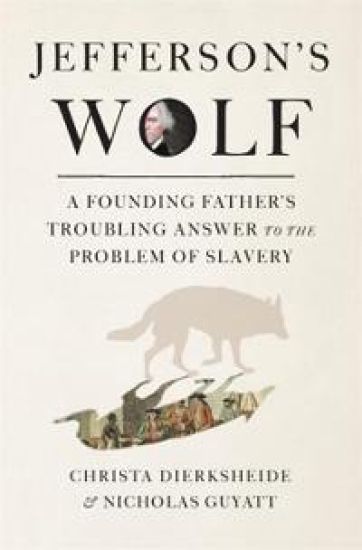
Jefferson's Wolf

Jefferson's Wolf

Christa Dierksheide; Nicholas Guyatt

HARVARD UNIVERSITY PRESS
2026
sidottu
A decisive reassessment of Thomas Jefferson's long-debated views on slavery, showing that his chief antislavery strategy was racial exclusion: the removal of emancipated Black people from the United States. Toward the end of his life, Thomas Jefferson made his most famous statement about American slavery: "We have the wolf by the ear, and we can neither hold him safely, nor let him go." Presenting abolition as both necessary and perilous, the phrase has long been relied upon to explain an apparent paradox: despite publicly opposing slavery for four decades, Jefferson had made no progress toward Black freedom in his political career by the time he died in 1826. Nor had he done so in his expansive household, where he enslaved more than 600 people, including Sally Hemings and the four children he fathered with her. Christa Dierksheide and Nicholas Guyatt argue that the key to understanding Jefferson's antislavery position is his commitment to racial exclusion. Jefferson believed that the principal reason to abolish slavery was the threat of a massive slave revolt, but he viewed the presence of free Black people in the new nation as no less dangerous. To avert racial violence, Jefferson argued, the gradual abolition of slavery had to be paired with Black exile. Even when challenged by white and Black contemporaries with more expansive views of American belonging, Jefferson held fast to his vision for a white republic. Neither an egalitarian antiracist nor a proslavery apologist, Jefferson became the most influential advocate for racial separation in the early United States. Charting the evolution of his thought across the nation's formative decades, Jefferson's Wolf is a surprising and provocative account of the problem of slavery in the founding era.
Wolfgang Koeppen: Die Stadt ALS Pandaemonium

Wolfgang Koeppen: Die Stadt ALS Pandaemonium

Christl Friederici

Peter Lang AG
2014
nidottu
Die Stadt als Pandamonium setzt sich zum Ziel, die Affinitat von Stadt und Roman an den Werken Tauben im Gras, Das Treibhaus und Der Tod in Rom von Wolfgang Koeppen aufzuzeigen. In jedem dieser Romane stellt die Stadt nicht nur Kulisse, Hintergrund, Symbol oder Motiv dar, sondern wird zum wesentlichen Bestandteil, zum konstituierenden Element des Textes. Von besonderer Wichtigkeit ist dabei die qualitative Komponente der Stadt: Einst Ort der persoenlichen Freiheit des Menschen, verwandelt sie sich in den Nachkriegsromanen Koeppens in ein Pandamonium, das den Menschen in seiner Existenz bedroht.