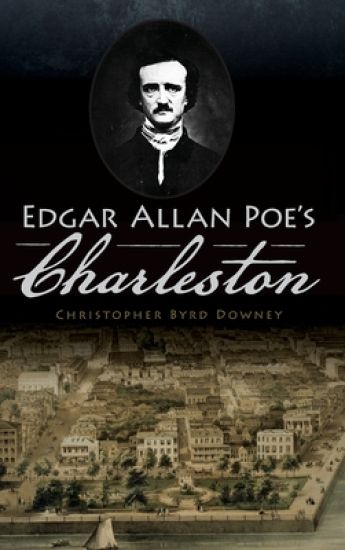
Edgar Allan Poe arrived in Charleston in November 1827 chased by storms, both literal and figurative. Some of the author's previous indiscretions caused him to enlist in the U.S. Army six months earlier under the pseudonym Edgar A. Perry. The more than on
Founded in 1670, Charleston is among the oldest cities in the nation and site of some of the most pivotal events in American history. Explore the city and discover the Old Exchange and Provost Dungeon where South Carolina ratified the U.S. Constitution in 1788. Visit beautiful Rainbow Row and learn the true history of this most iconic of Charleston sites. Tour the city's oldest church edifice at St. Michael's Church, which first opened for services in 1761. Join historian and author Christopher Byrd Downey for a guided tour of nearly one hundred historic Charleston sites tailor-made for the history lover.
A circle of spies travels by Cadillac from Switzerland to the Sudan in this critically acclaimed novel: "arguably the finest modern American spy story" (The New York Times). Paul Christopher is cool, urbane, clear-sighted--a perfect American agent in deep cover in the twilight world of international intrigue. But now even he does not know which side is good or bad in a maze of double- and triple-cross. When a small group of international agents embarks on a road trip from Switzerland to the Sudan, Christopher is among them. Along for the ride are a comical Polish exile, a beautiful Hungarian seductress, and a North African prince with an appetite for women and a lust for power. Christopher only knows that he has to find whose finger is on the trigger of a terrorist threat that could turn the Cold War uncomfortably hot--and God help everyone if he makes a mistake. Related as a collection of dossier notes on the mission, The Miernik Dossier reveals a complicated web in which each character spins his or her own deception.
*Includes Columbus's journal entries of his first voyage to the New World from August-October 1492. *Includes maps of Columbus's voyages and pictures depicting Columbus and important people, places, and events in his life. "At two o'clock in the morning the land was discovered...As I saw that they were very friendly to us, and perceived that they could be much more easily converted to our holy faith by gentle means than by force, I presented them with some red caps, and strings of beads to wear upon the neck, and many other trifles of small value, wherewith they were much delighted, and became wonderfully attached to us." - Christopher Columbus's diary, October 11-12, 1492 A lot of ink has been spilled covering the lives of history's most influential figures, but how much of the forest is lost for the trees? The Age of Exploration and the explorers who set out on their history-making expeditions left many legacies and profoundly influenced history around the world. The voyages of men like Columbus and the conquests of men like Cortes escalated tensions between the European nations, initiated imperialistic empires on a global scale, helped birth the United States, and ensured that the wars in the 20th century were truly world wars. In Charles River Editors' Legendary Explorers series, readers can get caught up to speed on the lives of the most important explorers of history in the time it takes to finish a commute, while learning interesting facts long forgotten or never known. The most seminal event of the last millennium might also be its most controversial. As schoolchildren have been taught for over 500 years, "In 1492 Columbus sailed the ocean blue." In October of that year, the Italian Christopher Columbus immortalized himself by landing in the New World and beginning the process of European settlement in the Americas for Spain, bringing the Age of Exploration to a new hemisphere with him. Ironically, the Italian had led a Spanish expedition, in part because the Portuguese rejected his offers in the belief that sailing west to Asia would take too long. Columbus had better luck with the Spanish royalty, successfully persuading Queen Isabella to commission his expedition. In August 1492, Columbus set west for India at the helm of the Nina, Pinta and Santa Maria. After a harrowing trip that nearly left his crew mutinous, on October 7, 1492, the three ships spotted flocks of birds, suggesting land was nearby, so Columbus followed the direction in which the birds flew. On the night of October 11, the expedition sighted land, and when Columbus came ashore the following day in the Bahamas, he thought he was in Japan, but the natives he came into contact with belied the descriptions of the people and lands of Asia as wealthy and resourceful. Instead, the bewildered Columbus would note in his journal that the natives painted their bodies, wore no clothes and had primitive weapons, leading him to the conclusion they would be easily converted to Catholicism. When he set sail for home in January 1493, he brought several imprisoned natives back to Spain with him. Everyone agrees that Columbus's discovery of the New World was one of the turning points in history, but agreements over his legacy end there. Columbus became such a towering figure in Western history that the United States' capital was named after George Washington and him. Conversely, among the Native Americans and indigenous tribes who suffered epidemics and enslavement at the hands of the European settlers, Columbus is widely portrayed as an archvillain. Legendary Explorers: The Life and Legacy of Christopher Columbus chronicles Columbus's life and his historic voyages, but it also examines the aftermath of his expeditions and analyzes the controversy surrounding his legacy. Along with maps and pictures, you will learn about Columbus like you never have before, in no time at all.
A masterful espionage thriller that delves into the murky depths of international intrigue and conspiracy, set in the aftermath of the assassination of President John F. Kennedy. Charles McCarry's novel, a major bestseller, follows Paul Christopher, an American intelligence officer and former Marine, as he uncovers a shocking theory about the true motives behind the assassination. Christopher's investigation leads him to believe that the Kennedy White House was involved in the assassination of Vietnamese President Ngo Dinh Diem, and that Vietnamese leaders orchestrated Kennedy's assassination in retaliation. As he pursues the truth, Christopher faces threats from powerful figures who want to keep the conspiracy buried. His relentless quest for answers takes him from Paris to Rome, Zurich, the Congo, and Saigon, revealing a web of deceit and danger. With its compelling narrative and richly drawn characters, The Tears of Autumn is a gripping tale of espionage, political intrigue, and the search for truth. Charles McCarry's novel is a must-read for fans of spy fiction and anyone intrigued by theories surrounding the Kennedy assassination.
*Includes extracts from Columbus's journal of his historic first voyage to the New World. *Includes Cortes's letter to King Charles V describing Tenochtitlan and the Aztec Empire. *Includes descriptions of both the Aztec and Inca Empires. *Includes pictures of the explorers and important people and places in their lives. *Includes a Bibliography for further reading. "At two o'clock in the morning the land was discovered...As I saw that they were very friendly to us, and perceived that they could be much more easily converted to our holy faith by gentle means than by force, I presented them with some red caps, and strings of beads to wear upon the neck, and many other trifles of small value, wherewith they were much delighted, and became wonderfully attached to us." - Christopher Columbus's diary, October 11-12, 1492 "Among these temples there is one which far surpasses all the rest, whose grandeur of architectural details no human tongue is able to describe; for within its precincts, surrounded by a lofty wall, there is room enough for a town of five hundred families." - Hern n Cort s "Friends and comrades On that side south] are toil, hunger, nakedness, the drenching storm, desertion, and death; on this side ease and pleasure. There lies Peru with its riches; here, Panama and its poverty. Choose, each man, what best becomes a brave Castilian. For my part, I go to the south." - Francisco Pizarro The most seminal event of the last millennium might also be its most controversial. As schoolchildren have been taught for over 500 years, "In 1492 Columbus sailed the ocean blue." In October of that year, the Italian Christopher Columbus immortalized himself by landing in the New World and beginning the process of European settlement in the Americas for Spain, bringing the Age of Exploration to a new hemisphere with him. Ironically, the Italian had led a Spanish expedition, in part because the Portugese rejected his offers in the belief that sailing west to Asia would take too long. Everyone agrees that Columbus's discovery of the New World was one of the turning points in history, but agreements over his legacy end there. Although his other three voyages to the New World were far less successful and largely overlooked in the narrative of his life, Columbus has become a towering figure in the annals of history. During the Age of Exploration, some of the most famous and infamous individuals were Spain's best known conquistadors. Naturally, as the best known conquistador, Hern n Cort s (1485-1547) is also the most controversial. Like Christopher Columbus before him, Cort s was lionized for his successes for centuries without questioning his tactics or motives, while indigenous views of the man have been overwhelmingly negative for the consequences his conquests had on the Aztecs and other natives in the region. Just about the only thing everyone agrees upon is that Cort s had a profound impact on the history of North America. If Columbus and Cort s were the pioneers of Spain's new global empire, Pizarro consolidated its immense power and riches, and his successes inspired a further generation to expand Spain's dominions to unheard of dimensions. Furthermore, he participated in the forging of a new culture: like Cort s, he took an indigenous mistress with whom he had two mixed-race children, and yet the woman has none of the lasting fame of Cort s's Do a Marina. With all of this in mind, it is again remarkable that Pizarro remains one of the less well-known and less written about of the explorers of his age. Discovering and Conquering the New World looks at the lives of the three famous explorers and their enduring legacies. Along with pictures of important people, places, and events, you will learn about Columbus, Cortes and Pizarro like you never have before.
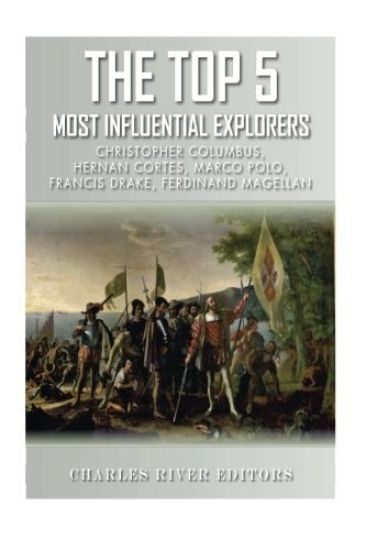
Includes extracts from Columbus's journal of his first voyage. Includes Cortes's letter to King Charles V describing Tenochtitlan and the Aztec Empire. Includes passages from Antonio Pigafetta, a member of Magellan's crew. Includes descriptions of both the Aztec and Inca Empires. Includes pictures of the explorers and important Includes a Bibliography for further reading. *Includes a Table of Contents. Marco Polo was hardly the only European merchant or trader who traveled to the Far East, but it was his written account of his travels that would generate extreme interest in Asia. Having described such a rich land full of desired resources, Marco Polo's travels became a source for European cartographers of the era, and they became the impetus for men like Christopher Columbus, who added his own annotations to Marco Polo's account and used it as a reference for his own legendary expedition in search of the Far East. Centuries later, historians have scoured over the account and what was written in an effort to validate its authenticity, leading to sharp debates today. The most seminal event of the last millennium might also be its most controversial. As schoolchildren have been taught for over 500 years, "In 1492 Columbus sailed the ocean blue." In October of that year, the Italian Christopher Columbus immortalized himself by landing in the New World and beginning the process of European settlement in the Americas for Spain, bringing the Age of Exploration to a new hemisphere with him. Ironically, the Italian had led a Spanish expedition, in part because the Portugese rejected his offers in the belief that sailing west to Asia would take too long. Today Ferdinand Magellan is remembered as the first man to circumnavigate the globe, an ironic legacy given that he died half a world away from completing that journey. But though it ended catastrophically for Magellan and most of his crew, his expedition accomplished its objective, and in economic terms, the opening up of new trade routes with Asia was a more significant development than the conquest of the Americas for the Europeans of the early 16th century. The life of Sir Francis Drake, or, more precisely, the tale of it, is one of those prime examples that history is written by the winners. Drake was the most famous sailor of the Elizabethan Era, and he has long been considered a hero by the English. His successes against the Spanish as a captain and a privateer were legendary, and Drake was celebrated for fighting the Queen's enemies, sinking their ships, and capturing the treasure that would otherwise be used to finance attacks on England. Drake vigorously pursued every mission given to him by Elizabeth I, and brought all his skill, experience and training to bear against her enemies. He was recognized at court for his valor, praised in story and song, and remembered for the kind of personality and esprit de corps that the English have long desired and celebrated in their military heroes.