Kirjojen hintavertailu. Mukana 11 244 527 kirjaa ja 12 kauppaa.

Kirjahaku

Etsi kirjoja tekijän nimen, kirjan nimen tai ISBN:n perusteella.

1000 tulosta hakusanalla Christopher Farnsworth

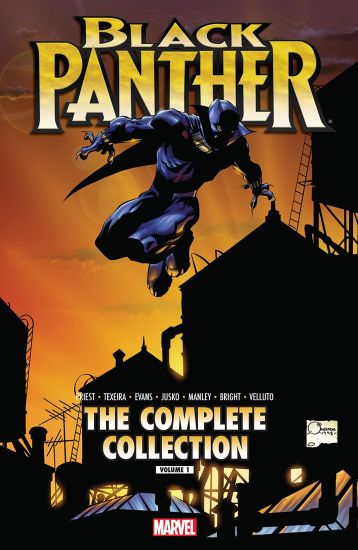
Black Panther By Christopher Priest: The Complete Collection Volume 1
Black Panther reinvented as a sharp and witty political satire? Believe it T'Challa is the man with the plan, as Christopher Priest puts the emphasis on the Wakandan king's reputation as the ultimate statesman, as seen through the eyes of the U.S. government's Everett K. Ross. As the Panther investigates a murder in New York, Ross plays Devil's Advocate in an encounter with Mephisto, and a new regime seizes control in Wakanda. COLLECTING Black Panther (1998) 1-17
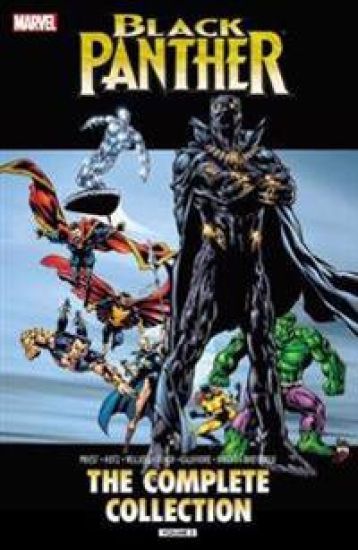
Black Panther By Christopher Priest: The Complete Collection Volume 2
When T'Challa falls to the one foe he's never beaten, Killmonger earns the right to become the new Black Panther Only Everett K. Ross can save T'Challa's life - okay, Ross plus Moon Knight, Brother Voodoo and the Panther God Still suffering, the deposed Wakandan leader finds himself caught in a cat trap with the Avengers and...Deadpool? Storm of the X-Men off ers comfort, as Wakanda fi nds itself on the verge of war with Lemuria and Atlantis - and Klaw, Malice and Man-Ape threaten to destroy the African Avenger once and for all COLLECTING: BLACK PANTHER (1998) 18-35, DEADPOOL (1997) 44
Christopher Lee and Peter Cushing and Horror Cinema

Christopher Lee and Peter Cushing and Horror Cinema

Mark A. Miller; David J. Hogan

McFarland Co Inc
2020
sidottu
From their first pairing in Hamlet (1948) to House of the Long Shadows (1983), British film stars Christopher Lee and Peter Cushing forged perhaps the most successful collaboration in horror film history. In its revised and expanded second edition, this volume examines their 22 movie team-ups, with critical commentary, complete cast and credits, production information, details on cinematography and make-up, exhibition history and box-office figures. A wealth of background about Hammer, Amicus and other production companies is provided, along with more than 100 illustrations. Lee and Cushing describe particulars of their partnership in original interviews. Exclusive interviews with Robert Bloch, Hazel Court and nearly fifty other actors, directors and others who worked on the Lee-Cushing films are included.
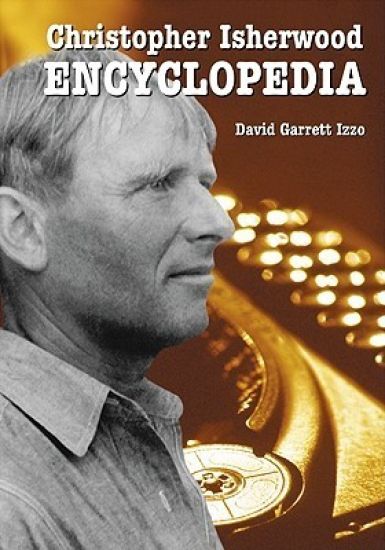
Christopher Isherwood Encyclopedia

Christopher Isherwood Encyclopedia

David Garrett Izzo

McFarland Co Inc
2010
pokkari
This comprehensive and accessible reference work serves Isherwood scholars who need quick access to people, places, novels, stories, essays and plays, introduces Isherwood to those who know little of him, expands the knowledge of the literate general reader, and refreshes teachers of literature with Isherwood details. Entries on Isherwood's most influential friends, including W.H. Auden, Aldous Huxley and Stephen Spender, are significant. Included are all of the monumental "roles" Isherwood exemplified during his life--writer, rebel, gay-activist hero, and proud exponent of the Eastern philosophy known as Vedanta.
The Christopher Parkening Guitar Method - Volume 2

The Christopher Parkening Guitar Method - Volume 2

Christopher Parkening

Hal Leonard Corporation
2005
nidottu
(Guitar Method). An outstanding source for the technique and repertoire of the classical guitar, this book continues where Vol. 1 leaves off. It teaches: all notes in the upper position; tone production; advanced techniques such as tremolo, harmonics, vibrato, pizzicato and slurs; practice tips; stylistic interpretation; and more. The first half of the book deals primarily with technique, while the second half of the book applies the technique with repertoire pieces. As a special bonus, this book includes 32 previously unpublished Parkening edition pieces by composers including Dowland, Bach, Scarlatti, Sor, Tarrega and others, plus three guitar duets.
Christopher Marlowe

Christopher Marlowe

Kuriyama Constance Brown

CORNELL UNIVERSITY PRESS
2002
sidottu
Christopher Marlowe (1564–1593) emerges in most accounts of his life by biographers and critics as a mysterious and sensational action figure, a hapless pawn of circumstance, or a pseudonymous cipher. Constance Brown Kuriyama's new biography reconstructs the eventful life of a radically innovative playwright who flourished briefly and died violently more than four hundred years ago, yet persists in the romantic imagination even today.Many discoveries about Marlowe's life have emerged over the past hundred years. The author here supplements these findings with new material, placing the dramatist and poet more precisely in his historical milieu. Kuriyama interprets Marlowe's acts of violence—inexplicable though they may seem—as logical consequences of the circumstances he faced. Experience and temperament both accounted for the characteristically brash way he moved through the world.The stringent constraints of Elizabethan society, which encouraged intense political and religious conflicts, had a great influence on Marlowe's thinking, while his ambitions were stirred by the period's unprecedented opportunities for talented individuals to rise in society. The documentary evidence assembled by Kuriyama—and made available to readers—allows her to show how Marlowe was able to take advantage of Elizabethan social mobility. In the context of Elizabethan education, society, and culture, Marlowe becomes a fully human, three-dimensional figure.
Christopher Marlowe

Christopher Marlowe

Constance Brown Kuriyama

Cornell University Press
2010
pokkari
Christopher Marlowe (1564–1593) emerges in most accounts of his life by biographers and critics as a mysterious and sensational action figure, a hapless pawn of circumstance, or a pseudonymous cipher. Constance Brown Kuriyama's new biography reconstructs the eventful life of a radically innovative playwright who flourished briefly and died violently more than four hundred years ago, yet persists in the romantic imagination even today. Many discoveries about Marlowe's life have emerged over the past hundred years. The author here supplements these findings with new material, placing the dramatist and poet more precisely in his historical milieu. Kuriyama interprets Marlowe's acts of violence—inexplicable though they may seem—as logical consequences of the circumstances he faced. Experience and temperament both accounted for the characteristically brash way he moved through the world. The stringent constraints of Elizabethan society, which encouraged intense political and religious conflicts, had a great influence on Marlowe's thinking, while his ambitions were stirred by the period's unprecedented opportunities for talented individuals to rise in society. The documentary evidence assembled by Kuriyama—and made available to readers—allows her to show how Marlowe was able to take advantage of Elizabethan social mobility. In the context of Elizabethan education, society, and culture, Marlowe becomes a fully human, three-dimensional figure.
Christopher Durang Explains it All for You

Christopher Durang Explains it All for You

Christopher Durang

Avalon Travel Publishing
1994
nidottu
Few playwrights have explored as relentlessly as Christopher Durang the pain and confusion of everyday life--or made us laugh so uproariously at the results. Sister Mary Ignatius Explains It All for You, the center of a storm of controversy for its satire of misplaced trust in religious authority," remains as powerful today as when it was originally produced. The excruciatingly funny The Nature and Purpose of the Universe asks whether Eleanor Mann's Job-like suffering is really her fault, while Titanic takes us into the heart of children's anger with their parents and parents' manipula-tion of their children. In Beyond Therapy, two horrifyingly human therapists pursue their own needs at the expense of the most mismatched couple ever to meet through a personal ad. Also including 'Dentity Crisis and The Actor's Nightmare, this collection demonstrates that laughter is the best surgery, slicing through prejudice and hypocrisy, cutting out dead beliefs and inflamed opinions. These dark comedies, lit by lightning bolts of truth and humor, are among the most illuminating in American drama, by "one of the most explosively funny American dramatists" (Newsweek). Includes: The Nature and Purpose of the Universe 'Dentity Crisis Titanic The Actor's Nightmare Sister Mary Ignatius Explains It All for You Beyond Therapy
The Diario of Christopher Columbus's First Voyage to America, 1492-1493

The Diario of Christopher Columbus's First Voyage to America, 1492-1493

Christopher Columbus

University of Oklahoma Press
1991
nidottu
As the Quincentennial Celebration of Christopher Columbus's discovery of America approaches, interest in the voyage, and in the questions surrounding it, continues to grow. This definitive edition of Columbus's account of the voyage presents the most accurate printed version of his journal available to date. Unfortunately both Columbus's original manuscript, presented to Ferdinand and Isabella along with other evidence of his discoveries, and a single complete copy have been lost for centuries. The primary surviving record of the voyage-part quotation, part summary of the complete copy-is a transcription made by Bartolomé de las Casas in the 1530s.This new edition of the Las Casas manuscript presents its entire contents-including notes, insertions, and canceled text-more accurately, completely, and graphically than any other Spanish text published so far. In addition, the new translation, which strives for readability and accuracy, appears on pages facing the Spanish, encouraging on-the- spot comparisons of the translation with the original. Study of the work is further facilitated by extensive notes, documenting differences between the editors' transcription and translation and those of other transcribers and translators and summarizing current research and debates on unanswered current research and debates on unanswered questions concerning the voyage. In addition to being the only edition in which Spanish and English are presented side by side, this edition includes the only concordance ever prepared for the Diario.Awaited by scholars, this new edition will help reduce the guesswork that has long plagued the study of Columbus's voyage. It may shed light on a number of issues related to Columbus's navigational methods and the identity of his landing places, issues whose resolution depend, at least in part, on an accurate transcription of the Diario. Containing day-by-day accounts of the voyage and the first sighting of land, of the first encounters with the native populations and the first appraisals of his islands explored, and of a suspenseful return voyage to Spain, the Diario provides a fascinating and useful account to historians, geographers, anthropologists, sailors, students, and anyone else interested in the discovery-or in a very good sea story.
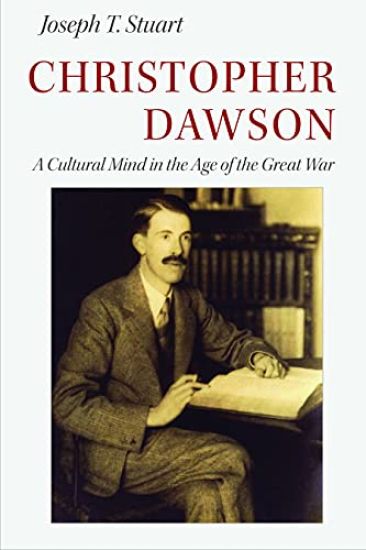
Christopher Dawson

Christopher Dawson

Jospeh T. Stuart

THE CATHOLIC UNIVERSITY OF AMERICA PRESS
2022
nidottu
The English historian Christopher Dawson (1889-1970) was the first Catholic Studies professor at Harvard University and has been described as one of the foremost Catholic thinkers of modern times. His focus on culture prefigured its importance in Catholicism since Vatican Council II and in the rise of mainstream cultural history in the late twentieth century. How did Dawson think about culture and why does it matter? Joseph T. Stuart argues that through Dawson's study of world cultures, he acquired a "cultural mind" by which he attempted to integrate knowledge according to four implicit rules: intellectual architecture, boundary thinking, intellectual asceticism, and intellectual bridges. Dawson's multilayered approach to culture, instantiating John Henry Newman's philosophical habit of mind, is key to his work and its relevance. By it, he responded to the cultural fragmentation he sensed after the Great War (1914-1918). Stuart supports these claims by demonstrating how Dawson formed his cultural mind practicing an interdisciplinary science of culture involving anthropology, sociology, history, and comparative religion. Stuart shows how Dawson applied his cultural thinking to problems in politics and education.This book establishes how Dawson's simple definition of culture as a "common way of life" reconciles intellectualist and behavioral approaches to culture. In addition, Dawson's cultural mind provides a synthesis helpful for recognizing the importance of Christian culture in education. It demonstrates principles which construct a more meaningful cultural history. Anyone interested in the idea of culture, the connection of religion to the social sciences, Catholic Studies, or Dawson studies will find this book an engaging and insightful intellectual history.
Christopher Hitchens and His Critics

Christopher Hitchens and His Critics

New York University Press
2008
sidottu
A provocative volume of the controversial radical thinker Christopher Hitchens—political journalist, cultural critic, public intellectual and self-described contrarian—is one of the most controversial and prolific writers of his generation. His most recent book, God Is Not Great, was on the New York Times bestseller list in 2007 for months. Like his hero, George Orwell, Hitchens is a tireless opponent of all forms of cruelty, ideological dogma, religious superstition and intellectual obfuscation. Once a socialist, he now refers to himself as an unaffiliated radical. As a thinker, Hitchens is perhaps best viewed as post-ideological, in that his intellectual sources and solidarities are strikingly various (he is an admirer of both Leon Trotsky and Kingsley Amis) and cannot be located easily at any one point on the ideological spectrum. Since leaving Britain for the United States in 1981, Hitchens's thinking has moved in what some see as contradictory directions, but he remains an unapologetic and passionate defender of the Enlightenment values of secularism, democracy, free expression, and scientific inquiry. The global turmoil of the recent past has provoked intense dispute and division among intellectuals, academics, and other commentators. Hitchens's writing during this time, particularly after 9/11, is an essential reference point for understanding the genesis and meaning of that turmoil—and the challenges that accompany it. This volume brings together Hitchens's most incisive reflections on the war on terror, the war in Iraq, and the state of the contemporary Left. It also includes a selection of critical commentaries on his work from his former leftist comrades, a set of exchanges between Hitchens and various left-leaning interlocutors (such as Studs Terkel, Norman Finkelstein, and Michael Kazin), and an introductory essay by the editors on the nature and significance of Hitchens's contribution to the world of ideas and public debate. In response, Hitchens provides an original afterword, written for this collection. Whatever readers might think about Hitchens, he remains an intellectual force to be reckoned with. And there is no better place to encounter his current thinking than in this provocative volume.
Christopher Hitchens and His Critics

Christopher Hitchens and His Critics

New York University Press
2008
pokkari
A provocative volume of the controversial radical thinker Christopher Hitchens—political journalist, cultural critic, public intellectual and self-described contrarian—is one of the most controversial and prolific writers of his generation. His most recent book, God Is Not Great, was on the New York Times bestseller list in 2007 for months. Like his hero, George Orwell, Hitchens is a tireless opponent of all forms of cruelty, ideological dogma, religious superstition and intellectual obfuscation. Once a socialist, he now refers to himself as an unaffiliated radical. As a thinker, Hitchens is perhaps best viewed as post-ideological, in that his intellectual sources and solidarities are strikingly various (he is an admirer of both Leon Trotsky and Kingsley Amis) and cannot be located easily at any one point on the ideological spectrum. Since leaving Britain for the United States in 1981, Hitchens's thinking has moved in what some see as contradictory directions, but he remains an unapologetic and passionate defender of the Enlightenment values of secularism, democracy, free expression, and scientific inquiry. The global turmoil of the recent past has provoked intense dispute and division among intellectuals, academics, and other commentators. Hitchens's writing during this time, particularly after 9/11, is an essential reference point for understanding the genesis and meaning of that turmoil—and the challenges that accompany it. This volume brings together Hitchens's most incisive reflections on the war on terror, the war in Iraq, and the state of the contemporary Left. It also includes a selection of critical commentaries on his work from his former leftist comrades, a set of exchanges between Hitchens and various left-leaning interlocutors (such as Studs Terkel, Norman Finkelstein, and Michael Kazin), and an introductory essay by the editors on the nature and significance of Hitchens's contribution to the world of ideas and public debate. In response, Hitchens provides an original afterword, written for this collection. Whatever readers might think about Hitchens, he remains an intellectual force to be reckoned with. And there is no better place to encounter his current thinking than in this provocative volume.
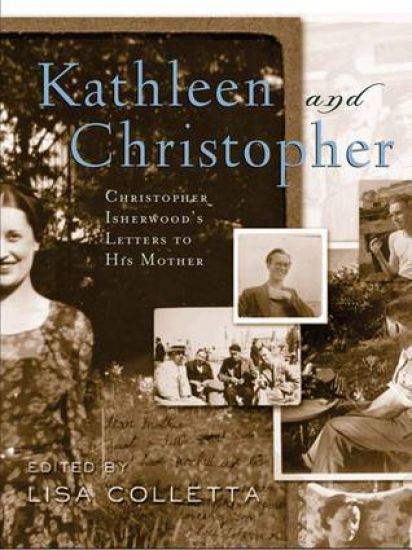
Kathleen and Christopher

Kathleen and Christopher

Christopher Isherwood

University of Minnesota Press
2005
sidottu
Opening a window into the most fascinating and, in many ways, most mysterious period in Christopher Isherwood's life, Kathleen and Christopher collects more than one hundred previously unpublished letters the young author wrote to his mother between 1935 and 1940. Composed while he was still a struggling writer, they offer a brilliant eyewitness account of Europe on the brink of war and an intimate look at the early career of a major literary figure. Because Isherwood destroyed his diaries from these years, these letters—published for the first time and edited and introduced by Lisa Colletta—provide one of the few records of this part of his life not filtered through the lens of time and memory. They contain requests for money and books, descriptions of his travels, stories of his friends W. H. Auden and Stephen Spender, reactions to the critical reception of his Berlin Stories, and a tense account of his failed attempt to save his lover Heinz from conscription into the Nazi military. The final letters in this volume document Isherwood's journey to Los Angeles, where he permanently settled. Also included are thirty images from Isherwood's personal photo album and reproductions of postcards from his international travels. Warm, confiding, and sometimes quite caustic, the letters also reveal a closer affection between the young Isherwood and his mother than his biographers have portrayed. While Isherwood acknowledged that it took him a long time to come to terms with his mother's influence on his life, the letters in Kathleen and Christopher dispute the prevalent idea that theirs was a relationship rife with conflict. Isherwood's everyday correspondence, written in extraordinary times, reveals a complex yet wholly recognizable and very close bond between mother and son. She was for him, in turns, an agent, a sounding board, and an unbreakable connection to England. Lisa Colletta is assistant professor of English at Babson College. She is the author of Dark Humor and Social Satire in the Modern British Novel.
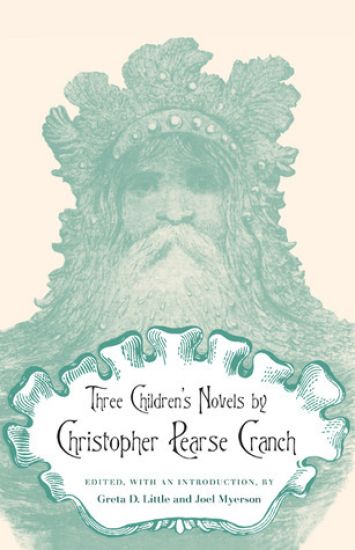
Three Children's Novels by Christopher Pearse Cranch

Three Children's Novels by Christopher Pearse Cranch

Christopher Pearse Cranch

University of Georgia Press
2010
pokkari
In his day, Christopher Pearse Cranch (1813–1892) was a well-known figure in American arts and letters, with close ties to the New England Transcendentalists. His most enduring achievements are his novels for children. Collected here for the first time in one volume, these three works—The Last of the Huggermuggers, Kobboltozo: A Sequel to the Last of the Huggermuggers, and The Legend of Dr. Theophilus; or, The Enchanted Clothes—establish Cranch as a pioneer in American fantasy fiction.Huggermuggers (1856) and Kobboltozo (1857) went through several printings during the last half of the nineteenth century but were not reissued until the initial publication of this volume in 1993. These novels relate the escapades of a shipwrecked American boy, Jacky Cable, and the gentle giants and evil dwarfs who inhabit the island on which he is marooned. The manuscript of Cranch’s last unpublished novel, The Legend of Dr. Theophilus, disappeared around 1870 and did not resurface until the early 1980s. The story revolves around a faraway place where the sun cannot penetrate the fog and where a suit of enchanted clothes can cause mayhem and grief.As the editors explain in their introduction, Cranch was the first American author to write novel-length works solely for children, and to fuse elements of fantasy and adventure. In an era when most juvenile books emphasized moral rectitude and acquiescence to adult authority, Cranch put a higher premium on humor and the imaginative aspects of storytelling. Written during an important transition in the history of American children’s literature, these three novels are of special interest to scholars of American Romanticism. Perhaps most important of all, they have not lost their attraction for young readers.
Christopher Morley's New York

Christopher Morley's New York

Christopher Morley

Fordham University Press
1988
sidottu
A collection of fifty-five essays, written mostly in the mid-twenties but with some later examples as well, Christopher Morley's New York presents in rich, evocative detail New York at the end of World War I – that heady time after the doughboys returned, the Twenties got roaring, the Volstead Act found itself thwarted, and a lot of progressive life got on with its business before running into the wall of the Great Depression. In the first section of the book, East Side, West Side, All Around the Town, we experience New York just as Morley did: through its bookstores, restaurants, taverns, waterfronts, and other locales that lent the city its unique, rough-and-tumble character. But we're also treated to a vivid picture of Christopher Morley himself, particularly in the next section, The Three Hours for Lunch Club, in which Morley's gusto in food, drink, companionship, conversation, and general bonhomie is plainly evident. Finally, in the last section, we experience another, suburban New York: Roslyn, Long Island, where for years Morley lived with his wife and family. Contrasted with the vulgar beauty of the city, the natural splendor Morley encountered on Long Island is particularly affecting. This attractive volume is enhanced by the evocative period illustrations of Walter Jack Duncan, who illustrated so many Morley first editions.