Kirjahaku
Etsi kirjoja tekijän nimen, kirjan nimen tai ISBN:n perusteella.
1000 tulosta hakusanalla Conrad Mbewe
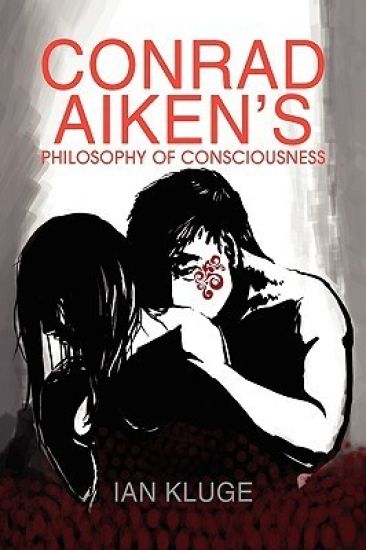
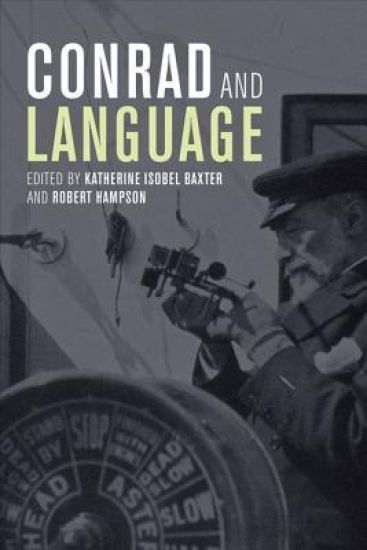
Conrad and Language
Edinburgh University Press
2016
sidottu
Opens up the rich topic of Joseph Conrad's complex relationship with languageJoseph Conrad was, famously, trilingual in Polish, French and English, and was also familiar with German, Russian, Dutch and Malay. He was also a consummate stylist, using words with the precision of a poet in his fiction.The essays in this collection examine his engagement with specific lexical sets and terminology maritime language, the language of terror, and abstract language; issues of linguistic communication speech, hearing, and writing; and his relationship to specific languages his deployment of foreign languages, his decision to write in English, and his reception through translation. The collection closes with an Afterword by renowned Conrad scholar, Laurence Davies.Key FeaturesThe first academic and critical study wholly devoted to the topic of Conrad and language, and the first to address that topic from a diversity of critical approachesSpeaks to a range of current trends in literary criticism including transnationalism, lateness, translation studies, terrorism and disabilities studiesComprises newly commissioned essays by leading and emerging Conrad scholars from around the world, employing a variety of approaches including philosophy, psychoanalytical theory, biographical theory, as well as textually driven readings
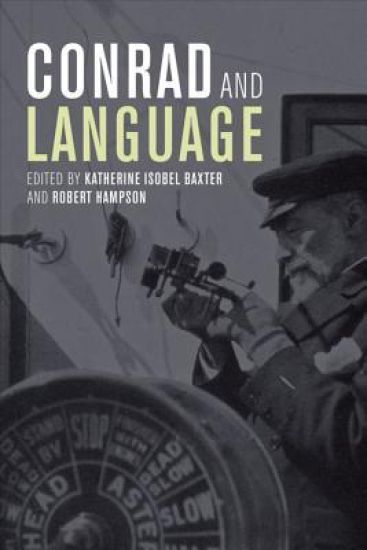
Conrad and Language
Katherine Isobel (EDT) Baxter; Robert (EDT) Hampson
Edinburgh University Press
2017
pokkari
Joseph Conrad was, famously, trilingual in Polish, French and English, and was also familiar with German, Russian, Dutch and Malay. He was also a consummate stylist, using words with the precision of a poet in his fiction. The essays in this collection examine his engagement with specific lexical sets and terminology - maritime language, the language of terror, and abstract language; issues of linguistic communication - speech, hearing, and writing; and his relationship to specific languages - his deployment of foreign languages, his decision to write in English, and his reception through translation. The collection closes with an Afterword by renowned Conrad scholar, Laurence Davies.
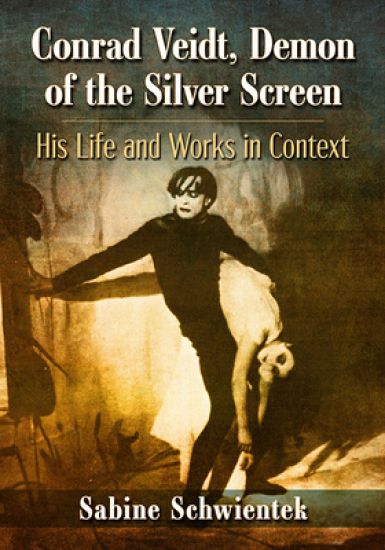
This book depicts the life of Conrad Veidt (1893-1943), the defining German actor of Expressionist cinema in the 1920s. His legendary performance in Das Cabinet des Dr. Caligari (1919/20) earned him the epithet "Demon of the Screen" and made Veidt an international star. To this day, Veidt is considered an icon of early horror film. He showed his acting range in more than a hundred films, among them masterpieces such as The Indian Tomb (1921), Orlac's Hands (1924), The Man Who Laughs (1928), The Thief of Bagdad (1940), and Casablanca (1942). Conrad Veidt used his acting career to become socially and politically involved, starting with the film Anders als die Anderen, the first film to advocate homosexual rights, in 1919. After the Nazis came to power, he left Germany to protest anti-Semitism and Nazi rule. Along with his biography, this book provides insights into the development of filmmaking from its beginnings through the 1940s, an epoch of cinematic art marked by technical innovations like sound and color film and by world-shaking events, including two world wars.
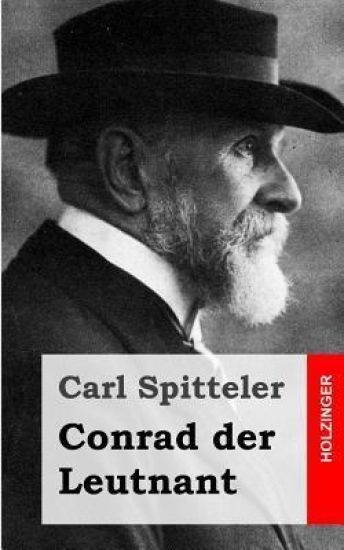
Carl Spitteler: Conrad der Leutnant. Eine Darstellung Seine naturalistische Darstellung eines Vater-Sohn Konfliktes leitet Spitteler 1898 mit einem Programm zum Inneren Monolog ein. Zwei Jahre sp ter erscheint Schnitzlers Leutnant Gustl" der als Schl sseltext und Einf hrung des inneren Monologes in die deutsche Literatur gilt. Edition Holzinger. Taschenbuch Berliner Ausgabe, 2017, 4. Auflage Durchgesehener Neusatz mit einer Biographie des Autors bearbeitet und eingerichtet von Michael Holzinger Erstdruck: Berlin (Vita) 1898. Textgrundlage ist die Ausgabe: Carl Spitteler: Gesammelte Werke. Herausgegeben von Gottfried Bohnenblust, Wilhelm Altweg und Robert Faesi. Mit einem Geleitwort von Bundesrat Philipp Etter, 9 B nde und 2 Geleitb nde, Z rich: Artemis, 1945-1958. Herausgeber der Reihe: Michael Holzinger Reihengestaltung: Viktor Harvion Umschlaggestaltung unter Verwendung des Bildes: Carl Spitteler (Fotografie) Gesetzt aus der Minion Pro, 10 pt.
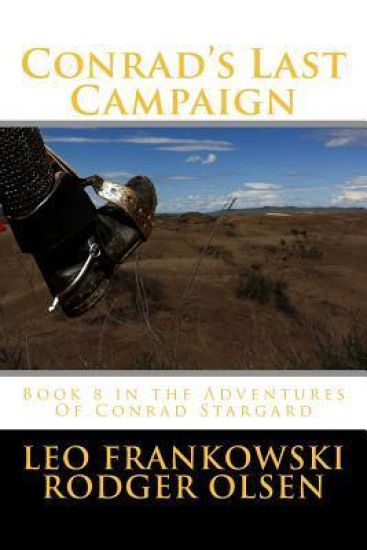
Conrad's Last Campaign: Book 8 in the Adventures Of Conrad Stargard
Rodger Olsen
Createspace Independent Publishing Platform
2014
nidottu
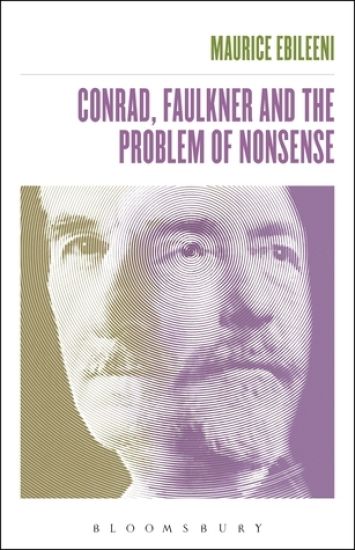
Maurice Ebileeni explores the thematic and stylistic problems in the major novels of Joseph Conrad and William Faulkner through Jacques Lacan’s psychoanalytic theories. Against the background of the cultural, scientific, and historic changes that occurred at the turn of the 20th century, describing the landscape of ruins bequeathed to humanists by the forefathers of the Counter-Enlightenment movement (Schopenhauer, Kierkegaard, Nietzsche, Dostoyevsky, and Baudelaire), Ebileeni proposes that Conrad and Faulkner wrote against impossible odds, metaphorically standing at the edge of a chaotic abyss that initially would spill over into the challenges of literary production. Both authors discovered that underneath, behind, or within the intuitively comprehensible narrative layers there exists a nonsensical dimension, constantly threatening to dissolve any attempt at producing intelligible meaning. Ebileeni argues that in Conrad’s and Faulkner’s major novels, the quest for meaning in confronting the prospects of nonsense becomes a necessary symptom of human experience to both avoid and engage the entropy of modern life.
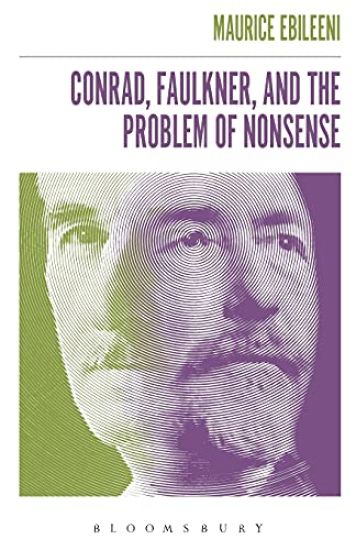
Maurice Ebileeni explores the thematic and stylistic problems in the major novels of Joseph Conrad and William Faulkner through Jacques Lacan’s psychoanalytic theories. Against the background of the cultural, scientific, and historic changes that occurred at the turn of the 20th century, describing the landscape of ruins bequeathed to humanists by the forefathers of the Counter-Enlightenment movement (Schopenhauer, Kierkegaard, Nietzsche, Dostoyevsky, and Baudelaire), Ebileeni proposes that Conrad and Faulkner wrote against impossible odds, metaphorically standing at the edge of a chaotic abyss that initially would spill over into the challenges of literary production. Both authors discovered that underneath, behind, or within the intuitively comprehensible narrative layers there exists a nonsensical dimension, constantly threatening to dissolve any attempt at producing intelligible meaning. Ebileeni argues that in Conrad’s and Faulkner’s major novels, the quest for meaning in confronting the prospects of nonsense becomes a necessary symptom of human experience to both avoid and engage the entropy of modern life.


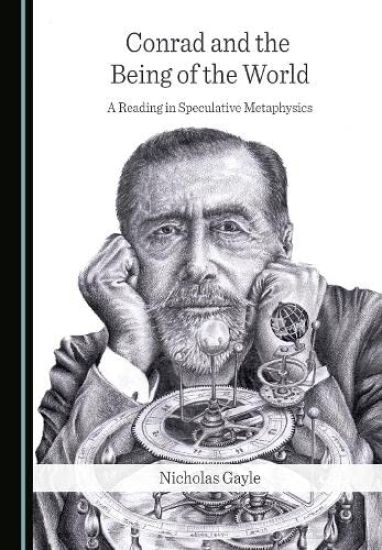
Why is it that many readers sense in Joseph Conrad's universe something opaque and withdrawn, a suggestive feeling of something lying behind his richly textured prose that is possibly momentous, always hidden, but never fully expressed? This unique study explores and answers this question by analysing Conrad's work through the lens of Object-Oriented Ontology, a new development in contemporary philosophy that has already been employed to illuminating effect in aesthetics and the humanities, quite apart from philosophy itself. What results from such a literary and philosophical coupling is a persuasive reading with real explanatory force, one able to shed light on what has remained hidden in Conrad till now, at the same time as it articulates a metaphysical structure of not just Conrad's world but the universe itself and the very things we are—and what we take ourselves to be.