Kirjahaku
Etsi kirjoja tekijän nimen, kirjan nimen tai ISBN:n perusteella.
1000 tulosta hakusanalla Craig A Parton

Action Research: Improving Schools and Empowering Educators, Seventh Edition introduces both beginning and experienced educators to the process of designing and conducting classroom-based action research. This practical text focuses on research methods and procedures that educators can use in their everyday instructional practices, classroom activities, and school settings.

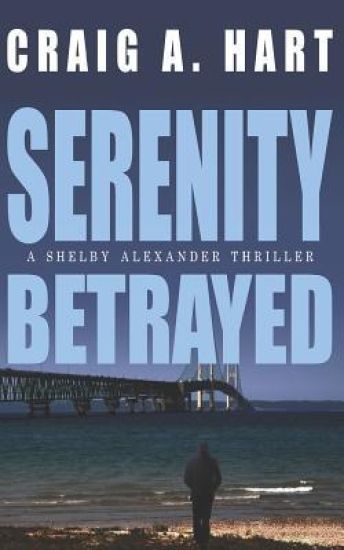
After the Governor of Michigan begins receiving threats from a militant environmental group, he calls in extra security.The problem? He fears there might be a traitor on his security detail.The solution? Call in an independent contractor.The man for the job? An ex-boxer and semi-retired fixer named Shelby Alexander.But who can be trusted? As it turns out ... no one.Along with his best buddy and right hand man Jerry "Mack" MacIntyre, Shelby steps in to protect the governor of his beloved state. It doesn't take long for the fireworks to start and the betrayals to run thick and heavy.Don't miss this rollercoaster ride of danger, action, and high stakes treachery

Author Craig A. Opal addresses the most important prophetic questions of our time: How many Seals of Revelation have been broken and has the last Great Tribulation already begun? Many from all over the world are beginning to ask this, because they can see for themselves the evidences of the end times all around them. "Revelation Unleashed: Re-Discovering The Blessed Hope," answers this question and many others, as we inch closer and closer to the first "Great and Terrible Day of the Lord's Wrath," which is about to be unleashed on the world any day now. Are you ready for what is about to happen? Did you know that a massive worldwide earthquake along with millions of fires was predicted to occur in the last days? Did you know that the "Great Tribulation" begins with these events among others? Craig will not only show you proof that these things are about to occur, but also to give hope and encouragement to those who are looking for answers, as well as an escape from the troubles to come.
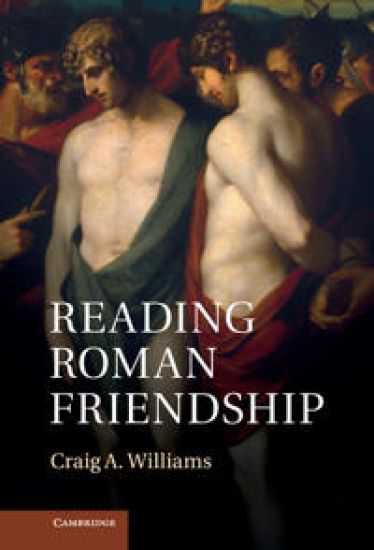
This book invites us to approach friendship not as something that simply is, but as something performed in and through language. Roman friendship is read across a wide spectrum of Latin texts, from Catullus' poetry to Petronius' Satyricon to the philosophical writings of Cicero and Seneca, from letters exchanged by the Emperor Marcus Aurelius and his beloved teacher Fronto, to those written by men and women at an outpost in northern Britain. One of the most innovative features of this study is the equal attention it pays to Latin literature and to inscriptions carved in stone across the Roman Empire. What emerges is a richly varied and perhaps surprising picture. Hundreds of epitaphs, commissioned by men and women, citizens and slaves, record the commemoration of friends, which is of equal importance to understanding Roman friendship as Cicero's influential essay De amicitia.
This book invites us to approach friendship not as something that simply is, but as something performed in and through language. Roman friendship is read across a wide spectrum of Latin texts, from Catullus' poetry to Petronius' Satyricon to the philosophical writings of Cicero and Seneca, from letters exchanged by the Emperor Marcus Aurelius and his beloved teacher Fronto, to those written by men and women at an outpost in northern Britain. One of the most innovative features of this study is the equal attention it pays to Latin literature and to inscriptions carved in stone across the Roman Empire. What emerges is a richly varied and perhaps surprising picture. Hundreds of epitaphs, commissioned by men and women, citizens and slaves, record the commemoration of friends, which is of equal importance to understanding Roman friendship as Cicero's influential essay De amicitia.
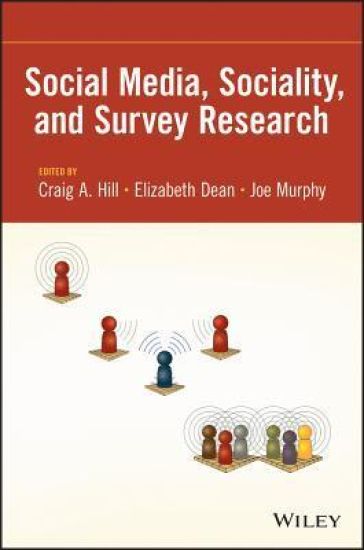
Social Media, Sociality, and Survey Research
Craig A. Hill; Elizabeth Dean; Joe Murphy
John Wiley Sons Inc
2013
nidottu
Provides the knowledge and tools needed for the future of survey research The survey research discipline faces unprecedented challenges, such as falling response rates, inadequate sampling frames, and antiquated approaches and tools. Addressing this changing landscape, Social Media, Sociality, and Survey Research introduces readers to a multitude of new techniques in data collection in one of the fastest developing areas of survey research. The book is organized around the central idea of a "sociality hierarchy" in social media interactions, comprised of three levels: broadcast, conversational, and community based. Social Media, Sociality, and Survey Research offers balanced coverage of the theory and practice of traditional survey research, while providing a conceptual framework for the opportunities social media platforms allow. Demonstrating varying perspectives and approaches to working with social media, the book features: New ways to approach data collection using platforms such as Facebook and TwitterAlternate methods for reaching out to interview subjectsDesign features that encourage participation with engaging, interactive surveys Social Media, Sociality, and Survey Research is an important resource for survey researchers, market researchers, and practitioners who collect and analyze data in order to identify trends and draw reliable conclusions in the areas of business, sociology, psychology, and population studies. The book is also a useful text for upper-undergraduate and graduate-level courses on survey methodology and market research.
Thorough coverage of space flight topics with self-contained chapters serving a variety of courses in orbital mechanics, spacecraft dynamics, and astronautics This concise yet comprehensive book on space flight dynamics addresses all phases of a space mission: getting to space (launch trajectories), satellite motion in space (orbital motion, orbit transfers, attitude dynamics), and returning from space (entry flight mechanics). It focuses on orbital mechanics with emphasis on two-body motion, orbit determination, and orbital maneuvers with applications in Earth-centered missions and interplanetary missions. Space Flight Dynamics presents wide-ranging information on a host of topics not always covered in competing books. It discusses relative motion, entry flight mechanics, low-thrust transfers, rocket propulsion fundamentals, attitude dynamics, and attitude control. The book is filled with illustrated concepts and real-world examples drawn from the space industry. Additionally, the book includes a “computational toolbox” composed of MATLAB M-files for performing space mission analysis. Key features: Provides practical, real-world examples illustrating key concepts throughout the bookAccompanied by a website containing MATLAB M-files for conducting space mission analysisPresents numerous space flight topics absent in competing titles Space Flight Dynamics is a welcome addition to the field, ideally suited for upper-level undergraduate and graduate students studying aerospace engineering.
The simulation of complex, integrated engineering systems is a core tool in industry which has been greatly enhanced by the MATLAB and Simulink software programs. The second edition of Dynamic Systems: Modeling, Simulation, and Control teaches engineering students how to leverage powerful simulation environments to analyze complex systems. Designed for introductory courses in dynamic systems and control, this textbook emphasizes practical applications through numerous case studies--derived from top-level engineering from the AMSE Journal of Dynamic Systems. Comprehensive yet concise chapters introduce fundamental concepts while demonstrating physical engineering applications. Aligning with current industry practice, the text covers essential topics such as analysis, design, and control of physical engineering systems, often composed of interacting mechanical, electrical, and fluid subsystem components. Major topics include mathematical modeling, system-response analysis, and feedback control systems. A wide variety of end-of-chapter problems--including conceptual problems, MATLAB problems, and Engineering Application problems--help students understand and perform numerical simulations for integrated systems.
There is now a palpable sense of optimism about the role of cities and transnational city-networks in global climate governance. Yet, amidst the euphoria, there is also a sense that the power that has been ascribed to – and frequently assumed by – cities has been overstated; that the power of cities and city-networks to make a difference in global climate politics is not what it appears. This book explores the implications of city-engagement in global climate politics, outlining a theoretical framework that can be used to understand the power of cities in relation to transnational city-networks, multinational corporations and nation-states. The book will be of interest to students and scholars of transnational governance, global environmental politics and climate change.
Action Research Communities presents a new perspective on two current and proven educational practices: classroom-/school-based action research and professional learning communities. Implementation of one or the other of these practices often results in a variety of possible benefits for the teaching–learning process, for student achievement, and for overall school improvement. While these might seem to be separate, isolated practices, the author has taken the beneficial aspects of each practice and merged them into a cohesive and potentially powerful concept, coined "action research communities." Each of the two concepts or approaches (action research and professional learning communities) is presented and discussed in detail. Because they both focus on local-level improvement of educational practice and share several overlapping features, the two concepts are then merged into a single entity—action research communities, or ARCs. These professional learning communities, with action research at their core, hold an immense amount of power and potential when it comes to enhanced professional growth and development for educators, increased student achievement, school improvement, and educator empowerment. ARCs essentially capitalize on all the individualized benefits and strengths of action research and of professional learning communities, and merge them into a single educational concept and practice. ARCs have the potential to help educators everywhere experience:•a common and collective focus and vision;• sustained collaborative inquiry;•individualized, customizable—and meaningful—professional growth; and•true empowerment that comes with this form of collaborative, inquiry-based, and reflective practice.Practical guidance for the development and implementation of ARCs is also provided, by focusing on ways in which professional educators (teachers, administrators, support staff, etc.) can implement, sustain, and extend the impact of their respective action research communities. Specific roles for district administrators, building administrators, and teachers are presented and discussed in depth, as are ways that ARCs can be used both to deepen professional learning for educators and to improve student learning.
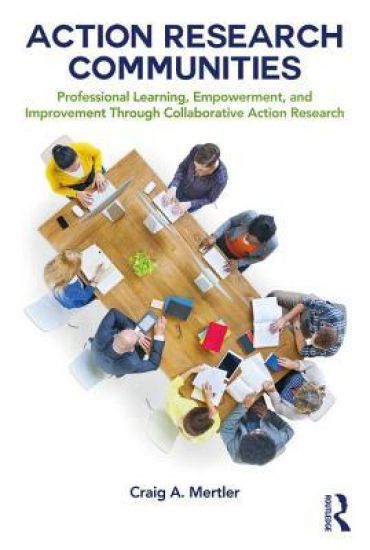
Action Research Communities presents a new perspective on two current and proven educational practices: classroom-/school-based action research and professional learning communities. Implementation of one or the other of these practices often results in a variety of possible benefits for the teaching–learning process, for student achievement, and for overall school improvement. While these might seem to be separate, isolated practices, the author has taken the beneficial aspects of each practice and merged them into a cohesive and potentially powerful concept, coined "action research communities." Each of the two concepts or approaches (action research and professional learning communities) is presented and discussed in detail. Because they both focus on local-level improvement of educational practice and share several overlapping features, the two concepts are then merged into a single entity—action research communities, or ARCs. These professional learning communities, with action research at their core, hold an immense amount of power and potential when it comes to enhanced professional growth and development for educators, increased student achievement, school improvement, and educator empowerment. ARCs essentially capitalize on all the individualized benefits and strengths of action research and of professional learning communities, and merge them into a single educational concept and practice. ARCs have the potential to help educators everywhere experience:•a common and collective focus and vision;• sustained collaborative inquiry;•individualized, customizable—and meaningful—professional growth; and•true empowerment that comes with this form of collaborative, inquiry-based, and reflective practice.Practical guidance for the development and implementation of ARCs is also provided, by focusing on ways in which professional educators (teachers, administrators, support staff, etc.) can implement, sustain, and extend the impact of their respective action research communities. Specific roles for district administrators, building administrators, and teachers are presented and discussed in depth, as are ways that ARCs can be used both to deepen professional learning for educators and to improve student learning.
Presents an Australian perspective on the issues in expressive arts in early childhood education by authors who are researching, teaching and actively involved in the arts as theatre directors, painter designers, adjudicators, advisers, actors or arts administrators in community organizations at the national and international level. It constitutes a collective look at the arts and young children. This volume covers a wide spectrum of arts areas, including the roles of the teacher as co-worker, collaborator, guide, facilitator and stage-manager; the tertiary educator in indigenous art, improvizational drama, and movement and dance; and the early childhood adviser in national, non-commercial television production. In addition, there is discussion on the national broadcasting standards required for children's commercial television production in Australia, the value of language and literature in the lives of young children and experimental programmes for theatre companies and symphony orchestras.