Kirjojen hintavertailu. Mukana 11 244 527 kirjaa ja 12 kauppaa.

Kirjahaku

Etsi kirjoja tekijän nimen, kirjan nimen tai ISBN:n perusteella.

1000 tulosta hakusanalla Cyril Methodius Jansky

The Appropriation of Divine Life in Cyril of Alexandria

The Appropriation of Divine Life in Cyril of Alexandria

Daniel A. Keating

Oxford University Press
2004
sidottu
Daniel A. Keating presents a comprehensive account of sanctification and divinization in Cyril. By establishing the importance of pneumatology in Cyril's narrative of salvation and by showing the requirement for an ethical aspect of divinization grounded in the example of Christ himself, this study brings a corrective to certain readings of Cyril that tend to exaggerate the 'somatic' or 'physicalistic' character of his understanding of divinization. Keating argues that Cyril correlates the somatic and pneumatic means of our union with Christ, and integrates impressively the ontological and ethical aspects of our sanctification and divinization. A final chapter compares these findings with Theodore of Mopsuestia, Augustine, and Leo the Great, in order to examine in brief the relationship between Eastern and Western accounts of salvation.
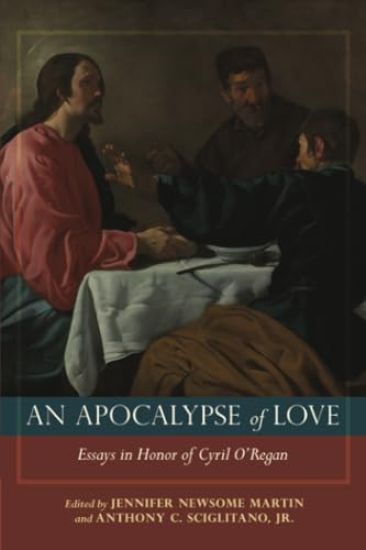
Apocalypse of Love Essays in Honor of Cyril J. O'Regan
An Apocalypse of Love is a collection of essays on the many facets of Cyril O'Regan's work to date written by both prominent and rising scholars in the fields of philosophy and theology. Essay topics included in this volume range over his entire corpus, including appreciatively critical analyses of his early and current work on Hegel, rhetorical and pedagogical styles, spiritual theology, engagement with Hegel and Heidegger, von Balthasar and John of the Cross, kenosis, Eric Voegelin, his relation to post-moderns such as Lacan and Bataille, and poetry both published and unpublished.
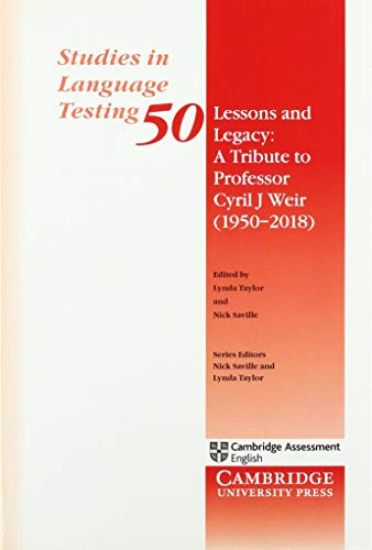
Lessons and Legacy: A Tribute to Professor Cyril J Weir (1950–2018)
Written by a selection of his friends and collaborators, this multi-authored volume is intended as a tribute to the academic achievements of Professor Cyril J Weir. Each contribution refers to a particular aspect of his legacy to the field of language testing and assessment, both nationally and internationally, in order to discuss and reflect upon some of the specific lessons we have learned from him for our profession.
Protestant Patriarch: The Life of Cyril Lucaris, 1572-1638, Patriarch of Constantinople

Protestant Patriarch: The Life of Cyril Lucaris, 1572-1638, Patriarch of Constantinople

George A. Hadjiantoniou; George A. Chatziantoniou; Albert Outler

Literary Licensing, LLC
2011
sidottu
Protestant Patriarch: The Life of Cyril Lucaris, 1572-1638, Patriarch of Constantinople is a biography written by George A. Hadjiantoniou. The book tells the story of Cyril Lucaris, who was a prominent figure in the Orthodox Church during the late 16th and early 17th centuries. Lucaris was born in Crete in 1572 and became a monk at a young age. He eventually rose through the ranks of the church to become the Patriarch of Constantinople, one of the most important positions in the Orthodox Church.The book explores Lucaris' life and career, including his efforts to reform the Orthodox Church and his controversial views on theology and religion. Lucaris was a proponent of Calvinism, a Protestant denomination that was at odds with the Orthodox Church's traditional teachings. This led to conflict with other members of the church and ultimately led to Lucaris' downfall.Hadjiantoniou's biography provides a detailed look at Lucaris' life, including his upbringing, education, and career in the church. The book also explores the political and social context of Lucaris' time, including the Ottoman Empire's rule over Greece and the wider Balkan region.Protestant Patriarch: The Life of Cyril Lucaris, 1572-1638, Patriarch of Constantinople is a comprehensive and engaging biography that sheds light on an important figure in the history of the Orthodox Church.This scarce antiquarian book is a facsimile reprint of the old original and may contain some imperfections such as library marks and notations. Because we believe this work is culturally important, we have made it available as part of our commitment for protecting, preserving, and promoting the world's literature in affordable, high quality, modern editions, that are true to their original work.
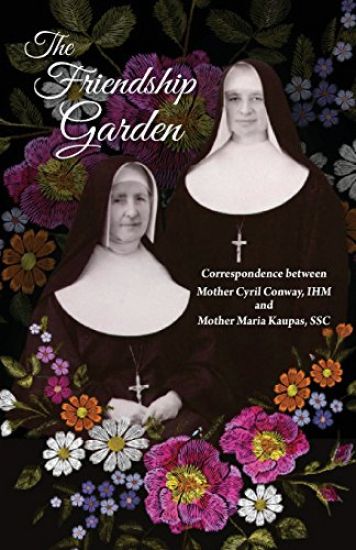
The Friendship Garden: Correspondence between Mother Cyril Conway, IHM and Mother Maria Kaupas, SSC
The bond between Mother Cyril and Mother Maria grew into a deep and lasting friendship over thirty-five years that birthed a closeness of the heart and soul of the two congregations, The Sisters, Servants of the Immaculate Heart of Mary and The Sisters of St. Casimir. That connection, along with our shared Alphonsian heritage and deep spiritual relationships that have continued over these past one hundred and eleven years, has led to this graced moment in our histories-the formal approval of the Covenant Agreement between the congregations. To mark this occasion, Sister Margaret Gannon, IHM has compiled an exchange of letters between Mother Maria and Mother Cyril from 1907 to 1912 and from 1933 to 1939, about five months before Mother Maria's death from cancer. The letters serve to illustrate the depth and scope of the friendship between the two women that is the foundation of the love and trust among the sisters of both congregations today.
The Plays And Poems Of Cyril Tourneur
This book has been considered by academicians and scholars of great significance and value to literature. This forms a part of the knowledge base for future generations. So that the book is never forgotten we have represented this book in a print format as the same form as it was originally first published. Hence any marks or annotations seen are left intentionally to preserve its true nature.
Christian Identity Formation according to Cyril of Jerusalem
This study is an exploration of how Cyril of Jerusalem constructed Christian identity for those who were preparing to enter into full communion with the church at Easter. In order to include the full catechetical teachings of the fourth-century hagiopolite tradition, the study examined the history of liturgy arguments against Cyrillian authorship of the Mystagogic Catecheses and has found, based upon the most recent scholarship, no reason to date the text to after Cyril’s bishopric. Having also used codicological and textual critical analysis to support the claim of Cyrillian authorship, the study argues for a different preferred manuscript tradition than what is presented in the critical edition. Since Cyril provided an identity-clarifying attribute for the new Christians to associate with each of the rites of initiation, the study looks at the scholarly literature regarding Cyril’s sacramental theology. Taking the Jerusalem catechetical writings as a pedagogical unit and examining it through word studies and flow-of-thought analysis, this study constructs a new model for Cyril’s sacramental theology based upon his doctrine of theosis, which has not been examined with sufficient academic rigor to date. It demonstrates that not only does Cyril have a fully-developed doctrine of theosis, but his expression of theosis is Trinitarian, sacramental, and inseparable from his ethical and identity forming teachings.
Divine Participation: A Reconstruction of St Cyril of Alexandria’s and Fr Matta al-Miskin’s Commentaries on the Gospel of St John
This monograph offers a comparative study of Cyril of Alexandria (c.378–444) and Matta al-Miskin (1919–2006) on humankind’s union with God, or deification, as articulated in their commentaries on the Gospel of John. By bridging over fifteen centuries, it highlights the continuity of contemporary Coptic Orthodox thought with its Alexandrian roots. Both theologians emphasise the real, existential, and transformative nature of divine participation. While this participation is substantial, not superficial, both Cyril and Matta underscore the profound asymmetry between the divine being (God) and the human participant, affirming the mystery of this union within the framework of Orthodox theology.
The Prologues on Easter of Theophilus of Alexandria and [Cyril]
The Letter and Prologue on Easter of Theophilus of Alexandria (385-412), the 95-year list of Paschal data compiled by Cyril (412-444), and the Prologue or Praefatio to that list written in Latin about 482 in the persona of Cyril are among the foundational documents for our knowledge of the Alexandrian Easter cycle. That cycle, through the Latin versions of Dionysius Exiguus, Bede, and others was the standard method for determining the date of Easter in the western churches until the end of the sixteenth century. There has been no modern critical edition of either Prologue since those of Bruno Krusch in 1880. This new edition of the texts is based on Alden A. Mosshammer's discovery or rediscovery of manuscript witnesses unknown to Krusch and overlooked by more recent scholars who have engaged these texts. The historical introduction summarizes current knowledge about the history of Easter calculations in early Christian communities, including a new hypothesis attributing the Alexandrian cycle in its final form to the mathematician and astronomer Theon of Alexandria working in the 370's. Although both texts have already been translated into English, Mosshammer's new translations are based on his new reconstruction of the texts. The commentaries address many issues currently under debate in historical scholarship, such as the origin of 21 March as the conventional date of the vernal equinox. The newly reconstructed text of the Prologue attributed to Cyril and Mosshammer's extensive commentary make that difficult text intelligible for the first time.
The Theology of St. Cyril of Alexandria
There is no book in English that treats the whole of Cyril's theological thought. In the past scholars have normally focused on Cyril's Christology and left largely unexamined the remainder of his theological thought. Thus the English-speaking scholarly community has never fully appreciated the breadth, the depth and the immense significance of Cyril's theology. This book is therefore unique. The editors have brought together many of the foremost experts on Cyril. This international team examines all the major facets of his theology, and here for the first time reveals the theology of Cyril of Alexandria as a magisterial whole.
The Image of God in Man According to Cyril of Alexandria

The Image of God in Man According to Cyril of Alexandria

Walter J. Burghardt

Hassell Street Press
2021
sidottu
This work has been selected by scholars as being culturally important and is part of the knowledge base of civilization as we know it.This work is in the public domain in the United States of America, and possibly other nations. Within the United States, you may freely copy and distribute this work, as no entity (individual or corporate) has a copyright on the body of the work.Scholars believe, and we concur, that this work is important enough to be preserved, reproduced, and made generally available to the public. To ensure a quality reading experience, this work has been proofread and republished using a format that seamlessly blends the original graphical elements with text in an easy-to-read typeface.We appreciate your support of the preservation process, and thank you for being an important part of keeping this knowledge alive and relevant.
The Image of God in Man According to Cyril of Alexandria

The Image of God in Man According to Cyril of Alexandria

Walter J. Burghardt; Johannes Quasten

Literary Licensing, LLC
2011
sidottu
The book ""The Image of God in Man According to Cyril of Alexandria"" by Walter J. Burghardt is a comprehensive study of the theological concept of the image of God in man as expounded by Cyril of Alexandria, a prominent early Christian theologian. The book delves into the historical and cultural context in which Cyril wrote, exploring his views on the nature of humanity and its relationship to God. Burghardt analyzes Cyril's writings on the image of God in man, examining the philosophical and theological implications of this concept for Christian doctrine and practice. The book provides a detailed analysis of Cyril's thought, highlighting its relevance for contemporary Christian theology and ethics. It is an essential resource for scholars and students of early Christian theology and philosophy, as well as for anyone interested in the intersection of religion and philosophy.The Catholic University Of America, Studies In Christian Antiquity, No. 14.This scarce antiquarian book is a facsimile reprint of the old original and may contain some imperfections such as library marks and notations. Because we believe this work is culturally important, we have made it available as part of our commitment for protecting, preserving, and promoting the world's literature in affordable, high quality, modern editions, that are true to their original work.
St. Cyril of Alexandria's Metaphysics of the Incarnation

St. Cyril of Alexandria's Metaphysics of the Incarnation

Sergey Trostyanskiy

Peter Lang Publishing Inc
2016
sidottu
Cyril of Alexandria is one of the major intellectuals of the early Byzantine Christian world. His approach to Christ is at the core of the classical Christian tradition, however, because his works were not translated into English in the post-Reformation environment, the precise implications of his "science of Christ" have been extensively misunderstood. This work seeks to reposition Cyril in the precise philosophical context to which he belonged, seeking, as he did, for a deliberate bridge-building between ecclesiastical biblical presuppositions and the semantic terms central to the Late Antique philosophical Academy, with which he understands the Church must communicate. This book seeks to lay bare the fundamental philosophical axioms of Cyril’s metaphysics of the Incarnation. To illuminate this, it investigates the fifth-century curriculum of metaphysical studies as followed in the academies of both Alexandria and Athens. Common to both Cyril and his Hellene contemporaries are the terms of theological speculation prevalent in the Commentaries on the Parmenides. This monograph applies the schema of theological analysis offered by the Commentators to Cyril’s metaphysics of the Incarnation to see how well it accounts for the precise terms of the Incarnational doctrine posited by Cyril. This study also endeavors to expound and evaluate the many previous (and heavily conflicting) scholarly accounts of Cyril’s intellectual agenda. It outlines various cognitive gaps associated with the macro arguments of the different positions, which by and large have underestimated Cyril’s philosophical acumen and ignored his own immediate academic context.