Kirjojen hintavertailu. Mukana 12 390 323 kirjaa ja 12 kauppaa.

Kirjahaku

Etsi kirjoja tekijän nimen, kirjan nimen tai ISBN:n perusteella.

1000 tulosta hakusanalla Daniel a. Reed

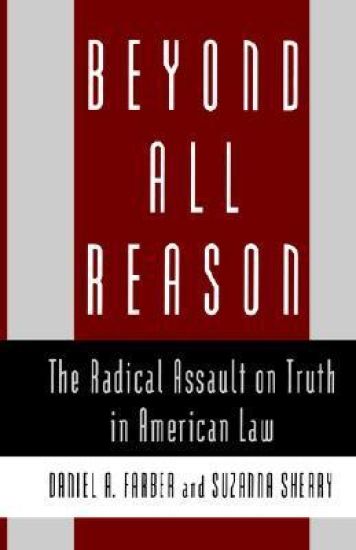
Beyond All Reason

Beyond All Reason

Daniel A. Farber; Suzanna Sherry

Oxford University Press Inc
1998
sidottu
Would you want to be operated on by a surgeon trained at a medical school that did not evaluate its students? Would you want to fly in a plane designed by people convinced that the laws of physics are socially constructed? Would you want to be tried by a legal system indifferent to the distinction between fact and fiction? These questions may seem absurd, but there are theories being seriously advanced by radical multiculturalists that force us to ask such questions. These scholars assert that such concepts as truth and merit are inextricably racist and sexist, that reason and objectivity are merely sophisticated masks for ideological bias, and that reality itself is nothing more than socially constructed mechanism for preserving the power of the ruling elite. In Beyond All Reason, liberal legal scholars Daniel A. Farber and Suzanna Sherry mount the first systematic critique of radical multiculturalism as a form of legal scholarship. Beginning with an incisive overview of the origins and basic tenets of radical multiculturalism, the authors critically examine the work of Derrick Bell, Catherine MacKinnon, Patricia Williams, and Richard Delgado, and explore the alarming implications of their theories. Farber and Sherry push these theories to their logical conclusions and show that radical multiculturalism is destructive of the very goals it wishes to affirm. If, for example, the concept of advancement based on merit is fraudulent, as the multiculturalists claim, the disproportionate success of Jews and Asians in our culture becomes difficult to explain without opening the door to age-old anti-Semitic and racist stereotypes. If historical and scientific truths are entirely relative social constructs, then Holocaust denial becomes merely a matter of perspective, and Creationism has as much "validity" as evolution. The authors go on to show that rather than promoting more dialogue, the radical multiculturalist preference for legal storytelling and identity politics over reasoned argument produces an insular set of positions that resist open debate. Indeed, radical multiculturalists cannot critically examine each others' ideas without incurring vehement accusations of racism and sexism, much less engage in fruitful discussion with a mainstream that does not share their assumptions. Here again, Farber and Sherry show that the end result of such thinking is not freedom but a kind of totalitarianism where dissent cannot be tolerated and only the naked will to power remains to settle differences. Sharply written and brilliantly argued, this book is itself a model of the kind of clarity, civility, and dispassionate critical thinking which the authors seek to preserve from the attacks of the radical multiculturalists. With far-reaching implications for such issues as government control of hate speech and pornography, affirmative action, legal reform, and the fate of all minorities, Beyond All Reason is a provocative contribution to one of the most important controversies of our time.
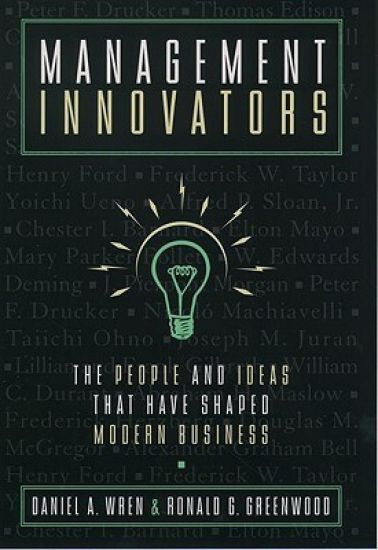
Management Innovators

Management Innovators

Daniel A. Wren; Ronald G. Greenwood

Oxford University Press Inc
1998
sidottu
The survey of the field of management begins with Eli Whitney, inventor of the cotton gin, who failed to create a successful business based on it, and ends with Peter Drucker, who is probably the most respected management thinker in America today, but who has never run a business. Each chapter of the book is devoted to a specific figure and describes not only that person's contribution to the field, but explores the wider social context in which the person lived and worked. Figures explored include: Thomas Edison, Andrew Carnegie, Henry Ford, Richard W. Sears, Alexander Graham Bell, J. Pierpont Morgan, Frederick W. Taylor, Alfred P. Sloan, and W. Edwards Deming.
Retinal Detachment

Retinal Detachment

Daniel A. Brinton; Charles P. Wilkinson

Oxford University Press Inc
2009
sidottu
Retinal Detachment: Principles and Practice provides a historical review of current information on the diagnosis and treatment of retinal detachment. It is intended as both an introduction for graduate students in ophthalmology and a concise review or reference for practicing ophthalmologists. The volume defines the types of retinal detachments, their classifications and causes, and covers preoperative examination, preoperative management, prophylactic procedures, surgery, complications of surgery, and results of reattachment surgery. It also includes a historical introduction, suggested readings at the end of each chapter, and the classic article 'The Technique of Binocular Indirect Ophthalmoscopy,' by Morten L. Rosenthal.
Judgment Calls

Judgment Calls

Daniel A. Farber; Suzanne Sherry

Oxford University Press Inc
2009
sidottu
Judgment Calls tackles one of the most important and controversial legal questions in contemporary America: How should judges interpret the Constitution? Our Constitution contains a great deal of language that is vague, broad, or ambiguous, making its meaning uncertain. Many people believe this uncertainty allows judges too much discretion. They suggest that constitutional adjudication is just politics in disguise, and that judges are legislators in robes who read the Constitution in accordance with their own political views. Some think that political decision making by judges is inevitable, and others think it can be restrained by "strict constructionist" theories like textualism or originalism. But at bottom, both sorts of thinkers believe that judging has to be either tightly constrained and inflexible or purely political and unfettered: There is, they argue, no middle ground. Farber and Sherry disagree, and in this book they describe and defend that middle ground. They show how judging can be--and often is--both principled and flexible. In other words, they attempt to reconcile the democratic rule of law with the recognition that judges have discretion. They explain how judicial discretion can be exercised responsibly, describe the existing constraints that guide and cabin such discretion, and suggest improvements. In exploring how constitutional adjudication works in practice (and how it can be made better), Farber and Sherry cover a wide range of topics that are relevant to their thesis and also independently important, including judicial opinion-writing, the use of precedent, the judicial selection process, the structure of the American judiciary, and the nature of legal education. They conclude with a careful look at how the Supreme Court has treated three of the most significant and sensitive constitutional issues: terrorism, abortion, and affirmative action. Timely, trenchant, and carefully argued, Judgment Calls is a welcome addition to the literature on the intersection of constitutional interpretation and American politics.
The Institutional Structure of Antitrust Enforcement

The Institutional Structure of Antitrust Enforcement

Daniel A. Crane

Oxford University Press Inc
2011
sidottu
The Institutional Structure of Antitrust Enforcement, by Daniel A. Crane provides a comprehensive and succinct treatment of the history, structure, and behavior of the various U.S. institutions that enforce antitrust laws, such as the Department of Justice and the Federal Trade Commission. It addresses the relationship between corporate regulation and antitrust, the uniquely American approach of having two federal antitrust agencies, antitrust federalism, and the predominance of private enforcement over public enforcement. It also draws comparisons with the structure of institutional enforcement outside the United States in the European Union and in other parts of the world, and it considers the possibility of creating international antitrust institutions through the World Trade Organization or other treaty mechanisms. The book derives its topics from historical, economic, political, and theoretical perspectives.
The Appropriation of Divine Life in Cyril of Alexandria

The Appropriation of Divine Life in Cyril of Alexandria

Daniel A. Keating

Oxford University Press
2004
sidottu
Daniel A. Keating presents a comprehensive account of sanctification and divinization in Cyril. By establishing the importance of pneumatology in Cyril's narrative of salvation and by showing the requirement for an ethical aspect of divinization grounded in the example of Christ himself, this study brings a corrective to certain readings of Cyril that tend to exaggerate the 'somatic' or 'physicalistic' character of his understanding of divinization. Keating argues that Cyril correlates the somatic and pneumatic means of our union with Christ, and integrates impressively the ontological and ethical aspects of our sanctification and divinization. A final chapter compares these findings with Theodore of Mopsuestia, Augustine, and Leo the Great, in order to examine in brief the relationship between Eastern and Western accounts of salvation.
Evolutionary Processes and Organizational Adaptation

Evolutionary Processes and Organizational Adaptation

Daniel A. Levinthal

Oxford University Press
2021
sidottu
How do firms adapt? There are two basic starting points from which to answer that question. One is premised on ideas of rational choice and intentionality, while the other is a process of evolutionary dynamics. Both are well-defined and operate as powerful intellectual attractors. Using the ideas of Gregor Mendel as a useful touchstone, this book aims to construct a middle-ground between these two conceptions. The image of the "Mendelian" executive shows how we might effectively balance the ideas of godlike rational design on the one hand and evolutionary dynamics on the other. The perspective developed in this book is anchored on the two key primitives of path-dependence and artificial selection. The intentionality of the Mendelian executive allows for the conscious exploration of opportunities, rather than the happenstance of random variants, yet the constraining forces of path-dependence may lead these moves to adjacent spaces. This perspective also highlights the role of intentionality with respect to the selection and culling of strategic initiatives. The organization operates an “artificial selection” environment, as firms receive profits and losses and, in turn, mediate how these environmental outcomes are projected onto underlying elements and actors within the organization. In this spirit, exploration can be considered not merely as the distance in the underlying behavior from current action, but also as changes in the dimensions of merit by which initiatives are judged. The Mendelian executive is a catalyst and cultivator of promising pathways to unknown futures.
Nuclear Medicine

Nuclear Medicine

Daniel A. Pryma

Oxford University Press Inc
2015
nidottu
In contrast to most anatomic radiographic imaging techniques, nuclear medicine permits real time, non-invasive imaging of human physiology and pathophysiology and also allows for exquisite targeting of disease with therapeutic radiology. To open this window to the processes of human disease, one must first understand the physical processes behind radioactive decay and emission, as well the principles of radiation detection. Practical Nuclear Medicine Physics provides residents and practitioners in nuclear medicine and radiology a readable explanation of the physics concepts underpinning nuclear imaging and how they impact the utilization and interpretation of those images. Following a brief introductory section, the book provides numerous case examples, illustrating various imaging artifacts and pitfalls that can be recognized and remedied with a solid understanding of the physics behind the procedure. Understanding and applying the physics behind nuclear medicine is essential to maximizing not only diagnostic and therapeutic accuracy for providing optimal patient care, but "Practical Physics" is a required portion of radiology residency education and a designated area of the board exams.
Contemporary Athletics and Ancient Greek Ideals

Contemporary Athletics and Ancient Greek Ideals

Daniel A. Dombrowski

University of Chicago Press
2009
sidottu
Despite their influence in our culture, sports inspire dramatically less philosophical consideration than such ostensibly weightier topics as religion, politics, or science. Arguing that athletic playfulness coexists with serious underpinnings, and that both demand more substantive attention, Daniel A. Dombrowski harnesses the insights of ancient Greek thinkers to illuminate contemporary athletics. Dombrowski contends that the ideas of Plato, Aristotle, and Plotinus shed important light on issues - such as the pursuit of excellence, the concept of play, and the power of accepting physical limitations while also improving one's body - that remain just as relevant in our sports-obsessed age as they were in ancient Greece. Bringing these concepts to bear on contemporary concerns, Dombrowski considers such questions as whether athletic competition can be a moral substitute for war, whether it necessarily constitutes war by other means, and whether it encourages fascist tendencies or ethical virtue. The first volume to philosophically explore twenty-first-century sports in the context of its ancient predecessor, "Contemporary Athletics and Ancient Greek Ideals" reveals that their relationship has great and previously untapped potential to inform our understanding of human nature.
Lincoln's Constitution

Lincoln's Constitution

Daniel A. Farber

University of Chicago Press
2003
sidottu
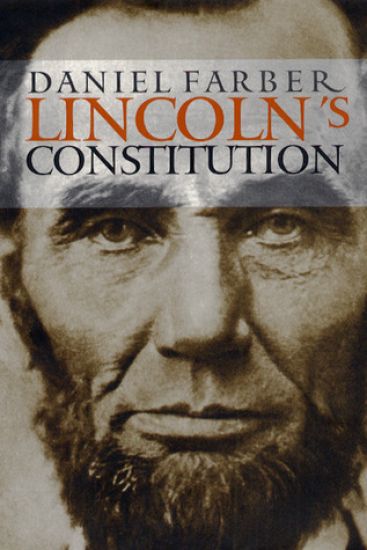
The Civil War brought pressure on the Constitution that had never been seen before and hasn't been seen since, testing it in much the same way as an engineer tests his materials to destruction to assess their structure. Did the South have the right to secede? Did Abraham Lincoln trample on the Bill of Rights? Can the president go to war without congressional approval? What is the nature of the Union, and what are the limits of states' rights? Forced to confront these issues during the Civil War, Lincoln ran squarely into the conflicts and the issues at the heart of our constitution, issues that remain with us today. Daniel Farber's purpose in "Lincoln's Constitution" is to lead the reader to understand exactly what Lincoln did, what arguments he made in defence of his actions, and how his words and deeds fit into the context of the times. Farber sets the constitutional problems that arose during Lincoln's term within their historical moment, as illuminated by recent work by historians, and investigates how well Lincoln's views hold up today - over a century later. The answers are crucial not only for a better understanding of the Civil War but also for shedding light on issues that the courts struggle with now: state sovereignty, presidential power, and national security limitations on civil liberties. The first book in over 75 years to evaluate Lincoln's legal legacy comprehensively, "Lincoln's Constitution" is a blend of history and constitutional thought. Written for the intelligent reader, its insights speak urgently to us as our nation again finds itself in a time of danger and the limits of constitutional law are once more being tested.
Lincoln's Constitution

Lincoln's Constitution

Daniel A. Farber

University of Chicago Press
2004
nidottu
In Lincoln's Constitution Daniel Farber leads the reader to understand exactly how Abraham Lincoln faced the inevitable constitutional issues brought on by the Civil War. Examining what arguments Lincoln made in defense of his actions and how his words and deeds fit into the context of the times, Farber illuminates Lincoln's actions by placing them squarely within their historical moment. The answers here are crucial not only for a better understanding of the Civil War but also for shedding light on issues-state sovereignty, presidential power, and limitations on civil liberties in the name of national security-that continue to test the limits of constitutional law even today.
Law and Public Choice

Law and Public Choice

Daniel A. Farber; Philip P. Frickey

University of Chicago Press
1991
sidottu
In Law and Public Choice, Daniel Farber and Philip Frickey present a remarkably rich and accessible introduction to the driving principles of public choice. In this, the first systematic look at the implications of social choice for legal doctrine, Farber and Frickey carefully review both the empirical and theoretical literature about interest group influence and provide a nonmathematical introduction to formal models of legislative action. Ideal for course use, this volume offers a balanced and perceptive analysis and critique of an approach which, within limits, can illuminate the dynamics of government decision-making. "Law and Public Choice is a most valuable contribution to the burgeoning literature. It should be of great interest to lawyers, political scientists, and all others interested in issues at the intersection of government and law."--Cass R. Sunstein, University of Chicago Law School
Eco-pragmatism

Eco-pragmatism

Daniel A. Farber

University of Chicago Press
1999
sidottu
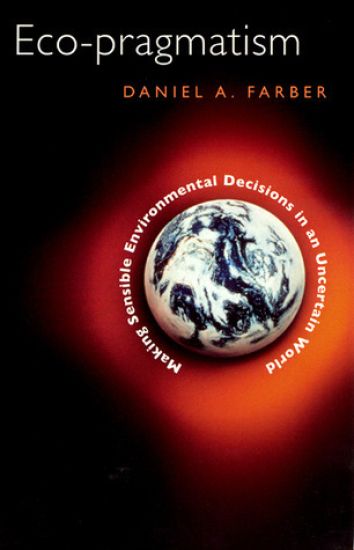
This text takes on the critical controversies in environmental law in the late 1990s: how to assess the values of future environmental benefits; how to use economic measurements of environmental values; and how to streamline the regulatory process to respond to changing scientific data. Daniel Farber steers a middle course between the "bean counters," who advocate strict cost-benefit analysis, and the "tree huggers," who favour environmental protection at any cost. The book explores fundamental issues in environmental economics, the philosophical disputes over the legitimacy of cost-benefit analysis, and the legal issues involved in applying and interpreting complex environmental statues. Synthesizing the best of our existing regulatory regime, Farber's analysis cuts a path through the thickets surrounding environmental policy.
Eco-pragmatism

Eco-pragmatism

Daniel A. Farber

University of Chicago Press
2000
nidottu
Eco-pragmatism takes on the most critical controversies in environmental law today: how to weigh economic costs against environmental quality and human life, how to assess the long time horizons of environmental problems, and how to make appropriate decisions in the face of scientific uncertainty about the scope of environmental problems."A comprehensive well-argued effort to address many of the most difficult issues facing legislators concerned with environmental issues."—Stephen P. Adamian, Boston Book Review"A timely and well-argued contribution."—Calestous Juma, Nature
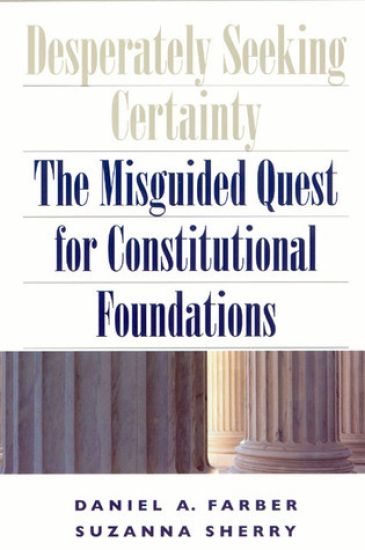
Desperately Seeking Certainty

Desperately Seeking Certainty

Daniel A. Farber; Suzanna Sherry

University of Chicago Press
2002
sidottu
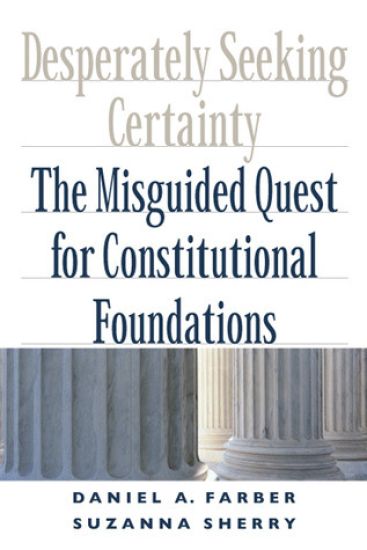
Irreverent, provocative, and engaging, Desperately Seeking Certainty attacks the current legal vogue for grand unified theories of constitutional interpretation. On both the right and the left, prominent legal scholars normally try to build all of constitutional law from a single foundational idea, Daniel Farber and Suzanna Sherry find that in the end no single, all-encompassing theory can successfully guide judges or provide definitive or even sensible answers to every constitutional question. Their book brilliantly reveals how problematic foundationalism is and shows how the pragmatic, multifaceted common law methods already used by the Court provide a far better means of reaching sound decisions and controlling judicial discretion than do any of the grand theories.
Desperately Seeking Certainty

Desperately Seeking Certainty

Daniel A. Farber; Suzanna Sherry

University of Chicago Press
2004
nidottu
Irreverent, provocative, and engaging, Desperately Seeking Certainty attacks the current legal vogue for grand unified theories of constitutional interpretation. On both the right and the left, prominent legal scholars normally try to build all of constitutional law from a single foundational idea, Daniel Farber and Suzanna Sherry find that in the end no single, all-encompassing theory can successfully guide judges or provide definitive or even sensible answers to every constitutional question. Their book brilliantly reveals how problematic foundationalism is and shows how the pragmatic, multifaceted common law methods already used by the Court provide a far better means of reaching sound decisions and controlling judicial discretion than do any of the grand theories.
Babies and Beasts

Babies and Beasts

Daniel A. Dombrowski

University of Illinois Press
1997
nidottu
Both its defenders and detractors have described the argument from marginal cases as the most important to date in defense of animal rights. Hotly debated among philosophers for some twenty years, the argument concludes that no morally relevant characteristic distinguishes human beings?including infants, the severely retarded, the comatose, and other "marginal cases"--from any other animals. Babies and Beasts presents the first book-length exploration of the broad range of views relating to the argument from marginal cases and sorts out and evaluates its various uses and abuses. Daniel Dombrowski analyzes the views of many who are prominent in the debate-- Peter Singer, Thomas Regan, H. J. McCloskey, Jan Narveson, John Rawls, R. G. Frey, Peter Carruthers, Michael Leahy, Robert Nozick, and James Rachels are included--in a volume that will be essential to philosophers, animal rights activists, those who work in clinical settings, and others who must sometimes deal with "marginal cases."
Saying It's So

Saying It's So

Daniel A. Nathan

University of Illinois Press
2005
nidottu
The story of "Shoeless" Joe Jackson and his White Sox teammates purportedly conspiring with gamblers to throw the 1919 World Series to the Cincinnati Reds has lingered in our collective consciousness for a century. Daniel A. Nathan's wide-ranging history looks at how journalists, historians, novelists, filmmakers, and baseball fans have represented and remembered the scandal. Nathan's reflections on what these different cultural narratives reveal about their creators and eras shape a fascinating study of cultural values, memory, and the ways people make meaning.
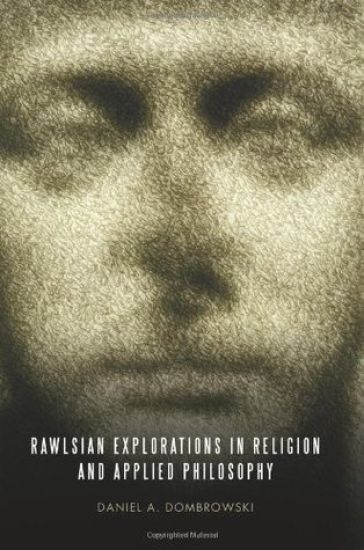
Rawlsian Explorations in Religion and Applied Philosophy

Rawlsian Explorations in Religion and Applied Philosophy

Daniel A. Dombrowski

Pennsylvania State University Press
2011
sidottu
To probe the underlying premises of a liberal political order, John Rawls felt obliged to use a philosophical method that abstracted from many of the details of ordinary life. But this very abstraction became a point of criticism, as it left unclear the implications of his theory for public policies and life in the real political world. Rawlsian Explorations in Religion and Applied Philosophy attempts to ferret out those implications, filling the gap between Rawls’s own empyrean heights and the really practical public policy proposals made by government planners, lobbyists, and legislators. Among the topics examined are natural rights, the morality of war, the treatment of mentally deficient humans and nonhuman sentient creatures, the controversies over legacy and affirmative action in college admissions, and the place of religious belief in a democratic society. The final chapter explores how Rawls’s own religious beliefs, as revealed in two works posthumously published in 2009, played into his formulation of his theory of justice.
Rawlsian Explorations in Religion and Applied Philosophy

Rawlsian Explorations in Religion and Applied Philosophy

Daniel A. Dombrowski

Pennsylvania State University Press
2016
pokkari
To probe the underlying premises of a liberal political order, John Rawls felt obliged to use a philosophical method that abstracted from many of the details of ordinary life. But this very abstraction became a point of criticism, as it left unclear the implications of his theory for public policies and life in the real political world. Rawlsian Explorations in Religion and Applied Philosophy attempts to ferret out those implications, filling the gap between Rawls’s own empyrean heights and the really practical public policy proposals made by government planners, lobbyists, and legislators. Among the topics examined are natural rights, the morality of war, the treatment of mentally deficient humans and nonhuman sentient creatures, the controversies over legacy and affirmative action in college admissions, and the place of religious belief in a democratic society. The final chapter explores how Rawls’s own religious beliefs, as revealed in two works posthumously published in 2009, played into his formulation of his theory of justice.