Kirjojen hintavertailu. Mukana 11 420 136 kirjaa ja 12 kauppaa.

Kirjahaku

Etsi kirjoja tekijän nimen, kirjan nimen tai ISBN:n perusteella.

1000 tulosta hakusanalla Daniela Killus

Legal Services and Digital Infrastructures
This book seeks to provide and promote a better understanding and a more responsive and inclusive governance of the automation and digital devices in public institutions, particularly the law and justice sector. Concerns related to AI design and use have been exacerbated recently with the recognition of the discriminatory potential that can be embedded into AI applications in public service institutions. This book examines issues relating to the assigning of responsibility in a public service produced and delivered on the basis of an automated mechanism. It encourages critical thinking about the legal services and the justice institutions as they are transformed by AI and automation. It raises awareness as to the prospect of transformation we face in terms of responsibility and of agency and the need to design a citizen-centered and human rights compliant system of technology assessment and AI monitoring and evaluation. The book calls for a comprehensive strategy to enable professional practitioners and decision makers to engage in the design of AI driven legal and justice services. The work draws on on-going research and consulting activities carried out by the author across different countries and different systems in the legal and justice sector. The book offers a critical approach to encourage a new mindset among legal professionals and the justice institutions thus empowering and training them to develop the necessary responsiveness and accountability in the justice sector and legal systems. It will also be of interest to researchers and academics working in the area of AI, Public Law, Human Rights and Criminal Justice.
Legal Services and Digital Infrastructures

Legal Services and Digital Infrastructures

Daniela Piana

TAYLOR FRANCIS LTD
2022
nidottu
This book seeks to provide and promote a better understanding and a more responsive and inclusive governance of the automation and digital devices in public institutions, particularly the law and justice sector. Concerns related to AI design and use have been exacerbated recently with the recognition of the discriminatory potential that can be embedded into AI applications in public service institutions. This book examines issues relating to the assigning of responsibility in a public service produced and delivered on the basis of an automated mechanism. It encourages critical thinking about the legal services and the justice institutions as they are transformed by AI and automation. It raises awareness as to the prospect of transformation we face in terms of responsibility and of agency and the need to design a citizen-centered and human rights compliant system of technology assessment and AI monitoring and evaluation. The book calls for a comprehensive strategy to enable professional practitioners and decision makers to engage in the design of AI driven legal and justice services. The work draws on on-going research and consulting activities carried out by the author across different countries and different systems in the legal and justice sector. The book offers a critical approach to encourage a new mindset among legal professionals and the justice institutions thus empowering and training them to develop the necessary responsiveness and accountability in the justice sector and legal systems. It will also be of interest to researchers and academics working in the area of AI, Public Law, Human Rights and Criminal Justice.

International Criminal Law and Sexual Violence against Women
This book explores the prosecution of wartime sexual violence in international criminal law and asks what the juridicalisation of gender-based violence signifies for women. The book explores the portrayal of the various gendered identities that surface in armed conflict and it asks whether the law is capable of reflecting these in subsequent judgements.Focusing on the International Criminal Tribunal for the Former Yugoslavia and the International Criminal Tribunal for Rwanda as well as subsequent developments in the International Criminal Court, the book shows how the tribunals have delivered landmark jurisprudence in the area of sexual violence against women and provided a legacy for how gender justice is incorporated into international law. However, Daniela Nadj argues that in the relevant cases there is a tendency to depict women in monolithic fashion with little agency or sense of identity beyond their ethnicity. By bringing to the surface the complexity and multi-faceted gendered identities in wartime, the book calls for a reconceptualisation of notions of femininity in armed conflict.
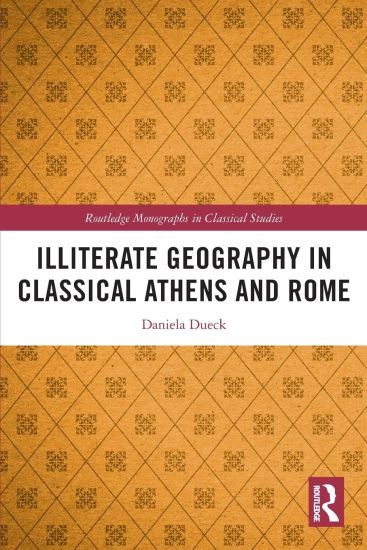
Illiterate Geography in Classical Athens and Rome
This study is devoted to the channels through which geographic knowledge circulated in classical societies outside of textual transmission. It explores understanding of geography among the non-elites, as opposed to scholarly and scientific geography solely in written form which was the province of a very small number of learned people.It deals with non-literary knowledge of geography, geography not derived from texts, as it was available to people, educated or not, who did not read geographic works. This main issue is composed of two central questions: how, if at all, was geographic data available outside of textual transmission and in contexts in which there was no need to write or read? And what could the public know of geography? In general, three groups of sources are relevant to this quest: oral communications preserved in writing; public non-textual performances; and visual artefacts and monuments. All of these are examined as potential sources for the aural and visual geographic knowledge of Greco-Roman publics.This volume will be of interest to anyone working on geography in the ancient world and to those studying non-elite culture.
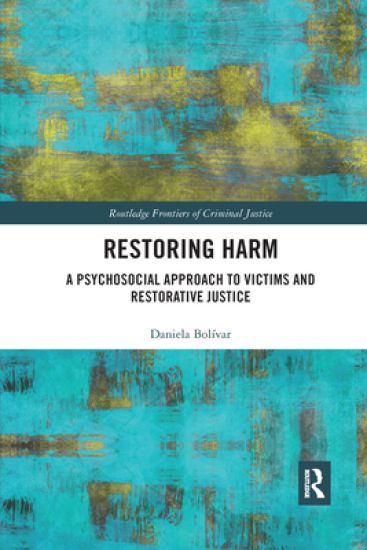
Restoring Harm

Restoring Harm

Daniela Bolívar

Routledge
2020
nidottu
To what extent is restorative justice able to ‘restore’ the harm suffered by victims of crimes of interpersonal violence? Restorative justice is an innovative, participatory and inclusive reaction to crime that permits victims and offenders to engage in a communication process about the consequences of the offence. It looks to the future, actively involving parties to find, agree and implement ways to repair the harm. Restoring Harm analyses the restoration process from a psychosocial point of view and discusses the role of victim–offender mediation within such a process. It brings together literature from the fields of restorative justice, victimology and psychology, and shares original findings from victims who were interviewed in Belgium and Spain. This book not only offers descriptive findings but also provides a theoretical and comprehensive model that elucidates several possibilities for why victim–offender mediation may or may not play a role in victims’ processes of emotional restoration.Well informed and well documented, this volume brings together evidence from different regions and develops a detailed discussion of the ‘effectiveness’ of restorative justice with regard to victims. Providing new and solid evidence thanks to a quasi-experimental methodological design, theory and practice come together to offer relevant reflections for researchers and practitioners who are concerned about the victim’s position within victim–offender mediation and desire to develop a victim-sensitive restorative justice practice.
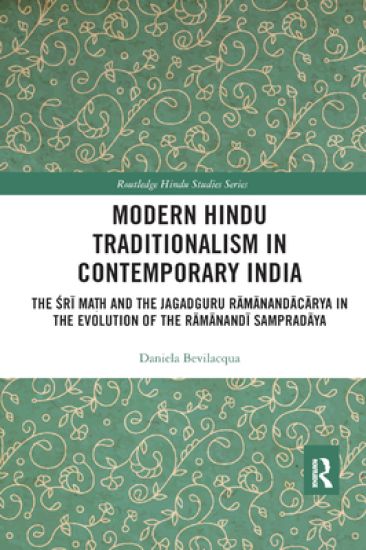
Modern Hindu Traditionalism in Contemporary India
Modern Hindu Traditionalism addresses Hindu traditions that resisted contact with both Neo-Hindu thought and views of “classical” Hinduism perceived to be outmoded.This book provides an in-depth understanding of Modern Hindu Traditionalism through the case study of the Ramanandi order (sampradaya) and the portrait of the Jagadguru Ramanandacarya Ramnaresacarya. This guru belongs to the ancient tradition of the Ramanandi order, which is active at the present time and the biggest Vai??ava religious order in Northern India. Analyzing the historical evolution of the Ramanandi order, the author shows how different centers have undergone different changes over the centuries, and focuses on the independence struggle of a group of Ramanandis from the Ramanujis, which led to the creation of the role of Jagadguru Ramanandacarya and the construction of the Sri Ma?h. Drawing on extensive fieldwork, this book casts light on figures and processes central to the development of Hinduism in the twentieth and twenty-first century and consequently describes the role of religion in contemporary Indian society. The author examines the role religious institutions and their leaders have in the everyday life of individuals, how they interact with and in the society, and how they approach and interpret social and political issues. The Ramanandis’ use of new methods of communication, in particular social media, is an innovative part of the study.A welcome innovation in the studies of South Asian religion, this book will be of interest to historians, anthropologists, and scholars of Hinduism and religion and politics.
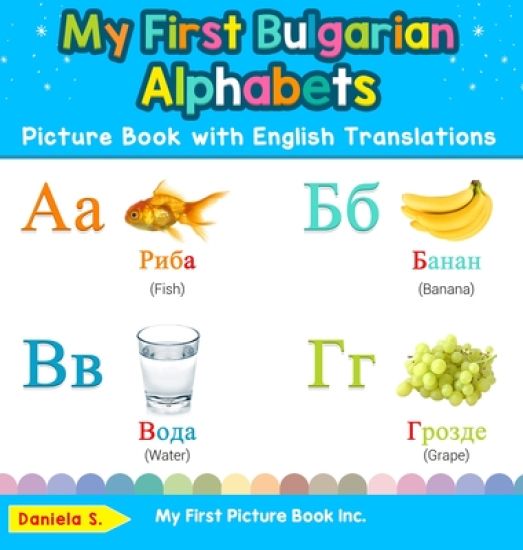
My First Bulgarian Alphabets Picture Book with English Translations
Did you ever want to teach your kids the basics of Bulgarian ? Learning Bulgarian can be fun with this picture book. In this book you will find the following features: Bulgarian Alphabets Bulgarian Words English Translations Some Important Information Regarding Our Books: Each Alphabet has its own Page. All Pages are in Color. No Transliterations (Pronunciations). You (the Parent) should be helping your child learn how to pronounce.
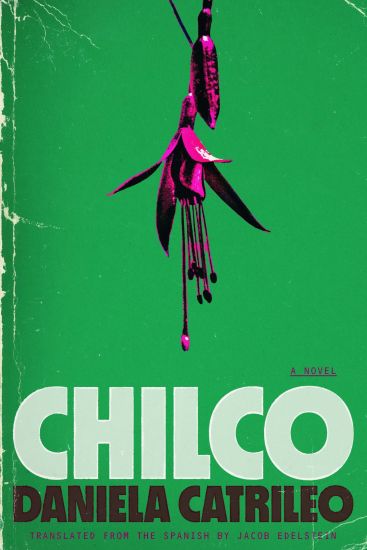
Chilco

Chilco

Daniela Catrileo

FARRAR, STRAUS GIROUX INC
2025
nidottu
Chilco is the name of Pascale’s home island. It is also the Mapudungun word for fuchsia: a word that evokes tropical lushness and the deep greenness of the forest. Pascale's partner, Marina, grew up in the vertical slums of Capital City, a place scarred by centuries of colonialism and now the ravages of feckless developers. Every day the couple fear a sinkhole will open up and take with it another poor neighborhood, another raft of refugees from the hinterlands: the indigenous, the poor, who are toiling for an all-consuming machine that is devouring the earth from beneath their feet. When they finally flee the collapsing city to live in Chilco, are they escaping centuries of colonial repression or merely stepping into a twisted new version of it? From her first days in this place Marina can’t avoid the feeling that everything is decaying around her - there is a smell of putrefaction in the air that no one except her can detect; there are seismic rifts that the political cruelties of the times have opened up in her own relationship with Pascale; and she is haunted by insistent memories of her past. In this baroque, tropical jeremiad, the wounds of capitalism and empire inflict themselves on the person and on the land, but linger most devastatingly in language and memory. Indigenous Mapudungun and Quechua words, history, and cosmology form the chorus to this tropical fever dream of life, love, death, and friendship.
Piñen: Stories

Piñen: Stories

Daniela Catrileo

Fsg Originals
2026
nidottu
A fierce, tender collection of stories about the lives, traumas, and dreams of Mapuche youth in modern-day Chile. The word "pi en" comes from Mapudungun and refers to the dust or the dirt that sticks to the body. In the all-too-real streets of Santiago de Chile, Daniela Catrileo gives us a portrait of a generation in search of itself. In "Warriache," two childhood friends whose lives have been marked by their partMapuche identity and the memories that bind them circle each other at a party. Their dance of delays and inevitable meeting expands into a tale across epochs--one that gives life to the hidden and suppressed experiences of those who live on the margins of other stories. In "Pornomisery," a young girl considers the sexual violence that seems to lurk behind every closed door in her cloistered community and darken every possible route of exit. Pi en is suffused with the humanity of its vivid, complex characters, bringing a side of modern Chile to vibrant life. It also marks the confident next step in the career of a writer poised to become one of the boldest and most uncompromising chroniclers of modern life in Latin American literature.
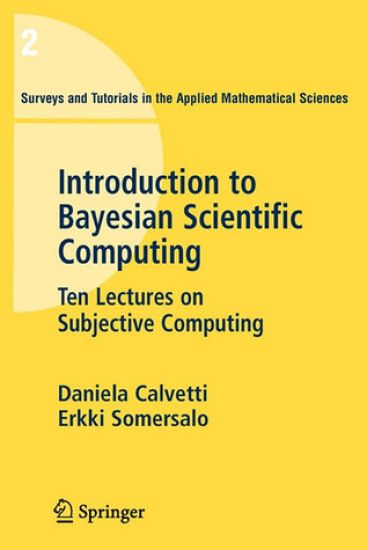
An Introduction to Bayesian Scientific Computing

An Introduction to Bayesian Scientific Computing

Daniela Calvetti; E. Somersalo

Springer-Verlag New York Inc.
2007
nidottu
The book of nature, according to Galilei, is written in the language of mat- matics. The nature of mathematics is being exact, and its exactness is und- lined by the formalism used by mathematicians to write it. This formalism, characterized by theorems and proofs, and syncopated with occasional l- mas, remarks and corollaries, is so deeply ingrained that mathematicians feel uncomfortable when the pattern is broken, to the point of giving the - pression that the attitude of mathematicians towards the way mathematics should be written is almost moralistic. There is a de?nition often quoted, “A mathematician is a person who proves theorems”, and a similar, more alchemistic one, credited to Paul Erd? os, but more likely going back to Alfr´ ed R´ enyi,statingthat“Amathematicianisamachinethattransformsco?eeinto 1 theorems ”. Therefore it seems to be the form, not the content, that char- terizes mathematics, similarly to what happens in any formal moralistic code wherein form takes precedence over content. This book is deliberately written in a very di?erent manner, without a single theorem or proof. Since morality has its subjective component, to pa- phrase Manuel Vasquez Montalban, we could call it Ten Immoral Mathemat- 2 ical Recipes . Does the lack of theorems and proofs mean that the book is more inaccurate than traditional books of mathematics? Or is it possibly just a sign of lack of co?ee? This is our ?rst open question. Exactness is an interesting concept.
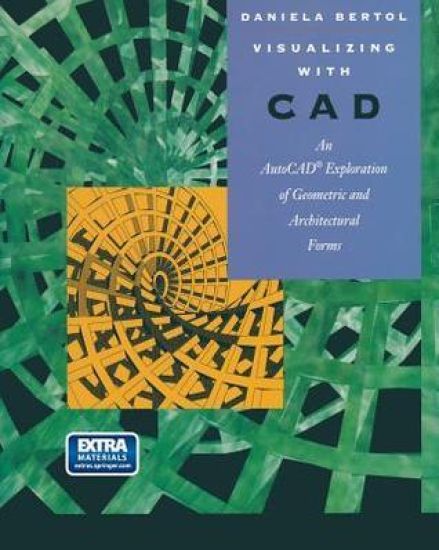
Visualizing with CAD

Visualizing with CAD

Daniela Bertol

Springer-Verlag New York Inc.
1994
nidottu
I spent the first twenty six years of my life in Rome. I used to go for ice cream to a popular place near the Pantheon and I remem­ ber the excitement I felt, beyond the chocolate and whipped cream, when I entered this ancient Roman temple. After staring at the "shower" of light coming from the circular opening at the center of the dome, as strong as a spotlight, I remember being attracted almost hypnotically to the place below the opening. I remember counting the coffers carving the concave dome, com­ posed in five rows of circular arrays, and could feel the power and protection created by the concave space. I also recall going every Sunday to Piazza San Pietro. This Baroque square is well known for its colonnades, which have an oval shape defined by two interlocking circles. For each of these circles there is a mark, located approximately at its center, from which the four aligned rows of columns appear as one. Before entering the church, almost as a part of a ritual, I had to find the mark in the pavement of the oval square. I was amazed by how the rows of columns could appear and disappear according to my position in relation to the mark:.
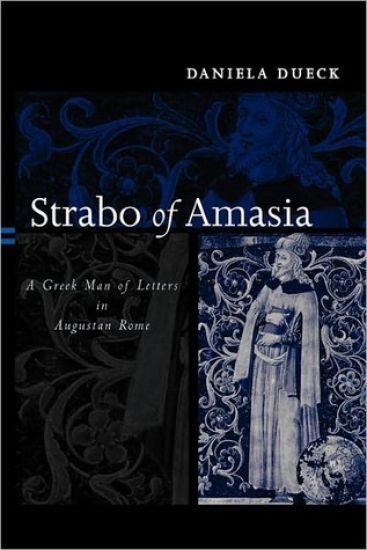
Strabo of Amasia

Strabo of Amasia

Daniela Dueck

Routledge
2000
sidottu
Strabo of Amasia offers an intellectual biography of Strabo, a Greek man of letters, set against the political and cultural background of Augustan Rome. It offers the first full-scale interpretation of the man and his life in English. It emphasises the place and importance of Strabo's Geography and of geography itself within these intellectual circles. It argues for a deeper understanding of the fusion of Greek and Roman elements in the culture of the Roman Empire. Though he wrote in Greek, Strabo must be regarded as an 'Augustan' writer like Virgil or Livy.
Strabo of Amasia

Strabo of Amasia

Daniela Dueck

Routledge
2011
nidottu
Strabo of Amasia offers an intellectual biography of Strabo, a Greek man of letters, set against the political and cultural background of Augustan Rome. It offers the first full-scale interpretation of the man and his life in English. It emphasises the place and importance of Strabo's Geography and of geography itself within these intellectual circles. It argues for a deeper understanding of the fusion of Greek and Roman elements in the culture of the Roman Empire. Though he wrote in Greek, Strabo must be regarded as an 'Augustan' writer like Virgil or Livy.
Islamist Radicalisation in Europe

Islamist Radicalisation in Europe

Daniela Pisoiu

Routledge
2011
sidottu
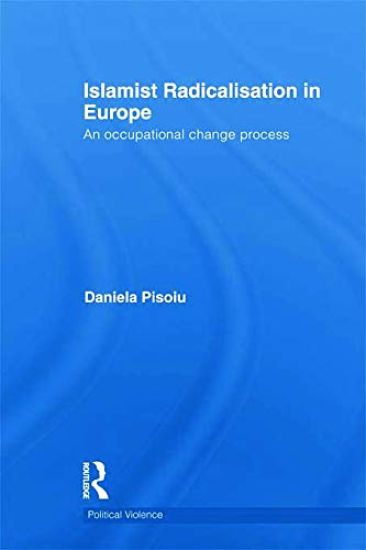
This book examines the Islamist radicalisation process in Europe, developing a new theoretical model based on an empirical study of the evolution of Islamist radicals in their social environment. The approach of this book is to examine how, and under what conditions, people choose to radicalise. It focuses on the experience of radicalisation from the perspective of those who have undergone it. The study is based on trial and court material, along with an extensive number of interviews collected from many different European countries, and this biographical approach is used to address individuals and the details of their social environment. Overall, the explanatory framework departs from the existing deterministic paradigm (with grievances as causes), also present in some psychological models, and argues that radicalisation is a process much like occupational choice – a rational choice made with social and ideational significance. It addresses critically the assumption that, because the result of the radicalisation process could be seen as ‘abnormal’, the cause of it might be of a similar nature. Parallels are drawn with other forms of extremism and European counter-radicalisation policies are considered critically. This book will be of great interest to students of terrorism studies and political violence, political Islam, social movements, European politics and IR/security studies in general.
Understanding and Healing Emotional Trauma
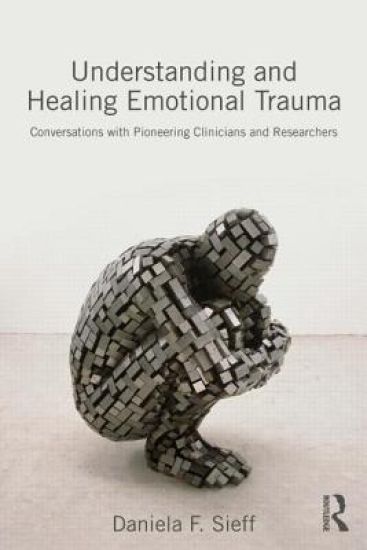
Understanding and Healing Emotional Trauma is an interdisciplinary book which explores our current understanding of the forces involved in both the creation and healing of emotional trauma. Through engaging conversations with pioneering clinicians and researchers, Daniela F. Sieff offers accessible yet substantial answers to questions such as: What is emotional trauma? What are the causes? What are its consequences? What does it mean to heal emotional trauma? and How can healing be achieved?These questions are addressed through three interrelated perspectives: psychotherapy, neurobiology and evolution. Psychotherapeutic perspectives take us inside the world of the unconscious mind and body to illuminate how emotional trauma distorts our relationships with ourselves and with other people (Donald Kalsched, Bruce Lloyd, Tina Stromsted, Marion Woodman). Neurobiological perspectives explore how trauma impacts the systems that mediate our emotional lives and well-being (Ellert Nijenhuis, Allan Schore, Daniel Siegel). And evolutionary perspectives contextualise emotional trauma in terms of the legacy we have inherited from our distant ancestors (James Chisholm, Sarah Blaffer Hrdy, Randolph Nesse).Transforming lives affected by emotional trauma is possible, but it can be a difficult process. The insights shared in these lively and informative conversations can support and facilitate that process.This book will therefore be a valuable resource for psychotherapists, psychologists, counsellors and other mental health professionals in practice and training, and also for members of the general public who are endeavouring to find ways through their own emotional trauma. In addition, because emotional trauma often has its roots in childhood, this book will also be of interest and value to parents, teachers and anyone concerned with the care of children.
Understanding and Healing Emotional Trauma
Understanding and Healing Emotional Trauma is an interdisciplinary book which explores our current understanding of the forces involved in both the creation and healing of emotional trauma. Through engaging conversations with pioneering clinicians and researchers, Daniela F. Sieff offers accessible yet substantial answers to questions such as: What is emotional trauma? What are the causes? What are its consequences? What does it mean to heal emotional trauma? and How can healing be achieved?These questions are addressed through three interrelated perspectives: psychotherapy, neurobiology and evolution. Psychotherapeutic perspectives take us inside the world of the unconscious mind and body to illuminate how emotional trauma distorts our relationships with ourselves and with other people (Donald Kalsched, Bruce Lloyd, Tina Stromsted, Marion Woodman). Neurobiological perspectives explore how trauma impacts the systems that mediate our emotional lives and well-being (Ellert Nijenhuis, Allan Schore, Daniel Siegel). And evolutionary perspectives contextualise emotional trauma in terms of the legacy we have inherited from our distant ancestors (James Chisholm, Sarah Blaffer Hrdy, Randolph Nesse).Transforming lives affected by emotional trauma is possible, but it can be a difficult process. The insights shared in these lively and informative conversations can support and facilitate that process.This book will therefore be a valuable resource for psychotherapists, psychologists, counsellors and other mental health professionals in practice and training, and also for members of the general public who are endeavouring to find ways through their own emotional trauma. In addition, because emotional trauma often has its roots in childhood, this book will also be of interest and value to parents, teachers and anyone concerned with the care of children.
Islamist Radicalisation in Europe

Islamist Radicalisation in Europe

Daniela Pisoiu

Routledge
2013
nidottu
This book examines the Islamist radicalisation process in Europe, developing a new theoretical model based on an empirical study of the evolution of Islamist radicals in their social environment. The approach of this book is to examine how, and under what conditions, people choose to radicalise. It focuses on the experience of radicalisation from the perspective of those who have undergone it. The study is based on trial and court material, along with an extensive number of interviews collected from many different European countries, and this biographical approach is used to address individuals and the details of their social environment. Overall, the explanatory framework departs from the existing deterministic paradigm (with grievances as causes), also present in some psychological models, and argues that radicalisation is a process much like occupational choice – a rational choice made with social and ideational significance. It addresses critically the assumption that, because the result of the radicalisation process could be seen as ‘abnormal’, the cause of it might be of a similar nature. Parallels are drawn with other forms of extremism and European counter-radicalisation policies are considered critically. This book will be of great interest to students of terrorism studies and political violence, political Islam, social movements, European politics and IR/security studies in general.
Theories of Terrorism

Theories of Terrorism

Daniela Pisoiu; Sandra Hain

Routledge
2017
sidottu
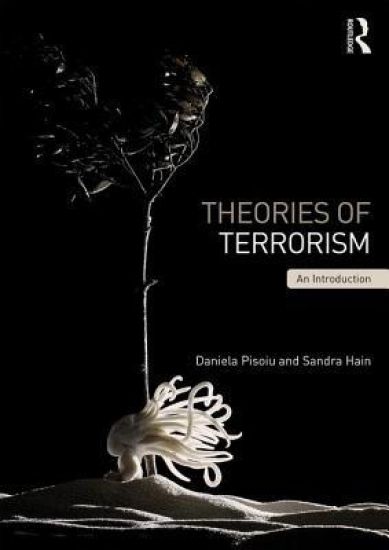
This new textbook provides students with a multidisciplinary theoretical and methodological introduction to terrorism studies. The book identifies the main theories proposed in the field of terrorism studies as they relate to several issues: why and how individuals and organizations get involved in terrorism; the definition and concept of terrorism; state terrorism; leaving terrorism behind; counter-terrorism; manifestations of terrorism in time and space. Terrorism studies is a highly heterogeneous field with a broad range of theories and disciplines, marked by ample debates. Beyond individual contributions and unique perspectives, however, it is difficult for students and interested readers to have a broader and structured grasp of the theoretical landscape within and behind the study of terrorism. This textbook offers a valuable new teaching tool which aims to provide students with the conceptual, theoretical, and methodological toolbox necessary to understand and research terrorism.This book will be essential reading for students of terrorism studies, political violence, and counter-terrorism, and is highly recommended for students of security studies, criminology, politics, and international relations.
Theories of Terrorism

Theories of Terrorism

Daniela Pisoiu; Sandra Hain

Routledge
2017
nidottu
This new textbook provides students with a multidisciplinary theoretical and methodological introduction to terrorism studies. The book identifies the main theories proposed in the field of terrorism studies as they relate to several issues: why and how individuals and organizations get involved in terrorism; the definition and concept of terrorism; state terrorism; leaving terrorism behind; counter-terrorism; manifestations of terrorism in time and space. Terrorism studies is a highly heterogeneous field with a broad range of theories and disciplines, marked by ample debates. Beyond individual contributions and unique perspectives, however, it is difficult for students and interested readers to have a broader and structured grasp of the theoretical landscape within and behind the study of terrorism. This textbook offers a valuable new teaching tool which aims to provide students with the conceptual, theoretical, and methodological toolbox necessary to understand and research terrorism.This book will be essential reading for students of terrorism studies, political violence, and counter-terrorism, and is highly recommended for students of security studies, criminology, politics, and international relations.