Kirjojen hintavertailu. Mukana 11 342 296 kirjaa ja 12 kauppaa.

Kirjahaku

Etsi kirjoja tekijän nimen, kirjan nimen tai ISBN:n perusteella.

1000 tulosta hakusanalla Danielle Forrest

Angelopolis

Angelopolis

Danielle Trussoni

Penguin USA
2013
nidottu
"A stunning follow-up to the best-seller Angelology. . . Part historical novel, fantasy, love story, thriller, and mystery. . . It's a must-read."--Booklist (starred review) A New York Times bestseller and global sensation, Angelology unfurled a brilliant tapestry of myth and biblical lore on our present-day world and plunged two star-crossed heroes into an ancient battle against mankind's greatest enemy: the fatally attractive angel-human hybrids known as the Nephilim. With Angelopolis, the conflict deepens into an inferno of danger and passion unbound. A decade has passed since Verlaine saw Evangeline alight from the Brooklyn Bridge, the sight of her new wings a betrayal that haunts him still. Now an elite angel hunter for the Society of Angelology, he pursues his mission with single-minded devotion: to capture, imprison, and eliminate her kind. But when Evangeline suddenly appears on a twilit Paris street, Verlaine finds her nature to be unlike any of the other creatures he so mercilessly pursues, casting him into a spiral of doubt and confusion that only grows when she is abducted before his eyes by a creature who has topped the society's most-wanted list for more than a century. The ensuing chase drives Verlaine and his fellow angelologists from the shadows of the Eiffel Tower to the palaces of St. Petersburg and deep into the provinces of Siberia and the Black Sea coast, where the truth of Evangeline's origins--as well as forces that could restore or annihilate them all--lie in wait. Conceived against an astonishing fresh tableau of history and science, Angelopolis plumbs Russia's imperial past, modern genetics, and ancient depictions of that most potent angelic appearance--the Annunciation of Gabriel--in a high-octane tale of abduction, treasure seeking, and divine warfare as the fate of humanity once again hangs in the balance.
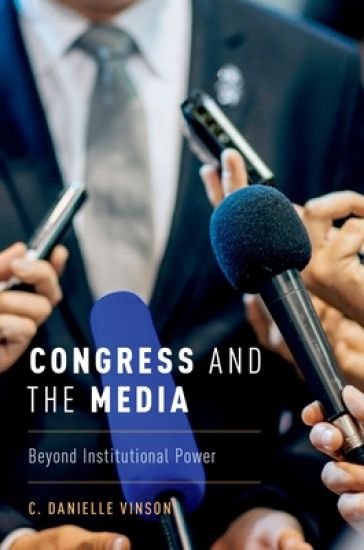
Congress and the Media

Congress and the Media

Danielle Vinson

Oxford University Press Inc
2017
sidottu
Over the last four decades, members of Congress have increasingly embraced media relations as a way to influence national policymaking and politics. In 1977, nearly half of congressional members had no press secretary. Today, media relations is a central component of most congressional offices, and more of that communications effort is directed toward national media, not just the local press. Arguing that members of Congress turn to the media to enhance their formal powers or to compensate for their lack of power, Congress and the Media explains why congressional members go public and when they are likely to succeed in getting coverage. Vinson uses content analysis of national newspaper and television coverage of congressional members over time and members' messages on social media as well as case studies to examine how members in different political circumstances use the media to try to influence policymaking and how this has changed over time. She finds that members' institutional position, the political context, increasing partisan polarization, and journalists' evolving notions of what is newsworthy all affect which congressional members are interested in and successful in gaining media coverage of their messages and what they hope to accomplish by going public. Ultimately, Congress and the Media suggests that going public can be a way for members of Congress to move beyond their institutional powers, but the strategy is not equally available to all members nor effective for all goals.
Congress and the Media

Congress and the Media

Danielle Vinson

Oxford University Press Inc
2017
nidottu
Over the last four decades, members of Congress have increasingly embraced media relations as a way to influence national policymaking and politics. In 1977, nearly half of congressional members had no press secretary. Today, media relations is a central component of most congressional offices, and more of that communications effort is directed toward national media, not just the local press. Arguing that members of Congress turn to the media to enhance their formal powers or to compensate for their lack of power, Congress and the Media explains why congressional members go public and when they are likely to succeed in getting coverage. Vinson uses content analysis of national newspaper and television coverage of congressional members over time and members' messages on social media as well as case studies to examine how members in different political circumstances use the media to try to influence policymaking and how this has changed over time. She finds that members' institutional position, the political context, increasing partisan polarization, and journalists' evolving notions of what is newsworthy all affect which congressional members are interested in and successful in gaining media coverage of their messages and what they hope to accomplish by going public. Ultimately, Congress and the Media suggests that going public can be a way for members of Congress to move beyond their institutional powers, but the strategy is not equally available to all members nor effective for all goals.
The Power of Race in Cuba

The Power of Race in Cuba

Danielle Clealand Pilar

Oxford University Press Inc
2017
sidottu
In The Power of Race in Cuba, Danielle Pilar Clealand analyzes racial ideologies that negate the existence of racism and their effect on racial progress and activism through the lens of Cuba. Since 1959, Fidel Castro and the Cuban government have married socialism and the ideal of racial harmony to create a formidable ideology that is an integral part of Cubans' sense of identity and their perceptions of race and racism in their country. While the combination of socialism and a colorblind racial ideology is particular to Cuba, strategies that paint a picture of equality of opportunity and deflect the importance of race are not particular to the island's ideology and can be found throughout the world, and in the Americas, in particular. By promoting an anti-discrimination ethos, diminishing class differences at the onset of the revolution, and declaring the end of racism, Castro was able to unite belief in the revolution to belief in the erasure of racism. The ideology is bolstered by rhetoric that discourages racial affirmation. The second part of the book examines public opinion on race in Cuba, particularly among black Cubans. It examines how black Cubans have indeed embraced the dominant nationalist ideology that eschews racial affirmation, but also continue to create spaces for black consciousness that challenge this ideology. The Power of Race in Cuba gives a nuanced portrait of black identity in Cuba and through survey data, interviews with formal organizers, hip hop artists, draws from the many black spaces, both formal and informal to highlight what black consciousness looks like in Cuba.
The Power of Race in Cuba

The Power of Race in Cuba

Danielle Clealand Pilar

Oxford University Press Inc
2017
nidottu
In The Power of Race in Cuba, Danielle Pilar Clealand analyzes racial ideologies that negate the existence of racism and their effect on racial progress and activism through the lens of Cuba. Since 1959, Fidel Castro and the Cuban government have married socialism and the ideal of racial harmony to create a formidable ideology that is an integral part of Cubans' sense of identity and their perceptions of race and racism in their country. While the combination of socialism and a colorblind racial ideology is particular to Cuba, strategies that paint a picture of equality of opportunity and deflect the importance of race are not particular to the island's ideology and can be found throughout the world, and in the Americas, in particular. By promoting an anti-discrimination ethos, diminishing class differences at the onset of the revolution, and declaring the end of racism, Castro was able to unite belief in the revolution to belief in the erasure of racism. The ideology is bolstered by rhetoric that discourages racial affirmation. The second part of the book examines public opinion on race in Cuba, particularly among black Cubans. It examines how black Cubans have indeed embraced the dominant nationalist ideology that eschews racial affirmation, but also continue to create spaces for black consciousness that challenge this ideology. The Power of Race in Cuba gives a nuanced portrait of black identity in Cuba and through survey data, interviews with formal organizers, hip hop artists, draws from the many black spaces, both formal and informal to highlight what black consciousness looks like in Cuba.
Metagnosis

Metagnosis

Danielle Spencer

Oxford University Press Inc
2021
sidottu
Bridging memoir with key concepts in narratology, philosophy and history of medicine, and disability studies, this book identifies and names the phenomenon of metagnosis: the experience of learning in adulthood of a longstanding condition. It can occur when the condition has remained undetected (e.g. colorblindness) and/or when the diagnostic categories themselves have shifted (e.g. ADHD). More broadly, it can occur with unexpected revelations bearing upon selfhood, such as surprising genetic test results. Though this phenomenon has received relatively scant attention, learning of an unknown condition is often a significant and bewildering revelation, one that subverts narrative expectations and customary categories. How do we understand these revelations? In addressing this topic Danielle Spencer approaches narrative medicine as a robust research methodology comprising interdisciplinarity, narrative attentiveness, and the creation of writerly texts. Beginning with Spencer's own experience, the book explores the issues raised by metagnosis, from communicability to narrative intelligibility to different ways of seeing. Next, it traces the distinctive metagnostic narrative arc through the stages of recognition, subversion, and renegotiation, discussing this trajectory in light of a range of metagnostic experiences-from Blade Runner to real-world mid-life diagnoses. Finally, it situates metagnosis in relation to genetic revelations and the broader discourses concerning identity. Spencer proposes that better understanding metagnosis will not simply aid those directly affected, but will serve as a bellwether for how we will all navigate advancing biomedical and genomic knowledge, and how we may fruitfully interrogate the very notion of identity.
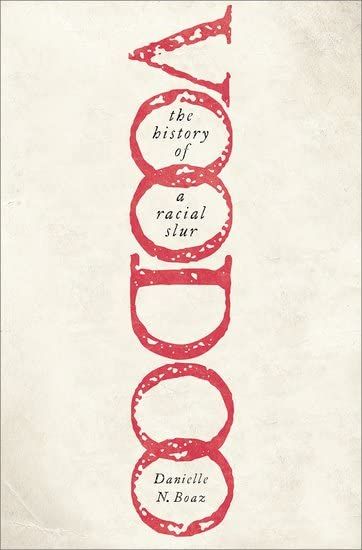
Voodoo: The History of a Racial Slur

Voodoo: The History of a Racial Slur

Danielle N. Boaz

OXFORD UNIVERSITY PRESS INC
2023
sidottu
Coined in the middle of the nineteenth century, the term "voodoo" has been deployed largely by people in the U.S. to refer to spiritual practices--real or imagined--among people of African descent. "Voodoo" is one way that white people have invoked their anxieties and stereotypes about Black people--to call them uncivilized, superstitious, hypersexual, violent, and cannibalistic. In this book, Danielle Boaz explores public perceptions of "voodoo" as they have varied over time, with an emphasis on the intricate connection between stereotypes of "voodoo" and debates about race and human rights. The term has its roots in the U.S. Civil War in the 1860s, especially following the Union takeover of New Orleans, when it was used to propagate the idea that Black Americans held certain "superstitions" that allegedly proved that they were unprepared for freedom, the right to vote, and the ability to hold public office. Similar stereotypes were later extended to Cuba and Haiti in the late nineteenth and early twentieth centuries. In the 1930s, Black religious movements like the Moorish Science Temple and the Nation of Islam were derided as "voodoo cults." More recently, ideas about "voodoo" have shaped U.S. policies toward Haitian immigrants in the 1980s, and international responses to rituals to bind Nigerian women to human traffickers in the twenty-first century. Drawing on newspapers, travelogues, magazines, legal documents, and books, Boaz shows that the term "voodoo" has often been a tool of racism, colonialism, and oppression.
Voodoo: The History of a Racial Slur

Voodoo: The History of a Racial Slur

Danielle N. Boaz

OXFORD UNIVERSITY PRESS INC
2023
nidottu
Coined in the middle of the nineteenth century, the term "voodoo" has been deployed largely by people in the U.S. to refer to spiritual practices--real or imagined--among people of African descent. "Voodoo" is one way that white people have invoked their anxieties and stereotypes about Black people--to call them uncivilized, superstitious, hypersexual, violent, and cannibalistic. In this book, Danielle Boaz explores public perceptions of "voodoo" as they have varied over time, with an emphasis on the intricate connection between stereotypes of "voodoo" and debates about race and human rights. The term has its roots in the U.S. Civil War in the 1860s, especially following the Union takeover of New Orleans, when it was used to propagate the idea that Black Americans held certain "superstitions" that allegedly proved that they were unprepared for freedom, the right to vote, and the ability to hold public office. Similar stereotypes were later extended to Cuba and Haiti in the late nineteenth and early twentieth centuries. In the 1930s, Black religious movements like the Moorish Science Temple and the Nation of Islam were derided as "voodoo cults." More recently, ideas about "voodoo" have shaped U.S. policies toward Haitian immigrants in the 1980s, and international responses to rituals to bind Nigerian women to human traffickers in the twenty-first century. Drawing on newspapers, travelogues, magazines, legal documents, and books, Boaz shows that the term "voodoo" has often been a tool of racism, colonialism, and oppression.
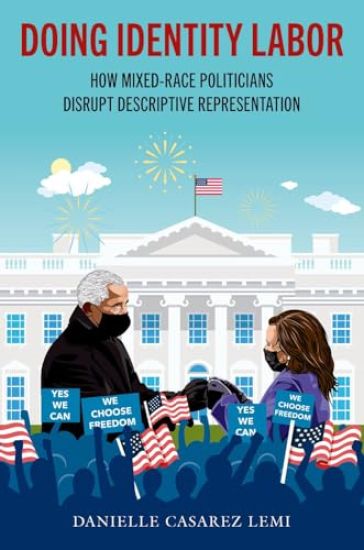
Doing Identity Labor

Doing Identity Labor

Danielle Casarez Lemi

OXFORD UNIVERSITY PRESS INC
2026
sidottu
As the 2024 Democratic presidential nominee, Kamala Harris stood to make history as the first Black and South Asian American woman president. Between 2008 and 2024, Americans saw multiracial candidates-Barack Obama and Harris-on four presidential tickets. They rose to power alongside the rising numbers of Americans who identify as multiracial. And yet, despite the presence of major multiracial political figures and a growing multiracial population, voters are still curious about their identities. People often ask multiracial politicians questions that amount to: “What are you?” In Doing Identity Labor: How Mixed-Race Politicians Disrupt Descriptive Representation, Danielle Casarez Lemi provides one of the first book-length treatments of how multiracial politicians, across office, geography, and background, navigate identity in public life. Lemi develops an interdisciplinary theory of identity labor that explains how multiracial politicians perform their racial identities, especially according to their appearance. The book assembles a rare combination of text analysis, discourse analysis, survey analysis, experimental analysis, nationwide interviews, and case studies of multiracial politicians, including a study of Vice President Kamala Harris. Lemi's groundbreaking multidimensional analysis shows that using racial identity for political gain is neither clear-cut nor ambiguous.
Doing Identity Labor

Doing Identity Labor

Danielle Casarez Lemi

OXFORD UNIVERSITY PRESS INC
2026
nidottu
As the 2024 Democratic presidential nominee, Kamala Harris stood to make history as the first Black and South Asian American woman president. Between 2008 and 2024, Americans saw multiracial candidates-Barack Obama and Harris-on four presidential tickets. They rose to power alongside the rising numbers of Americans who identify as multiracial. And yet, despite the presence of major multiracial political figures and a growing multiracial population, voters are still curious about their identities. People often ask multiracial politicians questions that amount to: “What are you?” In Doing Identity Labor: How Mixed-Race Politicians Disrupt Descriptive Representation, Danielle Casarez Lemi provides one of the first book-length treatments of how multiracial politicians, across office, geography, and background, navigate identity in public life. Lemi develops an interdisciplinary theory of identity labor that explains how multiracial politicians perform their racial identities, especially according to their appearance. The book assembles a rare combination of text analysis, discourse analysis, survey analysis, experimental analysis, nationwide interviews, and case studies of multiracial politicians, including a study of Vice President Kamala Harris. Lemi's groundbreaking multidimensional analysis shows that using racial identity for political gain is neither clear-cut nor ambiguous.
Realizing Reason

Realizing Reason

Danielle Macbeth

Oxford University Press
2014
sidottu
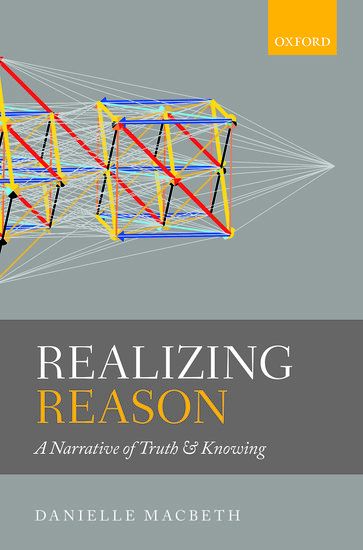
Realizing Reason pursues three interrelated themes. First, it traces the essential moments in the historical unfolding--from the ancient Greeks, through Descartes, Kant, and developments in the nineteenth century, to the present--that culminates in the realization of pure reason as a power of knowing. Second, it provides a cogent account of mathematical practice as a mode of inquiry into objective truth. And finally, it develops and defends a new conception of our being in the world, one that builds on and transforms the now standard conception according to which our experience of reality arises out of brain activity due, in part, to merely causal impacts on our sense organs. Danielle Macbeth shows that to achieve an adequate understanding of the striving for truth in the exact sciences we must overcome this standard conception and that the way to do that is through a more adequate understanding of the nature of mathematical practice and the profound transformations it has undergone over the course of its history, the history through which reason is first realized as a power of knowing. Because we can understand mathematical practice only if we attend to the systems of written signs within which to do mathematics, Macbeth provides an account of the nature and role of written notations, specifically, of the principal systems that have been developed within which to reason in mathematics: Euclidean diagrams, the symbolic language of arithmetic and algebra, and Frege's concept-script, Begriffsschrift.
Marathon Fighters and Men of Maple

Marathon Fighters and Men of Maple

Danielle L. Kellogg

Oxford University Press
2013
sidottu
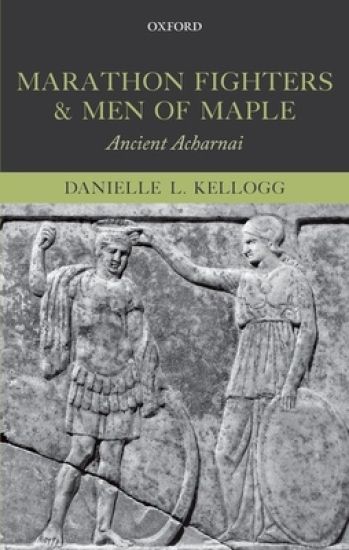
In ancient Athenian democracy there were one hundred and thirty-nine official demes, or recognized population centres, which formed the foundation of the political system introduced by Kleisthenes in 508/7 BC. Enrolment in one of these demes was a prerequisite for citizenship and participation in the Athenian socio-political system. Acharnai was by far the largest of the Kleisthenic demes and one of the best known from the ancient sources, most notably Thucydides and Aristophanes' comedy Acharnians; it therefore provides a rare opportunity for a comprehensive investigation into the workings of a rural deme. In this volume, Kellogg combines literary, prosopographical, epigraphical, and archaeological evidence to create an encompassing overview of this dynamic and historical settlement with a well-developed identity and unique traditions. Such an investigation also functions as a corrective to a 'one size fits all' approach to rural Attica, which privileges the city and its political and economic opportunities over the countryside where most of the Athenian citizenry lived. This volume constitutes a new and distinctive contribution to the study of ancient Athens, and is a major advance in the analysis of the critically important role of the Attic demes in the economic, political, social, and religious structures of Athenian democracy.
Talking to Strangers

Talking to Strangers

Danielle Allen

University of Chicago Press
2006
nidottu
"Don't talk to strangers" is the advice long given to children by parents of all classes and races. Today it has blossomed into a fundamental precept of civic education, reflecting interracial distrust, personal and political alienation, and a profound suspicion of others. In this powerful and eloquent essay, Danielle Allen, a 2002 MacArthur Fellow, takes this maxim back to Little Rock, rooting out the seeds of distrust to replace them with "a citizenship of political friendship." Returning to the landmark Brown v. Board of Education decision of 1954 and to the famous photograph of Elizabeth Eckford, one of the Little Rock Nine, being cursed by fellow "citizen" Hazel Bryan, Allen argues that we have yet to complete the transition to political friendship that this moment offered. By combining brief readings of philosophers and political theorists with personal reflections on race politics in Chicago, Allen proposes strikingly practical techniques of citizenship. These tools of political friendship, Allen contends, can help us become more trustworthy to others and overcome the fossilized distrust among us. Sacrifice is the key concept that bridges citizenship and trust, according to Allen. She uncovers the ordinary, daily sacrifices citizens make to keep democracy working—and offers methods for recognizing and reciprocating those sacrifices. Trenchant, incisive, and ultimately hopeful, Talking to Strangers is nothing less than a manifesto for a revitalized democratic citizenry.
Education and Equality

Education and Equality

Danielle Allen

University of Chicago Press
2016
sidottu
American education as we know it today—guaranteed by the state to serve every child in the country—is still less than a hundred years old. It’s no wonder we haven’t agreed yet as to exactly what role education should play in our society. In these Tanner Lectures, Danielle Allen brings us much closer, examining the ideological impasse between vocational and humanistic approaches that has plagued educational discourse, offering a compelling proposal to finally resolve the dispute. Allen argues that education plays a crucial role in the cultivation of political and social equality and economic fairness, but that we have lost sight of exactly what that role is and should be. Drawing on thinkers such as John Rawls and Hannah Arendt, she sketches out a humanistic baseline that re-links education to equality, showing how doing so can help us reframe policy questions. From there, she turns to civic education, showing that we must reorient education’s trajectory toward readying students for lives as democratic citizens. Deepened by commentaries from leading thinkers Tommie Shelby, Marcelo Suárez-Orozco, Michael Rebell, and Quiara Alegría Hudes that touch on issues ranging from globalization to law to linguistic empowerment, this book offers a critical clarification of just how important education is to democratic life, as well as a stirring defense of the humanities.
Dominatrix

Dominatrix

Danielle J. Lindemann

University of Chicago Press
2012
sidottu
Our lives are full of small tensions, our closest relationships full of struggle: between woman and man, artist and customer, purist and commercialist, professional and client - and between the dominant and the submissive. In "Dominatrix", Danielle J. Lindemann draws on extensive fieldwork and interviews with professional dominatrices in New York City and San Francisco to offer a sophisticated portrait of these unusual specialists, their work, and their clients. Prior research on sex work has focused primarily on prostitutes and most studies of BDSM absorb prodomme/client relationships without exploring the professional aspect that makes them unique. Lindemann satisfies our curiosity about these paid encounters, shining a light on one of the most secretive and least understood of personal relationships and unthreading a heretofore unexamined patch of our social tapestry. Upending the idea that these erotic laborers engage in simple exchanges and revealing the therapeutic and analytic nature of their work, Lindemann makes a major contribution to cultural studies, sociology, and queer studies with her analysis of how gender, power, sexuality, and hierarchy shape all of our social experiences.
Dominatrix

Dominatrix

Danielle J. Lindemann

University of Chicago Press
2012
nidottu
Our lives are full of small tensions, our closest relationships full of struggle: between woman and man, artist and customer, purist and commercialist, professional and client - and between the dominant and the submissive. In "Dominatrix", Danielle J. Lindemann draws on extensive fieldwork and interviews with professional dominatrices in New York City and San Francisco to offer a sophisticated portrait of these unusual specialists, their work, and their clients. Prior research on sex work has focused primarily on prostitutes and most studies of BDSM absorb prodomme/client relationships without exploring the professional aspect that makes them unique. Lindemann satisfies our curiosity about these paid encounters, shining a light on one of the most secretive and least understood of personal relationships and unthreading a heretofore unexamined patch of our social tapestry. Upending the idea that these erotic laborers engage in simple exchanges and revealing the therapeutic and analytic nature of their work, Lindemann makes a major contribution to cultural studies, sociology, and queer studies with her analysis of how gender, power, sexuality, and hierarchy shape all of our social experiences.
Education and Equality

Education and Equality

Danielle Allen

University of Chicago Press
2018
nidottu
American education as we know it today—guaranteed by the state to serve every child in the country—is still less than a hundred years old. It’s no wonder we haven’t agreed yet as to exactly what role education should play in our society. In these Tanner Lectures, Danielle Allen brings us much closer, examining the ideological impasse between vocational and humanistic approaches that has plagued educational discourse, offering a compelling proposal to finally resolve the dispute. Allen argues that education plays a crucial role in the cultivation of political and social equality and economic fairness, but that we have lost sight of exactly what that role is and should be. Drawing on thinkers such as John Rawls and Hannah Arendt, she sketches out a humanistic baseline that re-links education to equality, showing how doing so can help us reframe policy questions. From there, she turns to civic education, showing that we must reorient education’s trajectory toward readying students for lives as democratic citizens. Deepened by commentaries from leading thinkers Tommie Shelby, Marcelo Suárez-Orozco, Michael Rebell, and Quiara Alegría Hudes that touch on issues ranging from globalization to law to linguistic empowerment, this book offers a critical clarification of just how important education is to democratic life, as well as a stirring defense of the humanities.
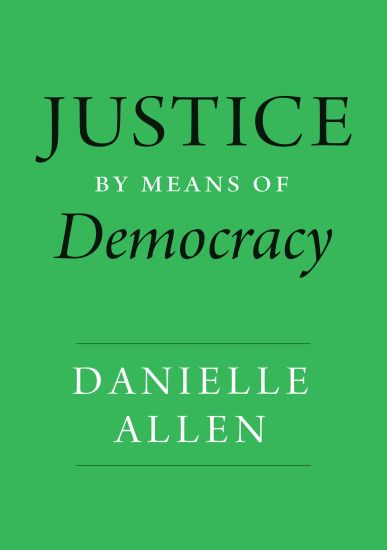
Justice by Means of Democracy

Justice by Means of Democracy

Danielle Allen

THE UNIVERSITY OF CHICAGO PRESS
2023
sidottu
From leading thinker Danielle Allen, a bold and urgent articulation of a new political philosophy: power-sharing liberalism. At a time of great social and political turmoil, when many residents of the leading democracies question the ability of their governments to deal fairly and competently with serious public issues, and when power seems more and more to rest with the wealthy few, this book reconsiders the very foundations of democracy and justice. Scholar and writer Danielle Allen argues that the surest path to a just society in which all are given the support necessary to flourish is the protection of political equality; that justice is best achieved by means of democracy; and that the social ideals and organizational design principles that flow from recognizing political equality and democracy as fundamental to human well-being provide an alternative framework not only for justice but also for political economy. Allen identifies this paradigm-changing new framework as “power-sharing liberalism.” Liberalism more broadly is the philosophical commitment to a government grounded in rights that both protect people in their private lives and empower them to help govern public life. Power-sharing liberalism offers an innovative reconstruction of liberalism based on the principle of full inclusion and non-domination—in which no group has a monopoly on power—in politics, economy, and society. By showing how we all might fully share power and responsibility across all three sectors, Allen advances a culture of civic engagement and empowerment, revealing the universal benefits of an effective government in which all participate on equal terms.
Democracy in the Time of Coronavirus

Democracy in the Time of Coronavirus

Danielle Allen

University of Chicago Press
2022
sidottu
The COVID-19 pandemic has demonstrated some of the strengths of our society, including the rapid development of vaccines. But the pandemic has also exposed its glaring weaknesses, such as the failure of our government to develop and quickly implement strategies for tracing and containing outbreaks as well as widespread public distrust of government prompted by often confusing and conflicting choices—to mask, or not to mask. Even worse is that over half a million deaths and the extensive economic devastation could have been avoided if the government had been prepared to undertake comprehensive, contextually-sensitive policies to stop the spread of the disease. In Democracy in the Time of Coronavirus, leading political thinker Danielle Allen untangles the US government’s COVID-19 victories and failures to offer a plan for creating a more resilient democratic polity—one that can better respond to both the present pandemic and future crises. Looking to history, Allen also identifies the challenges faced by democracies in other times that required strong government action. In an analysis spanning from ancient Greece to the Reconstruction Amendments and the present day, Allen argues for the relative effectiveness of collaborative federalism over authoritarian compulsion and for the unifying power of a common cause. But for democracy to endure, we—as participatory citizens—must commit to that cause: a just and equal social contract and support for good governance.
Democracy in the Time of Coronavirus

Democracy in the Time of Coronavirus

Danielle Allen

University of Chicago Press
2022
pokkari
The COVID-19 pandemic has demonstrated some of the strengths of our society, including the rapid development of vaccines. But the pandemic has also exposed its glaring weaknesses, such as the failure of our government to develop and quickly implement strategies for tracing and containing outbreaks as well as widespread public distrust of government prompted by often confusing and conflicting choices—to mask, or not to mask. Even worse is that over half a million deaths and the extensive economic devastation could have been avoided if the government had been prepared to undertake comprehensive, contextually-sensitive policies to stop the spread of the disease. In Democracy in the Time of Coronavirus, leading political thinker Danielle Allen untangles the US government’s COVID-19 victories and failures to offer a plan for creating a more resilient democratic polity—one that can better respond to both the present pandemic and future crises. Looking to history, Allen also identifies the challenges faced by democracies in other times that required strong government action. In an analysis spanning from ancient Greece to the Reconstruction Amendments and the present day, Allen argues for the relative effectiveness of collaborative federalism over authoritarian compulsion and for the unifying power of a common cause. But for democracy to endure, we—as participatory citizens—must commit to that cause: a just and equal social contract and support for good governance.