
Kirjahaku
Etsi kirjoja tekijän nimen, kirjan nimen tai ISBN:n perusteella.
1000 tulosta hakusanalla Darin Hoskisson

In Contemporary Social Constructionism, Darin Weinberg provides a detailed, critical overview of the key themes of this school of thought, which explains how phenomena and ways of thinking develop in their social contexts. Weinberg traces the multiple roots of social constructionism, and shows how it has been used, critiqued, and refined within the social and human sciences. Contemporary Social Constructionism illuminates how constructionist social science developed in relation to positivism, critical and hermeneutic philosophy, and feminism and then goes on to distinguish the concept from postmodernism and deconstructionism. In addition, Weinberg shows how social constructionists have contributed to our understanding of biology, the body, self-knowledge, and social problems. The result is a contemporary statement of social constructionism that shores up its scientific veracity and demonstrates its analytic power, promise, and influence. The book concludes with a look toward the future of the concept and its use.
In Contemporary Social Constructionism, Darin Weinberg provides a detailed, critical overview of the key themes of this school of thought, which explains how phenomena and ways of thinking develop in their social contexts. Weinberg traces the multiple roots of social constructionism, and shows how it has been used, critiqued, and refined within the social and human sciences. Contemporary Social Constructionism illuminates how constructionist social science developed in relation to positivism, critical and hermeneutic philosophy, and feminism and then goes on to distinguish the concept from postmodernism and deconstructionism. In addition, Weinberg shows how social constructionists have contributed to our understanding of biology, the body, self-knowledge, and social problems. The result is a contemporary statement of social constructionism that shores up its scientific veracity and demonstrates its analytic power, promise, and influence. The book concludes with a look toward the future of the concept and its use.

So You Want to Be Blessed: A Devotional Commentary of Psalm 1
Darin Bowler
Createspace Independent Publishing Platform
2011
nidottu

God: A Long Time Ago in a Galilean Far, Far Away
Darin Bowler
Createspace Independent Publishing Platform
2010
nidottu


The Intolerant Christ: Purifying Modern Christianity Through the Original Demands of Jesus and His Apostles
Darin Bowler
Createspace Independent Publishing Platform
2011
nidottu


Yellowstone's Backcountry Cutthroats
Darin Letzring
Createspace Independent Publishing Platform
2011
nidottu


The Prudence Awakening: Believing In God Is One Thing. Submitting To Him Is Another.
Darin Bowler
Createspace Independent Publishing Platform
2011
nidottu

Root Down and Branch Out: Best Practices for Leadership Development Programs
Darin J. Eich
Createspace Independent Publishing Platform
2012
nidottu
Root Down and Branch Out: Best Practices for Leadership Development Programs + Innovation ready: Learn from and root down in the high-impact practices in action at universities - and branch out from them with ideas you can launch in your own program + Research based: Be more scientific and gain insights from a University of Wisconsin study of high quality leadership development programs in US higher education + Grounded in real stories: Understand what works through reading quotes from over sixty students and practitioners from different leadership programs + Ready to apply: Use the charts and tools to apply the model and best practices to your own setting, workshop, course, program, institution, initiative, or organization + Assessment friendly: Use the included assessment sheets for program evaluation, development, reflection, idea generation, and improvement + Current and growing: New resources, activities, tips, guides, videos, networks, and updates are becoming available regularly at DarinEich.com/Book This book brings key findings to practice from a research study conducted to determine the most important characteristics of high quality leadership development programs. The author spoke with program developers, educators and participants from four programs to uncover what mattered most - what made the leadership programs most effective. From the study findings, the Grounded Theory Model of High Quality Leadership Programs was developed to outline the most important characteristics of effective programs that positively contribute to students' learning and leadership development. Charts also lay out the actions you can take and what types of outcomes these actions produce. The pieces of the model can be used as a checklist for things you could be doing in your program -- as catalysts for innovation. This practical knowledge can assist you, whether you are a program developer or teacher, in creating and administering high-quality leadership programs that enhance the learning and leadership development of your program participants.



Ruler Visibility and Popular Belonging in the Ottoman Empire, 1808-1908
Darin Stephanov
Edinburgh University Press
2018
sidottu
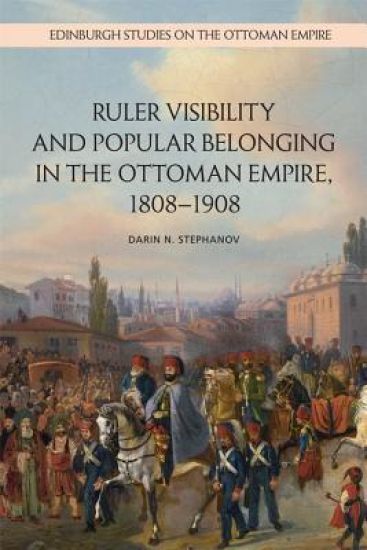
This book argues that the periodic ceremonial intrusion into the everyday lives of people across the Ottoman Empire, which the annual royal birthday and accession-day celebrations constituted, had multiple, far-reaching and largely unexplored consequences. On the one hand, it brought ordinary subjects into symbolic contact with the monarch and forged lasting vertical ties of loyalty to him, irrespective of language, location, creed or class. On the other hand, the rounds of royal celebration played a key role in the creation of new types of horizontal ties and ethnic group consciousness that crystallized into national movements and, after the empire's demise, national monarchies.
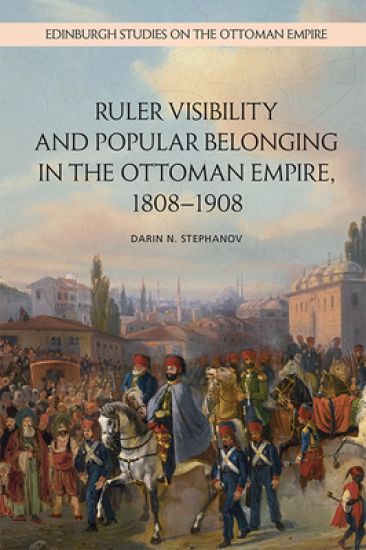
Ruler Visibility and Popular Belonging in the Ottoman Empire, 1808-1908
Darin Stephanov
Edinburgh University Press
2020
nidottu
This book argues that the periodic ceremonial intrusion into the everyday lives of people across the Ottoman Empire, which the annual royal birthday and accession-day celebrations constituted, had multiple, far-reaching and largely unexplored consequences. On the one hand, it brought ordinary subjects into symbolic contact with the monarch and forged lasting vertical ties of loyalty to him, irrespective of language, location, creed or class. On the other hand, the rounds of royal celebration played a key role in the creation of new types of horizontal ties and ethnic group consciousness that crystallized into national movements and, after the empire's demise, national monarchies.