Kirjojen hintavertailu. Mukana 12 016 292 kirjaa ja 12 kauppaa.

Kirjahaku

Etsi kirjoja tekijän nimen, kirjan nimen tai ISBN:n perusteella.

1000 tulosta hakusanalla Darius Good

Activating God's Power in Darius: Overcome and Be Transformed by Accessing God's Power.
Do you want to pray with power... and see results? Readers of Activating God's Power by Michelle Leslie will learn what to pray and to confidently claim answers to prayer. This personalized book is a guide to praying according to God's Word You will discover hundreds of Scripture-based prayers for all of life's situations: from finding your identity in Christ, to awakening God's favor in your life, to overcoming the trials of life with spiritual warfare. When we meditate on the word and speak it, we are activating God's power. God's word brings life and creates a spiritual mindset that changes us and the world around us (Romans 12:2). As you put these mighty, scriptural prayers to work in your own life and in the lives of those around you, you will see God moving and activating his Word. You no longer need to feel helpless in the face of difficult or painful circumstances. You no longer need to miss God's blessings for you and your loved ones. You can pray with power Nothing is more powerful than God. With Activating God's Power we are praying God's Word to overcome and bring us the freedom only found in Christ. Activating God's Power is a must-read for anyone who wants to pray with strength and purpose. The faith produced from this book will lead to results, not just for ourselves but for the lives around us.
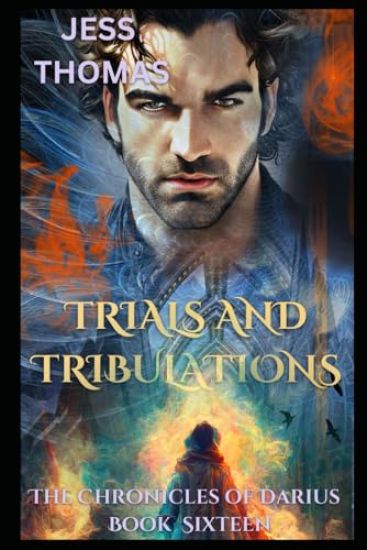
Trials and Tribulations: The Chronicles of Darius Book 16
Darius's clan continues to grow. With the addition of Killian, the family has gained another wizard, ally, and friend. However, he misses his mate and feels that he must embark on a dangerous journey to locate him at all costs. He can't do it alone and enlists the help of his friend Tasar to accompany him on his quest.Meanwhile, back on Eiravia, an old and powerful spell has awaked and weakened the protections around the planet. Slavers find their way to Eiravia in a bid to apprehend Killian but feel that Issaguard would make a suitable replacement. Obviously, this does not sit well with Darius or the clan. Light always attracts the darkness wherever it is, and Predition is no exception. He has vowed to destroy the clan at all costs. He is being pursued by Ammit and Anubis in a relentless battle to preserve the white energy of the universe and bring Predition to justice. Join Darius as he has to overcome trials and tribulations to save himself, his clan, and his friends.
Tag aus dem Leben des Konigs Darius

Tag aus dem Leben des Konigs Darius

Ferdinand Justi

Antigonos Verlag
2024
pokkari
Unver nderter Nachdruck der Originalausgabe von 1873. Der Verlag Antigonos spezialisiert sich auf die Herausgabe von Nachdrucken historischer B cher. Wir achten darauf, dass diese Werke der ffentlichkeit in einem guten Zustand zug nglich gemacht werden, um ihr kulturelles Erbe zu bewahren.
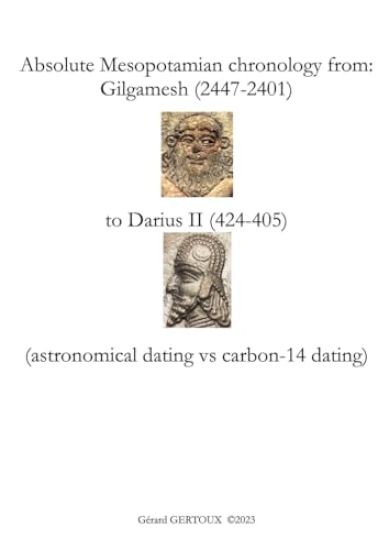
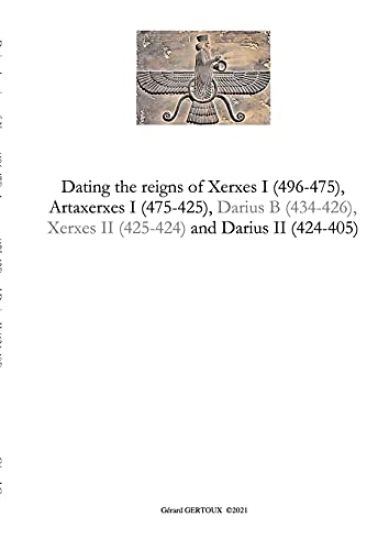
Absolute Mesopotamian chronology from Gilgamesh (2447-2401) to Darius II (424-405)
The Egyptian king lists were commissioned, as early as the first dynasty, by kings wishing to legitimise their royal descent from Narmer (2838-2808), the founder of the Egyptian empire. On the other hand, Sumerian king lists were commissioned by Shulgi (2002-1954), a powerful king of Ur III in the last Sumerian dynasty, who presented himself as the heir of the famous Gilgamesh (2447-2401), attributing to him the role of founder of the Sumerian empire, even though Gilgamesh, king of Uruk, knew that his city had been founded by EN AMAR.UTU (c.3000-2950), called Bel Marduk by the Babylonians. What's more, he also knew from the Akkadian governor of Babel (a word meaning "Gate of God" in Hebrew, later translated into Sumerian as KA.DINGIR.RA) that Marduk had built a temple next to the gigantic four-storey ziggurat, called E.TEMEN.AN.KI ("temple of the foundation of the sky/heavens and the earth") by the Sumerians, the famous Tower of Babel. The Sumerian king lists therefore completely obscured the role of Babylon's founder Marduk, a powerful hunter called Nimrod ("we will rebel") in the Bible (Gn 10:9-10), in order to conceal the collapse of his empire, referred to by archaeologists as the "Uruk expansion" (c.2950-2900). The Akkadian scribes of Shulgi, informed by some descendants of Noah (ZI.U4.SUD.RA "life of prolonged days" in Sumerian) living in Ur (like Abraham's family), traced the beginning of the mythical unified Sumerian kingship back to the 10th and last antediluvian king of Shuruppak, the famous survivor of the universal flood, named Ziusudra, or Noah, who lived 350 years after the universal flood (Gn 9:28), in 3170 BCE (LXX), and died in 2820 BCE, the beginning of the first Sumerian dynasty (Kish I). Marduk's role did not reappear until Hammurabi (1657-1654), who chose to glorify his capital "Babylon the Great" (Dn 4:30; Rv 17:18; 14:8), dedicating it to its founder: the Lord (Bel) Marduk (Jr 50:2), the powerful hunter whom the Sumerians had originally represented as the "Master of the Animals" clasping two lions in his arms. So, history did indeed begin at Sumer, but only the biblical text explains the role of its founder (Marduk).
Metrological Notes On The Ancient Electrum Coins Struck Between The Lelantian Wars And The Accession Of Darius
This work has been selected by scholars as being culturally important, and is part of the knowledge base of civilization as we know it. This work was reproduced from the original artifact, and remains as true to the original work as possible. Therefore, you will see the original copyright references, library stamps (as most of these works have been housed in our most important libraries around the world), and other notations in the work.This work is in the public domain in the United States of America, and possibly other nations. Within the United States, you may freely copy and distribute this work, as no entity (individual or corporate) has a copyright on the body of the work.As a reproduction of a historical artifact, this work may contain missing or blurred pages, poor pictures, errant marks, etc. Scholars believe, and we concur, that this work is important enough to be preserved, reproduced, and made generally available to the public. We appreciate your support of the preservation process, and thank you for being an important part of keeping this knowledge alive and relevant.
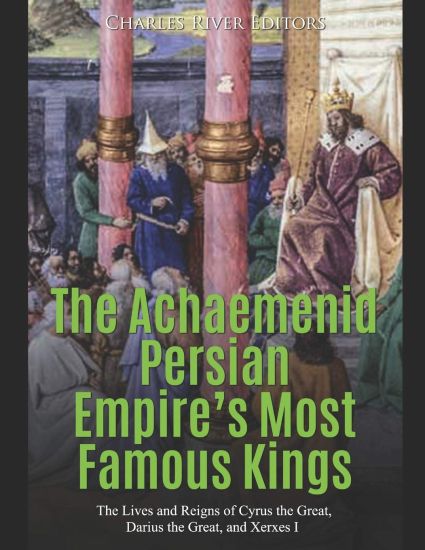
The Achaemenid Persian Empire's Most Famous Kings: The Lives and Reigns of Cyrus the Great, Darius the Great, and Xerxes I
*Includes pictures*Includes excerpts of ancient accounts*Includes a bibliography for further readingAt one point in antiquity, the Achaemenid Persian Empire was the largest empire the world had ever seen, but aside from its role in the Greco-Persian Wars and its collapse at the hands of Alexander the Great, it has been mostly overlooked. When it has been studied, the historical sources have mostly been Greek, the very people the Persians sought to conquer. Needless to say, their versions were biased. It was not until excavations in the region during the 20th century that many of the relics, reliefs, and clay tablets that offer so much information about Persian life could be studied for the first time. Through archaeological remains, ancient texts, and work by a new generation of historians, a picture can today be built of this remarkable civilization and their most famous leaders. When considering this empire's rulers, the two most often referenced are Xerxes, the leader of the Persian invasion of Greece which caused the heroic sacrifice of the Spartans and their allies at Thermopylae, or Cyrus the Great, the man who created the empire. While he was one of the most influential men in the ancient world, research on Cyrus the Great is simultaneously fascinating and frustrating. The Persians' ancestors did not write (in fact, in their epic poems and myths, they claim that it was something taught to man by demons and therefore something to be avoided), and though the Iranians had taken up writing in their governmental and administrative functions by the time Cyrus lived, the kings still did not learn to write. Put simply, it was considered a functional skill, but not of the greatest importance. As a result, while plenty of ancient sources mention the great Persian king, Persian sources themselves are rare, and those sources that do exist, such as the Babylonian Chronicle, are largely dry and state only the basic facts and large events. By contrast, Greek sources about Cyrus embrace the artistic aspect of their work so highly that the accuracy often comes into question, and sometimes deep scrutiny is necessary to attempt to separate the fact from the fiction. In the end, the full truth about Cyrus and his reign may never be truly understood. Darius I took the throne after the death of Cyrus's son, Cambyses II, and though his reign would not have been possible without the construction of the empire and the administrative groundwork laid by Cyrus the Great before him, Darius proved himself just as worthy of the epithet. Reigning for over 35 years, Darius kept control of the massive Persian Empire despite numerous rebellions and uprisings, and he also managed to implement reforms and improvements that established the empire's golden age. He followed the example of Cyrus before him in his foreign policy and mode of kingship as well, offering tolerance and patience to various cultures and religions, and even treating his enemies fairly in most cases. Perhaps his ultimate success can be seen most clearly in the passage of power at the end of his life. By that time, his reign had been long and stable, and though he died of illness somewhat unexpectedly, his kingdom was still so firmly established that the kingship passed to his son Xerxes without any question or upheaval. Under Darius the Great's rule, the empire reached its greatest extent, stretching from the Indus Valley and Central Asia in the east to Libya and the Danube River in the west. Xerxes remains one of the most famous rulers in history because he led the Second Persian War against the Greeks. That war was a veritable clash of civilizations, and had the Persians triumphed, Classical Athens would have been snuffed out and Greece would never have formed the backbone of Roman and Western culture. This book looks at the lives of the Persian rulers who brought the empire to the peak of its power.
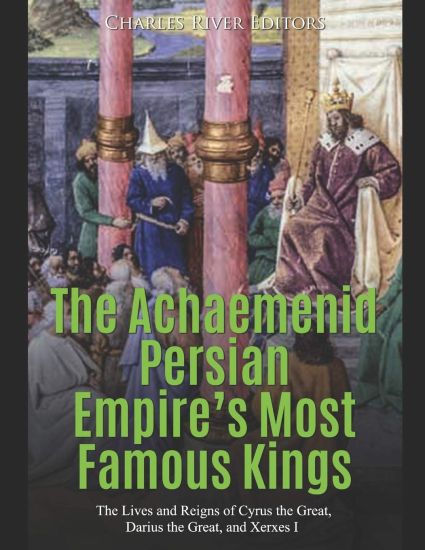
The Achaemenid Persian Empire's Most Famous Kings: The Lives and Reigns of Cyrus the Great, Darius the Great, and Xerxes I
*Includes pictures*Includes excerpts of ancient accounts*Includes a bibliography for further readingAt one point in antiquity, the Achaemenid Persian Empire was the largest empire the world had ever seen, but aside from its role in the Greco-Persian Wars and its collapse at the hands of Alexander the Great, it has been mostly overlooked. When it has been studied, the historical sources have mostly been Greek, the very people the Persians sought to conquer. Needless to say, their versions were biased. It was not until excavations in the region during the 20th century that many of the relics, reliefs, and clay tablets that offer so much information about Persian life could be studied for the first time. Through archaeological remains, ancient texts, and work by a new generation of historians, a picture can today be built of this remarkable civilization and their most famous leaders. When considering this empire's rulers, the two most often referenced are Xerxes, the leader of the Persian invasion of Greece which caused the heroic sacrifice of the Spartans and their allies at Thermopylae, or Cyrus the Great, the man who created the empire. While he was one of the most influential men in the ancient world, research on Cyrus the Great is simultaneously fascinating and frustrating. The Persians' ancestors did not write (in fact, in their epic poems and myths, they claim that it was something taught to man by demons and therefore something to be avoided), and though the Iranians had taken up writing in their governmental and administrative functions by the time Cyrus lived, the kings still did not learn to write. Put simply, it was considered a functional skill, but not of the greatest importance. As a result, while plenty of ancient sources mention the great Persian king, Persian sources themselves are rare, and those sources that do exist, such as the Babylonian Chronicle, are largely dry and state only the basic facts and large events. By contrast, Greek sources about Cyrus embrace the artistic aspect of their work so highly that the accuracy often comes into question, and sometimes deep scrutiny is necessary to attempt to separate the fact from the fiction. In the end, the full truth about Cyrus and his reign may never be truly understood. Darius I took the throne after the death of Cyrus's son, Cambyses II, and though his reign would not have been possible without the construction of the empire and the administrative groundwork laid by Cyrus the Great before him, Darius proved himself just as worthy of the epithet. Reigning for over 35 years, Darius kept control of the massive Persian Empire despite numerous rebellions and uprisings, and he also managed to implement reforms and improvements that established the empire's golden age. He followed the example of Cyrus before him in his foreign policy and mode of kingship as well, offering tolerance and patience to various cultures and religions, and even treating his enemies fairly in most cases. Perhaps his ultimate success can be seen most clearly in the passage of power at the end of his life. By that time, his reign had been long and stable, and though he died of illness somewhat unexpectedly, his kingdom was still so firmly established that the kingship passed to his son Xerxes without any question or upheaval. Under Darius the Great's rule, the empire reached its greatest extent, stretching from the Indus Valley and Central Asia in the east to Libya and the Danube River in the west. Xerxes remains one of the most famous rulers in history because he led the Second Persian War against the Greeks. That war was a veritable clash of civilizations, and had the Persians triumphed, Classical Athens would have been snuffed out and Greece would never have formed the backbone of Roman and Western culture. This book looks at the lives of the Persian rulers who brought the empire to the peak of its power.
Late Babylonian letters; transliterations and translations of a series of letters written in Babylonian cuneiform, chiefly during the reigns of Nabonidus, Cyrus, Cambyses, and Darius
This book has been considered by academicians and scholars of great significance and value to literature. This forms a part of the knowledge base for future generations. So that the book is never forgotten we have represented this book in a print format as the same form as it was originally first published. Hence any marks or annotations seen are left intentionally to preserve its true nature.
Life's Too Short

Life's Too Short

Darius Rucker

HARPERCOLLINS PUBLISHERS INC
2024
sidottu
"Darius has always been one of my favorite people to sing with and to call a friend in this industry and yet even knowing him well for as long as I have, there are so many incredible stories in Life's Too Short that I enjoyed learning for the first time.”—Sheryl Crow*A NEW YORK TIMES Bestseller*A raw, heartfelt memoir from Darius Rucker, the Grammy Award– winning country music sensation and multiplatinum-selling lead singer of Hootie & The Blowfish In 1986 Darius Rucker cofounded Hootie & The Blowfish at the University of South Carolina. What began as a party band playing frat houses and dive bars quickly became a global pop rock phenomenon through their multiplatinum-selling debut album, cracked rear view, which featured era-defining hit songs like “Only Wanna Be with You,” “Let Her Cry,” and “Hold My Hand.” Later, Darius would chart a pioneering path as a solo country music artist, with classic anthems like “Wagon Wheel” and “Alright.”Nearly forty years after the band’s formation, Darius tells his remarkable story through the lens of the songs that shaped him—from Al Green, Stevie Wonder, and KISS to Lou Reed, Billy Joel, Nanci Griffith, and so many more.Set against the soundtrack of his life, Darius recounts his childhood as the son of a single mother in Charleston, South Carolina. He traces the unlikely ascent of his band and shares wild tales of life on the road—but he also faces his missteps, defeats, and demons. As moving as it is entertaining, Life’s Too Short is a timeless book about a man and his music.
Life's Too Short

Life's Too Short

Darius Rucker

HARPERCOLLINS PUBLISHERS INC
2025
nidottu
"Darius has always been one of my favorite people to sing with and to call a friend in this industry and yet even knowing him well for as long as I have, there are so many incredible stories in Life's Too Short that I enjoyed learning for the first time.”—Sheryl Crow*A NEW YORK TIMES Bestseller*A raw, heartfelt memoir from Darius Rucker, the Grammy Award– winning country music sensation and multiplatinum-selling lead singer of Hootie & The Blowfish In 1986 Darius Rucker cofounded Hootie & The Blowfish at the University of South Carolina. What began as a party band playing frat houses and dive bars quickly became a global pop rock phenomenon through their multiplatinum-selling debut album, cracked rear view, which featured era-defining hit songs like “Only Wanna Be with You,” “Let Her Cry,” and “Hold My Hand.” Later, Darius would chart a pioneering path as a solo country music artist, with classic anthems like “Wagon Wheel” and “Alright.”Nearly forty years after the band’s formation, Darius tells his remarkable story through the lens of the songs that shaped him—from Al Green, Stevie Wonder, and KISS to Lou Reed, Billy Joel, Nanci Griffith, and so many more.Set against the soundtrack of his life, Darius recounts his childhood as the son of a single mother in Charleston, South Carolina. He traces the unlikely ascent of his band and shares wild tales of life on the road—but he also faces his missteps, defeats, and demons. As moving as it is entertaining, Life’s Too Short is a timeless book about a man and his music.
Neurotology

Neurotology

Darius Kohan; Selena E. Heman-Ackah; Sujana S. Chandrasekhar

Oxford University Press Inc
2014
nidottu
This text provides a concise yet comprehensive review of common neurologic disorders. The pathophysiology, presentation, diagnosis, and management of these entities is discussed in detail in a clear, easy to understand format. The focus is on patients presented with vertigo, disequilibrium, hearing loss, pulsatile and non-pulsatile tinnitus, facial nerve weakness, and complications of the otitis media. Vascular tumors and anomalies, trauma to the temporal bone, Meniere's disease, as well as cerebellopontine lesions such as vestibular schwannoma and meningioma will be discussed with special emphasis on clinical applications. The appropriate diagnostic work up and treatment options as well as controversies will be discussed in the context of evidence-based medicine and "best practice" approach. Judicious use of MRI/CT scanning and audio-vestibular testing relevant for each pathology is discussed in detail. Appropriate illustrations and tables will summarize algorithms and protocols for managing these disorders making this text an easy-to-digest medical resource. A reference list is provided.