This book provides valuable information and recommendations for current and future officers and correctional system employees, introducing them to civil liability and federal law, as well as recommending strategies that can be taken to minimize risks. The increasing litigation against criminal justice practitioners in the United States poses a significant problem for law enforcement and other personnel. Law enforcement and corrections professionals need to have a working knowledge of both criminal law and the civil law process to ensure that they are performing their duties within the limits of the law.Civil Liability in Criminal Justice is unique in its combination of applicable case law and related liability research, providing an overview of high-liability areas. This new edition has been revised to include up-to-date United States Supreme Court cases and illuminates the latest developments in the use of force, arrest-related deaths, custodial suicides in detention, collective bargaining, public perception issues, and more. Ross offers an engaging, accessible introduction to civil liability in the criminal justice system. A test bank and PowerPoint slides are available for instructor support.A valuable resource for enhancing student knowledge and practitioner job performance, this text is suitable for undergraduate and graduate courses in criminal justice programs as well as for in-service and academy training.
This book provides valuable information and recommendations for current and future officers and correctional system employees, introducing them to civil liability and federal law, as well as recommending strategies that can be taken to minimize risks. The increasing litigation against criminal justice practitioners in the United States poses a significant problem for law enforcement and other personnel. Law enforcement and corrections professionals need to have a working knowledge of both criminal law and the civil law process to ensure that they are performing their duties within the limits of the law.Civil Liability in Criminal Justice is unique in its combination of applicable case law and related liability research, providing an overview of high-liability areas. This new edition has been revised to include up-to-date United States Supreme Court cases and illuminates the latest developments in the use of force, arrest-related deaths, custodial suicides in detention, collective bargaining, public perception issues, and more. Ross offers an engaging, accessible introduction to civil liability in the criminal justice system. A test bank and PowerPoint slides are available for instructor support.A valuable resource for enhancing student knowledge and practitioner job performance, this text is suitable for undergraduate and graduate courses in criminal justice programs as well as for in-service and academy training.
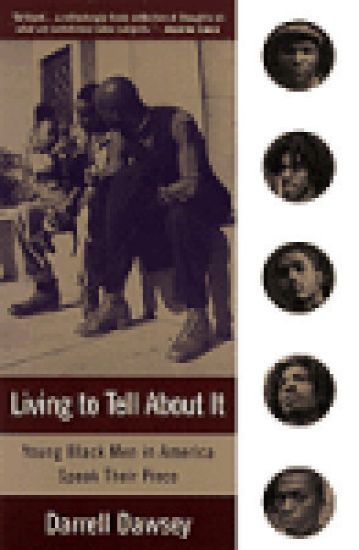
The statistics about young black men are familiar; homicide is their #1 killer, one fourth are in jail, on parole or probation, and theirs rates of unemployment, teen fatherhood, educational drop-out-and death-exceed those of any other demographic group. Moreover, in the public mind, even those who don't bear out the grim statistics have come to embody society's worst pathologies. When given the opportunity to speak for themselves, they report feeling as fearful of mere survival as they are feared, as threatened as they are threatening. Living to Tell About It is the first book to look beyond the statistics and perceptions at the real lives and experiences of most young black men in America today. Over the course of a year, journalist Darrell Dawsey traveled across the country, listening to a mosaic of young men talk about their childhoods, relationships with parents and women, sexuality, self-respect, spirituality, ambitions, the race that binds them and the diversity of class, education and geography that distinguishes them. Interweaving interview material with powerful reflections on his own background as a single-parent child of the inner city and a young father, Dawsey portrays the trials, tragedies, and triumphs of young black men in a society where they have been the targets of disenfranchisement, neglect, racism, and hostility. The result is a compelling portrait of a generation facing the manifold challenges and dilemmas of black manhood-and living to tell about it."
The efficacy of sound to penetrate the seas made acoustic systems in the past century the leading tools for sensing objects in and measuring properties of the seas. For over sixty years The United States Office of Naval Research (ONR) has been a major sponsor of undersea research and development at universities, national laboratories, and industrial organizations. App- priately ONR is the sponsor of this monograph series. The intent of the series is to summarize recent accomplishments in, and to outline perspectives for, underwater acoustics in specific fields of research. The general field has escalated in importance and spread broadly with ri- ness and depth of understanding. It has also, quite naturally, become more specialized. The goal of this series is to present monographs that critically review both past and recent accomplishments in order to address the sho- comings in present understanding. In this way, these works will bridge the gaps in understanding among the specialists and favorably color the direction of new research and development. Each monograph is intended to be a stand-alone advanced contribution to the field. We trust that the reader will also find that each is a critical introduction to related specialized topics of interest as well.
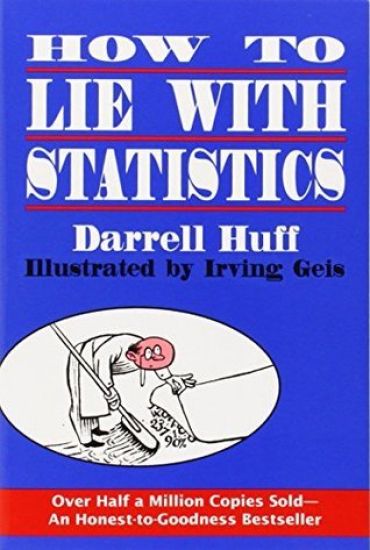
From distorted graphs and biased samples to misleading averages, there are countless statistical dodges that lend cover to anyone with an ax to grind or a product to sell. With abundant examples and illustrations, Darrell Huff's lively and engaging primer clarifies the basic principles of statistics and explains how they're used to present information in honest and not-so-honest ways. Now even more indispensable in our data-driven world than it was when first published, How to Lie with Statistics is the book that generations of readers have relied on to keep from being fooled.
From the leading foundation for AIDS research, a comprehensive guide to help readers understand the complexities of HIV/AIDS and provide the latest information on combination therapy. The AmFAR AIDS Handbook picks up where other books on AIDS leave off. It is the book you will turn to for a greater understanding of this disease, its causes and effects, and what new treatment options are being developed. How is HIV transmitted? When should antiviral treatment begin? Should treatment ever be stopped? How do protease inhibitors work? How does the disease differ in men, women, and children? This guide incorporates the latest research findings-including those on combination drug therapy-and answers all your questions in language comprehensible to nonscientists. AmFAR (American Foundation for AIDS Research) is the leading nonprofit organization dedicated to the support of laboratory and clinical research on AIDS, AIDS prevention, and advocacy for sound AIDS-related public policy. It has given out over $140 million to more than 1700 research teams. Elizabeth Taylor is the founding national chairman and Dr. Mathilde Krim is the founding co-chair and chairman of the board.
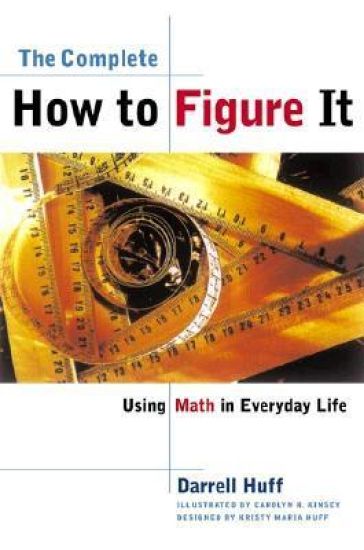
Budgeting and personal finance, planning for retirement, buying a house, estimating travel and leisure expenses, estimating costs of home repair: modern life presents us with an array of calculations we need to make but may not know how. Now, with his trademark wry humor and simple language, Darrell Huff explains how to figure: the likely outcome of different investments; how much home insurance is enough; whether it makes more sense to buy or lease a new car; the most efficient way to save for future needs, from vacations to college tuition; air-conditioning and heating requirements for a new house; how many rolls of wallpaper you will need for a particular room; and much more. Here are tips for getting the most out of a modest pocket calculator or home computer to make tedious calcuations easy, a handy chapter on "Math in a Hurry," and even tips on improving your chances in tennis, horse racing, and blackjack.
Darrell A Posey died in March 2001 after a long and distinguished career in anthropology and ecology. Kayapó Ethnoecology and Culture presents a selection of his writings that result from 25 years of work with the Kayapó Indians of the Amazon Basin. These writings describe the dispersal of the Kayapó sub-groups and explain how with this diaspora useful biological species and natural resource management strategies also spread. However the Kayapó are threatened with extinction like many of the inhabitants of the Amazon basin. The author is adamant that it is no longer satisfactory for scientists to just do 'good science'. They are are increasingly asked and morally obliged to become involved in political action to protect the peoples they study.
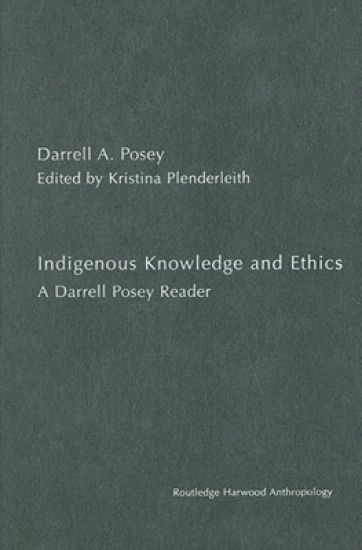
Darrell A. Posey, who died in 2001, was internationally known for his support of indigenous peoples and their natural habitats, and particularly for his pioneering work with the Kayapó people of Brazil. He was an organiser of the First International Congress of Ethnobiology which resulted in the Declaration of Belem: the first instance of an international scientific organisation recognizing an obligation to compensate native peoples for use of their knowledge and biological resources. In 1993, Posey received the United Nations Global 500 Award for Outstanding Achievement in Service to the Environment. Indigenous Knowledge and Ethics presents seventeen of his articles on the topics of environment, indigenous knowledge and intellectual property rights. Demonstrating his belief in the validity of indigenous knowledge systems, and his insistence that indigenous rights must be recognised and protected, it is an ideal introduction to his thought and work.
Darrell A. Posey, who died in 2001, was internationally known for his support of indigenous peoples and their natural habitats, and particularly for his pioneering work with the Kayapó people of Brazil. He was an organiser of the First International Congress of Ethnobiology which resulted in the Declaration of Belem: the first instance of an international scientific organisation recognizing an obligation to compensate native peoples for use of their knowledge and biological resources. In 1993, Posey received the United Nations Global 500 Award for Outstanding Achievement in Service to the Environment. Indigenous Knowledge and Ethics presents seventeen of his articles on the topics of environment, indigenous knowledge and intellectual property rights. Demonstrating his belief in the validity of indigenous knowledge systems, and his insistence that indigenous rights must be recognised and protected, it is an ideal introduction to his thought and work.
Darrell A Posey died in March 2001 after a long and distinguished career in anthropology and ecology. Kayapó Ethnoecology and Culture presents a selection of his writings that result from 25 years of work with the Kayapó Indians of the Amazon Basin. These writings describe the dispersal of the Kayapó sub-groups and explain how with this diaspora useful biological species and natural resource management strategies also spread. However the Kayapó are threatened with extinction like many of the inhabitants of the Amazon basin. The author is adamant that it is no longer satisfactory for scientists to just do 'good science'. They are are increasingly asked and morally obliged to become involved in political action to protect the peoples they study.
Popper’s Critical Rationalism presents Popper’s views on science, knowledge, and inquiry, and examines the significance and tenability of these in light of recent developments in philosophy of science, philosophy of probability, and epistemology. It develops a fresh and novel philosophical position on science, which employs key insights from Popper while rejecting other elements of his philosophy.Central theses include: Crucial questions about scientific method arise at the level of the group, rather than that of the individual. Although criticism is vital for science, dogmatism is important too. Belief in scientific theories is permissible even in the absence of evidence in their favour. The aim of science is to eliminate false theories. Critical rationalism can be understood as a form of virtue epistemology
Popper’s Critical Rationalism presents Popper’s views on science, knowledge, and inquiry, and examines the significance and tenability of these in light of recent developments in philosophy of science, philosophy of probability, and epistemology. It develops a fresh and novel philosophical position on science, which employs key insights from Popper while rejecting other elements of his philosophy.Central theses include: Crucial questions about scientific method arise at the level of the group, rather than that of the individual. Although criticism is vital for science, dogmatism is important too. Belief in scientific theories is permissible even in the absence of evidence in their favour. The aim of science is to eliminate false theories. Critical rationalism can be understood as a form of virtue epistemology
The definitive, must-have guide for the forensic accounting professional Financial Forensics Body of Knowledge is the unique, innovative, and definitive guide and technical reference work for the financial forensics and/or forensic accounting professional, including nearly 300 forensic tools, techniques, methods and methodologies apply to virtually all civil, criminal and dispute matters. Many of the tools have never before been published. It defines the profession: "The Art & Science of Investigating People & Money." It defines Forensic Operators: "…financial forensics-capable personnel… possess unique and specific skills, knowledge, experience, education, training, and integrity to function in the financial forensics discipline." It defines why: "If you understand financial forensics you understand fraud, but not vice versa" by applying financial forensics to all aspects of the financial community. It contains a book-within-a-book Companion Section for financial valuation and litigation specialists. It defines foundational financial forensics/forensic accounting methodologies: FAIM, Forensic Accounting Investigation Methodology, ICE/SCORE, CICO, APD, forensic lexicology, and others. It contains a Reader Lookup Table that permits everyone in the financial community to immediately focus on the pertinent issues. This work is the only financial forensics/forensic accounting methodology also published by the United States Department of Justice. It redefines the standard for all dimensions of the financial forensics and forensic accounting profession and is written to address the entire financial community comprised of Originators (CFOs, controllers, accountants, analysts, etc.), Users (auditors, valuators, attorneys, judges, lenders, investors, internal auditors, consumers, bankers, professors, board members, executives, journalists, etc.), and Regulators (civil, including IRS, IMF, SEC,; and criminal, including FBI and state and local law enforcement; Interpol, counterterrorism and military. Financial Forensics Body of Knowledge is: The only codified financial forensics/forensic accounting methodology known to exist;The only codified methodology comprising civil, criminal, and dispute methodologies within the same framework;The only codified methodology supported by optional Internet-based software that continually updates content with newly discovered and developed forensic tools, techniques, methods and methodologies, and actual reports;The only codified methodology to contain actual report content (BLINDED) for many different forensic matters, including alter ego, damages, fraud, fraudulent transfer, marital dissolution, valuation, etc.;The only codified methodology to contain a comprehensive Forensic Inventory of tools, techniques, methods and methodologies;The only codified methodology to address virtually every type of entity, i.e. privately-held, publicly-held, governmental, charitable, NPO, NGO, etc.;The only codified methodology applicable to the US and global financial community;The only codified methodology that comprises an embedded training tool for beginning, intermediate and advanced financial professionals;The only codified methodology suitable for immediate adoption as firm-wide and agency-wide best practices technical and training standards. The great majority of the content has not been previously assembled and published, and duplication of other publications has been purposely avoided to prevent redundancy. The two principal authors have trained literally thousands within the financial community in various aspects of the content during the last several years. The attendees have included virtually all entity types, including federal, state and local government and law enforcement, e.g. SEC, FBI. The feedback has been universally positive and prompted the construction of this book. The contributing authors include public and private practice, attorneys, academics, law enforcement, and publicly-held and privately-held financial professionals. They are practitioners first and foremost and heavily experienced in instructional settings.
This text argues that architecture, as an aesthetic practice, and blackness, as a linguistic practice, operate within the same semiotic paradigm. The book presents a systematic analysis of the theoretical relationship between architecture and blackness. Employing a technique whereby works are related through the repetition and revision of their semiotic structures, this text reconstructs the genaeology of a black racial subject represented by the simultaneous reading of a range of canonical texts from Hegel to Saussure to Henry Louis Gates, Jr.
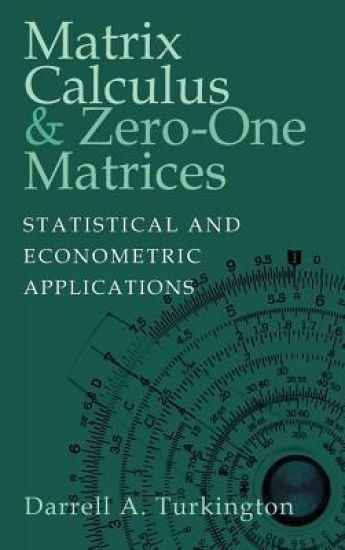
This 2002 book presents the reader with mathematical tools taken from matrix calculus and zero-one matrices and demonstrates how these tools greatly facilitate the application of classical statistical procedures to econometric models. The matrix calculus results are derived from a few basic rules that are generalizations of the rules of ordinary calculus. These results are summarized in a useful table. Well-known zero-one matrices, together with some newer ones, are defined, their mathematical roles explained, and their useful properties presented. The basic building blocks of classical statistics, namely the score vector, the information matrix, and the Cramer-Rao lower bound, are obtained for a sequence of linear econometric models of increasing statistical complexity. From these are obtained interactive interpretations of maximum likelihood estimators, linking them with efficient econometric estimators. Classical test statistics are also derived and compared for hypotheses of interest.
This 2002 book presents the reader with mathematical tools taken from matrix calculus and zero-one matrices and demonstrates how these tools greatly facilitate the application of classical statistical procedures to econometric models. The matrix calculus results are derived from a few basic rules that are generalizations of the rules of ordinary calculus. These results are summarized in a useful table. Well-known zero-one matrices, together with some newer ones, are defined, their mathematical roles explained, and their useful properties presented. The basic building blocks of classical statistics, namely the score vector, the information matrix, and the Cramer-Rao lower bound, are obtained for a sequence of linear econometric models of increasing statistical complexity. From these are obtained interactive interpretations of maximum likelihood estimators, linking them with efficient econometric estimators. Classical test statistics are also derived and compared for hypotheses of interest.