

Kirjahaku
Etsi kirjoja tekijän nimen, kirjan nimen tai ISBN:n perusteella.
1000 tulosta hakusanalla Daryl Conant

This study commences with a simple question: how did Russia matter to England in the age of William Shakespeare? In order to answer the question, the author studies stories of Lapland survival, diplomatic envoys, merchant transactions, and plays for the public theaters of London. At the heart of every chapter, Shakespeare and his contemporaries are seen questioning the status of writing in English, what it can and cannot accomplish under the influence of humanism, capitalism, and early modern science. The phrase 'Writing Russia' stands for the way these English writers attempted to advance themselves by conjuring up versions of Russian life. Each man wrote out of a joint-stock arrangement, and each man's relative success and failure tells us much about the way Russia mattered to England.

This book defends a startling idea: that the age-old theological and philosophical problems of original sin and evil, long thought intractable, have already been solved. The solution has come from the very scientific discovery that many consider the most mortal threat to traditional religion: evolution. Daryl P. Domning explains in straightforward terms the workings of modern evolutionary theory, Darwinian natural selection, and how this has brought forth life and the human mind. He counters objections to Darwinism that are raised by some believers and emphasizes that the evolutionary process necessarily enforces selfish behavior on all living things. This account of both physical and moral evil is arguably more consistent with traditional Christian teachings than are the explanations given by most contemporary "evolutionary" theologians themselves. The prominent theologian, Monika K. Hellwig, dialogues with Daryl Domning throughout the book to present a balanced reappraisal of the doctrine of original sin from both a scientist's and theologian's perspective.
Posthuman Personhood takes up the ethical challenge posed by Francis Fukuyama’s work, Our Posthuman Future. Daryl J. Wennemann argues that the traditional concept of personhood may be fruitfully applied to the ethical challenge we face in a posthuman age. He draws upon Wilfrid Sellars’ treatment of the concept of a person within “the manifest image of man in the world.” Sellars proposed that we develop a stereoscopic view of reality that includes both a scientific understanding of the world and a meaningful place for persons living and acting in the world. Following Mary Anne Warren, Wennemann develops a distinction between two meanings of the term “human,” a biological meaning and a moral meaning, and maintains that all (biologically) human beings are persons. But, it is not necessarily the case that all persons must be (biologically) human. After drawing on a contemporary version of Kant’s distinction between a theoretical possibility and a real possibility, the book posits that biologically non-human persons like robots, computers, or aliens are a theoretical possibility but that we do not know if they are a real possibility. Finally, Wennemann describes an ethic of self-limitation for the posthuman age.
`Darryl Glaser supplies an illuminating overview of the scholarship since 1970 on South Africa's political history. His emphasis is on the debates between liberals, Marxists, and to a lesser extent "post-structuralists" about the origins and the course of South Africa's racial order' - Tom Lodge, University of Witwatersrand `A well-researched, well-argued, readable, interesting, informative and competent study' - Capital and Class Providing a wide-ranging and critical introduction to contemporary South Africa, this book uses an interdisciplinary lens to introduce the student to the main debates, historical context, and issues that have characterized the study of South Africa over the last three decades. Key topics include: the role of colonialism, capitalism and modernity in the formation of the racial order; changes in the South African state; questions of class, race and ehtnicity; black resistance; and the transition to democracy. A number of underlying debates are critically evaluated. For exmple, the contribution of materialist and class-analytic approaches, the application of post-structuralism and theories of modernity, and the prospects for democratic liberalism and socialism in post-apartheid South Africa.
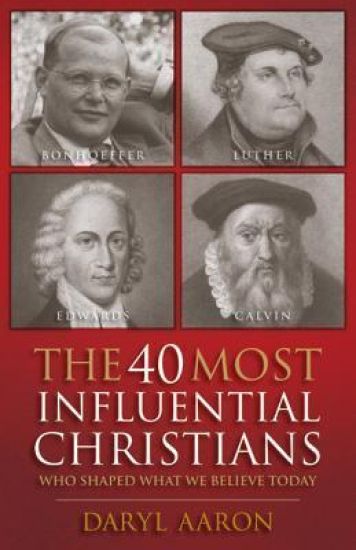
The 40 Most Influential Christians . . . Who Shaped What We Believe Today
Daryl Aaron
Bethany House Publishers, a division of Baker Publishing Group
2013
nidottu
Compelling Accounts of Key People Who Have Formed Christian Belief through the Ages All Christians' beliefs are shaped by those who went before them. Now these giants of Christian history are presented chronologically and in a format that helps readers get to know them. In addition to a biographical sketch, readers will discover each person's primary contributions to the Christian faith along with a brief quotation from their work. Students, history buffs, and curious readers will be fascinated as their faith is strengthened. Included are Polycarp, Justin Martyr, Augustine, Thomas Aquinas, Martin Luther, John Calvin, Karl Barth, Carl F. H. Henry, and more.
Christian Theology for People in a Hurry
Daryl Aaron
Bethany House Publishers, a division of Baker Publishing Group
2019
nidottu
Let's be real. Theology is intimidating. There are so many unfamiliar words and difficult concepts--or so it seems. Would you like to know the basics of theology and have an easy route to that knowledge? If so, these short, simple readings are the way to go. Here, Daryl Aaron answers some of the toughest questions about the nature of God, heaven, the Bible, church, and even ourselves. Blending the knowledge of a college professor with friendly, down-to-earth language, Aaron explains theology in a way you can understand. Broken into forty small chapters, this book gives you quick, clear answers to your questions about theology.
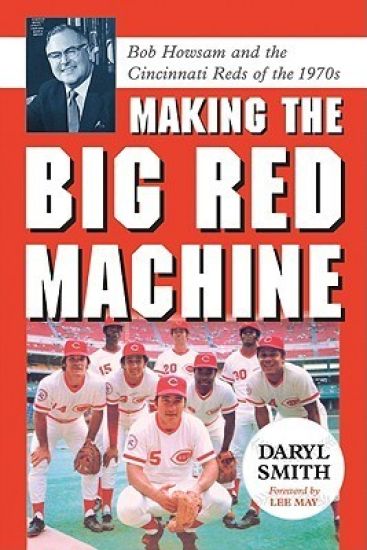
With a line-up that included future Hall of Famers Johnny Bench, Joe Morgan, Tony Perez and Pete Rose, Cincinnati's "Big Red Machine" powered its way in the 1970s to six division titles, four pennants, and two World Series. Three other times in that decade they finished second in their division to the eventual pennant winner. While much has been written about the players and manager Sparky Anderson, no book until now has given adequate attention to the man behind the Machine, general manager Bob Howsam. From his hire in 1967 through the end of his first stint with the Reds in 1978, Howsam brought about a remarkable change in fortune for the Reds, who had claimed only one pennant in the 26 years before his arrival. This detailed history of baseball's last dynasty shows not only how the team performed but why, delving into the off-field strategy and moves behind the Reds' success.
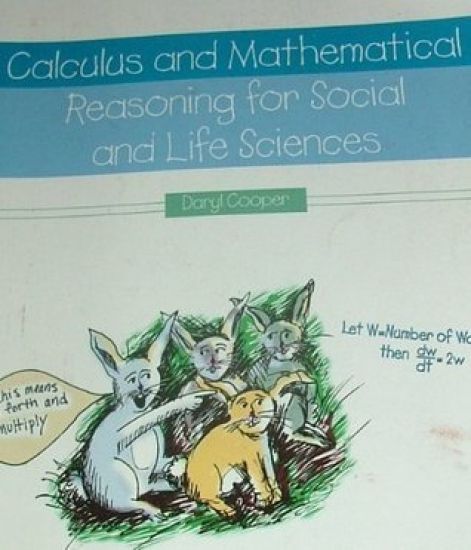
Calculus and Mathematical Reasoning for Social and Life Sciences
Daryl Cooper
Kendall Hunt Pub Co
2010
pokkari
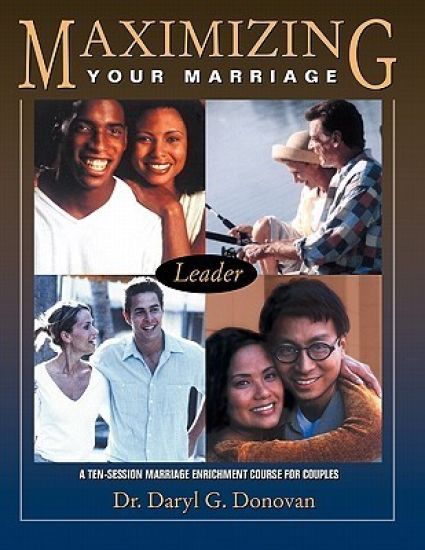
God intends for marriage to be one of the most satisfying relationships you will ever experience. Like your relationship with Christ, your relationship with your spouse should be a source of joy, peace, life, and love. But the marriages of nearly half the couples who go to the altar end in divorce ? and many of those who remain together find themselves in frustrating relationships full of pain and conflict. This interactive mentoring course for couples helps you experience and enjoy all God wants for you. Ten weekly sessions explore God's design for a fulfilling marriage and provide you with plenty of practical tools based on solid biblical principles. The course concludes with an overnight retreat that offers couples the opportunity to renew their vows. Student workbooks prepare participants for each session, and the leader's guide provides complete instructions, including overviews of each lesson, icebreaking games, and lists of all needed materials.
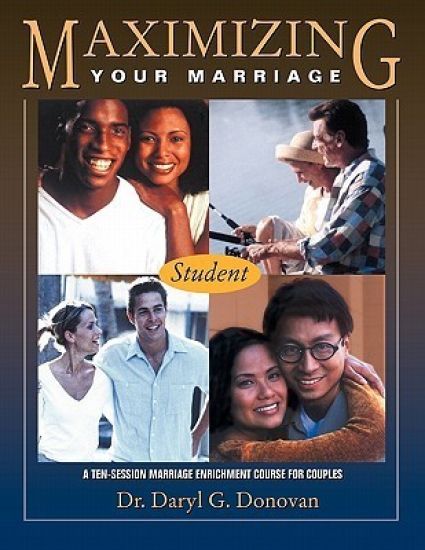
God intends for marriage to be one of the most satisfying relationships you will ever experience. Like your relationship with Christ, your relationship with your spouse should be a source of joy, peace, life, and love. But the marriages of nearly half the couples who go to the altar end in divorce ? and many of those who remain together find themselves in frustrating relationships full of pain and conflict. This interactive mentoring course for couples helps you experience and enjoy all God wants for you. Ten weekly sessions explore God's design for a fulfilling marriage and provide you with plenty of practical tools based on solid biblical principles. The course concludes with an overnight retreat that offers couples the opportunity to renew their vows. Student workbooks prepare participants for each session, and the leader's guide provides complete instructions, including overviews of each lesson, icebreaking games, and lists of all needed materials.

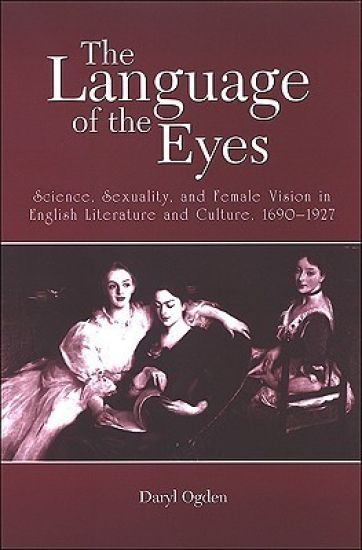
Recovers a dynamic women's tradition of vision and sexuality, challenging Darwinian and Freudian accounts of women as nonvisual sexual agents.While Darwinian and Freudian theories of vision and sexuality have represented women as lacking visual agency, Daryl Ogden's The Language of the Eyes argues that "the gaze" is not merely a masculine phenomenon, and that women have powerfully desiring eyes as well. Ogden offers a comprehensive cultural history of female visuality in England by analyzing scientific writings, conduct books, illustrated periodicals, poetry, painting, and novels, and he makes important and hitherto unrecognized connections between literary history, cultural studies, and science studies. In so doing, Ogden accomplishes what numerous feminist critics-especially film theorists-have not: the recovery of the modern female spectator from historical obscurity.
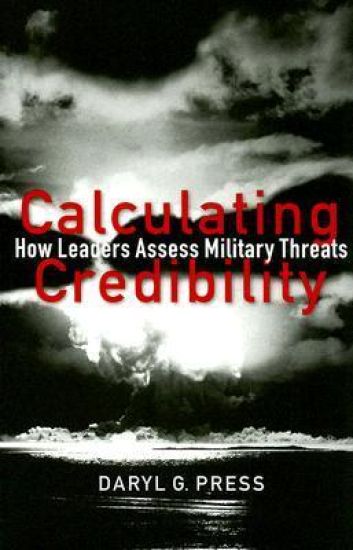
Calculating Credibility examines—and ultimately rejects—a fundamental belief held by laypeople and the makers of American foreign policy: the notion that backing down during a crisis reduces a country's future credibility. Fear of diminished credibility motivated America's costly participation in the Korean and Vietnam wars, and, since the end of the Cold War, this concern has continued to guide American policy decisions. Daryl G. Press uses historical evidence, including declassified documents, to answer two crucial questions: When a country backs down in a crisis, does its credibility suffer? How do leaders assess their adversaries' credibility? Press illuminates the decision-making processes behind events such as the crises in Europe that preceded World War II, the superpower showdowns over Berlin in the 1950s and 60s, and the Cuban Missile Crisis. When leaders face the prospect of high-stakes military conflicts, Press shows, they do not assess their adversaries' credibility by peering into their opponents' past and evaluating their history of keeping or breaking commitments. Power and interests in the current crisis—not past actions—determine the credibility of a threat. Press demonstrates that threats are credible only if backed by sufficient power and only if pursuing important interests. Press believes that Washington's obsession with the dangers of backing down has made U.S. foreign policy unnecessarily rigid. In every competitive environment—sports, gambling, warfare—competitors use feints and bluffs to tremendous advantage. Understanding the real sources of credibility, Press asserts, would permit a more flexible, and more effective, foreign policy.
On a journey begun twenty years earlier, Daryl Farmer, a twenty-year-old two-time college dropout, did what lost men have so often done in this country: he headed west. Twenty years later and seventy pounds heavier, with the yellowing journals from that transformative five-thousand-mile bicycle trek in his pack, Farmer set out to retrace his path. This is his story of pursuing that distant summer and that distant dream of home, where home is endless space, a roof of big sky, and a bed of dry earth. Just as the years altered the man, so, too, have they altered the West, and Farmer's second journey affords a unique perspective on these changes—as well as on what lasts. Whether caught in a Colorado snowstorm or braving a Yellowstone herd of bison, kayaking with orcas in Puget Sound, trading Ninja moves with a homeless man in San Francisco, or getting the lowdown on aliens on Nevada's Extraterrestrial Highway, Farmer charts a moving landscape of people and places. This is the West where the natural world and personal character are inextricably linked, and where one man's ride into the past and present takes us to the heart of that ever-evolving connection.
On a journey begun twenty years earlier, Daryl Farmer, a twenty-year-old two-time college dropout, did what lost men have so often done in this country: he headed west. Twenty years later and seventy pounds heavier, with the yellowing journals from that transformative five-thousand-mile bicycle trek in his pack, Farmer set out to retrace his path. This is his story of pursuing that distant summer and that distant dream of home, where home is endless space, a roof of big sky, and a bed of dry earth. Just as the years altered the man, so, too, have they altered the West, and Farmer's second journey affords a unique perspective on these changes—as well as on what lasts. Whether caught in a Colorado snowstorm or braving a Yellowstone herd of bison, kayaking with orcas in Puget Sound, trading Ninja moves with a homeless man in San Francisco, or getting the lowdown on aliens on Nevada's Extraterrestrial Highway, Farmer charts a moving landscape of people and places. This is the West where the natural world and personal character are inextricably linked, and where one man's ride into the past and present takes us to the heart of that ever-evolving connection.
Thirty-six portraits of contemporary Catholics show how they have lived the eucharistic prayer, "Lord, make of us an eternal offering to you" in their commitment to the common good and to human flourishing.Endorsements"Daryl Grigsby has written an inspiring book about inspiring people. As you turn the pages, you will join that great procession of people who have lived their lives for others. Prepare to be blessed."—Thomas P. Bonacci, CP, The Interfaith Peace Project"A second grader once described a saint as 'Someone the light shines through!' In Daryl Grigsby's engaging and inspiring portraits of contemporary men and women saints, the light does indeed shine through!"—Joann Heinritz, CSJ, spiritual director and presenter, the Renewal Program, Jesuit School of Theology of Santa Clara University"Daryl Grigsby's book reminds us of the faith, love, strength, and service of those who came before us; it challenges us to live into our calling to serve in healing the world."—Cynthia Bailey Manns, lay delegate to the Synod on Synodality; adult learning director, Saint Joan of Arc Catholic Community, Minneapolis, Minnesota"This book beautifully honors the legacy of ordinary radicals who prophetically lived out Catholic social teaching in remarkable ways, as we are all called to do."—Joanna Arellano-Gonzalez, cofounder and director of training and formation, Coalition for Spiritual and Public Leadership, Chicago, IllinoisDaryl Russell Grigsby is on the board of directors for Leadership Foundations, which resolves critical urban challenges around the world.†

In 2008 there were 149 militia groups in the United States. In 2009, that number more than tripled to 512, and now there are nearly 600. In Right-Wing Resurgence, author Daryl Johnson offers a detailed account of the growth of right-wing extremism and militias in the United States and the ever-increasing threat they pose. The author is an acknowledged expert in this area and has been an intelligence analyst working for several federal agencies for nearly 20 years. The book is also a first-hand, insider’s account of the DHS Right-Wing Extremism report from the person who wrote it. It is a truthful depiction of the facts, circumstances, and events leading up to the leak of this official intelligence assessment. The leak and its aftermath have had an adverse effect on homeland security. Because of its alleged mishandling of the situation, the Department’s reputation has declined in the intelligence and law enforcement communities and the analytical integrity of the Office of Intelligence and Analysis was undermined. Most importantly, the nation’s security has been compromised during a critical time when a significant domestic terrorist threat is growing. This book is replete with case studies and interviews with leaders which reveal their agendas, how they recruit, and how they operate around the country. It presents a comprehensive account of an ever-growing security concern at a time when this threat is only beginning to be realized, and is still largely ignored in many circles.