Kirjojen hintavertailu. Mukana 11 244 527 kirjaa ja 12 kauppaa.

Kirjahaku

Etsi kirjoja tekijän nimen, kirjan nimen tai ISBN:n perusteella.

1000 tulosta hakusanalla David DeLaney

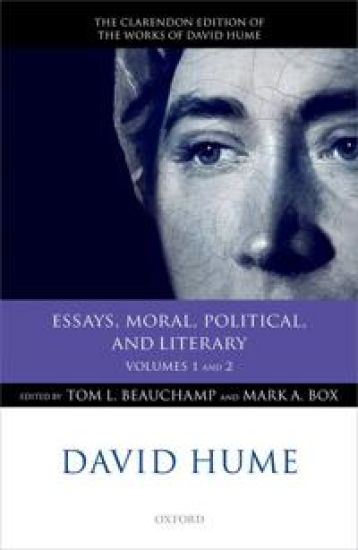
David Hume: Essays, Moral, Political, and Literary
This is the first critical edition ever produced of Essays, Moral, Political, and Literary by David Hume, who is widely widely considered to be the most important British philosopher and an author celebrated for his moral, political, historical, and literary works. The editors' Introduction is primarily historical and written for advanced students and scholars from many disciplines. It is neither an orientation to Hume's philosophy nor an introduction aimed at philosophers. It is not an attempt to interpret Hume's text, but rather discusses the genesis, revision, and reception of the essays, which went into many editions at the author's hand. The annotations provide information about Hume' s sources, allusions, and citations, as well as background facts pertinent to an informed reading of the essays. The primary goal is to aid readers in their interpretations of the text. This edition also includes a detailed commentary on Hume's essay 'On the Populousness of Ancient Nations', which will be of special interest to ancient historians. The two volumes present a full critical edition, in every respect. They assemble a massive amount of historical and textual information never previously published. The editorial apparatus is comprehensive and includes extensive historical and bibliographical detail. The Clarendon Edition of the Works of David Hume as a whole is on the cutting-edge of editorial work in the history of great works in the eighteenth century. This edition will quickly become a necessary addition to the library of any scholar who works on David Hume's Essays.
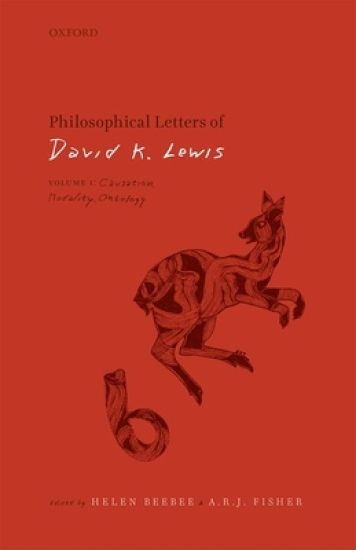
Philosophical Letters of David K. Lewis

Philosophical Letters of David K. Lewis

David K. Lewis

Oxford University Press
2020
sidottu
David Kellogg Lewis (1941-2001) was one of the most influential philosophers of the twentieth century. He made significant contributions to almost every area of analytic philosophy including metaphysics, philosophy of language, philosophy of mind, and philosophy of science, and set the agenda for various debates in these areas which carry on to this day. In several respects he remains a contemporary figure, yet enough time has now passed for historians of philosophy to begin to study his place in twentieth century thought. His philosophy was constructed and refined not just through his published writing, but also crucially through his life-long correspondence with fellow philosophers, including leading figures such as D.M. Armstrong, Saul Kripke, W.V. Quine, J.J.C. Smart, and Peter van Inwagen. His letters formed the undercurrent of his published work and became the medium through which he proposed many of his well-known theories and discussed a range of philosophical topics in depth. A selection of his vast correspondence over a 40-year period is presented here across two volumes. As metaphysics is arguably where Lewis made his greatest contribution, this forms the focus of Volume 1. Arranged under the broad areas of Causation, Modality, and Ontology, the letters offer an organic story of the origins, development, breadth, and depth of his metaphysics in its historical context, as well as a glimpse into the influence of his many interlocutors. This volume will be an indispensable resource for contemporary metaphysics and for those interested in the Lewisian perspective.
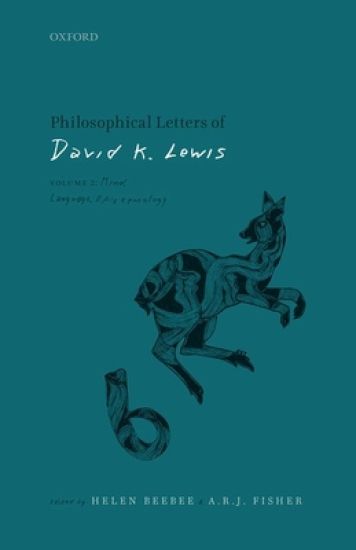
Philosophical Letters of David K. Lewis

Philosophical Letters of David K. Lewis

David K. Lewis

Oxford University Press
2020
sidottu
David Kellogg Lewis (1941-2001) was one of the most influential philosophers of the twentieth century. He made significant contributions to almost every area of analytic philosophy including metaphysics, philosophy of language, philosophy of mind, and philosophy of science, and set the agenda for various debates in these areas which carry on to this day. In several respects he remains a contemporary figure, yet enough time has now passed for historians of philosophy to begin to study his place in twentieth century thought. His philosophy was constructed and refined not just through his published writing, but also crucially through his life-long correspondence with fellow philosophers, including leading figures such as D.M. Armstrong, Saul Kripke, W.V. Quine, J.J.C. Smart, and Peter van Inwagen. His letters formed the undercurrent of his published work and became the medium through which he proposed many of his well-known theories and discussed a range of philosophical topics in depth. A selection of his vast correspondence over a 40-year period is presented here across two volumes. Structured in three parts, Volume 2 explores Lewis' contributions to philosophical questions of mind, language, and epistemology respectively. The letters address Lewis's answer to the mind-body problem, propositional attitudes and the purely subjective character of conscious experience, meaning and reference as well as grammar in language, vagueness, truth in fiction, the problem of scepticism, and Lewis's work on decision theory and rationality, among many other topics. This volume is a testament to Lewis' achievement in these areas and will be an invaluable resource for those exploring contemporary debates concerning mind, language, and epistemology.
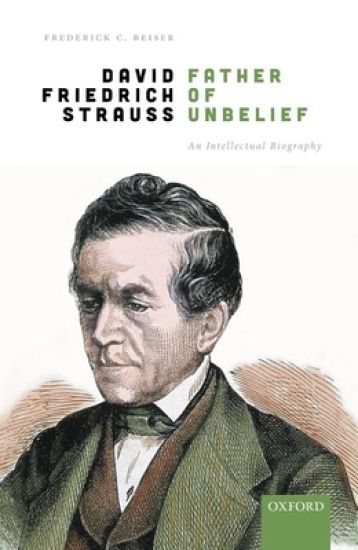
David Friedrich Strauß, Father of Unbelief

David Friedrich Strauß, Father of Unbelief

Frederick C. Beiser

Oxford University Press
2020
sidottu
David Friedrich Strauss is a central figure in 19th century intellectual history. The first major source for the loss of faith in Christianity in Germany, his work Das Leben Jesu was the most scandalous publication in Germany during his time. His book was a critique of the claims to historical truth of the New Testament, which had been the mainstay of Protestantism since the Reformation. As the father of unbelief, his critique of Christianity preceded that of Nietzsche, Marx, Feuerbach, and Schopenhauer. His views imposed a harsh fate upon him - he was persecuted for his beliefs by religious and political authorities and was denied employment in the university and government, forcing him to live as a free-lance writer. He led a wandering and isolated life as an outcast. Here, Frederick C. Beiser studies the intellectual development of Strauss and recounts his fate, which began in faith as a young man but finally ended in unbelief.
David Jones and Rome

David Jones and Rome

Jasmine Hunter Evans

Oxford University Press
2022
sidottu
This interdisciplinary and archival study explores the reception of ancient Rome in the artistic, literary, and philosophical works of David Jones (1895-1974)—the Anglo-Welsh, Roman Catholic, First World War veteran. For Jones, the twentieth century was a period of crisis, an age of conflict, disillusionment and cultural decay, all of which he saw as evidence of the decline of Western civilisation. Across his lifetime, Jones would create a dynamic vision of ancient Rome in an attempt both to understand and to challenge this situation. His reimagining of Rome was not founded on a classical education. Instead, it was fashioned from his lived experience, extensive reading, and—most importantly—his engagement with four areas of contemporary discourse that were themselves built upon intricate and conflicting representations of Rome: British political rhetoric, cyclical history, the Catholic cultural revival, and the Welsh nationalist movement. Tracing Jones's developing approach to Rome across these contexts can provide a way into his art and thought. Whether in his poetic fragments, watercolours, essays, letters, marginalia or unique painted inscriptions, Jones strove to question, complicate and remake Rome's relationship with modernity. In this way, Rome appears in Jones's works both as a symbol of transhistorical imperialism, totalitarianism, and the mechanisation of life, and simultaneously as the cultural and religious progenitor of the West, and in particular, of Wales, with which artists must creatively reconnect if decline was to be avoided.
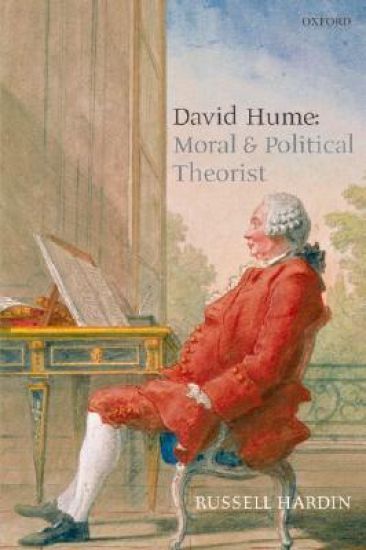
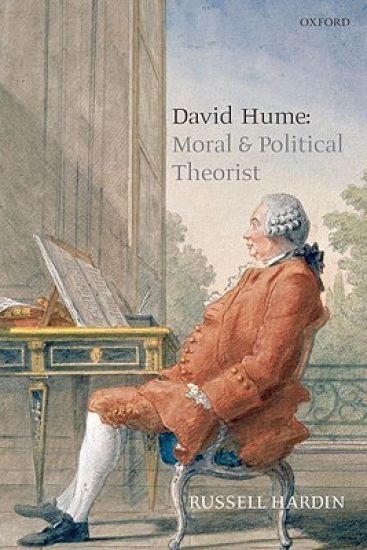
David Hume: Moral and Political Theorist

David Hume: Moral and Political Theorist

Russell Hardin

Oxford University Press
2007
sidottu
Russell Hardin presents a new explication of David Hume's moral and political theory. With Hume, he holds that our normative views can be scientifically explained but they cannot be justified as true. Hume argued for the psychological basis of such views. In particular, he argued for sympathy as the mirroring of the psychological sensations and emotions of others. By placing Hume in the developing tradition of social science, as a strong forerunner of his younger friend Adam Smith, Hardin demonstrates Hume's strong strategic sense, his nascent utilitarianism, his powerful theory of convention as a main source of social and political order, and his recognition of moral and political theory as a single enterprise.
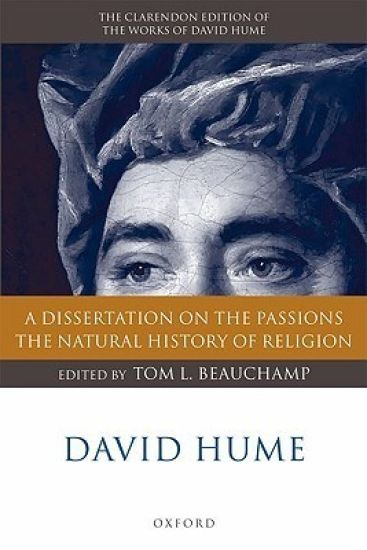
David Hume: A Dissertation on the Passions; The Natural History of Religion
David Hume (1711-1776) is one of the greatest of philosophers. Today he probably ranks highest of all British philosophers in terms of influence and philosophical standing. His philosophical work ranges across morals, the mind, metaphysics, epistemology, religion, and aesthetics; he had broad interests not only in philosophy as it is now conceived but in history, politics, economics, religion, and the arts. He was a master of English prose. The Clarendon Hume Edition will include all of his works except his History of England and minor historical writings. It is the only thorough critical edition, and will provide a far more extensive scholarly treatment than any previous editions. This edition (which has been in preparation since the 1970s) offers authoritative annotation, bibliographical information, and indexes, and draws upon the major advances in textual scholarship that have been made since the publication of earlier editions--advances both in the understanding of editorial principle and practice and in knowledge of the history of Hume's own texts. In this volume, Tom Beauchamp presents two essays from Four Dissertations (1757), the last philosophical work written by Hume, which was subsequently revised by the philosopher in the remaining years of his life. Whilst the bulk of A Dissertation on the Passions was extracted from passages in A Treatise of Human Nature, The Natural History of Religion was an original work when published in 1757, as well as the only major work devoted exclusively to the subject of religion that Hume published in his lifetime. Together with Hume's earlier work on religious topics, this essay drew considerable philosophical commentary from his contemporaries. The last edition of the two works in this volume seen through the press by Hume himself appeared in 1772. It provides the copy-text for this critical edition. The Editor's primarily historical Introduction discusses the genesis, revision, and reception of these two dissertations, which went into ten editions at the author's hand. It will appeal to scholars across many disciplines. General Editors of the Clarendon Hume: Professors T. L. Beauchamp (Georgetown University, USA), D. F. Norton (McGill University, Canada), M. A. Stewart (University of Lancaster, England). The Edition comprises (or will comprise): Vols. 1 and 2: A Treatise of Human Nature, edited by D. F. Norton Vol. 3: An Enquiry concerning Human Understanding, edited by T. L. Beauchamp Vol. 4: An Enquiry concerning the Principles of Morals, edited by T. L. Beauchamp Vol. 5: The Natural History of Religion and A Dissertation on the Passions, edited by T. L. Beauchamp Vols. 6 and 7: Essays, edited by T. L. Beauchamp and M. Box Vol. 8: Dialogues concerning Natural Religion and other posthumous publications, edited by M. A. Stewart
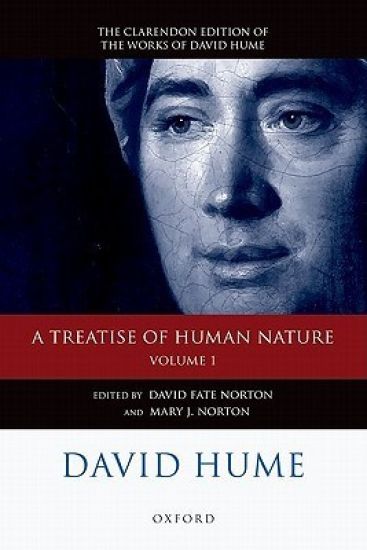
David Hume: A Treatise of Human Nature

David Hume: A Treatise of Human Nature

David Hume

Clarendon Press
2007
sidottu
David and Mary Norton present the definitive scholarly edition of one of the greatest philosophical works ever written. This first volume contains the critical text of David Hume's Treatise of Human Nature (1739/40), followed by the short Abstract (1740) in which Hume set out the key arguments of the larger work; the volume concludes with A Letter from a Gentleman to his Friend in Edinburgh (1745), Hume's defence of the Treatise when it was under attack from ministers seeking to prevent Hume's appointment as Professor of Moral Philosophy at the University of Edinburgh.
David Hume: A Treatise of Human Nature

David Hume: A Treatise of Human Nature

David Hume

Clarendon Press
2007
sidottu
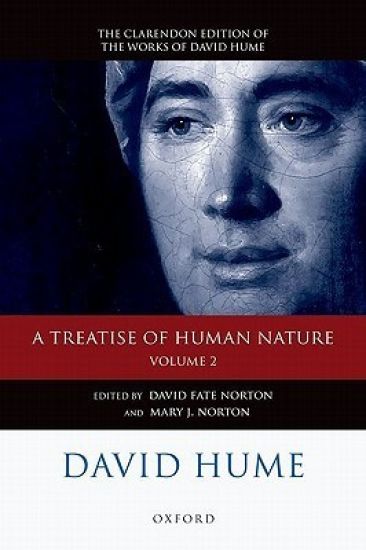
David and Mary Norton present the definitive scholarly edition of one of the greatest philosophical works ever written. This second volume begins with their 'Historical Account' of the Treatise, an account that runs from the beginnings of the work to the period immediately following Hume's death in 1776, followed by an account of the Nortons' editorial procedures and policies and a record of the differences between the first-edition text of the Treatise and the critical text that follows. The volume continues with an extensive set of 'Editors' Annotations', intended to illuminate (though not intepret) Hume's texts; a four-part bibliography of materials cited in both volumes; and a comprehensive index.
David Hume: An Enquiry concerning the Principles of Morals
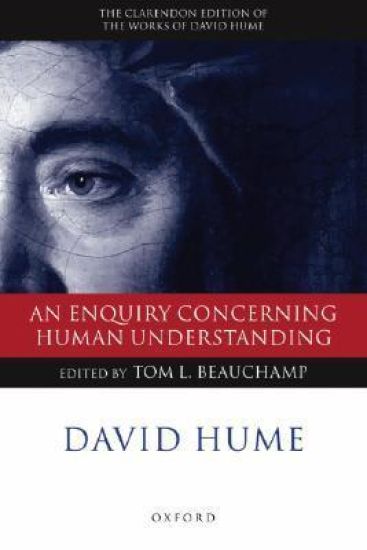
About Hume David Hume (1711-1776) is one of the greatest of philosophers. Today he probably ranks highest of all British philosophers in terms of influence and philosophical standing. His philosophical work ranges across morals, the mind, metaphysics, epistemology, and aesthetics; he had broad interests not only in philosophy as it is now conceived but in history, politics, economics, religion, and the arts. He was a master of English prose. The Clarendon Hume Edition General Editors: Professor T. L. Beauchamp, Georgetown University, USA, Professor D. F. Norton, McGill University, Canada, and Professor M. A. Stewart, University of Lancaster, England The Clarendon Hume will include all of his works except his History of England and minor historical writings; it will be the only thorough critical edition, and will provide a far more extensive scholarly treatment than any previous editions. This edition (which has been in preparation since the 1970s) offers authoritative annotation, bibliographical information, and indexes, and draws upon the major advances in textual scholarship that have been made since the publication of earlier editions--advances both in the understanding of editorial principle and practice and in knowledge of the history of Hume's own texts. The Edition will comprise: Volumes 1 and 2: A Treatise of Human Nature, edited by D. F. Norton Volume 3: An Enquiry concerning Human Understanding, edited by T. L. Beauchamp Volume 4: An Enquiry concerning the Principles of Morals, edited by T. L. Beauchamp Volume 5: The Natural History of Religion and the Dissertation on the Passions Volumes 6 and 7: Essays Volume 8: Dialogues concerning Natural Religion and other posthumous publications, edited by M. A. Stewart About this work An Enquiry concerning the Principles of Morals was Hume's third great philosophical work, first published in 1751. Hume's aim in this elegant and lucid work was to present in an accessible way his theory of the foundation of morality in human nature, which had developed significantly since he first addressed the subject in the Treatise of Human Nature (1739/40). He discusses moral psychology; freedom, necessity, and causation; practical reasoning; justice; virtues and other moral qualities. He considered this Enquiry to be 'of all my writings, historical, philosophical, or literary, incomparably the best'. About this volume The authoritative version of the text, based upon the 1772 edition that was seen through the press by Hume himself, is presented here accurately and clearly. The editor's introduction sets the work in its historical context; the annotation and glossary provide information about Hume's sources, allusions, citations, and meanings, to help readers towards a full understanding of the text. A biographical appendix identifies the many people mentioned by Hume in the Enquiry. Bibliographies list the works cited by Hume and a selection of the secondary literature. Hume's original index is reproduced, together with a new general index by the editor.
David Hume: An Enquiry concerning Human Understanding
about Hume: David Hume (1711-1776) is one of the greatest of philosophers. Today he probably ranks highest of all British philosophers in terms of influence and philosophical standing. His philosophical work ranges across morals, the mind, metaphysics, epistemology, and aesthetics; he had broad interests not only in philosophy as it is now conceived but in history, politics, economics, religion, and the arts. He was a master of English prose. about the Clarendon Hume Edition: The Clarendon Hume will include all of his works except his History of England and minor historical writings; it will be the only thorough critical edition, and will provide a far more extensive scholarly treatment than any previous editions. This edition (which has been in preparation since the 1970s) offers authoritative annotation, bibliographical information, and indexes, and draws upon the major advances in textual scholarship that have been made since the publication of earlier editions--advances both in the understanding of editorial principle and practice and in knowledge of the history of Hume's own texts. General Editors: Professors T. L. Beauchamp (Georgetown University, USA), D. F. Norton (McGill University, Canada), M. A. Stewart (University of Lancaster, England). The Edition will comprise: Vols. 1 and 2: A Treatise of Human Nature, edited by D. F. Norton Vol. 3: An Enquiry concerning Human Understanding, edited by T. L. Beauchamp Vol. 4: An Enquiry concerning the Principles of Morals, edited by T. L. Beauchamp Vol. 5: The Natural History of Religion and the Dissertation on the Passions Vols. 6 and 7: Essays Vol. 8: Dialogues concerning Natural Religion and other posthumous publications, edited by M. A. Stewart
David Copperfield

David Copperfield

Charles Dickens

Oxford University Press
2008
nidottu
`I have in my heart of hearts a favourite child. And his name is DAVID COPPERFIELD,' wrote Dickens of what is the most personal, certainly one of the most popular, of all his novels. Dickens wrote the book after the completion of a fragment of autobiography recalling his employment as a child in a London warehouse, and in the first-person narrative, a new departure for him, realized marvellously the workings of memory. The embodiment of his boyhood experience in the novel involved a `complicated interweaving of truth and fiction', at its most subtle in the portrait of his father as Mr Micawber, one of Dickens's greatest comic creations. Enjoying a humour that never becomes caricature, the reader shares David's affection for the eccentric Betsey Trotwood and her protégé Mr Dick, and smiles with the narrator at the trials he endures in his love for the delightfully silly Dora. Settings, (East Anglia, the London of the 1820s), people, and events are unified by their relationship to the story of Steerforth's treachery, which reaches its powerful climax in the storm scene. This edition, which has the accurate Clarendon text, includes Dickens's trial titles and working notes, and eight of the original illustrations by `Phiz'. ABOUT THE SERIES: For over 100 years Oxford World's Classics has made available the widest range of literature from around the globe. Each affordable volume reflects Oxford's commitment to scholarship, providing the most accurate text plus a wealth of other valuable features, including expert introductions by leading authorities, helpful notes to clarify the text, up-to-date bibliographies for further study, and much more.
David Hume

David Hume

Russell Hardin

Oxford University Press
2009
nidottu
Russell Hardin presents a new explication of David Hume's moral and political theory. With Hume, he holds that our normative views can be scientifically explained but they cannot be justified as true. Hume argued for the psychological basis of such views. In particular, he argued for sympathy as the mirroring of the psychological sensations and emotions of others. By placing Hume in the developing tradition of social science, as a strong forerunner of his younger friend Adam Smith, Hardin demonstrates Hume's strong strategic sense, his nascent utilitarianism, his powerful theory of convention as a main source of social and political order, and his recognition of moral and political theory as a single enterprise.
David Hume: A Dissertation on the Passions; The Natural History of Religion
David Hume (1711-1776) is one of the greatest of philosophers. Today he probably ranks highest of all British philosophers in terms of influence and philosophical standing. His philosophical work ranges across morals, the mind, metaphysics, epistemology, religion, and aesthetics; he had broad interests not only in philosophy as it is now conceived but in history, politics, economics, religion, and the arts. He was a master of English prose. The Clarendon Hume Edition will include all of his works except his History of England and minor historical writings. It is the only thorough critical edition, and will provide a far more extensive scholarly treatment than any previous editions. This edition (which has been in preparation since the 1970s) offers authoritative annotation, bibliographical information, and indexes, and draws upon the major advances in textual scholarship that have been made since the publication of earlier editions--advances both in the understanding of editorial principle and practice and in knowledge of the history of Hume's own texts. In this volume, Tom Beauchamp presents two essays from Four Dissertations (1757), the last philosophical work written by Hume, which was subsequently revised by the philosopher in the remaining years of his life. Whilst the bulk of A Dissertation on the Passions was extracted from passages in A Treatise of Human Nature, The Natural History of Religion was an original work when published in 1757, as well as the only major work devoted exclusively to the subject of religion that Hume published in his lifetime. Together with Hume's earlier work on religious topics, this essay drew considerable philosophical commentary from his contemporaries. The last edition of the two works in this volume seen through the press by Hume himself appeared in 1772. It provides the copy-text for this critical edition. The Editor's primarily historical Introduction discusses the genesis, revision, and reception of these two dissertations, which went into ten editions at the author's hand. It will appeal to scholars across many disciplines.
David Hume: A Treatise of Human Nature
David and Mary Norton present the definitive scholarly edition of one of the greatest philosophical works ever written. This first volume contains the critical text of David Hume's Treatise of Human Nature (1739/40), followed by the short Abstract (1740) in which Hume set out the key arguments of the larger work; the volume concludes with A Letter from a Gentleman to his Friend in Edinburgh (1745), Hume's defence of the Treatise when it was under attack from ministers seeking to prevent Hume's appointment as Professor of Moral Philosophy at the University of Edinburgh.
David Hume: A Treatise of Human Nature
David and Mary Norton present the definitive scholarly edition of one of the greatest philosophical works ever written. This second volume begins with their 'Historical Account' of the Treatise, an account that runs from the beginnings of the work to the period immediately following Hume's death in 1776, followed by an account of the Nortons' editorial procedures and policies and a record of the differences between the first-edition text of the Treatise and the critical text that follows. The volume continues with an extensive set of 'Editors' Annotations', intended to illuminate (though not intepret) Hume's texts; a four-part bibliography of materials cited in both volumes; and a comprehensive index.
David Lewin's Morgengruß

David Lewin's Morgengruß

Oxford University Press Inc
2015
sidottu
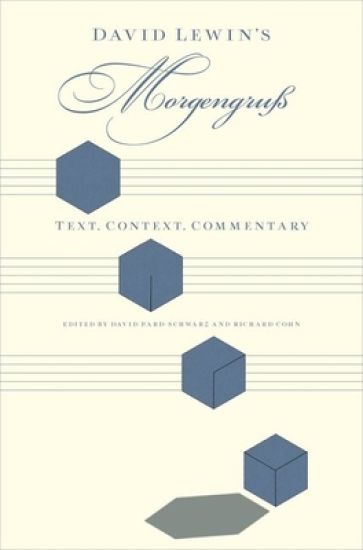
Arguably one of the most influential and revered figures in contemporary music theory, David Lewin (1933-2003) revolutionized the field through his work on transformational theory and theoretical methodology. David Lewin's Morgengruß: Text, Context, Commentary presents in print for the first time Lewin's legendary 1974 essay on Franz Schubert's "Morgengruß," from the composer's song cycle, Die Schöne Müllerin. The essay was central to Lewin's graduate teaching, and copies of it have circulated by hand through the music-scholarly community for decades. This book presents the original text of Lewin's essay along with over 200 graphical illustrations. Lewin's ability to present an artful and rich argument, based on a close reading of a short, "simple" score is but one of the wonders to behold in his masterful essay. At once deeply nuanced and widely accessible, Lewin's "Morgengruß" offers insight into Schubert's composition as well as the analytical process itself. Along with the full text of Lewin's essay, this book includes a small but pointed collection of essays interpreting the content and significance of Lewin's "Morgengruß." Drawing on current research as well as personal reflection, editors Richard Cohn and David Bard-Schwarz, along with contributors Brian Kane and Henry Klumpenhouwer, elaborate on the analytical, pedagogical, and philosophical contexts of Lewin's work. Taken together, the editors and contributors offer a compelling account of the enduring significance of Lewin's writing. David Lewin's Morgengruß is a must-have for anyone with an interest in Lewin's career, Schubert's music, or music theory generally.
David Boring

David Boring

Daniel Clowes

Vintage
2002
pokkari
Discover the adventures of David Boring in this electrifying new graphic novel from the author of Ghost WorldDavid Boring is a nineteen-year-old security guard with a tortured inner life and an obsessive nature.
David's Heart

David's Heart

Laurie O'Brien

Tellwell Talent
2022
pokkari
Our David was always an optimistic, endlessly determined person, and while he navigated through his challenges of having two rare disorders, it was never more evident Share in his journey to make his little corner of the world a better place. His quick wit and remarkable compassion and understanding for those less fortunate somehow enriched his own life. His loving and caring nature and ability to see past stigmas and perceptions is shown in his encounters with everyone he met, because that is what he wanted for himself. He has been teased, shunned and underestimated, but his chutzpah and drive helped him to come out the other side to become an extraordinary human being.Learn how his love for his family, his fuzzes, his friends and his fellow man translates into how he conducts himself in his daily life. Behold how his circumstances shaped how he saw himself and the people he met along the way. Marvel at his fight for respect and recognition, then contemplate the tragic circumstances in which we lost our beloved young man, and the impact that is still felt today Let me take you with me on my ongoing quest for justice, change -no, establishment of rules and guidelines for agencies entrusted with the care of the disabled and the elderly. Our family's unimaginable pain and the rocky road to acceptance of something that goes against nature Keeping hope alive while never forgetting how we got here. What does moving past or through and going forward and healing look like?
David's Heart

David's Heart

Laurie O'Brien

Tellwell Talent
2022
sidottu
Our David was always an optimistic, endlessly determined person, and while he navigated through his challenges of having two rare disorders, it was never more evident Share in his journey to make his little corner of the world a better place. His quick wit and remarkable compassion and understanding for those less fortunate somehow enriched his own life. His loving and caring nature and ability to see past stigmas and perceptions is shown in his encounters with everyone he met, because that is what he wanted for himself. He has been teased, shunned and underestimated, but his chutzpah and drive helped him to come out the other side to become an extraordinary human being.Learn how his love for his family, his fuzzes, his friends and his fellow man translates into how he conducts himself in his daily life. Behold how his circumstances shaped how he saw himself and the people he met along the way. Marvel at his fight for respect and recognition, then contemplate the tragic circumstances in which we lost our beloved young man, and the impact that is still felt today Let me take you with me on my ongoing quest for justice, change -no, establishment of rules and guidelines for agencies entrusted with the care of the disabled and the elderly. Our family's unimaginable pain and the rocky road to acceptance of something that goes against nature Keeping hope alive while never forgetting how we got here. What does moving past or through and going forward and healing look like?