Kirjojen hintavertailu. Mukana 11 342 296 kirjaa ja 12 kauppaa.

Kirjahaku

Etsi kirjoja tekijän nimen, kirjan nimen tai ISBN:n perusteella.

1000 tulosta hakusanalla David B. Chesebrough

Identity Politics in the Age of Genocide

Identity Politics in the Age of Genocide

David B. MacDonald

Routledge
2007
sidottu
In an era of globalization and identity politics, this book explores how Holocaust imagery and vocabulary have been appropriated and applied to other genocides. The author examines how the Holocaust has impacted on other ethnic and social groups, asking whether the Holocaust as a symbol is a useful or destructive means of reading non-Jewish history. This volume: explains the rise of the Holocaust as a gradual process, charting how its importance as a symbol has evolved, providing a theoretical framework to understand how and why non-Jewish groups choose to invoke ‘holocausts’ to apply to other events explores the Holocaust in relation to colonialism and indigenous genocide, with case studies on America, Australia and New Zealand analyzes the Holocaust in relation to war and genocide, with case studies on the Armenian genocide, the Rape of Nanking, Serbia and the Rwandan genocide examines how the Holocaust has been used to promote animal rights.Demonstrating both the opportunities and pitfalls the Holocaust provides to non-Jewish groups who seek to represent their collective histories, this book fills a much needed gap on the use of the Holocaust in contemporary identity politics and will be of interest to students and researchers of politics, the Holocaust and genocide.

Identity Politics in the Age of Genocide

Identity Politics in the Age of Genocide

David B. MacDonald

Routledge
2009
nidottu
In an era of globalization and identity politics, this book explores how Holocaust imagery and vocabulary have been appropriated and applied to other genocides. The author examines how the Holocaust has impacted on other ethnic and social groups, asking whether the Holocaust as a symbol is a useful or destructive means of reading non-Jewish history. This volume: explains the rise of the Holocaust as a gradual process, charting how its importance as a symbol has evolved, providing a theoretical framework to understand how and why non-Jewish groups choose to invoke ‘holocausts’ to apply to other events explores the Holocaust in relation to colonialism and indigenous genocide, with case studies on America, Australia and New Zealand analyzes the Holocaust in relation to war and genocide, with case studies on the Armenian genocide, the Rape of Nanking, Serbia and the Rwandan genocide examines how the Holocaust has been used to promote animal rights.Demonstrating both the opportunities and pitfalls the Holocaust provides to non-Jewish groups who seek to represent their collective histories, this book fills a much needed gap on the use of the Holocaust in contemporary identity politics and will be of interest to students and researchers of politics, the Holocaust and genocide.

Clinical Procedures in Primary Eye Care

Clinical Procedures in Primary Eye Care

David B. Elliott

Elsevier Health Sciences
2026
nidottu
Step-by-step guidance, high-quality visual support, and integrated online resources make Clinical Procedures in Primary Eye Care, 6th Edition, your go-to reference for mastering the commonly used primary care procedures that facilitate accurate diagnosis and effective patient management. Well organized and easy to read, this practical, clinically-focused text offers succinct descriptions of today's most frequently encountered optometric techniques supported by research-based evidence. Ideal for learning, maintaining, and enhancing clinical skills, it reflects evolving technologies and expanded scopes of practice, providing essential instructions for mastering the procedures you need to know. Focuses on evidence-based optometry; all procedures include a section that reviews when and how the procedure should be measured and uses practical, clinical guidance from trusted authorities in the field in addition to research-based evidence Covers the latest procedures and technological advances, including OCTA and digital phoropters as well as the latest in myopia management Includes high-quality, full-color photographs; charts, graphs, and diagrams; anatomical illustrations, diagnostic imaging, including fundus images, OCT, OCTA, and wide-field retinal imaging-all helping you clearly visualize normal eye appearance, eye disorders, and clinical procedures Features additional OCT, OCTA, and ultra-wide retinal imaging throughout, including patients with high myopia Offers an expanded video collection offering real-time visual guidance on a range of optometric procedures, as well as additional photographs online An eBook version is included with purchase. The eBook allows you to access all of the text, figures, and references, with the ability to search, customize your content, make notes and highlights, and have content read aloud. Additional digital ancillary content may publish up to 6 weeks following the publication date
Ecotourism and Wildlife Conservation in the Anthropocene

Ecotourism and Wildlife Conservation in the Anthropocene

David B. Weaver

ELSEVIER SCIENCE PUBLISHING CO INC
2026
nidottu
Ecotourism and Wildlife Conservation in the Anthropocene innovates by demonstrating ecotourism as an inclusive industry positioned to mobilize all people as agents of wildlife conservation. The Anthropocene and post-1950 "Great Acceleration" of human populations have dramatically altered our planet, and ecotourism is often framed as a niche activity that has limited potential to promote conservation of regional biodiversity. By showing that ecotourism as a sustainable, educational, and nature-focused activity can occur anywhere, the sector can better support the preservation and rehabilitation of diverse environments, networks, and natural communities. Accordingly, Ecotourism and Wildlife Conservation in the Anthropocene presents a cogent argument for a new management paradigm based on broader parameters of engagement. Here, all people are empowered to co-create a better future. Concurrently, the book provides practical advice for achieving this future through the examination of relevant real-world management considerations. For students and young professionals in the wildlife conservation discipline, the book conveys the growing importance of ecotourism as a vehicle for preserving and rehabilitating threatened habitats, flora, and fauna. Frequent case studies focused on Crawford Lake provide a focal point that personifies the parameters and possibilities of ecotourism in the Anthropocene and helps to integrate the comprehensive scope of this book.
The Last 100 Days

The Last 100 Days

David B. Woolner

Basic Books
2018
sidottu
A revealing portrait of the end of Franklin Roosevelt's life and presidency, shedding new light on how he made his momentous final policy decisionsThe first hundred days of FDR's presidency are justly famous, a period of political action without equal in American history. Yet as historian David B. Woolner reveals, the last hundred might very well surpass them in drama and consequence.Drawing on new evidence, Woolner shows how FDR called on every ounce of his diminishing energy to pursue what mattered most to him: the establishment of the United Nations, the reinvigoration of the New Deal, and the possibility of a Jewish homeland in Palestine. We see a president shorn of the usual distractions of office, a man whose sense of personal responsibility for the American people bore heavily upon him. As Woolner argues, even in declining health FDR displayed remarkable political talent and foresight as he focused his energies on shaping the peace to come.
Digital Data Integrity

Digital Data Integrity

David B Little; Skip Farmer; Oussama El-Hilali

John Wiley Sons Inc
2007
sidottu
How to plan your future strategy for efficient, cost-saving data management Businesses have historically treated data protection as an afterthought, as simply making an occasional copy of data that could be used in the future. Today, this attitude is changing rapidly. The ever-increasing amount of data, along with the emphasis on continuous availability, necessitates changes in the approach to data integrity, which results in management and protection becoming much more closely aligned. Digital Data Integrity throws light on the data integrity landscape of the future. It provides the reader with a brief overview of the historical methods and subsequent evolution of data protection. The text shows how the whole subject of data integrity is changing and describes and positions many of the new, enhanced, more intelligent protection technologies and methods. Digital Data Integrity: Takes a unique, forward look at data protection and management, highlighting the paradigm shift from simple backup and recovery to total data management.Details recent developments in compliance regulations in an accessible manner.Covers enhanced protection technologies such as advanced intelligent synthetic backups, data reduction methods, and data growth – online protection using continuous data protection.Explains data life cycle management and data storage, using management, quality of service products and tools to achieve better data management, intelligent allocation of storage, and compliance with regulations.Contains information on quality control, looking at SLA (Service Level Agreements), protection by business unit and billing/charge back.Unique insight into hot topics such as next generation bare metal recovery and true system provisioning. This invaluable text will provide system administrators, and database administrators, as well as senior IT managers and decision makers with a thorough understanding of data management and protection. With contributions from Ray Schafer and Paul Mayer.
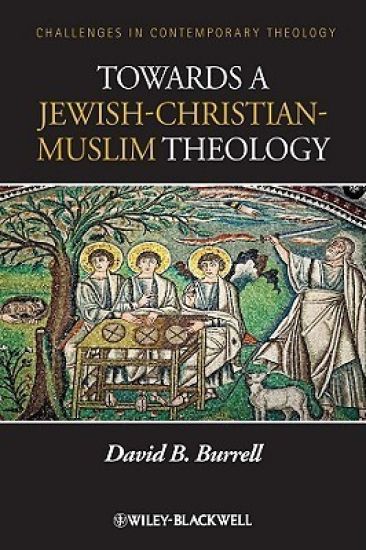
Towards a Jewish-Christian-Muslim Theology

Towards a Jewish-Christian-Muslim Theology

David B. Burrell

John Wiley Sons Inc
2011
sidottu
Towards a Jewish-Christian-Muslim Theology delineates the ways that Christianity, Islam, and the Jewish tradition have moved towards each another over the centuries and points to new pathways for contemporary theological work. Explores the development of the three Abrahamic traditions, brilliantly showing the way in which they have struggled with similar issues over the centuriesShows how the approach of each tradition can be used comparatively by the other traditions to illuminate and develop their own thinkingWritten by a renowned writer in philosophical theology, widely acclaimed for his comparative thinking on Jewish and Islamic theologyA very timely book which moves forward the discussion at a period of intense inter-religious dialogue
Evolutionary Computation

Evolutionary Computation

David B. Fogel

John Wiley Sons Inc
2006
sidottu
This Third Edition provides the latest tools and techniques that enable computers to learn The Third Edition of this internationally acclaimed publication provides the latest theory and techniques for using simulated evolution to achieve machine intelligence. As a leading advocate for evolutionary computation, the author has successfully challenged the traditional notion of artificial intelligence, which essentially programs human knowledge fact by fact, but does not have the capacity to learn or adapt as evolutionary computation does. Readers gain an understanding of the history of evolutionary computation, which provides a foundation for the author's thorough presentation of the latest theories shaping current research. Balancing theory with practice, the author provides readers with the skills they need to apply evolutionary algorithms that can solve many of today's intransigent problems by adapting to new challenges and learning from experience. Several examples are provided that demonstrate how these evolutionary algorithms learn to solve problems. In particular, the author provides a detailed example of how an algorithm is used to evolve strategies for playing chess and checkers. As readers progress through the publication, they gain an increasing appreciation and understanding of the relationship between learning and intelligence. Readers familiar with the previous editions will discover much new and revised material that brings the publication thoroughly up to date with the latest research, including the latest theories and empirical properties of evolutionary computation. The Third Edition also features new knowledge-building aids. Readers will find a host of new and revised examples. New questions at the end of each chapter enable readers to test their knowledge. Intriguing assignments that prepare readers to manage challenges in industry and research have been added to the end of each chapter as well. This is a must-have reference for professionals in computer and electrical engineering; it provides them with the very latest techniques and applications in machine intelligence. With its question sets and assignments, the publication is also recommended as a graduate-level textbook.
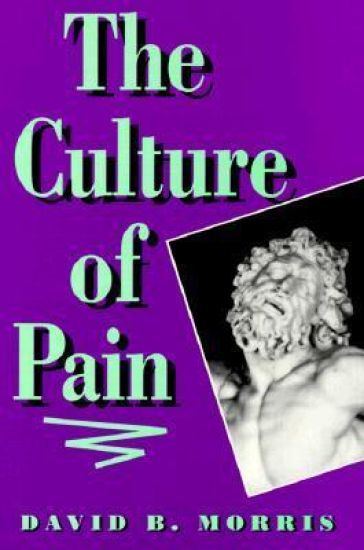
The Culture of Pain

The Culture of Pain

David B. Morris

University of California Press
1993
pokkari
This is a book about the meanings we make out of pain. The greatest surprise I encountered in discussing this topic over the past ten years was the consistency with which I was asked a single unvarying question: Are you writing about physical pain or mental pain? The overwhelming consistency of this response convinces me that modern culture rests upon and underlying belief so strong that it grips us with the force of a founding myth. Call it the Myth of Two Pains. We live in an era when many people believe--as a basic, unexamined foundation of thought--that pain comes divided into separate types: physical and mental. These two types of pain, so the myth goes, are as different as land and sea. You feel physical pain if your arm breaks, and you feel mental pain if your heart breaks. Between these two different events we seem to imagine a gulf so wide and deep that it might as well be filled by a sea that is impossible to navigate.
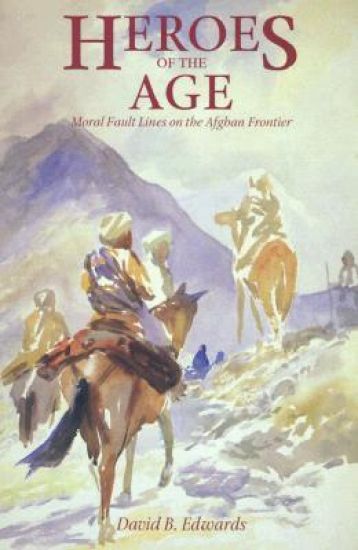
Heroes of the Age

Heroes of the Age

David B. Edwards

University of California Press
1996
pokkari
Much of the political turmoil that has occurred in Afghanistan since the Marxist revolution of 1978 has been attributed to the dispute between Soviet-aligned Marxists and the religious extremists inspired by Egyptian and Pakistani brands of 'fundamentalist' Islam. In a significant departure from this view, David B. Edwards contends that - though Marxism and radical Islam have undoubtedly played a significant role in the conflict - Afghanistan's troubles derive less from foreign forces and the ideological divisions between groups than they do from the moral incoherence of Afghanistan itself. Seeking the historical and cultural roots of the conflict, Edwards examines the lives of three significant figures of the late nineteenth century - a tribal khan, a Muslim saint, and a prince who became king of the newly created state. He explores the ambiguities and contradictions of these lives and the stories that surround them, arguing that conflicting values within an artificially-created state are at the root of Afghanistan's current instability. Building on this foundation, Edwards examines conflicting narratives of a tribal uprising against the British Raj that broke out in the summer of 1897. Through an analysis of both colonial and native accounts, Edwards investigates the saint's role in this conflict, his relationship to the Afghan state and the tribal groups that followed him, and the larger issue of how Islam traditionally functions as an encompassing framework of political association in frontier society.
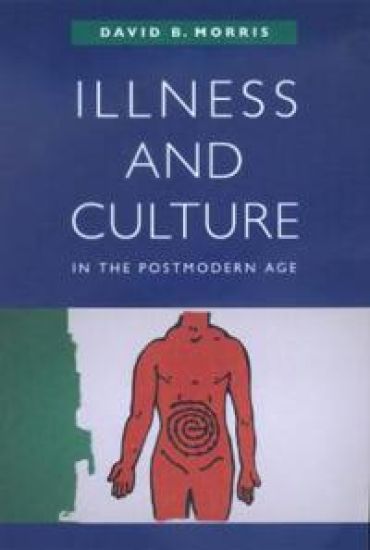
Illness and Culture in the Postmodern Age

Illness and Culture in the Postmodern Age

David B. Morris

University of California Press
2000
pokkari
We become ill in ways our parents and grandparents did not, with diseases unheard of and treatments undreamed of by them. Illness has changed in the postmodern era - roughly the period since World War II - as dramatically as technology, transportation, and the texture of everyday life. Exploring these changes, David B. Morris tells the fascinating story, or stories, of what goes into making the postmodern experience of illness different, perhaps unique. Even as he decries the overuse and misuse of the term 'postmodern', Morris shows how brightly ideas of illness, health, and postmodernism illuminate one another in late-twentieth-century culture. Modern medicine traditionally separates disease - an objectively verified disorder - from illness - a patient's subjective experience. Postmodern medicine, Morris says, can make no such clean distinction; instead, it demands a biocultural model, situating illness at the crossroads of biology and culture. Maladies such as chronic fatigue syndrome and post-traumatic stress disorder signal our awareness that there are biocultural ways of being sick. The biocultural vision of illness not only blurs old boundaries but also offers a new and infinitely promising arena for investigating both biology and culture. In many ways "Illness and Culture in the Postmodern Age" leads us to understand our experience of the world differently.
Before Taliban

Before Taliban

David B. Edwards

University of California Press
2002
pokkari
In this powerful book, David B. Edwards traces the lives of three recent Afghan leaders in Afghanistan's history--Nur Muhammad Taraki, Samiullah Safi, and Qazi Amin Waqad--to explain how the promise of progress and prosperity that animated Afghanistan in the 1960s crumbled and became the present tragedy of discord, destruction, and despair. Before Taliban builds on the foundation that Edwards laid in his previous book, Heroes of the Age, in which he examines the lives of three significant figures of the late nineteenth century--a tribal khan, a Muslim saint, and a prince who became king of the newly created state. In the mid twentieth century, Afghans believed their nation could be a model of economic and social development that would inspire the world. Instead, political conflict, foreign invasion, and civil war have left the country impoverished and politically dysfunctional. Each of the men Edwards profiles were engaged in the political struggles of the country's recent history. They hoped to see Afghanistan become a more just and democratic nation. But their visions for their country were radically different, and in the end, all three failed and were killed or exiled. Now, Afghanistan is associated with international terrorism, drug trafficking, and repression. Before Taliban tells these men's stories and provides a thorough analysis of why their dreams for a progressive nation lie in ruins while the Taliban has succeeded. In Edwards's able hands, this culturally informed biography provides a mesmerizing and revealing look into the social and cultural contexts of political change.
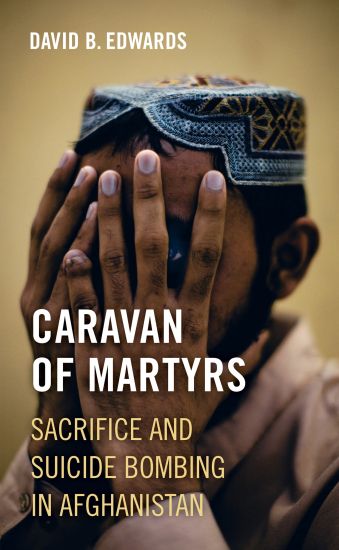
Caravan of Martyrs

Caravan of Martyrs

David B. Edwards

University of California Press
2019
pokkari
What compels a person to strap a vest loaded with explosives onto his body and blow himself up in a crowded street? Scholars have answered this question by focusing on the pathology of the “terrorist mind” or the “brainwashing” practices of terrorist organizations. In Caravan of Martyrs, David Edwards argues that we need to understand the rise of suicide bombing in relation to the cultural beliefs and ritual practices associated with sacrifice. Before the war in Afghanistan began, the sacrificial killing of a sheep demonstrated a tribe’s desire for peace. After the Soviet invasion of 1979, as thousands of people were killed, sacrifice took on new meanings. The dead were venerated as martyrs, but this informal conferral of status on the casualties of war soon became the foundation for a cult of martyrs exploited by political leaders for their own advantage. This first repurposing of the machinery of sacrifice set in motion a process of mutation that would lead nineteen Arabs who had received their training in Afghanistan to hijack airplanes on September 11 and that would in time transform what began as a cult of martyrs created by a small group of Afghan jihadis into the transnational scattering of suicide bombers that haunts our world today. Drawing on years of research in the region, Edwards traces the transformation of sacrifice using a wide range of sources, including the early poetry of jihad, illustrated martyr magazines, school primers and legal handbooks, martyr hagiographies, videos produced by suicide bombers, the manual of ritual instructions used by the 9/11 hijackers, and Facebook posts through which contemporary “Talifans” promote the virtues of self-destruction.
Moral Relativity

Moral Relativity

David B. Wong

University of California Press
2022
pokkari
This title is part of UC Press's Voices Revived program, which commemorates University of California Press’s mission to seek out and cultivate the brightest minds and give them voice, reach, and impact. Drawing on a backlist dating to 1893, Voices Revived makes high-quality, peer-reviewed scholarship accessible once again using print-on-demand technology. This title was originally published in 1984.
Moral Relativity

Moral Relativity

David B. Wong

University of California Press
2022
sidottu
This title is part of UC Press's Voices Revived program, which commemorates University of California Press’s mission to seek out and cultivate the brightest minds and give them voice, reach, and impact. Drawing on a backlist dating to 1893, Voices Revived makes high-quality, peer-reviewed scholarship accessible once again using print-on-demand technology. This title was originally published in 1984.
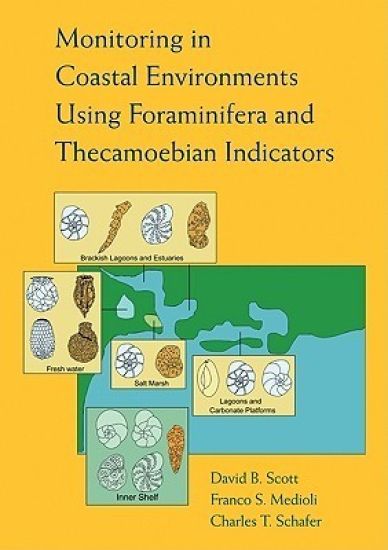
Monitoring in Coastal Environments Using Foraminifera and Thecamoebian Indicators

Monitoring in Coastal Environments Using Foraminifera and Thecamoebian Indicators

David B. Scott; Franco S. Medioli; Charles T. Schafer

Cambridge University Press
2007
pokkari
Foraminifera and thecamoebians are highly sensitive to environmental stress (natural or anthropogenic). This feature means that they can be used to biologically characterize a variety of freshwater and coastal marine environments. Due to their small size and hard shells, large quantities are also found fossilised in core samples, making them ideal for reconstructing past environmental conditions. This volume covers the specific environmental applications of these organisms and contains an introduction to the subject, detailed descriptions of methods and techniques and case studies. Written for non-specialists, this book will appeal to resource managers and consultants in the public and private sector who routinely work on coastal environmental problems. The book will also serve as a supplementary text for graduate students in many courses on environmental monitoring, ecological baseline studies and environmental science.
Immunological Aspects of Renal Disease

Immunological Aspects of Renal Disease

David B. G. Oliveira

Cambridge University Press
2010
pokkari
This book examines renal disease from an immunological perspective; it has been designed to be suitable both as an introductory overview of the area, as well as a guide to further reading. Following an introductory chapter, which discusses general immunological principles of particular relevance to autoimmunity and immunological mechanisms of renal injury, each of the major forms of renal disease with a significant immunopathogenesis is considered. The immunogenetics of each condition is reviewed, followed by a discussion of the immunopathology in animal models and in human disease. A section on therapeutic aspects of immunological relevance is followed by a concluding section which contains more speculative material. A final chapter summarises the various therapeutic strategies available. The volume is suitable for consultants and clinicians in training, particularly in the areas of nephrology and immunology, and for basic scientists working on relevant animal models, autoimmunity and renal disease.
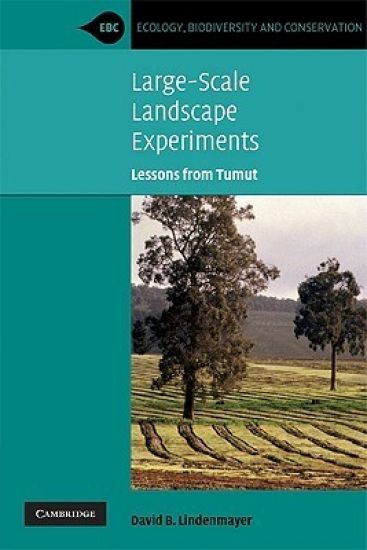
Large-Scale Landscape Experiments

Large-Scale Landscape Experiments

David B. Lindenmayer

Cambridge University Press
2009
pokkari
Landscape change and habitat fragmentation are key factors impacting biodiversity worldwide. These processes have many facets, each of which is usually studied in isolation. The Tumut Fragmentation Study has run for over 11 years and yielded extensive data on changes in both plant and animal populations in areas of native forest and pine plantation. The study is unique in the way that many different factors and processes, influencing a wide range of species groups, have been studied in the one large-scale natural experiment. Writing for academic researchers, professionals and graduate students, David Lindenmayer uses the study and other relevant research to provide an overview of the relationships between landscape change, habitat fragmentation and biodiversity conservation. Key lessons are drawn on throughout the book, on the design and implementation of large-scale ecological studies, biodiversity conservation in fragmented landscapes, and the management of plantation landscapes for enhanced nature conservation.