Kirjojen hintavertailu. Mukana 12 390 323 kirjaa ja 12 kauppaa.

Kirjahaku

Etsi kirjoja tekijän nimen, kirjan nimen tai ISBN:n perusteella.

1000 tulosta hakusanalla David Chill

Math Challenge II-B Algebra

Math Challenge II-B Algebra

John Lensmire; David Reynoso; Kevin Wang

Areteem Institute
2019
nidottu
The math challenge curriculum textbook series is designed to help students learn the fundamental mathematical concepts and practice their in-depth problem solving skills with selected exercise problems. Ideally, these textbooks are used together with Areteem Institute's corresponding courses, either taken as live classes or as self-paced classes. According to the experience levels of the students in mathematics, the following courses are offered: Fun Math Problem Solving for Elementary School (grades 3-5)Algebra Readiness (grade 5; preparing for middle school)Math Challenge I-A Series (grades 6-8; intro to problem solving)Math Challenge I-B Series (grades 6-8; intro to math contests e.g. AMC 8, ZIML Div M)Math Challenge I-C Series (grades 6-8; topics bridging middle and high schools)Math Challenge II-A Series (grades 9+ or younger students preparing for AMC 10)Math Challenge II-B Series (grades 9+ or younger students preparing for AMC 12)Math Challenge III Series (preparing for AIME, ZIML Varsity, or equivalent contests)Math Challenge IV Series (Math Olympiad level problem solving)These courses are designed and developed by educational experts and industry professionals to bring real world applications into the STEM education. These programs are ideal for students who wish to win in Math Competitions (AMC, AIME, USAMO, IMO, ARML, MathCounts, Math League, Math Olympiad, ZIML, etc.), Science Fairs (County Science Fairs, State Science Fairs, national programs like Intel Science and Engineering Fair, etc.) and Science Olympiad, or purely want to enrich their academic lives by taking more challenges and developing outstanding analytical, logical thinking and creative problem solving skills.In Math Challenge II-B, students learn and practice in areas such as algebra and geometry at the high school level, as well as advanced number theory and combinatorics. Topics include polynomials, inequalities, special algebraic techniques, trigonometry, triangles and polygons, collinearity and concurrency, vectors and coordinates, numbers and divisibility, modular arithmetic, residue classes, advanced counting strategies, binomial coefficients, and various other topics and problem solving techniques involved in math contests such as the American Mathematics Competition (AMC) 10 \& 12, ARML, beginning AIME, and Zoom International Math League (ZIML) Junior Varsity and Varsity Divisions.The course is divided into four terms: Summer, covering AlgebraFall, covering GeometryWinter, covering CombinatoricsSpring, covering Number TheoryThe book contains course materials for Math Challenge II-B: Algebra.We recommend that students take all four terms. Each of the individual terms is self-contained and does not depend on other terms, so they do not need to be taken in order, and students can take single terms if they want to focus on specific topics.Students can sign up for the online live or self-paced course at https: //classes.areteem.org
Math Challenge I-C Geometry

Math Challenge I-C Geometry

John Lensmire; David Reynoso; Kelly Ren

Areteem Institute
2018
nidottu
The math challenge curriculum textbook series is designed to help students learn the fundamental mathematical concepts and practice their in-depth problem solving skills with selected exercise problems. Ideally, these textbooks are used together with Areteem Institute's corresponding courses, either taken as live classes or as self-paced classes. According to the experience levels of the students in mathematics, the following courses are offered: Fun Math Problem Solving for Elementary School (grades 3-5)Algebra Readiness (grade 5; preparing for middle school)Math Challenge I-A Series (grades 6-8; intro to problem solving)Math Challenge I-B Series (grades 6-8; intro to math contests e.g. AMC 8, ZIML Div M)Math Challenge I-C Series (grades 6-8; topics bridging middle and high schools)Math Challenge II-A Series (grades 9+ or younger students preparing for AMC 10)Math Challenge II-B Series (grades 9+ or younger students preparing for AMC 12)Math Challenge III Series (preparing for AIME, ZIML Varsity, or equivalent contests)Math Challenge IV Series (Math Olympiad level problem solving)These courses are designed and developed by educational experts and industry professionals to bring real world applications into the STEM education. These programs are ideal for students who wish to win in Math Competitions (AMC, AIME, USAMO, IMO, ARML, MathCounts, Math League, Math Olympiad, ZIML, etc.), Science Fairs (County Science Fairs, State Science Fairs, national programs like Intel Science and Engineering Fair, etc.) and Science Olympiad, or purely want to enrich their academic lives by taking more challenges and developing outstanding analytical, logical thinking and creative problem solving skills.Math Challenge I-C is a four-part course designed to bridge the middle school and high school math materials. For students who participate in the American Math Competitions (AMC), there is a big gap in both the fundamental math concepts and the problem-solving techniques involved between the AMC 8 and AMC 10 contests. This course is developed to help students transition smoothly from middle school to high school, and prepare them for high school math competitions including the AMC 10 \& 12, ARML, and ZIML. The full course covers topics and introductory problem solving in algebra, geometry, and finite math. Algebraic topics include linear equations, systems of equations and inequalities, exponents and radicals, factoring polynomials, and solving quadratic equations. Geometric topics include angles in triangles, quadrilaterals, and polygons, congruent and similar polygons, calculating area, and algebraic geometry. Topics in finite math include logic, introductory number theory, and an introduction to probability and statistics. These topics serve as the fundamental knowledge needed for a more advanced problem solving course such as Math Challenge II-A.The course is divided into four terms: Summer, covering AlgebraFall, covering covering additional topics in AlgebraWinter, covering GeometrySpring, covering Finite MathThe book contains course materials for Math Challenge I-C: Geometry.We recommend that students take all four terms starting with the Summer, but students with the required background are welcome to join for later terms in the course, or select suitable terms for self-paced study.Students can sign up for the live or self-paced course at https: //classes.areteem.org .
Math Challenge II-B Combinatorics

Math Challenge II-B Combinatorics

John Lensmire; David Reynoso; Kelly Ren

Areteem Institute
2018
nidottu
The math challenge curriculum textbook series is designed to help students learn the fundamental mathematical concepts and practice their in-depth problem solving skills with selected exercise problems. Ideally, these textbooks are used together with Areteem Institute's corresponding courses, either taken as live classes or as self-paced classes. According to the experience levels of the students in mathematics, the following courses are offered: Fun Math Problem Solving for Elementary School (grades 3-5)Algebra Readiness (grade 5; preparing for middle school)Math Challenge I-A Series (grades 6-8; intro to problem solving)Math Challenge I-B Series (grades 6-8; intro to math contests e.g. AMC 8, ZIML Div M)Math Challenge I-C Series (grades 6-8; topics bridging middle and high schools)Math Challenge II-A Series (grades 9+ or younger students preparing for AMC 10)Math Challenge II-B Series (grades 9+ or younger students preparing for AMC 12)Math Challenge III Series (preparing for AIME, ZIML Varsity, or equivalent contests)Math Challenge IV Series (Math Olympiad level problem solving)These courses are designed and developed by educational experts and industry professionals to bring real world applications into the STEM education. These programs are ideal for students who wish to win in Math Competitions (AMC, AIME, USAMO, IMO, ARML, MathCounts, Math League, Math Olympiad, ZIML, etc.), Science Fairs (County Science Fairs, State Science Fairs, national programs like Intel Science and Engineering Fair, etc.) and Science Olympiad, or purely want to enrich their academic lives by taking more challenges and developing outstanding analytical, logical thinking and creative problem solving skills.In Math Challenge II-B, students learn and practice in areas such as algebra and geometry at the high school level, as well as advanced number theory and combinatorics. Topics include polynomials, inequalities, special algebraic techniques, trigonometry, triangles and polygons, collinearity and concurrency, vectors and coordinates, numbers and divisibility, modular arithmetic, residue classes, advanced counting strategies, binomial coefficients, and various other topics and problem solving techniques involved in math contests such as the American Mathematics Competition (AMC) 10 \& 12, ARML, beginning AIME, and Zoom International Math League (ZIML) Junior Varsity and Varsity Divisions.The course is divided into four terms: Summer, covering AlgebraFall, covering GeometryWinter, covering CombinatoricsSpring, covering Number TheoryThe book contains course materials for Math Challenge II-B: Combinatorics.We recommend that students take all four terms. Each of the individual terms is self-contained and does not depend on other terms, so they do not need to be taken in order, and students can take single terms if they want to focus on specific topics.Students can sign up for the course at https: //classes.areteem.org for the live or self-paced course
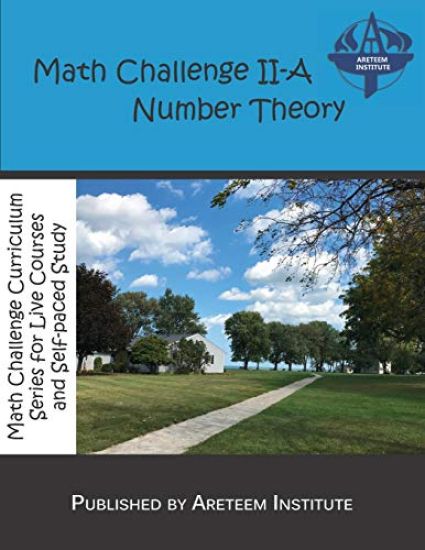
Math Challenge II-A Number Theory

Math Challenge II-A Number Theory

John Lensmire; David Reynoso; Kevin Wang Ph. D.

Areteem Institute
2018
nidottu
The math challenge curriculum textbook series is designed to help students learn the fundamental mathematical concepts and practice their in-depth problem solving skills with selected exercise problems. Ideally, these textbooks are used together with Areteem Institute's corresponding courses, either taken as live classes or as self-paced classes. According to the experience levels of the students in mathematics, the following courses are offered: Fun Math Problem Solving for Elementary School (grades 3-5)Algebra Readiness (grade 5; preparing for middle school)Math Challenge I-A Series (grades 6-8; intro to problem solving)Math Challenge I-B Series (grades 6-8; intro to math contests e.g. AMC 8, ZIML Div M)Math Challenge I-C Series (grades 6-8; topics bridging middle and high schools)Math Challenge II-A Series (grades 9] or younger students preparing for AMC 10)Math Challenge II-B Series (grades 9+ or younger students preparing for AMC 12)Math Challenge III Series (preparing for AIME, ZIML Varsity, or equivalent contests)Math Challenge IV Series (Math Olympiad level problem solving)These courses are designed and developed by educational experts and industry professionals to bring real world applications into the STEM education. These programs are ideal for students who wish to win in Math Competitions (AMC, AIME, USAMO, IMO, ARML, MathCounts, Math League, Math Olympiad, ZIML, etc.), Science Fairs (County Science Fairs, State Science Fairs, national programs like Intel Science and Engineering Fair, etc.) and Science Olympiad, or purely want to enrich their academic lives by taking more challenges and developing outstanding analytical, logical thinking and creative problem solving skills.Math Challenge II-A is for students who are preparing for the American Mathematics Competition 10 (AMC 10) contest. Students are required to have fundamental knowledge in Algebra I, Geometry, Basic Number Theory and Counting and Probability up to the 10th grade level. Topics include polynomials, inequalities, special algebraic techniques, triangles and polygons, collinearity and concurrency, vectors and coordinates, numbers and divisibility, modular arithmetic, advanced counting strategies, binomial coefficients, sequence and series, and various other topics and problem solving techniques involved in math contests such as the AMC 10, advanced MathCounts, American Regions Math League (ARML), and Zoom International Math League (ZIML) Division H and Junior Varsity Division.The course is divided into four terms: Summer, covering AlgebraFall, covering GeometryWinter, covering CombinatoricsSpring, covering Number TheoryThe book contains course materials for Math Challenge II-A: Number Theory.We recommend that students take all four terms. Each of the individual terms is self-contained and does not depend on other terms, so they do not need to be taken in order, and students can take single terms if they want to focus on specific topics.Students can sign up for the course at https: //classes.areteem.org for the live online version or the self-paced version.
Math Challenge II-B Number Theory

Math Challenge II-B Number Theory

John Lensmire; David Reynoso; Kevin Wang Ph. D.

Areteem Institute
2019
nidottu
The math challenge curriculum textbook series is designed to help students learn the fundamental mathematical concepts and practice their in-depth problem solving skills with selected exercise problems. Ideally, these textbooks are used together with Areteem Institute's corresponding courses, either taken as live classes or as self-paced classes. According to the experience levels of the students in mathematics, the following courses are offered: Fun Math Problem Solving for Elementary School (grades 3-5)Algebra Readiness (grade 5; preparing for middle school)Math Challenge I-A Series (grades 6-8; intro to problem solving)Math Challenge I-B Series (grades 6-8; intro to math contests e.g. AMC 8, ZIML Div M)Math Challenge I-C Series (grades 6-8; topics bridging middle and high schools)Math Challenge II-A Series (grades 9+ or younger students preparing for AMC 10)Math Challenge II-B Series (grades 9+ or younger students preparing for AMC 12)Math Challenge III Series (preparing for AIME, ZIML Varsity, or equivalent contests)Math Challenge IV Series (Math Olympiad level problem solving)These courses are designed and developed by educational experts and industry professionals to bring real world applications into the STEM education. These programs are ideal for students who wish to win in Math Competitions (AMC, AIME, USAMO, IMO, ARML, MathCounts, Math League, Math Olympiad, ZIML, etc.), Science Fairs (County Science Fairs, State Science Fairs, national programs like Intel Science and Engineering Fair, etc.) and Science Olympiad, or purely want to enrich their academic lives by taking more challenges and developing outstanding analytical, logical thinking and creative problem solving skills.In Math Challenge II-B, students learn and practice in areas such as algebra and geometry at the high school level, as well as advanced number theory and combinatorics. Topics include polynomials, inequalities, special algebraic techniques, trigonometry, triangles and polygons, collinearity and concurrency, vectors and coordinates, numbers and divisibility, modular arithmetic, residue classes, advanced counting strategies, binomial coefficients, and various other topics and problem solving techniques involved in math contests such as the American Mathematics Competition (AMC) 10 and 12, ARML, beginning AIME, and Zoom International Math League (ZIML) Junior Varsity and Varsity Divisions.The course is divided into four terms: Summer, covering AlgebraFall, covering GeometryWinter, covering CombinatoricsSpring, covering Number TheoryThe book contains course materials for Math Challenge II-B: Number Theory.We recommend that students take all four terms. Each of the individual terms is self-contained and does not depend on other terms, so they do not need to be taken in order, and students can take single terms if they want to focus on specific topics.Students can sign up for the online live or self-paced course at https: //classes.areteem.org
Individuation and the Evolution of Consciousness: At the Turning Point and Jung's Challenge

Individuation and the Evolution of Consciousness: At the Turning Point and Jung's Challenge

David T. Johnston

Createspace Independent Publishing Platform
2017
nidottu
Jung's individuation process is founded on the fact that everything living dreams of Individuation. His path involves a specific concentration of a natural phenomenon of nature, which speeds up the process. This grounding in nature is a significant factor that distinguishes his spirituality and psychology from other spiritual and psychological disciplines and methods. The one major exception is the Integral Yoga of Sri Aurobindo and the Mother, which is why I use them both as my most significant hermeneutic references, and the former for insight into the evolution of consciousness. Jung's path involves the incarnation of the Divine through individuals that potentially leads to far-reaching transformation of both individuals and culture. This reflects his important challenge to Western and world culture at this critical turning point in human history. In addition to Sri Aurobindo and the Mother, I refer to the work of Jean Gebser to add insight into the phenomenon of the evolution of consciousness. I also refer to the study on the development of the Western mind by Richard Tarnas for understanding the unfolding Western psyche from a philosophic, religious and psychological perspective. Not only do I wish to represent Jung's challenge at this juncture in history, but I am particularly interested in differentiating Jung's approach to psychology from that of his prize pupil, Eric Neumann, as well as from that of a brilliant post-Jungian, James Hillman, in addition to Erich Fromm, a post-Freudian, and Charles Ponc , another post-Jungian. I believe these differentiations are important in helping to elucidate the deeper and higher nature of Jung's challenge.
In Love With Jesus: A 40-Day Challenge to Consciously Grow in Intimacy with Jesus

In Love With Jesus: A 40-Day Challenge to Consciously Grow in Intimacy with Jesus

Michael Isebiama David

Createspace Independent Publishing Platform
2018
nidottu
Sadly, many today see God as some oracle that can only be consulted by some "prophets". Many see God as an unapproachable Being. Some even see Him as some kind of powerful force that came and exploded in a big bang which caused the universe to form. Still many, even in the church, do not think that they can have a real and living love-walk with God. They don't think they can hear God speak, they leave that to their pastors. The God who created all that exists desires to be in a face-to-face relationship with you. It is the reason He created us, to have intimate fellowship with us. And He sent Jesus to come and make a way for us to commune with Him. This new book by Michael Isebiama David is sure to ignite a burning flame in your heart for Jesus. Michael carefully guides you through the essentials for experiencing a fiery love-walk with the Lord. The 40-Day Challenge has been compiled to lead you into a deeper place of intimacy with God. So whether you're just starting your love-walk in Christ, or have been there for decades, or whether you have not started at all, this book is for you. Get ready to experience a personal revival
Jesus - His Home, His Journey, His Challenge
This book explores a sequence of important questions about Jesus that have relevance to our own faith journeys; Where did Jesus start from? What did he meet on the way, both in the annual journey with his family to Jerusalem for the Passover and also in his inner spiritual journey? How did these encounters shape his life, activity and message? To help readers with these questions, 'ground-level insights' are offered, both from recent advances in the historical Jesus studies and from the author's own research visits to Israel-Palestine. Part of the author's aim is to show, in a respectful but honest way, that there is plenty of evidence in the Gospels that Jesus himself grew and developed in his own life journey. At each step of the way, he considers how this relates to Christian discipleship, particularly in relation to our attitudes to those who are strangers.
The Challenge Of Globalization And Institution Building

The Challenge Of Globalization And Institution Building

Randall W. Kindley; David F Good

Routledge
2019
sidottu
Describing and analyzing the links between monetary policy and economic governance in small countries in both Western and Eastern Europe, this interdisciplinary volume demonstrates how interest groups shape monetary policy decisions in increasingly globalized financial markets. The contributors' findings hold great relevance even for large contries like the United States, which are now struggling with the challenges of internationalization. A diverse group of political scientists and economists, the contributors contend that although the small states have limited options, they are nonetheless able to make choices that enable their export industries to flourish in an environment of increasing internationalization. The authors conclude that lack of control over the future shape of monetary union in Europe is not inimical to future prosperity.
The Challenge Of Globalization And Institution Building

The Challenge Of Globalization And Institution Building

Randall W. Kindley; David F Good

Routledge
2021
nidottu
Describing and analyzing the links between monetary policy and economic governance in small countries in both Western and Eastern Europe, this interdisciplinary volume demonstrates how interest groups shape monetary policy decisions in increasingly globalized financial markets. The contributors' findings hold great relevance even for large contries like the United States, which are now struggling with the challenges of internationalization. A diverse group of political scientists and economists, the contributors contend that although the small states have limited options, they are nonetheless able to make choices that enable their export industries to flourish in an environment of increasing internationalization. The authors conclude that lack of control over the future shape of monetary union in Europe is not inimical to future prosperity.
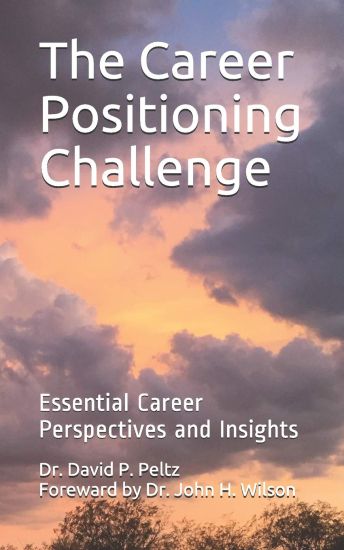
The Career Positioning Challenge

The Career Positioning Challenge

John H Wilson; David P Peltz

Createspace Independent Publishing Platform
2019
pokkari
Have you ever found yourself feeling lost in your job? Or, wondering what is the next step for you in your career? Or, how to even go about taking the next step to jumpstart your position in the work place? If so, then this book is for you. From the same author who brought you The Military Transition Challenge, this companion guidebook extends into the civilian workplace and helps you drive your career forward. Dr. Dave Peltz has made it his life's work to coach employees at all levels on how to find and take the next step in their careers. He does this by first challenging your perspective, then offering vital views and tools to become proactive with your career. If you are tired of waiting for your career to happen and ready instead to accept the challenge of owning your career, then your first step starts TODAY
Climate-Challenged Society

Climate-Challenged Society

John S. Dryzek; Richard B. Norgaard; David Schlosberg

Oxford University Press
2013
sidottu
This book is an original, accessible, and thought-provoking introduction to the severe and broad-ranging challenges that climate change presents and how societies can respond. It synthesizes and deploys cutting-edge scholarship on the range of social, economic, political, and philosophical issues surrounding climate change. The treatment is introductory, but the book is written "with attitude", for nobody has yet charted in coherent, integrative, and effective fashion a way to move societies beyond their current paralysis as they face the challenges of climate change. The coverage begins with an examination of science, public opinion, and policy making, with special attention to organized climate change denial. The book then moves to economic analysis and its limits; different kinds of policies; climate justice; governance at all levels from the local to the global; and the challenge of an emerging "Anthropocene" in which the mostly unintended consequences of human action drive the earth system into a more chaotic and unstable era. The conclusion considers the prospects for fundamental transition in ideas, movements, economics, and governance.