Kirjahaku
Etsi kirjoja tekijän nimen, kirjan nimen tai ISBN:n perusteella.
1000 tulosta hakusanalla David Edgar

Whiff is the new novel by David Edwards (Séguier). It is illustrated by the Japanese Manga artist Junko Murata and continues the story of Edwards’ first novel, Niche, co-authored with Jay Cantor (Plessis). Whiff derives from an actual experiment performed in Paris at the art and science innovation center, Le Laboratoire. In this latest experiment, the double-Michelin-starred chef Thierry Marx collaborated with the colloidal scientist Jérôme Bibette to introduce a new way of encapsulating flavors. Wishing to present these delectable capsules in an unusual way, a group of art and science college students developed with Edwards a new way of eating by aerosol, called whiffing. Whiff, whose publication coincides with the commercialization by Le Laboratoire of aerosolized chocolate, explores how we dream, and realize our dreams, through surprising combinations of aesthetic and analytical methods. Whiff is also accompanied by the first “whiffing” recipes.
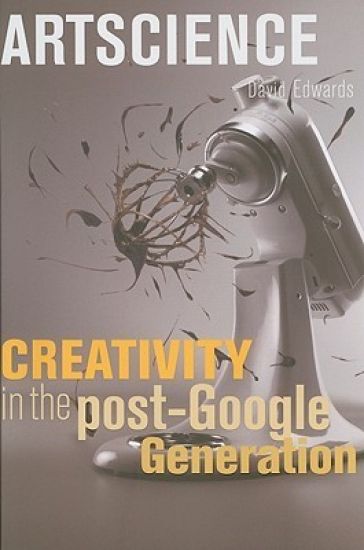
Scientists are famous for believing in the proven and peer-accepted, the very ground that pioneering artists often subvert; they recognize correct and incorrect where artists see only true and false. And yet in some individuals, crossover learning provides a remarkable kind of catalyst to innovation that sparks the passion, curiosity, and freedom to pursue--and to realize--challenging ideas in culture, industry, society, and research. This book is an attempt to show how innovation in the "post-Google generation" is often catalyzed by those who cross a conventional line so firmly drawn between the arts and the sciences.David Edwards describes how contemporary creators achieve breakthroughs in the arts and sciences by developing their ideas in an intermediate zone of human creativity where neither art nor science is easily defined. These creators may innovate in culture, as in the development of new forms of music composition (through use of chaos theory), or, perhaps, through pioneering scientific investigation in the basement of the Louvre. They may innovate in research institutions, society, or industry, too. Sometimes they experiment in multiple environments, carrying a single idea to social, industrial, and cultural fruition by learning to view traditional art-science barriers as a zone of creativity that Edwards calls artscience. Through analysis of original stories of artscience innovation in France, Germany, and the United States, he argues for the development of a new cultural and educational environment, particularly relevant to today's need to innovate in increasingly complex ways, in which artists and scientists team up with cultural, industrial, social, and educational partners.

Never has the spirit of innovation been more highly valued than today. Around the world, people see the hard-to-teach skills of creativity as the lifeblood of cultural change and the engine of economic development. In The Lab, David Edwards presents a blueprint for revitalizing labs with "artscience"? creative thought that erases conventional boundaries between art and science?to produce innovations that otherwise might never see the light of day. At the heart of The Lab is "cultural incubation," whereby ideas translate with free-wheeling public exchange through a kind of innovation funnel—from educational settings (as in The Lab at Harvard University), to cultural settings (as at Le Laboratoire in Paris and elsewhere), to realizations as innovative products or humanitarian initiatives (within LaboGroup and other translation labs around the globe). With examples ranging from breathable chocolate (Le Whif) to contemporary art installations that explore the neuroscience of fear, Edwards shows how a measured-risk, seed-investment, mentorship-focused network of labs can allow exotic, unexpected ideas to flourish without being killed off at the first hint of impracticality. Unique to the innovation funnel is how creator risk is encouraged but also managed by mentors and others in each lab, so that the most daring ideas—lighting African villages with microbiotic lamps, or cleaning the air with plant-based filters—can emerge within passionate and sometimes inexperienced creative bands. Lively and engaging, replete with anecdotes that bring Edwards's unique personal experience in developing artscience labs to life, The Lab approaches innovation from exciting new angles, finding invigorating ways to repurpose our most creative assets—in scientific exploration, artistic imagination, and business model-building. David Edwards teaches at Harvard University in the School of Engineering and Applied Sciences. His creative work is described at www.davidideas.com.
Guardians of Power is a thought-provoking and controversial challenge to the idea that western media is unbiased, fearless and open to different ideas. This book argues that a corporate media system be never be expected to tell the truth about a world dominated by corporations. It challenges the complacent view that newspapers, including the 'liberal' Guardian and the Independent, tell the truth about climate change, war and problems in society when they are profit-oriented businesses dependent on advertisers for 75% of their revenues. Guardians of Power is a radical intervention which will spark debate amongst media students and journalists, and all those who believe in the values of a free and independent media.
Media Lens' mission is to correct the distorted vision of the liberal media. A thorn in the side of the Guardian, Independent, Channel 4 and the BBC, among many others, it is constantly under counterfire by those it attacks. These responses are collected in Newspeak. They expose the arrogance and servility to power of our leading journalists and editors, starring Andrew Marr, Alan Rusbridger, Roger Alton, Jon Snow, Jeremy Bowen and even George Monbiot. Packed with forensic media analysis, revealing the lethal bias in 'balanced' reporting. Even the 'best' UK media turn out to be cheerleaders for government, business and war. Alongside an A-Z of BBC propaganda and chapters on Iraq and climate change, Newspeak focuses on the demonisation of Iran and Venezuela, the Israel-Palestine conflict, the myth of impartial reporting and the dark art of smearing dissidents.
Media Lens' mission is to correct the distorted vision of the liberal media. A thorn in the side of the Guardian, Independent, Channel 4 and the BBC, among many others, it is constantly under counterfire by those it attacks. These responses are collected in Newspeak. They expose the arrogance and servility to power of our leading journalists and editors, starring Andrew Marr, Alan Rusbridger, Roger Alton, Jon Snow, Jeremy Bowen and even George Monbiot. Packed with forensic media analysis, revealing the lethal bias in 'balanced' reporting. Even the 'best' UK media turn out to be cheerleaders for government, business and war. Alongside an A-Z of BBC propaganda and chapters on Iraq and climate change, Newspeak focuses on the demonisation of Iran and Venezuela, the Israel-Palestine conflict, the myth of impartial reporting and the dark art of smearing dissidents.
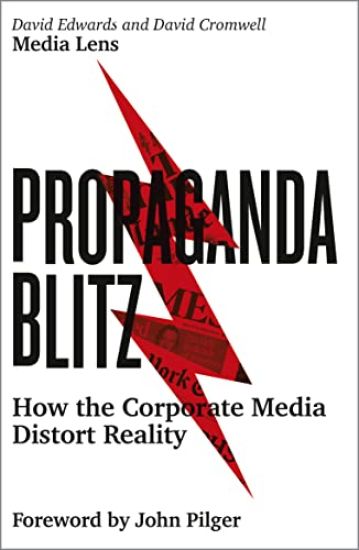
Do you trust the liberal media? While the tabloid and right-wing press - the Sun, The Times, the Mail and the Express - are constantly criticised for dangerous bias, outlets like the BBC and the Guardian are trusted by their readers to report in the interests of the public. However, the reality is that all corporate media is systematically filtered by the powerful interests that own, manage and fund it. Propaganda Blitz shows that the corporate media does not just 'spin' the news - it fundamentally distorts everything it touches, hiding the real issues from public view, and often completely reversing the truth. This book uncovers a storm of top-down campaigns behind war reporting from Iraq, Syria and Palestine, as well as the destruction of the credibility of figures on the left, including Jeremy Corbyn and Hugo Chavez. Exposing propagandists at the top levels of the BBC, as well as their reporting on the Scottish independence referendum, the dismantling of the NHS and looming climate chaos, Propaganda Blitz explains the real meaning of 'objective' journalism, exposes the fake news about 'fake news' and outlines a model for anti-business media activism.

Do you trust the liberal media? While the tabloid and right-wing press - the Sun, The Times, the Mail and the Express - are constantly criticised for dangerous bias, outlets like the BBC and the Guardian are trusted by their readers to report in the interests of the public. However, the reality is that all corporate media is systematically filtered by the powerful interests that own, manage and fund it. Propaganda Blitz shows that the corporate media does not just 'spin' the news - it fundamentally distorts everything it touches, hiding the real issues from public view, and often completely reversing the truth. This book uncovers a storm of top-down campaigns behind war reporting from Iraq, Syria and Palestine, as well as the destruction of the credibility of figures on the left, including Jeremy Corbyn and Hugo Chavez. Exposing propagandists at the top levels of the BBC, as well as their reporting on the Scottish independence referendum, the dismantling of the NHS and looming climate chaos, Propaganda Blitz explains the real meaning of 'objective' journalism, exposes the fake news about 'fake news' and outlines a model for anti-business media activism.
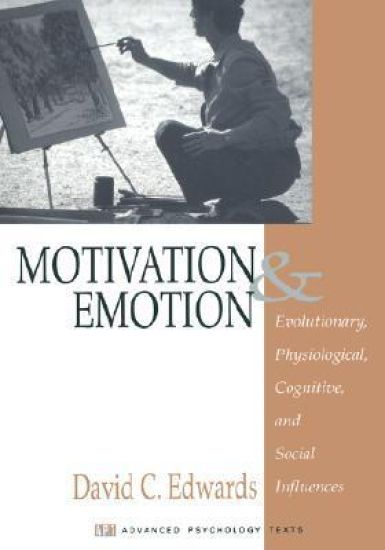
"I think David C. Edwards does a very good job of covering the material. The writing style is consistently clear, direct and interesting. Research findings are clearly presented and clearly explained." --Ronald R. Ulm, Salisbury State University How do culture and other people affect our eating habits? Is love "natural" to humans? Is anger always at the root of aggressive behaviors? Aimed at unraveling the mysteries of human motivation and emotion, author David C. Edwards explores the evolutionary, physiological, social, and cognitive factors that shape each motivational behavior from anger to sex to work and play. Topically organized, Edwards provides readers with the best of contemporary findings in each motivational behavior and summarizes how past research in the field contributed to current thought. To facilitate the reader's comprehension of the material, each chapter begins with a concise overview statement and ends with a personal summary. Within the chapter, the author highlights material of special importance and concludes major sections with a summary. Each chapter ends with a set of questions that will help a student reader prepare for an exam.

Prophecy in Early Christianity and the Ancient Mediterranean World
David Edward Aune
William B Eerdmans Publishing Co
1991
pokkari
The most detailed study of early Christian prophecy written. Places the phenomenon of early Christian prophecy within the larger Greco-Roman world.
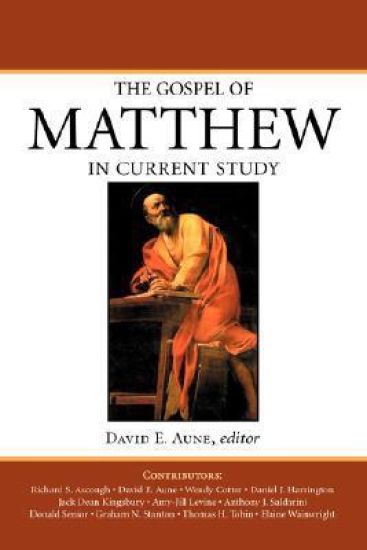
The Gospel of Matthew in Current Study
David Edward Aune; William G. Thompson
William B Eerdmans Publishing Co
2001
pokkari
First-rate scholars here explore the pastoral and academic aspects of the study of Matthew's Gospel. Built on the best of current research, these chapters cover a diverse range of significant topics in addition to highlighting the points of disagreement that continue to stimulate scholarship in the field. Published in memory of William G. Thompson, S. J.,The Gospel of Matthew in Current Study is not only a fitting tribute to Thompson's lifelong interest in the First Gospel but is also an excellent introduction to contemporary Matthean studies with great potential as a classroom resource. Contributors: Richard S. Ascough David E. Aune Wendy Cotter Daniel J. Harrington Jack Dean Kingsbury Amy-Jill Levine Anthony J. Saldarini Donald Senior Graham N. Stanton Thomas H. Tobin Elaine Wainwright

Will anything of us survive after death? This is a central question when we ask what life means. All through history, societies and their cultures, in particular their religions and philosophies, have guided and sustained people as they have approached death and as they have mourned. A more secular society has made these comforts less accessible. Many beliefs formerly advanced with some authority and believed with some assurance have become incredible to many.After Death? offers a thought-provoking analysis of past and present beliefs for those who want to think for themselves about the greatest uncertainty of life.

What Anglicans Believe in the Twenty-first Century
David Edwards
Continuum International Publishing Group Ltd.
2004
nidottu
This new edition of the 1974 classic What Anglicans Believe is for the very different world of the twenty-first century and its powerful new preface examines the whole question of belief.David Edwards' purpose is to present a straightforward account of what many Anglicans believe. He writes honest answers to the questions that many are asking of their faith and the Church. He aims to help Anglicans all over the world to understand their own tradition and what it can offer them. A list of questions for discussion makes this an ideal book for study groups as well as for individual contemplation.

Hegel's 'Philosophy of Right'
David Edward Rose
Continuum International Publishing Group Ltd.
2007
sidottu
"Hegel's Philosophy of Right" is a classic text in the history of Western political thought and one with which all serious students of political philosophy must engage. While it is a hugely important and exciting piece of philosophical writing, Hegel's ideas and style are notoriously difficult to understand and the content is particularly challenging. In "Hegel's Philosophy of Right: A Reader's Guide", David Rose explains the philosophical and political background against which the book was written and, taking each part of the book in turn, guides the reader to a clear understanding of the text as a whole. This is the ideal companion to study of this most influential and challenging of texts, offering guidance on philosophical and historical context; key themes; reading the text; reception and influence; and, further reading.

Hegel's 'Philosophy of Right'
David Edward Rose
Continuum International Publishing Group Ltd.
2007
nidottu
"Hegel's Philosophy of Right" is a classic text in the history of Western political thought and one with which all serious students of political philosophy must engage. While it is a hugely important and exciting piece of philosophical writing, Hegel's ideas and style are notoriously difficult to understand and the content is particularly challenging. In "Hegel's Philosophy of Right: A Reader's Guide", David Rose explains the philosophical and political background against which the book was written and, taking each part of the book in turn, guides the reader to a clear understanding of the text as a whole. This is the ideal companion to study of this most influential and challenging of texts, offering guidance on philosophical and historical context; key themes; reading the text; reception and influence; and, further reading.

A Native foster youth brings a completed Pfizer Corporation's "PTSD Self-Quiz" she found in a U.S. Indian Health Service clinic waiting room to her psychologist, hoping a new diagnosis will allow her to discontinue her current stimulant medication. After advocating on her behalf and that of other Native clients in his care, the psychologist is put on a "performance improvement plan" by clinic supervisors. Subsequently, a nurse practitioner at the clinic sends a letter to the Secretary of the U.S. Department of Health and Human Services regarding concerns over poor medical care and infection control, only to be transferred out shortly after.Coyote's Swing reveals how the U.S. mental health system reframes Native American reactions to oppression and marginalization into "mental disorders" and "mental illness." Contemporary practices of the Indian Health Service echo historical "Indian lunacy" determinations, false imprisonment in the Hiawatha Asylum for Insane Indians, stigmatizing of Native children kidnapped to federally- and mission-run boarding schools as "feebleminded," sterilizing of Native people evaluated by white psychologists as "unfit to reproduce," and long-standing doctrines of impairment and deficiency foreign to Native values of spiritual balance and wellbeing.Immersed in this system and its history for two decades, David Edward Walker develops provocative connections between past and present while using a traditional Yakama tale as a motif. Combining narrative ease and a scholar's eye, he exposes how the "white man's Cat" continues to push Coyote, Sacred Trickster, on a "swing" of Western mental health ideology that has threatened Native lives and culture for over 150 years. Coyote's Swing combines Walker's firsthand experiences as a consulting psychologist with rare history and sociocultural critique.