Although only children at the time, the Second World War had a permanent effect on the schoolboys who lived through the conflict. Watching a country preparing for war and then being immersed in the horrors of the Blitz brought encounters and events that some will never forget. Now in their seventies and eighties, many are revisiting their memories of this time of upheaval and strife for the first time. In this charming book, David F. Wood recalls his days as a schoolboy in Essex, where his family moved when the Luftwaffe threatened his native London. With the same sense of fascination that grips many men of his generation, he describes watching airmen parachute to safety during the Battle of Britain and witnessing a Messerschmitt dramatically crash-landing close to his home.The accounts of his days spent playing with his new friends in the nearby countryside provide a stark contrast to the ravages of a war that was going on all around them. The first of a new series documenting the memories of these wartime schoolboys, this book is a must for anyone who wishes to learn more about life on the Home Front through the eyes of someone who witnessed it first hand.
Building Modern Criminology collects four decades of theoretical essays and research papers by David Greenberg, a sociologist pulled away by his political experiences during the Vietnam War from a career in theoretical high energy physics into criminology. The papers take up critical questions in the study of crime, including the explanation of group differences, the nature of criminal careers, and historical trends in violence. Other papers address the historical development of criminal prohibitions, modes of punishment, and the effectiveness of sanctions in preventing crime. These seminal efforts have helped to build a logically coherent, empirically grounded criminology that understands the criminal law, patterns of crime and social responses to it in their historically-specific, social contexts. This volume is indispensable for students, teachers and working criminological researchers engaging with cutting-edge issues in contemporary criminology.
Disordered Bodies and Disrupted Borders examines the profound effects of warfare and imperialism on twentieth century British Literature, focusing on several twentieth century authors' representations of the human body as a political text, specifically as a material/theoretical text of resistance to the dominant ideology of warfare and imperialism. The authors discussed often provide a vantage point from which to objectify the present system and to call for a transformation of the cultural codes which reproduce the cycle of violence. The early twentieth century authors experienced warfare through the Boer War and World War I, as well as British imperialism in Ireland, Africa, and India, which continue to influence contemporary British authors. This study depicts the common resistance to domination among British authors who also describe the serious consequences of resistance, particularly the destruction of the body/text by the power that inscribes it.
By turning the classical arguments for God's existence on their head, David and Marjorie Haight present original arguments for the existence of the devil in order to reveal a cosmic 'God beyond Goddiness' or the God beyond good and evil, which reconciles Divinity with its Shadow. The consequences of doing so cast light on the mysteries and problems of evil, divine predication, universals, time and eternity, the highest good, mind and body, personal immortality and the philosophical foundations of science. This superunification of the most fundamental concepts in philosophy, cosmology, quantum-relativity physics, chaos theory, biology, religion, ethics and even poetry anticipates a grand Theory of Everything.
In The Civil War on the River Lines of Virginia, 1862-1864, Trask argues that the bloody engagements on the river lines were the most important battles of the Civil War in the East, far surpassing even the dramatic contests at Antietam and Gettysburg in significance. During the Civil War, the Union and the Confederacy fought for possession of the land between Culpeper Court House and Fredericksburg in east-central Virginia from December 1862 to May 1864, waging four great battles at Fredericksburg, Chancellorsville, the Wilderness, and Spotsylvania Court House. The Rappahannock and Rapidan Rivers flowed through the area. It was the only defensible stronghold between Washington, D.C. and Richmond, the capitals of the belligerent nations. Its loss would doom the Southern cause in Virginia. When the army of General Ulysses S. Grant finally evicted General Robert E. Lee's troops from the river lines, he soon marched to the James River and lay siege to Petersburg and Richmond. Eventually, Grant achieved the final victory of the union in the eastern theater of war. This book is the first to analyze and evaluate all of the struggles on the river lines in one book.
“Tomcat Alley” contains over seven-hundred images depicting the venerable F-14 Tomcat, bureau number by bureau number. Each U.S. Navy Tomcat is traced from date of delivery through February 1998. After a brief introduction, informative captions provide details concerning every Tomcat model, modification, and the fate of each aircraft including those stricken due to operational accidents, retired to the “bone-yard”, or resting as “gate guards” at military installations around the country. The majority of Tomcats are shown in full-color with images displaying every paint scheme worn by the F-14, including many water-based schemes applied during various tactical exercises and deployments. Images also include every squadron commander’s aircraft, nose art, tail colors, over 150 patches and insignia, bicentennial schemes, and Tomcats which participated in Operation Desert Shield/Desert Storm. Additionally, the Su-22, MiG-23, and Hi-8 killers are depicted along with “movie star” Tomcats from “Final Countdown,” “Topgun,” and “Executive Decision.”
The Grumman A-6 Intruder was the US Navy and Marine Corps' primary carrier-based, all-weather attack aircraft from 1963 to 1997. Famous for its combat missions in Vietnam and the 1991–92 Gulf War—as well as the novel and movie Flight of the Intruder—the A-6 was capable of carrying both conventional and nuclear weapons. This book covers the A-6 from concept, design, and construction in the late 1950s, through its fleet service beginning in 1963, up to its retirement and display status in museums around the country. Every A-6 USN and USMC squadron is covered through superb photography, including aircraft markings and unit insignias.
The offbeat musicals Fame 1980), Pink Floyd--The Wall (1982), The Commitments 1991) and Evita (1996)... The stylized biopics Midnight Express (1978), Mississippi Burning (1988), The Road to Wellville (1994) and Angela's Ashes (1999)... The visceral social dramas Shoot the Moon (1982), Birdy (1984), Come See the Paradise (1990) and The Life of David Gale (2003)... The one-of-kind genre films Bugsy Malone (1979) and Angel Heart (1987)... These are the films of British director, writer, producer and cartoonist Sir Alan Parker. Among many awards and a knighthood, Parker is the founding director of the Director's Guild of Great Britain, and in 2013 won the honorary British Academy of Film and Television Arts Fellowship Award. Parker is known for his humility as a director and has never considered himself an auteur: "I have total admiration for film crews. They are the true heroes of the filmmaking process, not directors." He has worked alongside producer Alan Marshall, cinematographer Michael Seresin and the late film editor, Gerry Hambling. This book is the first study of his complete body of feature films (1976-2003).
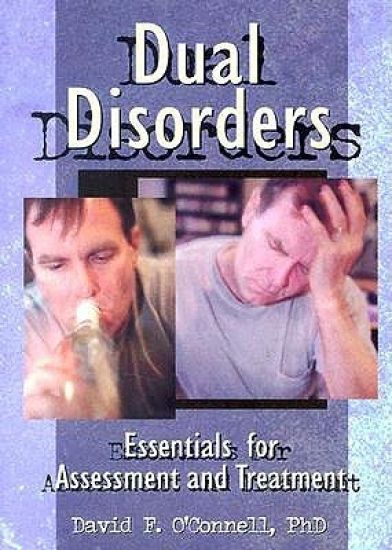
Dual Disorders: Essentials for Assessment and Treatment is a practical handbook for the assessment and clinical management of patients with addiction and psychiatric disorders. Addictions counselors, prevention specialists, and chemical dependency nurses will use this book to understand the nature of psychiatric disorders and uncover valuable guidelines on their treatment and management in the context of primary addictions treatment. It includes an introduction to the rationale and clinical approaches of cognitive therapy; a special section on psychiatric medications; and coverage of mood, anxiety, psychotic, cognitive, eating, and personality disorders.Dual Disorders: Essentials for Assessment and Treatment contains information that is vital and fundamental to effective treatment. It fills a void in the training and education of addictions counselors, helping you become a better diagnostician, develop better treatment plans, and communicate more meaningfully with psychiatrists and other mental health professionals. It will also increase your understanding of psychopathology and psychotherapy and decrease the frustration that can arise from a lack of understanding and planning. Specifics that you need to know to do this are thoroughly covered, including:elements of a comprehensive assessment of dual disorders clinical considerations in the treatment of the depressed addict pitfalls of treating patients with personality disorders the borderline patient--what to do and what not to do the psychopathic patient--anticipating and effectively addressing manipulation practical approaches in treating patients with eating disorders effective treatment of sexual trauma cognitive therapy approaches to treating dual disorders what to expect when your patient is referred to a psychiatrist for psychotropic medicationUnlike other books on this topic, Dual Disorders: Essentials for Assessment and Treatment is not a summary of research on dual diagnosis nor an overview of general programmatic considerations in treatment delivery. Rather, it is directed specifically to addictions counselors involved in the day-to-day treatment of dually diagnosed patients, providing detailed descriptions of the major psychiatric disorders as well as useful guidelines and treatment approaches.
Dual Disorders: Essentials for Assessment and Treatment is a practical handbook for the assessment and clinical management of patients with addiction and psychiatric disorders. Addictions counselors, prevention specialists, and chemical dependency nurses will use this book to understand the nature of psychiatric disorders and uncover valuable guidelines on their treatment and management in the context of primary addictions treatment. It includes an introduction to the rationale and clinical approaches of cognitive therapy; a special section on psychiatric medications; and coverage of mood, anxiety, psychotic, cognitive, eating, and personality disorders.Dual Disorders: Essentials for Assessment and Treatment contains information that is vital and fundamental to effective treatment. It fills a void in the training and education of addictions counselors, helping you become a better diagnostician, develop better treatment plans, and communicate more meaningfully with psychiatrists and other mental health professionals. It will also increase your understanding of psychopathology and psychotherapy and decrease the frustration that can arise from a lack of understanding and planning. Specifics that you need to know to do this are thoroughly covered, including:elements of a comprehensive assessment of dual disorders clinical considerations in the treatment of the depressed addict pitfalls of treating patients with personality disorders the borderline patient--what to do and what not to do the psychopathic patient--anticipating and effectively addressing manipulation practical approaches in treating patients with eating disorders effective treatment of sexual trauma cognitive therapy approaches to treating dual disorders what to expect when your patient is referred to a psychiatrist for psychotropic medicationUnlike other books on this topic, Dual Disorders: Essentials for Assessment and Treatment is not a summary of research on dual diagnosis nor an overview of general programmatic considerations in treatment delivery. Rather, it is directed specifically to addictions counselors involved in the day-to-day treatment of dually diagnosed patients, providing detailed descriptions of the major psychiatric disorders as well as useful guidelines and treatment approaches.
The classic text--thoroughly updated for 2002!Managing the Dually Diagnosed Patient: Current Issues and Clinical Approaches, Second Edition provides a wealth of useful information on effectively treating substance abusers who also suffer from mental illness. This second edition is updated to apply the latest information on the assessment, treatment, and management of co-existing disorders. It includes new information on special treatment considerations for women and adolescents and examines the restrictions placed on treatment in the age of managed care. Certain to enhance your knowledge about a highly misunderstood population, this updated volume addresses the theoretical, conceptual, and practical issues involved in caring for dually diagnosed patients. Treatment professionals from hospitals, medical schools, addiction treatment programs, and dual disorder units come together to examine the critical issues in the assessment and treatment of dually diagnosed individuals and offer an up-to-date review of the latest knowledge in research and rehabilitation.Managing the Dually Diagnosed Patient: Current Issues and Clinical Approaches, Second Edition delivers up-to-date information on: substance abuse and psychopathology psychodiagnostic assessment training issues for dealing with comorbidity how collaboration with other helping professionals can improve your treatment of dually diagnosed patients understanding and treating the psychiatric problems common within chemically dependent populations-affective disorders, anxiety disorders, personality disorders, and schizophreniaThis updated volume contains new case studies, treatment protocols, and a comprehensive overview of the existing literature on dual diagnosis assessment and treatment that integrates practical clinical considerations and approaches based on the authors’extensive experience. Add it to your reference shelf today!
The classic text--thoroughly updated for 2002!Managing the Dually Diagnosed Patient: Current Issues and Clinical Approaches, Second Edition provides a wealth of useful information on effectively treating substance abusers who also suffer from mental illness. This second edition is updated to apply the latest information on the assessment, treatment, and management of co-existing disorders. It includes new information on special treatment considerations for women and adolescents and examines the restrictions placed on treatment in the age of managed care. Certain to enhance your knowledge about a highly misunderstood population, this updated volume addresses the theoretical, conceptual, and practical issues involved in caring for dually diagnosed patients. Treatment professionals from hospitals, medical schools, addiction treatment programs, and dual disorder units come together to examine the critical issues in the assessment and treatment of dually diagnosed individuals and offer an up-to-date review of the latest knowledge in research and rehabilitation.Managing the Dually Diagnosed Patient: Current Issues and Clinical Approaches, Second Edition delivers up-to-date information on: substance abuse and psychopathology psychodiagnostic assessment training issues for dealing with comorbidity how collaboration with other helping professionals can improve your treatment of dually diagnosed patients understanding and treating the psychiatric problems common within chemically dependent populations-affective disorders, anxiety disorders, personality disorders, and schizophreniaThis updated volume contains new case studies, treatment protocols, and a comprehensive overview of the existing literature on dual diagnosis assessment and treatment that integrates practical clinical considerations and approaches based on the authors’extensive experience. Add it to your reference shelf today!
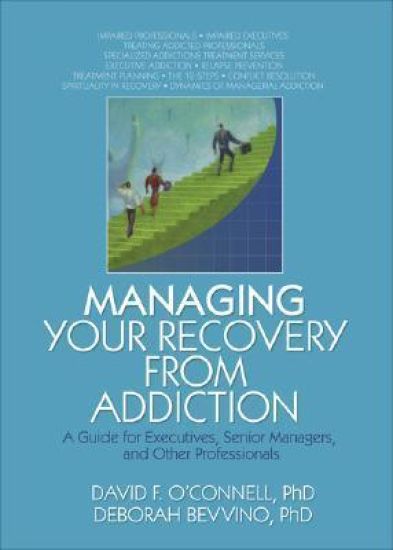
Learn how to get soberand stay that wayGetting and staying sober provides a special set of challenges for professional peoplephysicians, lawyers, corporate CEOs, accountants, and otherswho drive themselves to achieve and succeed in high-pressure surroundings. Managing Your Recovery from Addiction applies business approaches and ideas to the process of planning, implementing, and carrying out programs that really work for professionals in their first year of recovery. This unique self-help book provides guidance to impaired executives and professionals seeking recovery through inpatient and outpatient care, setting strategies for managing conflict, dealing with changing emotions and moods, and developing a solid spiritual program. Managing Your Recovery from Addiction helps professionals develop both short- and long-term programs for dealing with the challenges of maintaining sobriety. The book is based on the authors’ extensive experience treating impaired business personnel in a variety of settings, including the Caron Treatment Centers and Lifeworks of London, England, an internationally recognized addictions treatment center. Their rational, scientific approach complements ongoing counseling and other treatment approaches to help keep the professional’s career on track, saving the recovering individualand his or her employersignificant time and money due to lower productivity, arrested organizational development, absenteeism, and other problems associated with professional level addiction. Topics examined in Managing Your Recovery from Addiction include: a unique view of the 12 Steps for business personnel the dynamics of managerial addiction essential information to prevent relapse to active addiction coping with relapse basic tasks and fundamental recovery steps setting and tracking recovery goals recovery stages 10 tasks to recovery conflict management strategies spiritual development addictions treatment and much more!Managing Your Recovery from Addiction concludes with the O’Connell Dysfunctional Attitude Survey (ODAS). This book is vital for recovering executives and professionals and is an important resource for addictions and mental health treatment agencies that serve a professional population. It’s equally helpful for employee assistance program (EAP) personnel who regularly refer professionals for addictions treatment.
Learn how to get soberand stay that wayGetting and staying sober provides a special set of challenges for professional peoplephysicians, lawyers, corporate CEOs, accountants, and otherswho drive themselves to achieve and succeed in high-pressure surroundings. Managing Your Recovery from Addiction applies business approaches and ideas to the process of planning, implementing, and carrying out programs that really work for professionals in their first year of recovery. This unique self-help book provides guidance to impaired executives and professionals seeking recovery through inpatient and outpatient care, setting strategies for managing conflict, dealing with changing emotions and moods, and developing a solid spiritual program. Managing Your Recovery from Addiction helps professionals develop both short- and long-term programs for dealing with the challenges of maintaining sobriety. The book is based on the authors’ extensive experience treating impaired business personnel in a variety of settings, including the Caron Treatment Centers and Lifeworks of London, England, an internationally recognized addictions treatment center. Their rational, scientific approach complements ongoing counseling and other treatment approaches to help keep the professional’s career on track, saving the recovering individualand his or her employersignificant time and money due to lower productivity, arrested organizational development, absenteeism, and other problems associated with professional level addiction. Topics examined in Managing Your Recovery from Addiction include: a unique view of the 12 Steps for business personnel the dynamics of managerial addiction essential information to prevent relapse to active addiction coping with relapse basic tasks and fundamental recovery steps setting and tracking recovery goals recovery stages 10 tasks to recovery conflict management strategies spiritual development addictions treatment and much more!Managing Your Recovery from Addiction concludes with the O’Connell Dysfunctional Attitude Survey (ODAS). This book is vital for recovering executives and professionals and is an important resource for addictions and mental health treatment agencies that serve a professional population. It’s equally helpful for employee assistance program (EAP) personnel who regularly refer professionals for addictions treatment.
Readers have long puzzled over peculiar aspects of the Gospel of Mark: Jesus' attempts to conceal his deeds and his identity. William Wrede called these and similar motifs the "messianic secret" in Mark, and proposed that Mark had invented the "secret" to explain why the announcement of the arrival of the Son of God had not taken the world by storm. Other scholars have disagreed: perhaps Mark meant to highlight Jesus' divinity (after all, Jesus usually doesn't succeed in keeping himself hidden!)...or perhaps Mark wanted to tie Jesus' identity to his destiny on the cross as a warning to disciples that they may face persecution. Or, some have proposed, there simply is no single explanation for all of Jesus' bewildering behaviors in the Gospel. David F. Watson brings a new perspective to the "messianic secret," relying not on the Christological concerns of nineteenth- and twentieth-century theologians, but on recent insights into the role of honor and shame in ancient Mediterranean culture on the part of social scientists. Mark's portrayal of Jesus simultaneously shows his ability to provide favors and benefits to others and his refusal to put himself forward or draw attention to himself as a benefactor, thereby teaching that in God's kingdom it is not the great and powerful who are most highly regarded, but the humble. Mark's depiction of Jesus is part of a larger effort to promote a radically different understanding of honor within the family of faith. Contents Adobe Acrobat Document Introduction Adobe Acrobat Document Preface Adobe Acrobat Document Chapter 1 Adobe Acrobat Document Samples require Adobe Acrobat Reader Having trouble downloading and viewing PDF samples? "Taking up and refining insights from recent social-scientific exegetical research on secrecy in the Ancient Mediterranean world, Watson convincingly demonstrates that Wrede's Messianic Secret hypothesis is entirely culturally implausible. Concealment passages in Mark primarily reflect the day-to-day concerns about honor and shame among early believers who would have understood the Gospel to be addressing these issues." -John J. Pilch Georgetown University "David Watson has written a scholarly and very useful monograph. His soundings into the roles of secrecy in the ancient Mediterranean would further illustrate the value of anthropological history. Perhaps now Wrede's understanding of the 'Messianic Secret' in Mark may finally be laid to rest." -Bruce J. Malina Creighton University "Honor among Christians evinces perhaps the most thorough deployment of cultural anthropology for understanding Mark's Gospel that I know, and one of the most sophisticated. Watson convincingly argues that Wrede's durable prism of 'the Messianic secret' has occluded our exegetical vision, which may be corrected by adopting lenses more appropriate to Mark's own social world. The text, not a method, remains focal in Watson's analysis, which opens rather than shuts down a broad range of productive conversation with other interpretive approaches. This is a work of genuine importance, chiefly because it illumines how subversive the Second Gospel was in its own place and time-and remains so in our own." -C. Clifton Black Otto A. Piper Professor of Biblical Theology Princeton Theological Seminary
A truly interdisciplinary enterprise, The Paradox of Democratic Capitalism examines the interplay of ideas about politics, economics, and law in American society from the pre-revolutionary era to the eve of the September 11 attacks. David F. Prindle argues that while the United States was founded on liberalism, there is constant tension between two ideals of the liberal tradition: capitalism and democracy. Tracing the rise of natural law doctrine from neoclassical economics, Prindle examines the influence of economic development in late medieval society on the emergence of classical liberalism in early America and likens that influence to the impact of orthodox economics on contemporary American society. Prindle also evaluates political, economic, and legal ideas through the lens of his own beliefs. He warns against the emerging extremes of liberal ideology in contemporary American politics, where the right's definition of capitalism excludes interference from democratic publics and the left's definition of democracy excludes a market-based economy.
The deflation of the Enlightenment worldview and rise of the post-modern mood over the last decades has altered the relation of Christian faith to culture. How, in this new situation, should the church confess Christ? "Above All Earthly Powers" paints a picture of the West in all its complexity, brilliance, and emptiness.As David F. Wells masterfully depicts it, the postmodern ethos is relativistic, individualistic, therapeutic, and yet remarkably spiritual. By placing a premium on marketing rather than truth, the evangelical church is in danger of selling authentic engagement with culture for worldly success. Christians need to confess Christ as the center in a society lacking a center, as the sovereign in a world seemingly ruled by chance, and as the one who can give meaning in a nihilistic culture. "Above All Earthly Powers" issues a prophetic call to the evangelical church that it cannot afford to ignore.
In this sequel to the widely praised No Place for Truth, David Wells calls for the restoration of the church based on a fresh encounter with the transcendent God. By looking anew at the way God's transcendence and immanence have been taken captive by modern appetites, Wells argues convincingly for a reform of the evangelical world.
At its heart, the Protestant Reformation was about a deep, doctrinally shaped faith centered on God and his Word. But that historic, substantive faith is not faring so well in our contemporary Western context. In his 2008 book The Courage to Be Protestant, David Wells issued a summons to return to the historic Protestant faith, defined by the Reformation solas (grace, faith, and Scripture alone) and by a high regard for doctrine. In this thoroughly reworked second edition, Wells presents an updated look at the state of evangelicalism and the changes that have taken place since the original publication of his book. There is no better time than now to hear and heed Wells's clarion call to reclaim the historic, doctrinally serious Reformation faith in our fast-paced, technologically dominated, postmodern culture.