Kirjojen hintavertailu. Mukana 11 451 764 kirjaa ja 12 kauppaa.

Kirjahaku

Etsi kirjoja tekijän nimen, kirjan nimen tai ISBN:n perusteella.

1000 tulosta hakusanalla David Gates

Games of Chicken

Games of Chicken

David Schwartzman

Praeger Publishers Inc
1988
sidottu
Games of Chicken proposes basing nuclear weapons policies on both historical and analytical arguments. Schwartzman analyzes the trade-off between the aggression risk, which U.S. policy has sought to minimize, and the pre-emption risk, which has been ignored. This analysis is then applied to policy developments under each of the post-war U.S. presidents. The historical analysis also demonstrates the importance of the role of myths in the development of policy, most notably: the myth of the nuclear strategy expert; the evil empire myth; and the economic necessity myth. Finally, the author proposes a viable solution to the increasing build-up of nuclear weapons, one which would minimize the preemption risk.
The Open Gate

The Open Gate

David Adam

SPCK Publishing
2006
pokkari
The Open Gate by David Adam offers a book for both personal daily prayer and group weekly prayer as well as striking line drawings illustrations. The book is written Celtic tradition and is packed with Celtic prayers for growing in spirituality. The Open Gate will stimulate spiritual formation and is loosely structured for communion service featuring prayers of confession, intercession, thanksgiving and adoration. This book is ideal for new Christians, confirmations and those who want to find structure and refresh their daily devotions.
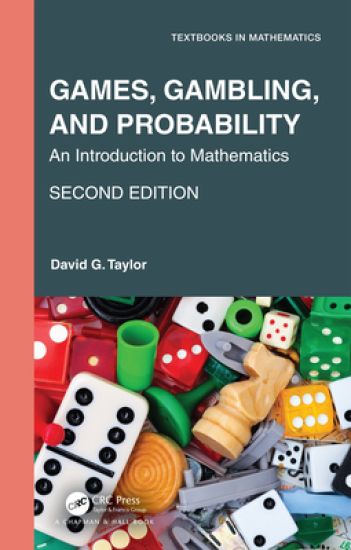
Games, Gambling, and Probability

Games, Gambling, and Probability

David G. Taylor

CRC Press
2021
sidottu
Many experiments have shown the human brain generally has very serious problems dealing with probability and chance. A greater understanding of probability can help develop the intuition necessary to approach risk with the ability to make more informed (and better) decisions. The first four chapters offer the standard content for an introductory probability course, albeit presented in a much different way and order. The chapters afterward include some discussion of different games, different "ideas" that relate to the law of large numbers, and many more mathematical topics not typically seen in such a book. The use of games is meant to make the book (and course) feel like fun! Since many of the early games discussed are casino games, the study of those games, along with an understanding of the material in later chapters, should remind you that gambling is a bad idea; you should think of placing bets in a casino as paying for entertainment. Winning can, obviously, be a fun reward, but should not ever be expected.Changes for the Second Edition: New chapter on Game Theory New chapter on Sports Mathematics The chapter on Blackjack, which was Chapter 4 in the first edition, appears later in the book. Reorganization has been done to improve the flow of topics and learning. New sections on Arkham Horror, Uno, and Scrabble have been added. Even more exercises were added! The goal for this textbook is to complement the inquiry-based learning movement. In my mind, concepts and ideas will stick with the reader more when they are motivated in an interesting way. Here, we use questions about various games (not just casino games) to motivate the mathematics, and I would say that the writing emphasizes a "just-in-time" mathematics approach. Topics are presented mathematically as questions about the games themselves are posed.Table of ContentsPreface1. Mathematics and Probability 2. Roulette and Craps: Expected Value 3. Counting: Poker Hands 4. More Dice: Counting and Combinations, and Statistics 5. Game Theory: Poker Bluffing and Other Games 6. Probability/Stochastic Matrices: Board Game Movement 7. Sports Mathematics: Probability Meets Athletics 8. Blackjack: Previous Methods Revisited 9. A Mix of Other Games 10. Betting Systems: Can You Beat the System? 11. Potpourri: Assorted Adventures in Probability Appendices Tables Answers and Selected Solutions Bibliography BiographyDr. David G. Taylor is a professor of mathematics and an associate dean for academic affairs at Roanoke College in southwest Virginia. He attended Lebanon Valley College for his B.S. in computer science and mathematics and went to the University of Virginia for his Ph.D. While his graduate school focus was on studying infinite dimensional Lie algebras, he started studying the mathematics of various games in order to have a more undergraduate-friendly research agenda. Work done with two Roanoke College students, Heather Cook and Jonathan Marino, appears in this book! Currently he owns over 100 different board games and enjoys using probability in his decision-making while playing most of those games. In his spare time, he enjoys reading, cooking, coding, playing his board games, and spending time with his six-year-old dog Lilly.
The Widening Gate

The Widening Gate

David Harris Sacks

University of California Press
1993
pokkari
From the Preface: Bristol is the city that John Cabot sailed from and Thomas Chatterton dreamed, that Hugh Latimer preached to and Oliver Cromwell seized, that entertained Parliaments in the Middle Ages and rioted for Reform in the nineteenth century. Since the Norman Conquest, it has always had an important place in English history, experiencing events and contributing to developments that stirred the nation. What follows is an account of its connection with one small piece of that history, the rise of the Atlantic economy in the early modern period and the accompanying transformation of English economic ideas and practices. But this book is not about economics alone. It is grounded on the belief that we can no more abstract the economy from politics, culture, and society than we can separate intentional human action from thought and judgment. It also rejects the notion that the life of a city like Bristol could ever be treated as a self-contained whole. Instead it views such cities as social organisms living in close relationship with their surroundings. What gives them their structure is the set of internal codes they carry. And what enables them to survive is their ability to adapt to or transform their environment, which itself is always changing.
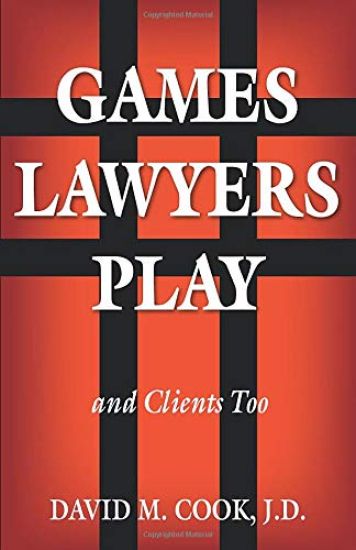
Games Lawyers Play...and Clients Too

Games Lawyers Play...and Clients Too

David M. Cook J. D.

White Tiger LLC
2019
nidottu
"He was lying to you, I said reading with my head down, half listening to her lawyer story in the background."A few years ago, those words slipped out - to a client no less - and have culminated in the writing of this funny, honest, andblunt assessment of the practice of law. David M. Cook shares the truth, the whole truth, and nothing but the truth about lawyers, clients and the realities of the legal system. You'll learn: - What the attorneys are really thinking when you meet them forthe first time - Why clients feel compelled to manipulate their stories andactions versus the reality - What's really going on with the judge and how he or she got there - About Bill Collectors - who are these people?- Why it can be so expensive to hire an attorney- What happens when your attorney isn't paying attention to your case- How to interview, hire and fire an attorney Experience an entertaining, compelling, and totally honest view of the legal system, legal clients, and the crazies attracted to the field. In Games Lawyers Play, you'll learn how you can become extremely effective in your interactions with a system that often lacks logic.
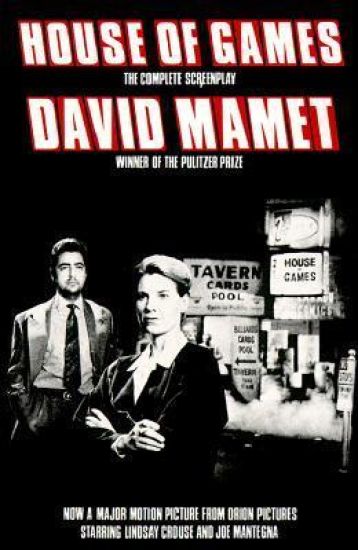
House of Games

House of Games

David Mamet

Grove Press / Atlantic Monthly Press
1994
nidottu
Playwright David Mamet's brilliant debut as a film director, House of Games is a psychological thriller in which a young woman psychiatrist falls prey to an elaborate and ingenious con game by one of her patients, who entraps her--with her own subconscious connivance--in a series of criminal escapades. It is a breathless roller-coaster ride of a movie that keeps springing one bizarre surprise after another, sustaining suspense with dazzling audacity. The unsuspecting audience is lured into a psychological and moral thicket of troubling implications, which bear the unmistakable imprint of Mamet's intensely personal vision.
Ella's Games

Ella's Games

David Bedford; Peter Kavanagh

Caboodle Books Limited
2017
pokkari
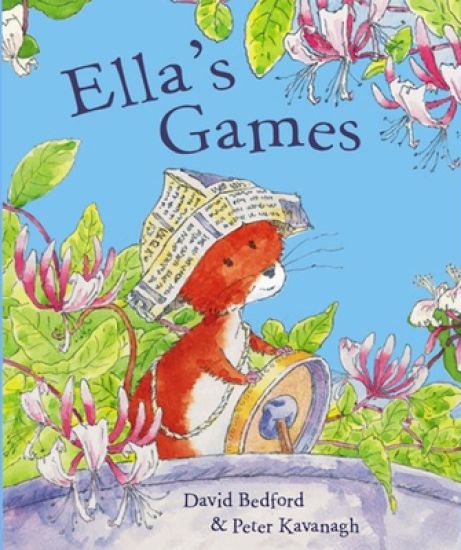
Ages 4 to 7 years Ella just wants to play with her three brothers, but they tell her she is too small and too scared to play with them - and what's more, she can't even climb. But Ella is not to be defeated and she makes up her own, truly amazing, games ...and the brothers soon realise their little sister is a great playmate, after all!
Theory of Games and Statistical Decisions

Theory of Games and Statistical Decisions

David Harold 1919- Blackwell; Meyer a. Girshick

Hassell Street Press
2021
sidottu
This work has been selected by scholars as being culturally important and is part of the knowledge base of civilization as we know it.This work is in the public domain in the United States of America, and possibly other nations. Within the United States, you may freely copy and distribute this work, as no entity (individual or corporate) has a copyright on the body of the work.Scholars believe, and we concur, that this work is important enough to be preserved, reproduced, and made generally available to the public. To ensure a quality reading experience, this work has been proofread and republished using a format that seamlessly blends the original graphical elements with text in an easy-to-read typeface.We appreciate your support of the preservation process, and thank you for being an important part of keeping this knowledge alive and relevant.
Theory of Games and Statistical Decisions

Theory of Games and Statistical Decisions

David Harold 1919- Blackwell; Meyer a. Girshick

Hassell Street Press
2021
nidottu
This work has been selected by scholars as being culturally important and is part of the knowledge base of civilization as we know it.This work is in the public domain in the United States of America, and possibly other nations. Within the United States, you may freely copy and distribute this work, as no entity (individual or corporate) has a copyright on the body of the work.Scholars believe, and we concur, that this work is important enough to be preserved, reproduced, and made generally available to the public. To ensure a quality reading experience, this work has been proofread and republished using a format that seamlessly blends the original graphical elements with text in an easy-to-read typeface.We appreciate your support of the preservation process, and thank you for being an important part of keeping this knowledge alive and relevant.
Games, Gambling, and Probability

Games, Gambling, and Probability

David G. Taylor

TAYLOR FRANCIS LTD
2024
nidottu
Many experiments have shown the human brain generally has very serious problems dealing with probability and chance. A greater understanding of probability can help develop the intuition necessary to approach risk with the ability to make more informed (and better) decisions. The first four chapters offer the standard content for an introductory probability course, albeit presented in a much different way and order. The chapters afterward include some discussion of different games, different "ideas" that relate to the law of large numbers, and many more mathematical topics not typically seen in such a book. The use of games is meant to make the book (and course) feel like fun! Since many of the early games discussed are casino games, the study of those games, along with an understanding of the material in later chapters, should remind you that gambling is a bad idea; you should think of placing bets in a casino as paying for entertainment. Winning can, obviously, be a fun reward, but should not ever be expected.Changes for the Second Edition: New chapter on Game Theory New chapter on Sports Mathematics The chapter on Blackjack, which was Chapter 4 in the first edition, appears later in the book. Reorganization has been done to improve the flow of topics and learning. New sections on Arkham Horror, Uno, and Scrabble have been added. Even more exercises were added! The goal for this textbook is to complement the inquiry-based learning movement. In my mind, concepts and ideas will stick with the reader more when they are motivated in an interesting way. Here, we use questions about various games (not just casino games) to motivate the mathematics, and I would say that the writing emphasizes a "just-in-time" mathematics approach. Topics are presented mathematically as questions about the games themselves are posed.Table of ContentsPreface1. Mathematics and Probability 2. Roulette and Craps: Expected Value 3. Counting: Poker Hands 4. More Dice: Counting and Combinations, and Statistics 5. Game Theory: Poker Bluffing and Other Games 6. Probability/Stochastic Matrices: Board Game Movement 7. Sports Mathematics: Probability Meets Athletics 8. Blackjack: Previous Methods Revisited 9. A Mix of Other Games 10. Betting Systems: Can You Beat the System? 11. Potpourri: Assorted Adventures in Probability Appendices Tables Answers and Selected Solutions Bibliography BiographyDr. David G. Taylor is a professor of mathematics and an associate dean for academic affairs at Roanoke College in southwest Virginia. He attended Lebanon Valley College for his B.S. in computer science and mathematics and went to the University of Virginia for his Ph.D. While his graduate school focus was on studying infinite dimensional Lie algebras, he started studying the mathematics of various games in order to have a more undergraduate-friendly research agenda. Work done with two Roanoke College students, Heather Cook and Jonathan Marino, appears in this book! Currently he owns over 100 different board games and enjoys using probability in his decision-making while playing most of those games. In his spare time, he enjoys reading, cooking, coding, playing his board games, and spending time with his six-year-old dog Lilly.
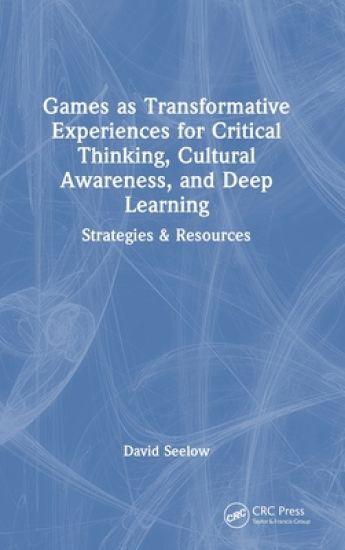
Games as Transformative Experiences for Critical Thinking, Cultural Awareness, and Deep Learning
All games are potentially transformative experiences because they engage the player in dynamic action. When repurposed in an educational context, even highly popular casual games played online to pass the time can engage players in a way that deepens learning. Games as Transformative Experiences for Critical Thinking, Cultural Awareness, and Deep Learning: Strategies & Resources examines the learning value of a wide variety of games across multiple disciplines.Organized just like a well-made game, the book is divided into four parts highlighting classroom experiences, community and culture, virtual learning, and interdisciplinary instruction. The author crosses between the high school and college classroom and addresses a range of disciplines, both online and classroom practice, the design of curriculum, and the transformation of assessment practices.In addition to a wealth of practical exercises, resources, and lesson ideas, the book explains how to use a wide and diverse range of games from casual to massively multiplayer online games for self-improvement as well as classroom situations.
Games as Transformative Experiences for Critical Thinking, Cultural Awareness, and Deep Learning
All games are potentially transformative experiences because they engage the player in dynamic action. When repurposed in an educational context, even highly popular casual games played online to pass the time can engage players in a way that deepens learning. Games as Transformative Experiences for Critical Thinking, Cultural Awareness, and Deep Learning: Strategies & Resources examines the learning value of a wide variety of games across multiple disciplines.Organized just like a well-made game, the book is divided into four parts highlighting classroom experiences, community and culture, virtual learning, and interdisciplinary instruction. The author crosses between the high school and college classroom and addresses a range of disciplines, both online and classroom practice, the design of curriculum, and the transformation of assessment practices.In addition to a wealth of practical exercises, resources, and lesson ideas, the book explains how to use a wide and diverse range of games from casual to massively multiplayer online games for self-improvement as well as classroom situations.
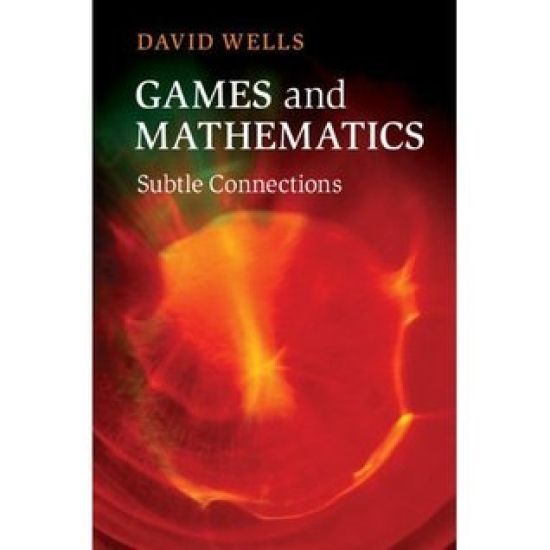
Games and Mathematics

Games and Mathematics

David Wells

Cambridge University Press
2012
sidottu
The appeal of games and puzzles is timeless and universal. In this unique book, David Wells explores the fascinating connections between games and mathematics, proving that mathematics is not just about tedious calculation but imagination, insight and intuition. The first part of the book introduces games, puzzles and mathematical recreations, including knight tours on a chessboard. The second part explains how thinking about playing games can mirror the thinking of a mathematician, using scientific investigation, tactics and strategy, and sharp observation. Finally the author considers game-like features found in a wide range of human behaviours, illuminating the role of mathematics and helping to explain why it exists at all. This thought-provoking book is perfect for anyone with a thirst for mathematics and its hidden beauty; a good high school grounding in mathematics is all the background that is required, and the puzzles and games will suit pupils from 14 years.
Games and Mathematics

Games and Mathematics

David Wells

Cambridge University Press
2012
pokkari
The appeal of games and puzzles is timeless and universal. In this unique book, David Wells explores the fascinating connections between games and mathematics, proving that mathematics is not just about tedious calculation but imagination, insight and intuition. The first part of the book introduces games, puzzles and mathematical recreations, including knight tours on a chessboard. The second part explains how thinking about playing games can mirror the thinking of a mathematician, using scientific investigation, tactics and strategy, and sharp observation. Finally the author considers game-like features found in a wide range of human behaviours, illuminating the role of mathematics and helping to explain why it exists at all. This thought-provoking book is perfect for anyone with a thirst for mathematics and its hidden beauty; a good high school grounding in mathematics is all the background that is required, and the puzzles and games will suit pupils from 14 years.
Theory of Games and Statistical Decisions: Wiley Publication in Statistics

Theory of Games and Statistical Decisions: Wiley Publication in Statistics

David Blackwell; Meyer a. Girshick

Literary Licensing, LLC
2013
sidottu
Theory of Games and Statistical Decisions is a comprehensive book written by David Blackwell and published by Wiley Publication in Statistics. The book discusses the mathematical theory of games and its applications in statistical decision-making. It covers a wide range of topics, including the theory of two-person zero-sum games, non-zero-sum games, and cooperative games. The book also explores the concepts of Bayesian decision theory, statistical decision theory, and game theory in social sciences. The book is divided into four parts, each of which covers a different aspect of the theory of games and statistical decisions. Part I introduces the basic concepts and principles of game theory, including the concept of Nash equilibrium, mixed strategies, and the minimax theorem. Part II focuses on non-zero-sum games, including the bargaining problem, the prisoner's dilemma, and the tragedy of the commons. Part III discusses cooperative games, including the Shapley value, the core, and the nucleolus. Finally, Part IV explores the applications of game theory in social sciences, including political science, economics, and sociology. Overall, Theory of Games and Statistical Decisions is an essential resource for students and researchers interested in the theory of games and its applications in statistical decision-making. It provides a comprehensive overview of the mathematical theory of games and its practical applications, making it an excellent reference for anyone interested in this field.This scarce antiquarian book is a facsimile reprint of the old original and may contain some imperfections such as library marks and notations. Because we believe this work is culturally important, we have made it available as part of our commitment for protecting, preserving, and promoting the world's literature in affordable, high quality, modern editions, that are true to their original work.