Kirjojen hintavertailu. Mukana 11 342 296 kirjaa ja 12 kauppaa.

Kirjahaku

Etsi kirjoja tekijän nimen, kirjan nimen tai ISBN:n perusteella.

1000 tulosta hakusanalla David J. Fitzpatrick

Cosmic Clouds 3-D

Cosmic Clouds 3-D

David J. Eicher

MIT Press
2020
sidottu
Amazing 3-D images take readers inside the birth and death of stars.This visually amazing volume, with text and 3-D images, takes readers inside the birthplace of stars-the cosmic clouds called nebulae. Nebulae (from the Latin for "cloud" or "fog") are stellar nurseries, frequently intermingled with clusters of young stars. Seen in the night sky, they glow, energized by the new stars within and around them. Cosmic Clouds 3-D offers hundreds of magnificent images of nebulae captured by ground-based and space telescopes. Along with the high-resolution views of nebulae are unique stereo views that show the nebulae in three dimensions.As we observe the birth of stars in these great clouds of gas, we are peering into the world of infant suns, seeing a process that for our own Sun took place some 4.6 billion years ago. The story of elements in nature, of why we are here, of our cosmic roots, is strongly tied to the story of stars in our galaxy and universe. And that means exploring the lives of stars, how stars come to be, what happens during their lifetimes, and how they, too-like humans-eventually die. We may not all know it, but we are part of the biggest recycling program that exists-the birth, life, and death of stars. A 3-D viewer, designed by astrophysicist (and lead guitarist with the rock group Queen) Brian May, is included with the book.

Principles of Data Mining

Principles of Data Mining

David J. Hand; Heikki Mannila; Padhraic Smyth

Bradford Books
2001
sidottu
The first truly interdisciplinary text on data mining, blending the contributions of information science, computer science, and statistics.The growing interest in data mining is motivated by a common problem across disciplines: how does one store, access, model, and ultimately describe and understand very large data sets? Historically, different aspects of data mining have been addressed independently by different disciplines. This is the first truly interdisciplinary text on data mining, blending the contributions of information science, computer science, and statistics.The book consists of three sections. The first, foundations, provides a tutorial overview of the principles underlying data mining algorithms and their application. The presentation emphasizes intuition rather than rigor. The second section, data mining algorithms, shows how algorithms are constructed to solve specific problems in a principled manner. The algorithms covered include trees and rules for classification and regression, association rules, belief networks, classical statistical models, nonlinear models such as neural networks, and local "memory-based" models. The third section shows how all of the preceding analysis fits together when applied to real-world data mining problems. Topics include the role of metadata, how to handle missing data, and data preprocessing.
Adapting Minds

Adapting Minds

David J. Buller

MIT Press
2006
pokkari
Was human nature designed by natural selection in the Pleistocene epoch? The dominant view in evolutionary psychology holds that it was-that our psychological adaptations were designed tens of thousands of years ago to solve problems faced by our hunter-gatherer ancestors. In this provocative and lively book, David Buller examines in detail the major claims of evolutionary psychology-the paradigm popularized by Steven Pinker in The Blank Slate and by David Buss in The Evolution of Desire-and rejects them all. This does not mean that we cannot apply evolutionary theory to human psychology, says Buller, but that the conventional wisdom in evolutionary psychology is misguided.Evolutionary psychology employs a kind of reverse engineering to explain the evolved design of the mind, figuring out the adaptive problems our ancestors faced and then inferring the psychological adaptations that evolved to solve them. In the carefully argued central chapters of Adapting Minds, Buller scrutinizes several of evolutionary psychology's most highly publicized "discoveries," including "discriminative parental solicitude" (the idea that stepparents abuse their stepchildren at a higher rate than genetic parents abuse their biological children). Drawing on a wide range of empirical research, including his own large-scale study of child abuse, he shows that none is actually supported by the evidence.Buller argues that our minds are not adapted to the Pleistocene, but, like the immune system, are continually adapting, over both evolutionary time and individual lifetimes. We must move beyond the reigning orthodoxy of evolutionary psychology to reach an accurate understanding of how human psychology is influenced by evolution. When we do, Buller claims, we will abandon not only the quest for human nature but the very idea of human nature itself.
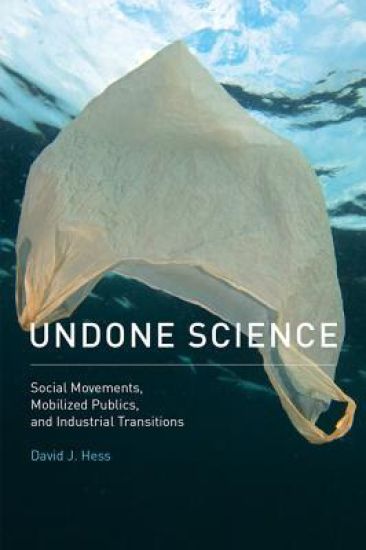
Undone Science

Undone Science

David J. Hess

MIT Press
2016
pokkari
A theoretical integration of science and technology studies and social movement studies that finds both common ground and "undone" research.As the fields of social movement studies (SMS) and science and technology studies (STS) have diversified in topical focus, they have moved closer to each other. SMS has turned toward the study of nonstate targets and institutionalized repertoires of action, just as STS has turned to expertise and publics. In Undone Science, David Hess argues that a theoretical integration of core concepts in the two fields is now possible, and he presents just such a synthesis. Hess focuses on industrial transition movements-mobilized counterpublics of activists, advocates, entrepreneurs, and other agents of change-and examines several areas of common ground between the two fields relevant to these movements. His account reveals the problem of "undone science"-areas of research potentially valuable to the goals of industrial transition movements that have been systematically ignored. Each chapter begins with a problem in SMS, discusses the relevant STS literature, describes new concepts and findings that have emerged, and offers applications to examples that range from nanotechnology and climate science denialism to conflicts based on race, class, and gender. Topics include the epistemic dimension of the political opportunity structure, networks of counterpublic knowledge, and regime resistance in industrial transition.
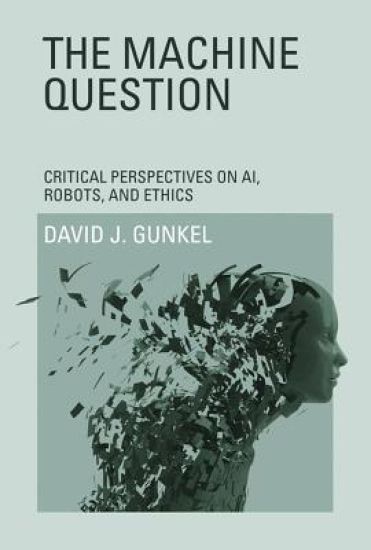
The Machine Question

The Machine Question

David J. Gunkel

MIT Press
2017
pokkari
An investigation into the assignment of moral responsibilities and rights to intelligent and autonomous machines of our own making.One of the enduring concerns of moral philosophy is deciding who or what is deserving of ethical consideration. Much recent attention has been devoted to the "animal question"-consideration of the moral status of nonhuman animals. In this book, David Gunkel takes up the "machine question": whether and to what extent intelligent and autonomous machines of our own making can be considered to have legitimate moral responsibilities and any legitimate claim to moral consideration.The machine question poses a fundamental challenge to moral thinking, questioning the traditional philosophical conceptualization of technology as a tool or instrument to be used by human agents. Gunkel begins by addressing the question of machine moral agency: whether a machine might be considered a legitimate moral agent that could be held responsible for decisions and actions. He then approaches the machine question from the other side, considering whether a machine might be a moral patient due legitimate moral consideration. Finally, Gunkel considers some recent innovations in moral philosophy and critical theory that complicate the machine question, deconstructing the binary agent-patient opposition itself.Technological advances may prompt us to wonder if the science fiction of computers and robots whose actions affect their human companions (think of HAL in 2001: A Space Odyssey) could become science fact. Gunkel's argument promises to influence future considerations of ethics, ourselves, and the other entities who inhabit this world.
Deconstruction

Deconstruction

David J. Gunkel

MIT Press
2021
nidottu
An accessible introduction to a concept often considered impossibly abstruse, demonstrating its power as a conceptual tool in the twenty-first century. This volume in the MIT Press Essential Knowledge series offers a clear and concise introduction to a topic often considered difficult and abstruse: deconstruction. David Gunkel sorts out the concept, terminology, and practices of deconstruction, not to defend academic orthodoxy, or to disseminate the thought of Jacques Derrida--the fabricator of the neologism and progenitor of the concept--but to provide readers with a powerful conceptual tool for the twenty-first century. Gunkel explains that deconstruction is not simply the opposite of construction--the deconstructed jacket hanging in your closet is not, strictly speaking, accurately named--or synonymous with destruction. It is a way to think beyond the construction/destruction dichotomy and all other conceptual dichotomies and logical oppositions. After describing what deconstruction is not, and developing an abstract and schematic characterization derived from Derrida, Gunkel offers examples in (rather than of) deconstruction, including logocentrism (the speech/writing dichotomy) and virtuality (the ruling philosophical binary of real/appearance), remix (the original/copy distinction), and the posthuman figure of the cyborg (the human/machine conceptual pairing). Finally, Gunkel discusses the costs and benefits of deconstruction, considering the many things deconstruction is good for and identifying potential problems, including Eurocentrism, relativism, difficulties in communicating the concept, and reappropriation.
Robot Rights

Robot Rights

David J. Gunkel

MIT PRESS LTD
2024
pokkari
A provocative attempt to think about what was previously considered unthinkable: a serious philosophical case for the rights of robots. We are in the midst of a robot invasion, as devices of different configurations and capabilities slowly but surely come to take up increasingly important positions in everyday social reality--self-driving vehicles, recommendation algorithms, machine learning decision making systems, and social robots of various forms and functions. Although considerable attention has already been devoted to the subject of robots and responsibility, the question concerning the social status of these artifacts has been largely overlooked. In this book, David Gunkel offers a provocative attempt to think about what has been previously regarded as unthinkable: whether and to what extent robots and other technological artifacts of our own making can and should have any claim to moral and legal standing. In his analysis, Gunkel invokes the philosophical distinction (developed by David Hume) between "is" and "ought" in order to evaluate and analyze the different arguments regarding the question of robot rights. In the course of his examination, Gunkel finds that none of the existing positions or proposals hold up under scrutiny. In response to this, he then offers an innovative alternative proposal that effectively flips the script on the is/ought problem by introducing another, altogether different way to conceptualize the social situation of robots and the opportunities and challenges they present to existing moral and legal systems.
Spirits and Scientists

Spirits and Scientists

David J. Hess

Pennsylvania State University Press
1991
sidottu
Brazilian Spiritism (espiritismo, kardecismo) is an important middle-class religious movement whose followers believe in communication with the dead via spirit mediums and in healing illnesses by means of spiritual therapies. Unlike Anglo-Saxon Spiritualists, Brazilian Spiritists count among their number a well-developed and institutionalized intellectual elite that has reinterpreted northern hemisphere parapsychology and developed its own alternative medicine and sociology of religion. As a result, the mediation between popular religion (especially Afro-Brazilian religious practices) and the orthodoxies of the universities, the state, and the medical profession.Situating Spiritist intellectual thought in what he calls a broader ideological arena, Hess examines Spiritism in the context of religion, science, political ideology, medicine, and even the social sciences. Hess challenges the legacy of French sociologist Roger Bastide, who saw in Spiritism an elitist, middle-class ideology. In the process, Spirits and Scientists provides a new approach to middle-class religious movements in Latin America.
Seeking Ezekiel

Seeking Ezekiel

David J. Halperin

Pennsylvania State University Press
1993
pokkari
In Seeking Ezekiel, David J. Halperin argues that the biblical Book of Ezekiel provides substantial information about its author's psychology and reveals his personality in considerable depth. Psychoanalytic investigation of the book yields a coherent portrait of its author: a marvelously gifted yet profoundly disturbed man, tormented by inner conflicts over his sexual longings and fears.Ezekiel, Halperin argues, was dominated by a pathological dread and loathing of female sexuality. He expresses this emotional stance in the symbolic language of dreams (his vision of a temple polluted by idolatry); in a thin disguise of historical allegory (his obscenely graphic representations of Israel and Jerusalem as promiscuous wives); and in his self-described behavior at his wife's death.Ezekiel also demonstrates a deeply ambivalent attitude toward a dominant male figure. Normally, he projects the positive elements of his ambivalence onto his God, its negative elements onto other males. Yet the reverse can also take place, and this does much to explain the disturbing cruelty and arbitrariness of Ezekiel's God. Any psychological study of a man dead for 2500 years will run into formidable methodological difficulties. Halperin establishes the legitimacy of his approach by arguing that it permits the solution of a wide range of long-recognized textual problems. The implications of Halperin's study extend far beyond the boundaries of Biblical scholarship. The sexual pathology that he attributes to Ezekiel has afflicted humanity for most of its history, tainting the relations of men and women the world over. Ezekiel's powerful influence on posterity has done its part in strengthening the grip of this pathology. By understanding Ezekiel, people may come to a better understanding of his sickness within themselves and thus eventually come to find healing.
Spirits and Scientists

Spirits and Scientists

David J. Hess

Pennsylvania State University Press
1991
pokkari
Brazilian Spiritism (espiritismo, kardecismo) is an important middle-class religious movement whose followers believe in communication with the dead via spirit mediums and in healing illnesses by means of spiritual therapies. Unlike Anglo-Saxon Spiritualists, Brazilian Spiritists count among their number a well-developed and institutionalized intellectual elite that has reinterpreted northern hemisphere parapsychology and developed its own alternative medicine and sociology of religion. As a result, the mediation between popular religion (especially Afro-Brazilian religious practices) and the orthodoxies of the universities, the state, and the medical profession.Situating Spiritist intellectual thought in what he calls a broader ideological arena, Hess examines Spiritism in the context of religion, science, political ideology, medicine, and even the social sciences. Hess challenges the legacy of French sociologist Roger Bastide, who saw in Spiritism an elitist, middle-class ideology. In the process, Spirits and Scientists provides a new approach to middle-class religious movements in Latin America.
The Jewish Agenda

The Jewish Agenda

David J. Schnall

Praeger Publishers Inc
1987
sidottu
Within a broad-based and comprehensive analysis, author David Schnall examines ten major issues facing the Jewish community today. The focus of this timely book shifts easily from the domestic to the international, from the political to the religious developments in the Jewish community as it relates to American Jewry, the State of Israel, and Zionism. Professionals in communal service, scholars of Jewish studies, and the interested lay reader will find this important new volume to be both accessible and enlightening.
Killing Game

Killing Game

David J Harland

Praeger Publishers Inc
1994
sidottu
In 1989 the international community banned the international trade in elephant ivory; three years later the ban was renewed. Dr. Harland believes the ivory ban is the most controversial--and most misunderstood--piece of international wildlife law ever made. His book, Killing Game, seeks to unravel some of the misunderstandings, and it attempts to determine if international law can be an effective tool for the conservation of wildlife and if international law has served the African elephant well.Part I is an extended investigation of how and why international law is used so badly by the conservation community, and how it could be used better. Here Dr. Harland focuses on the problem of which laws are complied with and which are not; in the process he shows the importance of factors of compliance in determining the degree to which laws will be followed. In Part II he examines the status of the African elephant in international law in light of these factors. This book will be of interest to those involved in formulating international law, as well as the conservation community in general.
Too Much Liberty?

Too Much Liberty?

David J. Saari

Praeger Publishers Inc
1995
sidottu
David Saari provides an extended essay on the nature of freedom in contemporary America, its historical roots, and its present-day manifestations. Drawing on the fields of history, law, politics, business, and philosophy, this wide-ranging study examines three facets of freedom—national freedom, freedom from the state, and freedom within the state—as they have developed in American law, politics, and society. Each of these facets is carefully defined and then applied to such contemporary issues as authority, property, equality, justice, and privacy.
Too Much Liberty?

Too Much Liberty?

David J. Saari

Praeger Publishers Inc
1995
nidottu
David Saari provides an extended essay on the nature of freedom in contemporary America, its historical roots, and its present-day manifestations. Drawing on the fields of history, law, politics, business, and philosophy, this wide-ranging study examines three facets of freedom—national freedom, freedom from the state, and freedom within the state—as they have developed in American law, politics, and society. Each of these facets is carefully defined and then applied to such contemporary issues as authority, property, equality, justice, and privacy.
Preventing Alcohol Abuse

Preventing Alcohol Abuse

David J. Hanson

Praeger Publishers Inc
1995
sidottu
The prevailing neo-prohibitionist approach to reducing alcohol problems is generally ineffective, often counter-productive, and is doomed to failure. This work is to promote an effective alternative strategy to reducing the incidence of alcohol problems. The thesis is that a socio-cultural approach would be effective, and therefore, that public policy should promote this approach. This work is expected to be controversial, and is hoped to form a pattern for reorientation of the current approach to alcohol abuse. Professionals in drug abuse education and treatment along with public policy makers and students in appropriate courses should be interested in the work.
Close Protection

Close Protection

David J. Cox

Praeger Publishers Inc
2000
sidottu
The evolution of elite personal protection units—also known as close protection units—within the former Soviet Union is one of the least examined, yet crucial political developments in this region. Due to the often-violent environment in which the political leaders of this region now operate, the need for these special military units is obvious. This study examines the similarities between these the current units and those of the Soviet past and finds that, in spite of the highly unstable nature of politics in post-communist Russia, these elite units have not intervened to the degree that many might have expected. They have, however, played a significant political role throughout the region. These close protection forces may very well determine the success or failure of the democratization process now underway. On the other hand, establishing a Praetorian Guard within the very walls of the Kremlin may in itself portend an end to democracy. Ultimately, a complete understanding of future politics in the former Soviet Union is impossible without acknowledging the role that these modern Praetorians play in the civil-military balance.
Screens Fade to Black

Screens Fade to Black

David J. Leonard

Praeger Publishers Inc
2006
sidottu
The triple crown of Oscars awarded to Denzel Washington, Halle Berry, and Sidney Poitier on a single evening in 2002 seemed to mark a turning point for African Americans in cinema. Certainly it was hyped as such by the media, eager to overlook the nuances of this sudden embrace. In this new study, author David Leonard uses this event as a jumping-off point from which to discuss the current state of African-American cinema and the various genres that currently compose it. Looking at such recent films as Love and Basketball, Antwone Fisher, Training Day, and the two Barbershop films—all of which were directed by black artists, and most of which starred and were written by blacks as well—Leonard examines the issues of representation and opportunity in contemporary cinema.In many cases, these films-which walk a line between confronting racial stereotypes and trafficking in them-made a great deal of money while hardly playing to white audiences at all. By examining the ways in which they address the American Dream, racial progress, racial difference, blackness, whiteness, class, capitalism and a host of other issues, Leonard shows that while certainly there are differences between the grotesque images of years past and those that define today's era, the consistency of images across genre and time reflects the lasting power of racism, as well as the black community's response to it.