The Year Book of Vascular Surgery brings you abstracts of the articles that reported the year's breakthrough developments in vascular surgery, carefully selected from more than 500 journals worldwide. Expert commentaries evaluate the clinical importance of each article and discuss its application to your practice. There's no faster or easier way to stay informed! Hot topics include: Coronary Disease, Epidemiology, Vascular Laboratory and Imaging, Carotid and Cerebrovascular Disease, and Grafts and Graft Complications.
Shape-Memory Polymer Device Design discusses the latest shape-memory polymers and the ways they have started to transition out of the academic laboratory and into devices and commercial products. Safranski introduces the properties of shape-memory polymers and presents design principles for designing and manufacturing, providing a guide for the R&D engineer/scientist and design engineer to add the shape memory effect of polymers into their design toolbox. This is the first book to focus on applying basic science knowledge to design practical devices, introducing the concept of shape-memory polymers, the history of their use, and the range of current applications. It details the specific design principles for working with shape-memory polymers that don't often apply to mechanically inactive materials and products. Material selection is thoroughly discussed because chemical structure and thermo-mechanical properties are intrinsically linked to shape-memory performance. Further chapters discuss programming the temporary shape and recovery through a variety of activation methods with real world examples. Finally, current devices across a variety of markets are highlighted to show the breadth of possible applications.
Fun, fast, and in full color, this portable resource is a perfect study tool covering everything you need to know for a solid foundation in neuroscience and neuroanatomy. This quick review tool allows you to test your knowledge on the go-when and where it’s convenient. More than 220 flash cards with Netter illustrations on the front and answers to labels and explanatory text on the back emphasize key neuroscience principles and clinical applications for an efficient yet in-depth review. Cards provide clinically important correlations in neuroanatomy, cell biology, and neurophysiology; extensive imaging, cross-sectional anatomy, and vascular information; and clinical pearls and helpful summaries of the results of neurological damage or injuries on the back of each card New neuropathology coverage from traumatic brain injury and coma to bipolar disorder and schizophrenia New access to cross-sectional anatomy cards online Coverage of timely topics such as cannabinoids, opioids, PTSD, OCD, and aging and the nervous system Pre-punched holes and convenient binding ring allow you to carry selected groups of flash cards with you anywhere A perfect study aid and complement to Dr. Felton’s related titles: Netter’s Atlas of Neuroscience, 3rd Edition (to which the cards are cross-referenced), and Netter’s Neuroscience Coloring Book Enhanced eBook version included with purchase. Your enhanced eBook allows you to access all of the text, figures, and references from the book on a variety of devices
Ideal for any student of neuroanatomy, neuroscience, or other medical or science disciplines involving the nervous system, Netter's Atlas of Neuroscience, 4th Edition, is a highly visual, clinically oriented exploration of structure and function-from neurons to motor and sensory systems to global neural function and dysfunction. This award-winning text approaches this complex topic from three perspectives: Neuroscience Overview, Regional Neuroscience, and Systemic Neuroscience. Illustrations by Frank H. Netter, MD, and others following in his tradition are framed by concise, expert text and accompanied by neuroimaging, photomicrographs, and summary diagrams. Combines Netter and Netter-like illustrations, and beautiful molecular and cellular illustrations, with succinct text and clinical points, delivering the essential information students need for both basic science and clinical programs. Presents organizational and summarized neurosciences information, enabling students to review complex concepts, functions, and systems in several contexts. Provides an overview of the basic features of cellular and molecular neuroscience; peripheral nerves, spinal cord, brain stem and cerebellum, and the brain; reviews the neural vasculature, meninges and cerebrospinal fluid, and developmental neuroscience. Highlights cross-sectional spinal cord and brain stem anatomy and side-by-side comparisons of Netter illustrations and MRIs of axial and coronal brain sections, including extensive clinical correlations. Focuses on foundational concepts as well as clinically relevant discussions. Expands basic neural connectivity and functional roles of limbic structures and behavior. Reviews Global Neural Functions and Disorders in a brand new chapter with more than a dozen new art plates. Includes many new art plates covering current topics including neural foundations of addiction, dementias, several neuropsychiatric disorders, consciousness, coma and its assessment, sleep regulation, postnatal and adult neurogenesis, endogenous opioid systems, endogenous cannabinoid systems, and others. Enhanced eBook version included with purchase. Your enhanced eBook allows you to access all of the text, figures, and references from the book on a variety of devices.
The Vietnam War endured for thirty years, cost billions of dollars, and resulted in thousands of Vietnamese, French, and American deaths. Massive American military intervention in Vietnam embroiled America in protests, placed enormous strains on the western alliance, and altered U.S. relations with the Soviet Union and China. David L. Anderson's concise overview critiques U.S. errors in magnifying the strategic importance of South-east Asia in the Cold War and in underestimating the strength of the Vietnamese communist movement.
Re-examines the primary source for this history, the Ecclesiastical History of the fourth-century Bishop Eusebius of Caesarea, in the light of Hellenistic political thought. This title describes the consequences of the emperor Constantine's tremendous achievement in transforming orthodox, Catholic Christianity into imperial Christianity.
This volume focuses on alternatives for non-metropolitan economic development in the new international economic climate. It provides critical reviews of popular employment-generation alternatives for rural areas.
Becoming a Buddhist monk in Thailand has for a long time provided the opportunity for access to a good education and to social advancement, both to bright, poor rural youths and to members of the urban elite whose youth often become monks for a few months as a rite of passage into adulthood. Moreover, although women are not allowed to become fully fledged monks, recent developments have encouraged a special status akin to nuns for many devout Thai Buddhist women. All this has resulted in large numbers of well-educated, well-motivated Buddhist religious people, keen both to engage in religious contemplation and also determined to contribute to this-worldly social, economic, educational and medical development goals. This book, by a leading authority on the subject, considers the role of Thai Buddhist religious people in development within Thailand. It discusses how Thai Buddhism has evolved philosophically and in its organisation to allow this, examines various examples of Buddhist people's engagement in development projects, and assesses how the situation is likely to unfold going forward. In addition, the book considers the relationship between science and religion in Thai Buddhism and also some aspects of the parallel situation in Sri Lanka.
This book provides an understanding of how the new economic environment works out at the ground level of the rural economy and community and of the policy initiatives. It presents an overview of both the potentials for and the problems with economic adaptation alternatives for nonmetropolitan areas.
How did Zhao Ziyang rise through the provincial apparatus of the Chinese Communist Party to become premier in 1980? How did he develop the policies of economic reform in the provinces that have now become national policy? What does Zhao Ziyang’s professional development indicate about upward elite mobility in the Chinese political system? These are the central questions the author addresses in this political biography, tracing Zhao Ziyang’s career in detail from his youth, through the Anti-Japanese War, the 1949 revolution, land reform, a series of political and economic campaigns during the 1950s and 1960s, the Cultural Revolution, political rehabilitation, and the “Sichuan Experience.” Mr. Shambaugh goes beyond a chronological account to elucidate Zhao’s job responsibilities and performance, political and economic philosophy, survival strategies, and behavior during thirty tumultous years in provincial politics. Bringing forth much new information drawn extensively from primary source materials, he also provides insights into the functioning of the post-1949 Chinese political system, especially the interplay between central and provincial politics.
This book provides the scope and complexity of Freud's contributions and emphasizes the wide proliferation of the Lacanian approach. It describes psychoanalytical theories, and is helpful for the readers as a stimulus to independent investigation and critical thought.
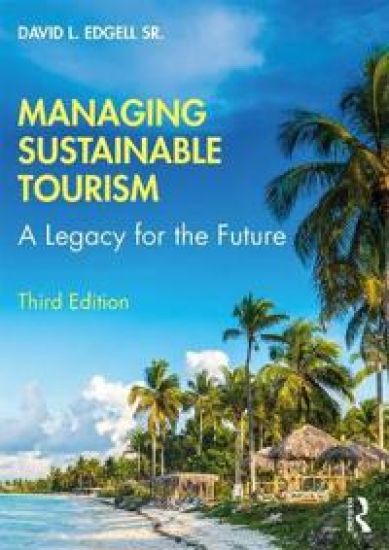
Managing Sustainable Tourism tackles the tough issues within the tourism industry, such as impacts on the natural and built environment and concerns for the history, heritage, and culture of local communities to provide answers that produce positive and quality economic growth for the tourism industry. It offers practical policies and plans for fostering harmonious relationships among local communities, the private sector, not-for-profit organizations academic institutions, and governments at all levels, as well as developing management practices and philosophies for the protection of natural, built, and cultural environments while reinforcing positive and orderly economic growth. It also confronts and explains the challenges on the tourism industry with respect to overtourism, climate change and global warming.Since the second edition, there have been many important developments in the field of sustainable tourism, and this third edition presents updated research and information in the following ways: Updated content to reflect issues and trends, including new directions in sustainable tourism development; New and updated international case studies of successes and failures to reflect current challenges and practices; A partial history of sustainable tourism from ancient times to the present; New concepts in sustainable tourism practices such as overtourism and undertourism; Transformative leadership and policies and their impact on sustainable tourism development.This volume provides a wealth of information and guidance on managing sustainable tourism and it will be invaluable to educators, students, developers, entrepreneurs, strategic planners and policymakers.
To ask the right question, one needs to have some idea of what the answer might be. So it is with remediation. There is no such thing as too much information when it comes to characterizing a site, as information can aid in selecting the best remediation options. Unfortunately, the collection of data for making an informed decision is often costly, forcing professionals to make decisions on incomplete data. The lack of accurate data can also lead to the wrong remediation method selections, unwanted surprises, and extra expense. Based on the author’s more than 40 years of experience working on environmental projects, Remediation Manual for Contaminated Sites provides a practical guide to environmental remediation and cleanups. It presents a broad overview of the environmental remediation process, distilled into what one needs to know to evaluate a specific challenge or solve a remediation problem. The text offers guidance on tasks that range from managing consultants and contractors to gathering data, selecting a suitable remediation technology, and calculating remediation costs. The book includes remediation strategies for a variety of contaminants and examines a wide range of technologies for the remediation of water and soil, including excavation, wells, drainage, soil venting, vapor stripping, incineration, bioremediation, containment, solidification, vitrification, and phytoremediation. Written as a down-to-earth reference for professionals faced with the challenges of remediating a contaminated site, this book is also useful as a primer for students and those new to the field. It includes numerous figures, photographs, tables, and helpful checklists.
The hard part of problem solving using GIS analysis is the selection of the proper tools. The only practical guide for solving geo-spatial problems independent of specific GIS software and hardware, Practical GIS Analysis will teach you how GIS tools work, and how you can use them to solve problems in both vector and grid GIS worlds. The book includes real-life applications from urban problems including real estate query, irrigation analysis, urban emergency response, address geocoding, street management, resource allocation, groundwater analysis, auto accident analysis, parcel analysis, and optimal path analysis. You can test your problem-solving abilities by trying the more than eighty GIS problems (and solutions) presented in this book. If you want to learn how GIS works, and what kinds of problems you can solve using it, this book is for you.
In Lessons from The Maestro: Crafting a Successful Fight/Stunt Career in Theatre and Film, famed Hollywood and theatre stuntman, trainer, and fight director David L. Boushey writes about his life, the history of stage and screen combat and stunt work, and how to enter the entertainment industry.Charting his illustrious career that spanned over 45 years, 400 theatre credits, and 45 films, Boushey narrates the events and decisions that lead him to enter the entertainment industry and documents for the first time his founding of multiple national and international associations for fight directors and stuntmen. He provides a roadmap for individuals aspiring to work in the theatre and film industry, providing information on training, auditioning, networking, unions, different paths one might take, and tips on how to be a successful stunt performer in a competitive industry. Part autobiography, part how-to guide to the entertainment business from the foremost authority in stage combat and stunt work, this is an invaluable resource for professional and aspiring fight and intimacy directors and stunt performers in theatre and film.
Uncover the Secrets of the Universe Hidden at Wavelengths beyond Our Optical GazeWilliam Herschel’s discovery of infrared light in 1800 led to the development of astronomy at wavelengths other than the optical. Infrared Astronomy – Seeing the Heat: from William Herschel to the Herschel Space Observatory explores the work in astronomy that relies on observations in the infrared. Author David L. Clements, a distinguished academic and science fiction writer, delves into how the universe works, from the planets in our own Solar System to the universe as a whole. The book first presents the major telescopes in the world of observational infrared astronomy, explains how infrared light is detected through various kinds of telescopes, and describes practical problems that send infrared astronomers to the tops of mountains and their telescopes into orbit and beyond. Much of the book focuses on what infrared astronomers find in their observations. You’ll discover what infrared astronomy reveals about the planets, moons, and other bodies that constitute our Solar System; star formation and stellar evolution; the processes that shape galaxies; and dark energy and dark matter.Infrared astronomy has revolutionized our understanding of the universe and has become essential in studying cosmology. Accessible to amateur astronomers, this book presents an overview of the science and technology associated with infrared astronomy. With color figures, it shows you how infrared astronomy provides insights into the workings of the universe that are unavailable at other wavelengths.