Kirjojen hintavertailu. Mukana 11 717 486 kirjaa ja 12 kauppaa.

Kirjahaku

Etsi kirjoja tekijän nimen, kirjan nimen tai ISBN:n perusteella.

1000 tulosta hakusanalla David R.

Letters from Home

Letters from Home

David R. Reiser; Andrea R. Reiser

John Wiley Sons Inc
2010
sidottu
It's Time to Rediscover America. Our nation is deteriorating. Slowly but surely the virtues and values we once celebrated—responsibility, resilience, dignity, respect—have been abandoned. Our work ethic has been replaced by an entitlement ethic. And as we lose the cultural traits that brought us to our leadership position, America's standing in the world will surely fall as well. But there is good news, say David and Andrea R. Reiser. By rediscovering the qualities that made America great, we can start to turn things around. We can teach our young people—not to mention ourselves, our employees, and our fellow Americans of all ages—what truly leads to success, prosperity, and fulfillment. That's what Letters from Home is about. Written in the form of letters to the authors' four sons, it explores fifteen basic American virtues that built our country and that foster individual success. Each chapter includes profiles of exceptional "real people"—the authors' wealth management clients, friends, and neighbors—who truly walk the talk. A few examples of what the book teaches: Work hard. Go above and beyond in all that you do.Be resilient and learn from adversity.Seize opportunity when it comes (and it comes every day).Follow your moral compass faithfully and consistently.When you fall, take responsibility for getting back up.Save prudently and spend thoughtfully.Practice gratitude. Know that you’re blessed. Part cultural treatise and part kick-in-the-pants, Letters from Home is a moving reminder that we live in a land of freedom and opportunity. It should inspire us all—parents, influential leaders, and ordinary citizens alike—to do everything in our power to honor and perpetuate that legacy. The authors are proud to contribute 100% of royalties from the publication of this book to three personally meaningful organizations: Share Our Strength (www.strength.org), Memorial Sloan-Kettering Cancer Center (www.mskcc.org), and FORCE (www.facingourrisk.org).
RealTime Physics Active Learning Laboratories, Module 4

RealTime Physics Active Learning Laboratories, Module 4

David R. Sokoloff

John Wiley Sons Inc
2012
nidottu
RealTime Physics is a series of introductory laboratory modules that use computer data acquisition tools (microcomputer-based lab or MBL tools) to help students develop important physics concepts while acquiring vital laboratory skills. Besides data acquisition, computers are used for basic mathematical modeling, data analysis, and simulations. There are 4 RealTime Physics modules: Module 1: Mechanics, Module 2: Heat and Thermodynamics, Module 3: Electricity and Magnetism, and Module 4: Light and Optics.
RealTime Physics: Active Learning Laboratories, Module 3

RealTime Physics: Active Learning Laboratories, Module 3

David R. Sokoloff; Priscilla W. Laws

John Wiley Sons Inc
2012
nidottu
RealTime Physics is a series of introductory laboratory modules that use computer data acquisition tools (microcomputer-based lab or MBL tools) to help students develop important physics concepts while acquiring vital laboratory skills. Besides data acquisition, computers are used for basic mathematical modeling, data analysis, and simulations. There are 4 RealTime Physics modules: Module 1: Mechanics, Module 2: Heat and Thermodynamics, Module 3: Electricity and Magnetism, and Module 4: Light and Optics.
RealTime Physics: Active Learning Laboratories, Module 2

RealTime Physics: Active Learning Laboratories, Module 2

David R. Sokoloff; Priscilla W. Laws; Ronald K. Thornton

John Wiley Sons Inc
2012
nidottu
RealTime Physics is a series of introductory laboratory modules that use computer data acquisition tools (microcomputer-based lab or MBL tools) to help students develop important physics concepts while acquiring vital laboratory skills. Besides data acquisition, computers are used for basic mathematical modeling, data analysis, and simulations. There are 4 RealTime Physics modules: Module 1: Mechanics, Module 2: Heat and Thermodynamics, Module 3: Electricity and Magnetism, and Module 4: Light and Optics.
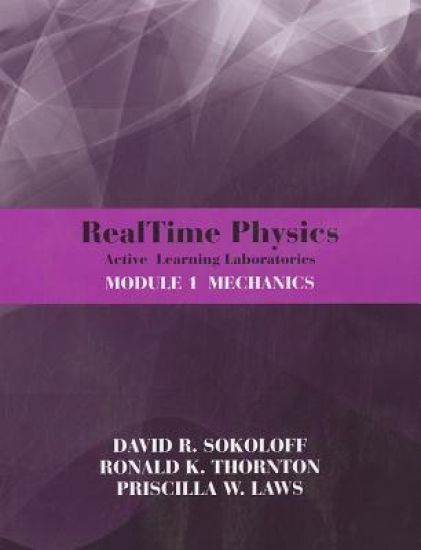
RealTime Physics: Active Learning Laboratories, Module 1

RealTime Physics: Active Learning Laboratories, Module 1

David R. Sokoloff; Ronald K. Thornton; Priscilla W. Laws

John Wiley Sons Inc
2012
nidottu
The authors of RealTime Physics Active Learning Laboratories, Module 1: Mechanics, 3rd Edition - David Sokoloff, Priscilla Laws, and Ron Thornton - have been pioneers in the revolution of the physics industry. In this edition, they provide a set of labs that utilize modern lab technology to provide hands-on information, as well as an empirical look at several new key concepts. They focus on the teaching/learning issues in the lecture portion of the course, as well as logistical lab issues such as space, class size, staffing, and equipment maintenance. Issues similar to those in the lecture have to with preparation and willingness to study.
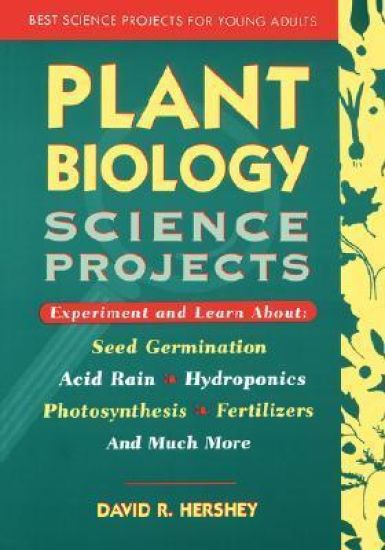
Plant Biology Science Projects

Plant Biology Science Projects

David R. Hershey

John Wiley Sons Inc
1995
nidottu
Features around two dozen intriguing science projects about seed plants which are used because they're readily available, inexpensive and quickly and easily grown indoors. The experiments include topics such as the effect of acid rain on plants and growing plants in hydroponic solutions. Each project requires no unusual equipment and includes a step-by-step experiment, followed by suggestions for further investigations.
G Protein-Coupled Receptor--Protein Interactions

G Protein-Coupled Receptor--Protein Interactions

David R. Sibley

John Wiley Sons Inc
2005
sidottu
This exciting volume elucidates how GPCRs organize signal transduction and control intracellular activities. Chapters written by the recognized expert in each respective topic offer state-of-the-art updates on the principles and technology, as well as stepwise protocols for methods currently applied to the analysis of protein-receptor interactions.
Interactive Lecture Demonstrations

Interactive Lecture Demonstrations

David R. Sokoloff; Ronald K. Thornton

John Wiley Sons Inc
2004
nidottu
Interactive Lecture Demonstrations (ILDs) are designed to enhance conceptual learning in large (and small) physics lectures through active engagement of students in the learning process. Real physics demonstrations are shown to students, who then make predictions about the outcomes on a prediction sheet, and collaborate with fellow students by discussing their predictions in small groups. Students then observe the results of the live demonstration (often displayed as real-time graphs using computer data acquisition tools), compare these results with their predictions, and attempt to explain the observed phenomena. ILDs have been demonstrated through physics education research to enhance student learning of physics concepts. ILDs can be used within the traditional structure of an introductory physics course. All of the printed materials needed to implement them are included in this book. Intended Courses: · Department: Physics · Course Name: Algebra Based or Calculus Based Introductory Physics · Course Level: Freshman/Sophomore
The Biogeochemistry of Iron in Seawater

The Biogeochemistry of Iron in Seawater

David R. Turner; Keith A. Hunter

John Wiley Sons Inc
2001
sidottu
A link between iron bioavailability and phytoplankton growth in the oceans was first put forward in the 1930s but it was not until the 1980s that developments in clean sampling and analytical techniques had advanced sufficiently to allow accurate measurements of iron at trace levels. The 1990s have been dubbed the 'Iron Age of Oceanography', and there is no doubt that the role played by iron in plankton ecology has been the decade's 'hot topic' in marine biogeochemistry. During that time the field has developed rapidly, and the initial simple hypothesis, that shortage of iron limits primary production in large areas of the ocean, has evolved into a new paradigm which recognises that iron, along with nitrogen, phosphorus and silicon, is an essential plant nutrient whose availability is a key determinant of phytoplankton growth and species distribution. Answering the need for an up-to-date, wide-ranging and critical review, this volume: *Is the only comprehensive review of the subject area to date; *Is sponsored by both SCOR and IUPAC - this, together with the leading international status of the editors and chapter authors, gives the book unique authority; *Contains many references to original research papers, including the key contributions in the field; *Identifies priorities for future research. The Biogeochemistry of Iron in Seawater will be an invaluable reference for academics and graduate students in marine sciences as well as marine scientists and oceanographers; environmental analytical chemists; and scientists studying the environmental impact of metals and their role in marine ecosystems.
General Chemistry I as a Second Language

General Chemistry I as a Second Language

David R. Klein

John Wiley Sons Inc
2005
nidottu
Many students and instructors are overwhelmed by the vast amount of content and concepts presented in General Chemistry. Students often emerge from the course with little understanding of chemical concepts and must be retaught in subsequent courses. This supplemental text can be paired with Olmsted/Williams, Brady, Spencer or any other General Chemistry title. David Klein is a lecturer at Johns Hopkins University where he teaches Organic and General Chemistry. He is a dynamic and creative teacher and uses analogy to help students grasp difficult topics. Klein’s unique informal voice and manner of presentation help students truly master key topics in this course. He is also the author of Organic Chemistry as a Second Language; response to this book has been phenomenal.
Americans, Congress, and Democratic Responsiveness

Americans, Congress, and Democratic Responsiveness

David R Jones; Monika L McDermott

The University of Michigan Press
2010
nidottu
"Jones and McDermott restore meaning to democratic responsibility by finding that public evaluations affect Congress. In contrast to the popular depiction of the representatives controlling the representedrampant in the political science literature, Jones and McDermott show that the people are in control, determining not only the direction of policy in Congress, but also who stays, who retires, and who faces difficult reelection efforts. This book makes an important correction to our understanding of how Congress operates."---Sean M. Theriault, University of Texas at Austin Voters may not know the details of specific policies, but they have a general sense of how well Congress serves their own interests; and astute politicians pay attention to public approval ratings. When the majority party is unpopular, as during the 2008 election, both voters and politicians take a hand in reconfiguring the House and the Senate. Voters throw hard-line party members out of office while candidates who continue to run under the party banner distance themselves from party ideology. In this way, public approval directly affects policy shifts as well as turnovers at election time. Contrary to the common view of Congress as an insulated institution, Jones and McDermott argue that Congress is indeed responsive to the people of the United States. David R. Jones is Professor of Political Science at Baruch College, City University of New York. Monika L. McDermott is Associate Professor of Political Science at Fordham University.
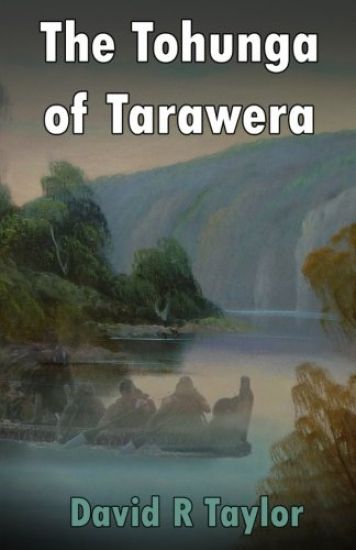
The Tohunga of Tarawera

The Tohunga of Tarawera

David R. Taylor

Taylor Publishing Company (TX)
2017
nidottu
In 1886, Maori priest Tuhoto Ariki, angered by his tribe's descent into debauchery, exerts his metaphysical powers to cleanse the land in an act of violence. His curse brings about the death of a powerful tribal chieftain in a matter of days. Out on the lake a doleful chanting heralds the arrival of a war canoe emerging through the fog, driven by a phantom crew of Maori warriors. Days later Tarawera mountain erupts in one of the most powerful detonations on earth, destroying the indescribable beauty of the world famous Pink and White Terraces and wreaking havoc on the villages below.
One Man's War: Private Nielsen in Italy

One Man's War: Private Nielsen in Italy

David R. Nielsen

Preservation Publishing
2018
nidottu
This documented journey follows a 22-year-old New Zealand soldier who departed New Zealand destined for the shores of Italy in World War II. Using notes, Private Nielsen's letters, photographs, maps, research and experiencing first-hand the terrain of the Italian battlefields, David Nielsen tracks his father's journey to Italy and beyond. David explains how his father initially did not really like to talk about the war but as time went by, David learnt how to ask careful questions and with respectful prompting, his story began to come forth. He and his Dad marked up a big map of Italy to record the places he went - this was also the first time he spoke in detail about his experiences, and also marked the beginning of One Man's War: Private Nielsen in Italy. After the passing of his father, David completed his story through many years of research, compiling notes and collating his father's letters. Finally, a trip to Italy in 2017 allowed him to experience first-hand the places his father had told him about. The history of World War II may have been well recorded, however the soldiers' experiences will soon no longer be heard first-hand. As this era of brave men pass on, preserving their memories is as important as history itself. Private E.R. Nielsen served as a radio operator with New Zealand 21 Battalion as part of the 2nd NZ Expeditionary Force Division, British 8th Army. Private Nielsen's experiences include the night of the final battle for Monte Cassino, where he crossed the Liri Valley with 21 Battalion and headed up into the hills towards the Gustav Line, a prepared German defence line spanning the width of Italy.
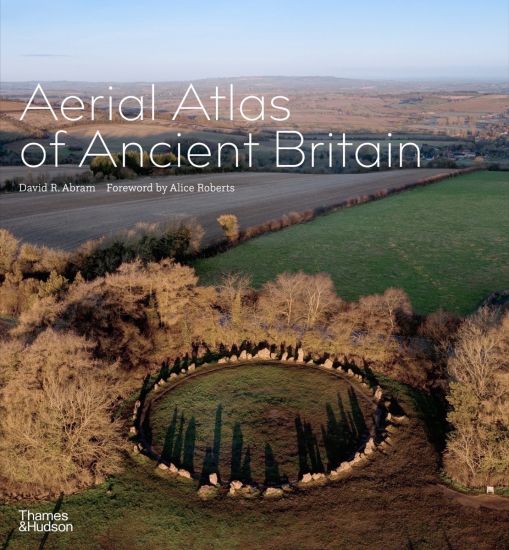
Aerial Atlas of Ancient Britain

Aerial Atlas of Ancient Britain

David R. Abram; Alice Roberts

THAMES HUDSON LTD
2022
sidottu
A spectacular collection of aerial photographs of Britain's most extraordinary prehistoric sites. This breathtaking collection of aerial images reveals ancient monuments from all around the British Isles, as they have never been seen before: Neolithic enclosures, cairns and stone circles; Bronze Age villages, farmsteads, tombs and burial mounds; and Iron Age hillforts, all photographed in spectacular bird’s-eye-view detail. Photographs taken directly above the sites, often at dawn, allow uniquely informative views, showing not only how ancient monuments fit into the surrounding landscape, but also how they define or respond to the area’s natural character. Stone cairns and circles evoke lost rituals and religious ceremonies; Iron Age ramparts hint at former strongholds; and tangible geographical clues reveal the scars of real or mythical battles. The oldest site in the collection was created nearly 6,000 years ago; the most recent originated shortly before the Roman invasion of Britain in AD 43. This is an inspiring way to discover the beauty and history of the British landscape, revealing the visible traces of our ancestors, from such famous monuments as Stonehenge to little-known gems that have never before been seen from the air.
Colored White

Colored White

David R. Roediger

University of California Press
2003
pokkari
David R. Roediger's powerful book argues that in its political workings, its distribution of advantages, and its unspoken assumptions, the United States is a 'still white' nation. Race is decidedly not over. The critical portraits of contemporary icons that lead off the book - Rush Limbaugh, Bill Clinton, O.J. Simpson, and Rudolph Giuliani - insist that continuities in white power and white identity are best understood by placing the recent past in historical context. Roediger illuminates that history in an incisive critique of the current scholarship on whiteness and an account of race-transcending radicalism exemplified by vanguards such as W.E.B. Du Bois and John Brown. He shows that, for all of its staying power, white supremacy in the United States has always been a pursuit rather than a completed project, that divisions among whites have mattered greatly, and that 'nonwhite' alternatives have profoundly challenged the status quo. "Colored White" reasons that, because race is a matter of culture and politics, racial oppression will not be solved by intermarriage or demographic shifts, but rather by political struggles that transform the meaning of race - especially its links to social and economic inequality. This landmark work considers the ways that changes in immigration patterns, the labor force, popular culture, and social movements make it possible - though far from inevitable - that the United States might overcome white supremacy in the twenty-first century. Roediger's clear, lively prose and his extraordinary command of the literature make this one of the most original and generative contributions to the study of race and ethnicity in the United States in many decades.
Bad Youth

Bad Youth

David R. Ambaras

University of California Press
2005
sidottu
The first in-depth study of the political, social, and cultural history of juvenile delinquency in modern Japan, "Bad Youth" treats the policing of urban youth as a crucial site for the development of new state structures and new forms of social power. Focusing on the years of rapid industrialization and imperialist expansion (1895 to 1945), David R. Ambaras challenges widely held conceptions of a Japan that did not, until recently, experience delinquency and related youth problems. He vividly reconstructs numerous individual life stories in the worlds of home, school, work, and the streets, and he relates the changes that took place during this time of social transformation to the broader processes of capitalist development, nation-state formation, and imperialism.
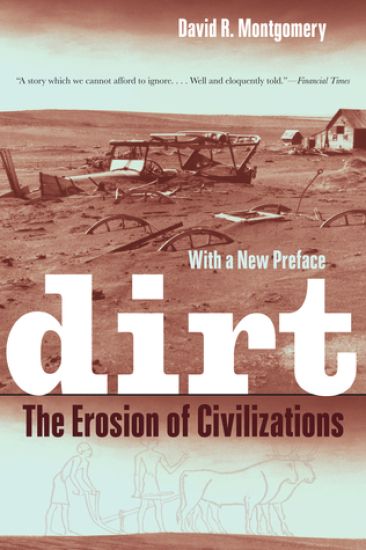
Dirt

Dirt

David R. Montgomery

University of California Press
2012
pokkari
Dirt, soil, call it what you want - it's everywhere we go. It is the root of our existence, supporting our feet, our farms, and our cities. This fascinating yet disquieting book finds, however, that we are running out of dirt, and it's no laughing matter. An engaging natural and cultural history of soil that sweeps from ancient civilizations to modern times, "Dirt: The Erosion of Civilizations" explores the compelling idea that we are - and have long been - using up Earth's soil. Once bare of protective vegetation and exposed to wind and rain, cultivated soils erode bit by bit, slowly enough to be ignored in a single lifetime but fast enough over centuries to limit the lifespan of civilizations. A rich mix of history, archaeology and geology, "Dirt" traces the role of soil use and abuse in the history of Mesopotamia, Ancient Greece, the Roman Empire, China, European colonialism, Central America, and the American push westward. We see how soil has shaped us and we have shaped soil - as society after society has risen, prospered, and plowed through a natural endowment of fertile dirt. David R. Montgomery sees in the recent rise of organic and no-till farming the hope for a new agricultural revolution that might help us avoid the fate of previous civilizations.
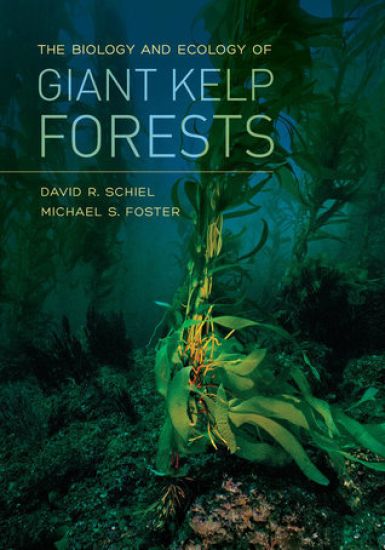
The Biology and Ecology of Giant Kelp Forests

The Biology and Ecology of Giant Kelp Forests

David R. Schiel; Michael S. Foster

University of California Press
2015
sidottu
This is the largest seaweed, giant kelp (Macrocystis) is the fastest growing and most prolific of all plants found on earth. Growing from the seafloor and extending along the ocean surface in lush canopies, giant kelp provides an extensive vertical habitat in a largely two-dimensional seascape. It is the foundation for one of the most species-rich, productive, and widely distributed ecological communities in the world. Schiel and Foster's scholarly review and synthesis take the reader from Darwin's early observations to contemporary research, providing a historical perspective for the modern understanding of giant kelp evolution, biogeography, biology, and physiology. The authors furnish a comprehensive discussion of kelp species and forest ecology worldwide, with considerations of human uses and abuses, management and conservation, and the current and likely future impacts of global change. This volume promises to be the definitive treatise and reference on giant kelp and its forests for many years, and it will appeal to marine scientists and others who want a better appreciation and understanding of these wondrous forests of the sea.