Kirjojen hintavertailu. Mukana 11 342 296 kirjaa ja 12 kauppaa.

Kirjahaku

Etsi kirjoja tekijän nimen, kirjan nimen tai ISBN:n perusteella.

1000 tulosta hakusanalla Devi Dharshini

The Many Worlds of Sarala Devi: A Diary & The Tagores and Sartorial Style: A Photo Essay

The Many Worlds of Sarala Devi: A Diary & The Tagores and Sartorial Style: A Photo Essay

Sukhendu Ray; Malavika Karlekar; Bharati Ray

TAYLOR FRANCIS LTD
2024
nidottu
This charming book The Many Worlds of Sarala Devi and The Tagores and Sartorial Styles, as the titles suggest, contain two separate but related writings on the Tagores. The Tagores were a pre-eminent family which became synonymous with the cultural regeneration of India, specifically of Bengal, in the nineteenth century. The first writing is a sensitive translation of Sarala Devis memoirs from the Bengali, Jeevaner Jharapata, by Sukhendu Ray. It is the first autobiography written by a nationalist woman leader of India. Sarala Devi was Rabindranath Tagores niece and had an unusual life. The translation unfolds, among other things, what it was like to grow up in a big affluent house Jorasanko, that had more than 116 inmates and a dozen cooks! The second writing by Malavika Karlekar is a photo essay, creatively conceived, visually reflecting the social and cultural trends of the times, through styles of dress, jewellery and accoutrements. The modern style of wearing a sari was introduced by Jnanadanandini Devi, a member of the Tagore family. The introduction by the well-known historian, Bharati Ray, very perceptively captures the larger context of family, marriage, womens education and politics of the time which touched Sarala Devis life. She points out that if memoirs are a kind of social history then womens diaries record social influences not found in official accounts and are therefore, a rich source of documentation.
A Simple Guide to Mahalakshmi/ Lakshmi Devi Worship! Goddess Lakshmi/Laxmi Upasana!
Upasana is known as continuous worship of an angelic presence or god. If you follow a particular god or goddess / a deity to help you in all your personal and complete life cycle then you have to follow certain protocols on which a particular deity will be satisfied and helps by speaking, appearing in dreams and giving some message, making success in business/ career, marriage, service to others etc. Firstly, please do not panic or no fear of worshiping lord Ganapathy, Mahavishnu, Lakshmi, Hanuman, Swamy Iyyapa or Kaali as these angelic powers will do only good things for us. They won't punish or reject us; because after all we are humans seeking help from angels and god to help us and only they can. Also any mantras can be chanted or prayers can be performed anytime anywhere. Only our mind and soul involvement is very important. Touching pooja things/ idols and deities at home or temple, lighting up lamp should be done with ablution (mandatory). For example if you choose Mahalakshmi/ Laxmi as your favourite deity and you need his full help then, you have to pray her everyday more than the other deities. You can start with Ganapathy pooja daily after taking bath (at least Om Maha Ganapathye' Namaha - 32 or 54 or 108 times) or follow the Ganapathy mantras given in this book and then start worship Lakshmi with Moola mantra, Gayatri mantra, Astothram (108 names), Sahasranama (1000 names), Sukthams, Hrudhayam, Kavacham or Ashtagam mantras - where Lakshmi will be pleased and start helping you. This may be continued for 40 to 48 days to take effect where a particular deity or angelic presence to help depending on our mind, body and soul balance. But don't worry as it happens automatically over the period of time. Lakshmi is also referred to as Sri or Thirumagal because she has six auspicious and divine characteristics, or gunas, and is Vishnu's divine power. She was born of the primordial ocean churning (Samudra manthan) in Hindu religion and she chose Vishnu as her perpetual consort. When Vishnu went to Earth as the Rama & Krishna avatars, Lakshmi originated as Sita and Rukmini as his respective consort. All females are proclaimed to be Lakshmi embodiments in India's ancient scriptures. The marriage and connection in Hindu weddings between Lakshmi and Vishnu as mother and husband is the paradigm for the bride and groom's rituals and ceremonies. Lakshmi personifies wealth, riches, happiness, loveliness, grace, charm and splendor in the Epics of Hinduism as in Mahabharata. In another Hindu legend, about the formation of the universe as outlined in Ramayana, Lakshmi springs from the ocean of milk foam with other valuable stuff. She appeared in her hand with a lotus, so she's also called Padmā. For simple Lakshmi pooja, please do Ganapathy pooja from the first chapter and then Lakshmi Gayatri, Moola mantras and then Ashtothram (108 names) plus Lakshmi Ashtakam. If you add Ashta lakshmi slogams/part and Kanagadhara slogam/part or Sri Suktham (with or without Sahasranama-1000 names) it can be like Vaibava Lakshmi or Vara Lakshmi pooja or Ashta Lakshmi pooja. If you add Kuber pooja chapter with the simple Lakshmi Pooja, then it is Lakshmi Kuber pooja. Mantras can be chanted with oblution without doing any pooja also. But choose mantras/chapters accordingly. Flowers or kumkum or yellow rice (akshatha) can be used for archana offerings. Also if you do pooja then fruits/ sweets are necessary to offer for Lakshmi Devi. If you want to practice homam/havan; then Gayatri mantra + Moola mantras can be chanted and offer Ghee in Agni (fire). Refer last chapters for Yagam/Yagna. Include little Maha Vishnu/ Narayana sosthrams (or simply gayatri/moola mantras) if you know before starting Lakshmi pooja always. (Given in starting of Lakshmi chapter). You can keep fasting for any Friday/ Monday virdha pooja/ Vaibava Lakshmi or Vara Lakshmi poojas if interested. Or simply keep only vegetarian diet. Do all Lakshmi Poojas
The Many Worlds of Sarala Devi: A Diary & The Tagores and Sartorial Style: A Photo Essay
This charming book The Many Worlds of Sarala Devi and The Tagores and Sartorial Styles, as the titles suggest, contain two separate but related writings on the Tagores. The Tagores were a pre-eminent family which became synonymous with the cultural regeneration of India, specifically of Bengal, in the nineteenth century. The first writing is a sensitive translation of Sarala Devis memoirs from the Bengali, Jeevaner Jharapata, by Sukhendu Ray. It is the first autobiography written by a nationalist woman leader of India. Sarala Devi was Rabindranath Tagores niece and had an unusual life. The translation unfolds, among other things, what it was like to grow up in a big affluent house Jorasanko, that had more than 116 inmates and a dozen cooks! The second writing by Malavika Karlekar is a photo essay, creatively conceived, visually reflecting the social and cultural trends of the times, through styles of dress, jewellery and accoutrements. The modern style of wearing a sari was introduced by Jnanadanandini Devi, a member of the Tagore family. The introduction by the well-known historian, Bharati Ray, very perceptively captures the larger context of family, marriage, womens education and politics of the time which touched Sarala Devis life. She points out that if memoirs are a kind of social history then womens diaries record social influences not found in official accounts and are therefore, a rich source of documentation.
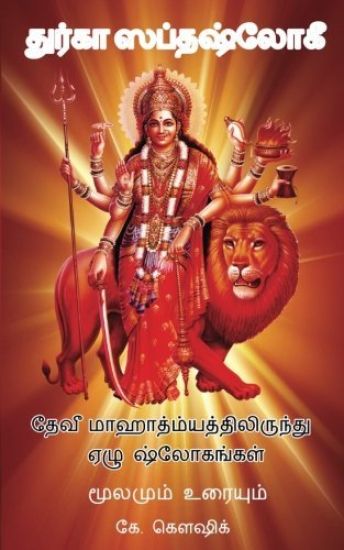
Durga Saptashloki: The Seven Verses from Devi Mahathmyam

Durga Saptashloki: The Seven Verses from Devi Mahathmyam

Koushik K

Createspace Independent Publishing Platform
2017
nidottu
Durga saptashlokee is a collection of seven important slokas from the sacred text Devi Maahaathmyam. The text Devi Maahatmyam praises the glories of mother Durgaa and elaborately narrates the great deeds of mother goddess. The text Durga Saptashlokee is a collection of the most important shlokas (mantras) from Durgaa patha for use in daily prayers and chants. Each of the seven shlokas praise the goddess Durgaa and pray to her for different fruits. All of these verses are found in different chapters of the Devi Maahaatmya. Each of these shlokas is a mantra which can also be chanted separately to please the mother and to attain a particular benefit, pray for protection, wealth, good fortune and the mother's (Ambaa's) grace. This hymn starts with a conversation between lord Shiva and Devi. One who chants this hymn with true devotion for goddess Durgaa shall be blessed with all fortunes of life and will also attain self realization by the grace of the goddess. In this book I will explain the meaning of those seven shlokas according to the commentaries of great shaakta scholars (devotees of mother goddess) like Bhaaskara raaya maakhin, Naagoji bhatta and other scholars of the shakta tradition
Durga Saptashloki the Seven Verses from Devi Mahathmyam (Tamil)

Durga Saptashloki the Seven Verses from Devi Mahathmyam (Tamil)

Koushik K

Createspace Independent Publishing Platform
2017
nidottu
Durga saptashlokee is a collection of seven important slokas from the sacred text Devi Maahaathmyam. The text Devi Maahatmyam praises the glories of mother Durgaa and elaborately narrates the great deeds of mother goddess. The text Durga Saptashlokee is a collection of the most important shlokas (mantras) from Durgaa patha for use in daily prayers and chants. Each of the seven shlokas praise the goddess Durgaa and pray to her for different fruits. All of these verses are found in different chapters of the Devi Maahaatmya. Each of these shlokas is a mantra which can also be chanted separately to please the mother and to attain a particular benefit, pray for protection, wealth, good fortune and the mother's (Ambaa's) grace. This hymn starts with a conversation between lord Shiva and Devi. One who chants this hymn with true devotion for goddess Durgaa shall be blessed with all fortunes of life and will also attain self realization by the grace of the goddess. In this book I will explain the meaning of those seven shlokas according to the commentaries of great shaakta scholars (devotees of mother goddess) like Bhaaskara raaya maakhin, Naagoji bhatta and other scholars of the shakta tradition
Le tribù nei DRAMMI BREVI di Mahasweta Devi

Le tribù nei DRAMMI BREVI di Mahasweta Devi

Karuppiah Rajendran Athista

Edizioni Sapienza
2021
pokkari
La scrittura in inglese indiano deve la sua origine all'educazione inglese che gli indiani hanno ricevuto durante il dominio coloniale; un profondo umanesimo intriso di un amore radicato per l'umanit sofferente il nucleo della filosofia di vita di Devi; Gayatri Chakravorty Spivak nel suo Imaginary Maps ha affermato che Devi caratterizza queste comunit come gli "spettatori sofferenti dell'India... che viaggiano verso il XXI secolo"; le opere di Devi sono popolari nelle traduzioni inglesi tra i lettori sia in India che all'estero. Anche se la sua produzione letteraria in termini di qualit e quantit eccezionale, non ha ricevuto l'attenzione critica che merita.
Plemiona w KRÓTKICH DRAMATACH Mahaswety Devi

Plemiona w KRÓTKICH DRAMATACH Mahaswety Devi

Karuppiah Rajendran Athista

Wydawnictwo Nasza Wiedza
2021
pokkari
Pisanie w indyjskim angielskim zawdzięcza swoje pochodzenie angielskiej edukacji, kt rą Hindusi otrzymali podczas rząd w kolonialnych.Glęboki humanizm przepojony glęboko zakorzenioną milością do cierpiącej ludzkości jest rdzeniem filozofii życia Devi.Gayatri Chakravorty Spivak w swoich Imaginary Maps stwierdzila, że Devi charakteryzuje te spoleczności jako "cierpiących widz w Indii ... podr żujących w kierunku dwudziestego pierwszego wieku".Prace Devi są popularne w angielskich tlumaczeniach wśr d czytelnik w zar wno w Indiach, jak i za granicą. Chociaż jej dorobek literacki pod względem jakości i ilości jest wybitny, nie otrzymala krytycznej uwagi, na kt rą zasluguje. Devi wlada pi rem dla uciskanych, kt rzy pr bują powstac w buncie, ale spotykają się albo z gwaltowną śmiercią, albo z niechwalebną porażką.
La nuova donna nei romanzi di Shanta Devi e Sita Devi
La Calcutta Review del 1864 sosteneva che l'educazione non doveva opporsi alla natura, che l'aveva preparata per essere una moglie e una madre, e contemporaneamente sottolineava l'importanza del legame tra l'estensione dell'educazione e la moralit . In sostanza, l'obiettivo di questo sforzo educativo sembra essere stato quello di rifondere la sensualit femminile indiana delle zenanas, con le sue preoccupazioni per il corpo e le funzioni corporee e con i suoi riti incentrati sul sesso e sulla sessualit . Mentre all'inizio del XIX secolo le misure di riforma avevano assunto la forma di leggi che vietavano i mali sociali, nella seconda met del secolo l'attenzione si era spostata sulla graduale rimozione dei mali sociali attraverso la rifusione e il rimodellamento delle menti delle donne indiane attraverso l'istruzione.
A Nova Mulher nos Romances de Shanta Devi e Sita Devi

A Nova Mulher nos Romances de Shanta Devi e Sita Devi

Prarthita Biswas

Edicoes Nosso Conhecimento
2023
pokkari
A Revista de Calcut , em 1864, argumentou que a educa o n o precisava de se opor natureza, que a enquadrou como esposa e m e e, simultaneamente, insistiu na import ncia da liga o entre a extens o da educa o e a moralidade. Em ess ncia, o impulso deste esfor o educativo parece ter sido o de reformular a t o desejada sensualidade feminina indiana das zenanas com as suas preocupa es com o corpo e as fun es corporais e com os seus ritos centrados no sexo e na sexualidade. Enquanto as medidas de reforma na primeira parte do s culo XIX tinham tomado a forma de legisla es proibindo os males sociais, na segunda metade do s culo o foco tinha-se deslocado para a remo o gradual dos males sociais atrav s da reformula o e remodela o das mentes das mulheres indianas atrav s da educa o.
Secret Healing of Mental Illness at Chottanikkara Devi Temple, Kerala

Secret Healing of Mental Illness at Chottanikkara Devi Temple, Kerala

Chittaranjan Subudhi Editor

Indian Society of Professional Social Work
2022
pokkari
This book is a outcome of a study was conducted in Chottanikkara Temple in Kerala, where the purposive sampling technique was used to obtain 14 participants. The target population were people with mental illness and their family members who attended the Chottanikkara temple for healing. The qualitative approach was used to conduct in-depth interviews to achieve the intended study objectives.The study found that a majority of patients with mental illness strongly believed that their illness was just a possession of evil spirits and had nothing to do with mental issues. With such belief, they concluded that the perfect cure for the disease is through temple healing. A few patients knew of mental health problems. They sought medical assistance, but due to their inability to afford the medical expenses, medication challenges, and slight improvement, they opted for temple healing. The use of different specified rituals in assisting people with mental illness improved the situation of the patients, as explained. However, some reported that they are felling better at the time of staying around the temple; but when they return home, the illness begins.
Fare Reiki è facile - Tutto quello che devi sapere su cos'è e cosa non è Reiki, come fare trattamento e auto-trattamento
Tutto quello che devi sapere su cos' o cosa non Reiki, come fare trattamento e auto-trattamento. Vuoi conoscere Reiki prima ancora di frequentare un corso? Vuoi la verit sulla pratica di Reiki e sulle attivazioni? Come e perch funziona, e comprendere il tuo essere "canale energetico"? Qui trovi un manuale completo che ti presenta la storia e l'evoluzione del Reiki in modo essenziale e fondamentale per conoscere la realt di oggi. Scopri soprattutto come fare trattamento: a te, ai figli, ad anziani, al pet di casa e anche per professione. Un manuale schietto e indispensabile, quello scritto da Monica Giovine, Reiki Master da 25 anni in Italia che riporta la pratica alla sua vera essenza. Con un occhio sempre rivolto alla globalit e a ci che viene proposto all'estero, l'autrice esperta, professionale e sincera su ci che non va, ci che non e ci che "semplicemente" Reiki, e che puoi fare tu sin da subito.
The Goddess Pose: The Audacious Life of Indra Devi, the Woman Who Helped Bring Yoga to the West
New York Times best-selling author Michelle Goldberg tells the globetrotting story of the incredible woman who brought yoga to the West. When Indra Devi was born in Russia in 1899, yoga was virtually unknown outside of India. By the time of her death, in 2002, it was being practiced around the world. Here Michelle Goldberg tells the globetrotting story of the incredible woman who helped usher in a craze that continues unabated to this day. A sweeping picture of the twentieth century that travels from the cabarets of Berlin to the Mysore Palace to Golden Age Hollywood and beyond, The Goddess Pose brings the Devi's little known but extraordinary adventures vividly to life.
Prima Di Iniziare l'Università: Tutto quello che devi sapere per evitare i gravissimi errori che il 99% degli studenti commette fin dai primi mesi e r
La prima e unica guida di orientamento universitario scritta da ex-studenti per studenti. Stai per iniziare l'Universit ti domandi sempre "non so che facolt sceglierenon so che universit fare"? Sei confuso e non sai come scegliere la facolt giusta e vorresti una guida all'universit per fare maggiore chiarezza?Credi di sapere come studiare all'Universit per superare tanti esami universitari con voti alti, anche se un esame non sai nemmeno com' fatto? Allora non azzardarti a fare nessun altro passo prima di aver letto le succose pagine di questo libro Nicola Guarino e Attilio Cordaro, formatori di riferimento per gli studenti universitari italiani (lavoratori e non) e Autori del libro rivelazioneCome Laurearsi Velocemente e con Voti Alti; tornano in campo con questa guida di orientamento all'Universit , l'unico strumento attualmente esistente in grado di guidare come un faro nella notte all'interno della pericolosa selva universitaria chi si appresta ad entrare in questo nuovo mondo, completamente diverso rispetto a quello delle scuole superiori e ad effettuare la fatidica scelta universitaria. Prima di iniziare l'Universit la prima e unica guida di orientamento universitario esistente in Italia per scoprire come scegliere la facolt giusta, come funzionano gli esami universitari, come funzione l'universit e molto altro, ed scritto da ex-studenti per studenti. Al suo interno racchiusa la chiave per decifrare l'Universit , dominarla come un gladiatore in un'arena di leoni e anzi sfruttarla a proprio vantaggio per diventare una persona di successo anche fuori di essa. Se attualmente sei confuso, non sai cosa fare dopo il liceo, come scegliere l'universit (o che facolt scegliere), oppure hai gi fatto la tua scelta universitaria o ti prepari a farla ma sai veramente poco della nuova realt che ti prepari ad affrontare e temi di ritrovarti ad essere ancora uno studente quando prenderai la pensione, allora devi assolutamente leggerlo... prima che sia troppo tardi. In particolare, leggendo il libro "Prima di iniziare l'Universit " scoprirai: Il grande inganno dell'Universit di cui nessuno ti parla;Perch l'attuale orientamento universitario non va bene per gli studenti (anzi, li manda spesso fuoristrada);Cosa fare dopo il liceo o il diploma;Perch NON devi iscriverti all'Universit ;Le 7 principali differenze tra l'Universit e le scuole superiori che non puoi permetterti di ignorare;Come capire cosa e come studiare all'Universit e come scegliere la facolt giusta per te;Come scegliere l'Universit ;Voti universitari: come funzionano e qual l'errore che fanno tutti;Come funzione l'universit ;Le 3 regole fondamentali (non scritte) sugli esami universitari che nessuno ti riveler mai al di fuori di questo libro;Tecniche di memorizzazione, apprendimento rapido, lettura veloce e metodo di studio: il vero motivo per il quale non possono aiutarti a dare tanti esami con voti alti all'Universit ;Come studiare all universit usando lo Studio Rovesciato ed eccellere ad ogni esame;Come preparare due o pi esami universitari contemporaneamente e organizzare lo studio correttamente;E tanto altro ancora *** Il libro contiene 6 BONUS GRATUITI E RISERVATI ESCLUSIVAMENTE AI LETTORI ***
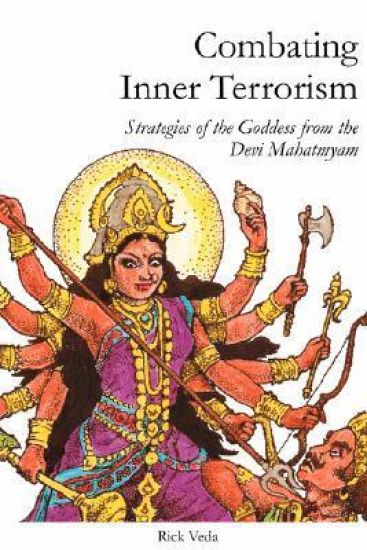
Combating Inner Terrorism: Strategies of the Goddess from the Devi Mahatmyam
A daily devotional translation of the ancient Sanskrit book known as Devi Mahatmyam (The Glory of the Goddess). Includes daily readings for a year, a daily mantra, and thoughts on how to personally apply the teachings to defeat our inner demons and experience the divinity within. This is a manual for overcoming those thoughts that prevent a life of true peace of mind, body, and spirit.