Kirjojen hintavertailu. Mukana 11 392 191 kirjaa ja 12 kauppaa.

Kirjahaku

Etsi kirjoja tekijän nimen, kirjan nimen tai ISBN:n perusteella.

1000 tulosta hakusanalla Dmitri Mereschkowski

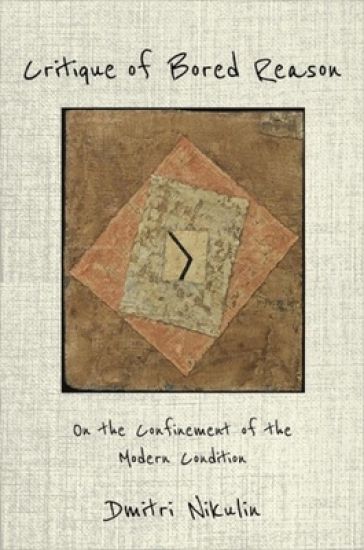
Critique of Bored Reason

Critique of Bored Reason

Dmitri Nikulin

Columbia University Press
2022
pokkari
Most of the core concepts of the Western philosophical tradition originate in antiquity. Yet boredom is strikingly absent from classical thought. In this philosophical study, Dmitri Nikulin explores the concept’s genealogy to argue that boredom is the mark of modernity.Nikulin contends that boredom is a specifically modern phenomenon. He provides a critical reconstruction of the concept of the modern subject as universal, rational, autonomous, and self-sufficient. Understanding itself in this way, this subject is at once the protagonist, playwright, director, and spectator of the staged drama of human existence. It is therefore inevitably monological, lonely, and alone, and can neither escape its own presence nor get rid of it. In other words, it is bored—and this boredom is the fundamental expression and symptom of the modern condition.Considering such thinkers as Descartes, Pascal, Kant, Kierkegaard, Kracauer, Heidegger, and Benjamin, Critique of Bored Reason places boredom on center stage in the philosophical critique of modernity. Nikulin also considers the alternative to the notion of the autonomous subject in the—nonbored and nonboring—dialogic and comic subject capable of shared existence with others.

Twice-42

Twice-42

Dmitri Gheorgheni

Lulu.com
2019
pokkari
We hope this volume will be one you'll keep on a bedside table. Or pop into a travel bag. We want you to use this anthology as a companion for those times when you have a half-hour to fill and don't want to muck about with the internet. Not one of these stories will take you more than ten minutes to read. But they will take you around the planet at warp speed. You may find yourself on a galactic cruise from your office, park bench, or seat on the 9.35 local. Some of what you'll read in here is laugh-out-loud funny. You may go Snork and get Looks on the commuter train. Some of the stories and poems in here will probably make you want to cry. Life on Earth can be dark, sometimes. We're hoping you can take the rough with the smooth. Some of these stories might introduce you to the kind of people you've wondered about, but never met.
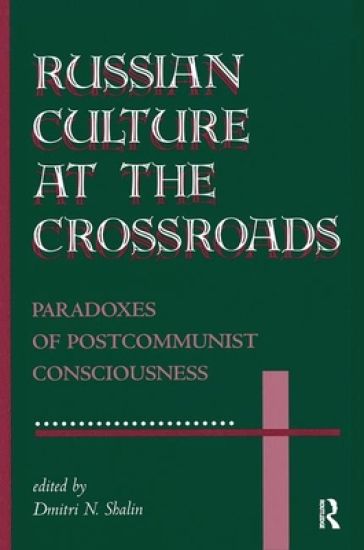
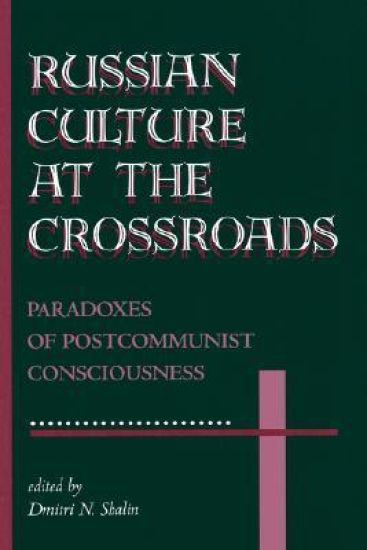
Russian Culture At The Crossroads

Russian Culture At The Crossroads

Dmitri N Shalin

Routledge
2019
sidottu
During the waning years of Soviet power, glasnost laid bare the distress of people trapped in a system they despised but felt powerless to change. The reexamination of values that began then continues today in the search for a new Russian culture, one rooted in the pre-Soviet past but dynamic and evolving, enabling Russians to meet the challenges t
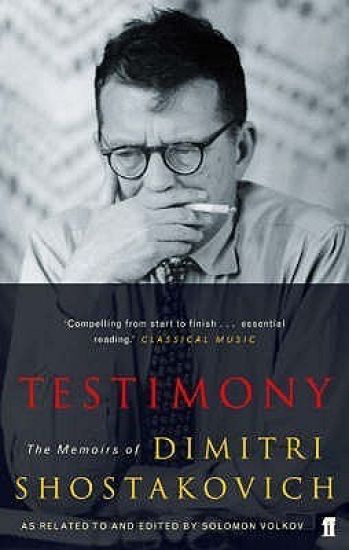
Testimony

Testimony

Dmitri Shostakovich

Faber Faber
2005
pokkari
'A terrifying and unhappy book...' The GuardianThis astounding self-portrait covering the whole of Shostakovich's life (1906-1975) was prepared in collaboration with the distinguished Soviet musicologist Solomon Volkov. With the composer's consent, the manuscript was smuggled out of Soviet Russia - but Shostakovich, fearing reprisals, stipulated that the book should not appear until after his death. Ever since its publication in 1979 it has been the subject of controversy, some suggesting that Volkov invented parts of it, but most affirming that it revealed a profoundly ambivalent Shostakovich which the world had never seen before - his life at once triumphant and tragic.Either way, it remains indispensible to an understanding of Shostakovich's life and work. Testimony is intense and fiercely ironic, both plain-spoken and outspoken.
The Red New Deal When Everything is Free, You are the Price
The Red New Deal: When Everything is Free, You are the Price" is a comparison of current US and world trends toward reconsidering socialism and the realities of everyday life under socialism. Young people of Western democracies no longer have a negative opinion about socialism. This is dangerous. Since they do not know history, they easily vote for candidates with a socialist agenda. Since they take their freedoms and prosperity for granted, they are not moved by theories. This book is designed for people of all ages, to share the real-life accounts of the daily routines, shortages, cancel culture, and a pattern of restricting freedoms from one who lived through it. Dmitri Dubograev grew up in the socialist environment of the USSR. Read carefully his eye-opening analysis of the parallels between "socialist trends" of prior generations and events occuring in the US today. Dmitri shares his real-life stories and the ominous effects under "real-life socialism." Nothing is free. It's imperative that "woke" America wake up before it's too late
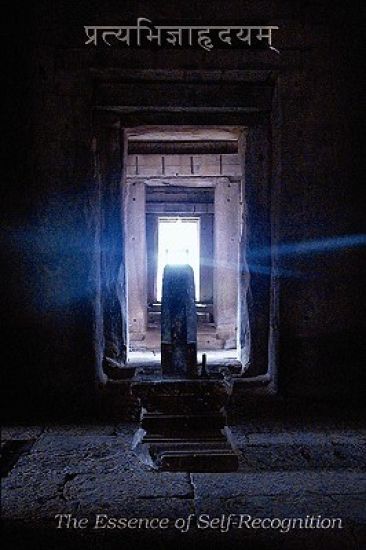
The Essence of Self-Recognition

The Essence of Self-Recognition

Dmitri Semenov

Sattarka Publications
2008
pokkari
"The Essence of Self-Recognition" presents a systematic and practical analysis of the ancient philosophical system Pratyabhijnahrdayam, a part of Trika system of Kashmir Shaivism. Drawing from a variety of Sanskrit scriptural sources, including "Yoga Sutra", "Shiva Sutra", and "Tantraloka", the book emphasizes practices belonging to the "true reasoning" path to enlightenment. Written specifically for people of analytic mind who are in pursuit of inner freedom, the book defines all underlying concepts relevant to effective practice in a precise and insightful manner, and explains ideas within this ancient philosophical system using concepts from modern cognitive psychology and Western philosophy.
On Dialogue

On Dialogue

Dmitri Nikulin

Lexington Books
2005
sidottu
Drawing from the works of Plato and more contemporary philosophers such as Bakhtin, Buber, Taylor, and Gadamer, On Dialogue explores the necessity of dialogue to being. Author Dmitri Nikulin argues that dialogue is not just a form of communication, but it is the very conditio humana. Nikulin provides a systematic account of dialogue and its role in philosophy, literature, and oral discourse. Exploring the notion of human unfinalizability in dialogical communication, which does not always come to a consensus but is always carried on further in order to express one's self as one's personal other, On Dialogue argues that the human is a dialogical being in perpetual conversation with the other. By offering clues a better understanding of the being, Nikulin's work makes a significant contribution not only to the field of philosophy, but also to the study of anthropology and ontology.
On Dialogue

On Dialogue

Dmitri Nikulin

Lexington Books
2005
nidottu
Drawing from the works of Plato and more contemporary philosophers such as Bakhtin, Buber, Taylor, and Gadamer, On Dialogue explores the necessity of dialogue to being. Author Dmitri Nikulin argues that dialogue is not just a form of communication, but it is the very conditio humana. Nikulin provides a systematic account of dialogue and its role in philosophy, literature, and oral discourse. Exploring the notion of human unfinalizability in dialogical communication, which does not always come to a consensus but is always carried on further in order to express one's self as one's personal other, On Dialogue argues that the human is a dialogical being in perpetual conversation with the other. By offering clues a better understanding of the being, Nikulin's work makes a significant contribution not only to the field of philosophy, but also to the study of anthropology and ontology.
Dialectic and Dialogue

Dialectic and Dialogue

Dmitri Nikulin

Stanford University Press
2010
sidottu
This book considers the emergence of dialectic out of the spirit of dialogue and traces the relation between the two. It moves from Plato, for whom dialectic is necessary to destroy incorrect theses and attain thinkable being, to Cusanus, to modern philosophers—Descartes, Kant, Hegel, Schleiermacher and Gadamer, for whom dialectic becomes the driving force behind the constitution of a rational philosophical system. Conceived as a logical enterprise, dialectic strives to liberate itself from dialogue, which it views as merely accidental and even disruptive of thought, in order to become a systematic or scientific method. The Cartesian autonomous and universal yet utterly monological and lonely subject requires dialectic alone to reason correctly, yet dialogue, despite its unfinalizable and interruptive nature, is what constitutes the human condition.
Dialectic and Dialogue

Dialectic and Dialogue

Dmitri Nikulin

Stanford University Press
2010
pokkari
This book considers the emergence of dialectic out of the spirit of dialogue and traces the relation between the two. It moves from Plato, for whom dialectic is necessary to destroy incorrect theses and attain thinkable being, to Cusanus, to modern philosophers—Descartes, Kant, Hegel, Schleiermacher and Gadamer, for whom dialectic becomes the driving force behind the constitution of a rational philosophical system. Conceived as a logical enterprise, dialectic strives to liberate itself from dialogue, which it views as merely accidental and even disruptive of thought, in order to become a systematic or scientific method. The Cartesian autonomous and universal yet utterly monological and lonely subject requires dialectic alone to reason correctly, yet dialogue, despite its unfinalizable and interruptive nature, is what constitutes the human condition.
Russian Culture At The Crossroads

Russian Culture At The Crossroads

Dmitri N Shalin

Westview Press Inc
1996
pokkari
During the waning years of Soviet power, glasnost laid bare the distress of people trapped in a system they despised but felt powerless to change. The reexamination of values that began then continues today in the search for a new Russian culture, one rooted in the pre-Soviet past but dynamic and evolving, enabling Russians to meet the challenges they face in the contemporary world.Multi-textual, polyphonic, and contradictory, the current Russian cultural discourse is richly reflected in these essays by a diverse group of authors from Russian and American academic and cultural circles. Each chapter focuses on a particular cultural domain, surveying the historical origins of Russian beliefs and behaviours, exploring their Soviet and post-Soviet permutations, and highlighting the range of choices that Russians are facing at this critical juncture. The decisions they make will shape their society and culture for generations to come.Illuminating the universal significance of the Soviet experience, this volume raises provocative questions about the social, political, and economic sources of cultural change.
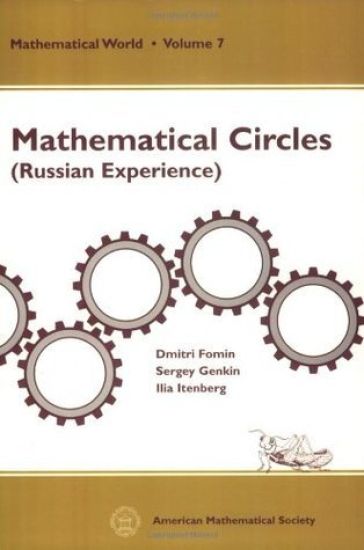
Mathematical Circles

Mathematical Circles

Dmitri Fomin; Sergey Genkin; Ilia V. Itenberg

American Mathematical Society
1996
pokkari
Suitable for both students and teachers who love mathematics and want to study its various branches beyond the limits of school curriculum. This book contains vast theoretical and problem material in main areas of what authors consider to be 'extracurricular mathematics'.
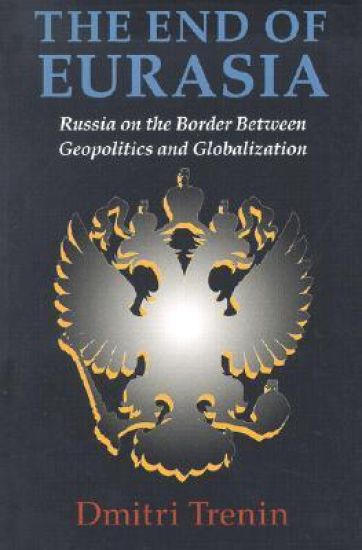
End of Eurasia

End of Eurasia

Dmitri Trenin

Carnegie Endowment for International Peace
2016
nidottu
Ten years after the breakup of the Soviet Union, the issue of Russia's international identity still remains largely unresolved. In this thought-provoking book, Dmitri Trenin argues that Russia must join the West by becoming integrated with the European Union and by building an alliance with the United States. He delineates the political, economic, demographic, religious, and strategic challenges that Russia faces in relation to neighboring countries —in Eastern Europe, along the Baltic Sea, around the Caspian Sea, in Central Asia, and in the Far East. Trenin suggests that Russia's time as the region's dominant leader is over, and that Russia and Eurasia will no longer share the same geopolitical objectives.
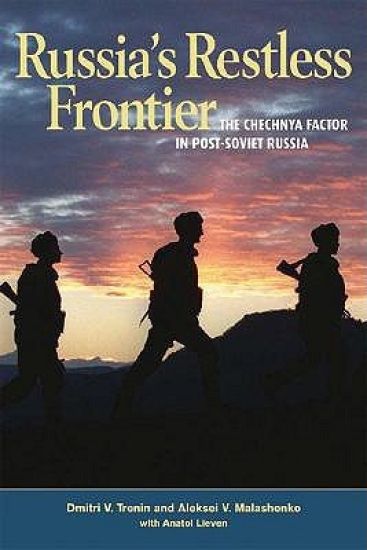
Russia™s Restless Frontier

Russia™s Restless Frontier

Dmitri Trenin; Alesksei Malashenko; Anatol Lieven

Carnegie Endowment for International Peace
2004
nidottu
The conflict in Chechnya, going through its low- and high-intensity phases, has been doggedly accompanying Russia's development. In the last decade, the Chechen war was widely covered, both in Russia and in the West. While most books look at the causes of the war, explain its zigzag course, and condemn the brutalities and crimes associated with it, this book is different. Its focus lies beyond the Caucasus battlefield. In Russia's Restless Frontier, Dmitri Trenin and Aleksei Malashenko examine the implications of the war with Chechnya for Russia's post-Soviet evolution. Considering Chechnya's impact on Russia's military, domestic politics, foreign policy, and ethnic relations, the authors contend that the Chechen factor must be addressed before Russia can continue its development.