Introducing and presenting thirty core texts from the sociological writings of W. E. B. Du Bois, Robert Wortham's unique reader highlights Du Bois as a multifaceted researcher and thinker who, by attempting to approach African American social life from every angle, became a pioneer in American sociology. As this astute reader demonstrates, in addition to his profound contributions to our understanding of racial inequality in the United States, Du Bois made momentous advances in the areas of research methods, social problems, community studies, population studies, the sociology of religion, and crime and deviance. When sociology appeared to be heading toward a deductive methodology, Du Bois presented a strong argument for inductive methods, advocating for the use of a more interdisciplinary approach. Eventually, combining sociological perspectives with those of history and anthropology, he developed his landmark approach: methodological triangulation.In this long-overdue volume, Wortham showcases the enormous influence of Du Bois's wide-ranging sociological imagination. Organized into four major parts--""The Scientific Study of Society and Social Problems,"" ""Social Structure and Social Processes,"" ""Dimensions of Inequality,"" and ""Social Dynamics""--the reader concludes with a complete biography of Du Bois' early sociological works.
This edition of The Autobiography of W. E. B. Du Bois is the first to be arranged and dedicated in accordance with Du Bois's manuscript notes. It begins with these words: "I was born by a golden river and in the shadow of two great hills, five years after the Emancipation Proclamation which began the freeing of American Negro Slaves." Du Bois was born in the town where Berkshire Publishing Group is located. His autobiography tells the story of a little boy, the only Black boy in his school, who became the first African American PhD at Harvard, an educator, editor, and activist, and a writer of expressive, lyrical, and accessible prose. In this book, he explains why he chose to become a communist. While the communism he praised did not turn out to offer the utopia so many hoped for, the problems he identified are still with us. His reasoning will resonant with modern readers who share his frustration with the continued inequities in our society.The Autobiography is a fascinating and often horrifying look at the experience of a Black man in America. Literary critic Irving Howe called it "a classic of American narrative, . . . packed with information and opinion about the early years of Negro protest." But, like many, he found the later chapters, in which Du Bois reflects the official Communist views of the times, to read "as if they came from the very heart of a mimeograph machine." But these chapters, too, are part of US history. The short essay on Communism is especially worth reading it speaks to issues on our minds today, and puts Du Bois's communism in context. His reasoning, and emotion, will resonant with modern readers who share his frustration with the continued inequities in our society. While the Communism he praised did not turn out to offer the utopia so many hoped for, the problems he identified are still with us.And now that the chapters about his early life are in their proper place, we hope readers will note the personal and revelatory tone of the chapter "My Character." Along with an analysis of his own character, not always favorable, he discusses his sexual experience, including early ignorance, being raped as a young man by an unhappy landlady, and never convincing his wife that sexual relations were "the most beautiful of human experiences."Berkshire Publishing Group was founded in Great Barrington, the small western Massachusetts town where Du Bois was born and educated. He wrote eloquently about the town and its people, and he is remembered today as the most influential graduate of the town's schools. Berkshire is known for its focus on international issues, especially world history. We were thrilled when we learned that Du Bois had wanted to create an Encyclopedia Africana since we have specialized in similar projects. Equally relevant was hearing from Thomas Bender, a leading scholar of transnational history, that Du Bois's Harvard dissertation on the Atlantic slave trade was one of the first publications that could truly be called transnational history.
Every year, millions of post-secondary hopefuls vie for enrollment at the nation's top academic institutions, with hopes of standing out in a saturated crowd of equally talented candidates. But as those would-be students and their parents know all too well, gaining admittance is a small part of the battle: the bigger hurdle can often be how to pay for it. In an era where families are willing to put themselves into suffocating debt for the sake of higher education, paying for college is increasingly prohibitive. In The College R.E.B.O.O.T.: 6 Timeless Principles for Reducing Student Loan Debt, Tameka L. Williamson shatters previous ways of approaching the post-secondary funding process and proves that where there's a clear will, there's an even clearer way. Seasoned with inspiring examples of Williamson's clients and their riveting success stories, and blended with the author's unique brand of telling it how it is, this inspiring how-to guide is a must read for everyone attempting to "kill the college game and win."
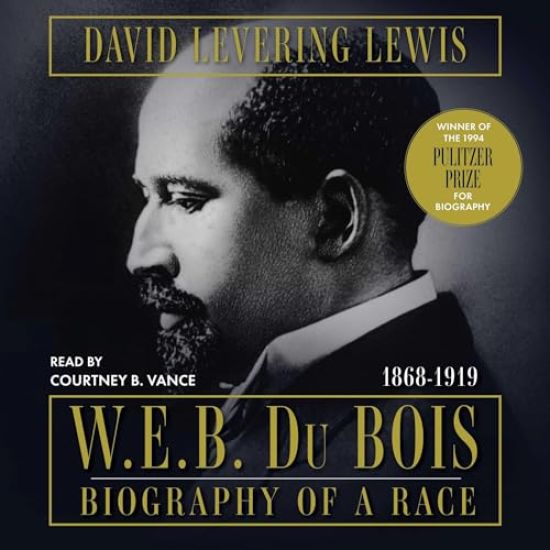
First time on audio The timeless Pulitzer Prize winner, the first in an epic two-volume biography that set the standard for historical scholarship on this era, narrated by Emmy and Tony Award winner Courtney B. Vance.This monumental biography by David Levering Lewis--eight years in the research and writing--treats the early and middle phases of a long and intense career: a crucial fifty-year period that demonstrates how W.E.B. Du Bois changed forever the way Americans think about themselves. William Edward Burghardt Du Bois?the premier architect of the civil rights movement in America?was a towering and controversial personality, a fiercely proud individual blessed with the language of the poet and the impatience of the agitator. In the first of his superlative two-volume biography, renowned scholar David Levering Lewis chronicles the first five decades of Du Bois's long and storied life, detailing in magisterial prose the momentous contributions to our national character that still echo today.
I have written for the beginning student who pursuing a technical degree in Electronics and communication Engineering (B.E, B.Tech, M.Sc, Diploma, AMIE) . The focus on absolutely essential knowledge for technicians, electronics and electrical engineers focus on real-world applications of these basic concepts makes it ideal for today's technology students. In covering the fundamentals of electricity and electronics, this text focuses on essential topics Atomic structure and energy levels, Concept of insulators, conductors and semiconductors, Atomic structure of Ge and Si, Covalent bonding, Intrinsic and extrinsic semiconductor, P and N impurities, doping, conductivity of semiconductor, energy level diagram and minority and majority carriers etc in depth.
Again Begin is a serial social political commentary and examination of humanities primary problem itself. A true science fiction story based upon the near-death experience of Daniel J. Frey. Frey, a political illustrator, takes us on a journey through the universe with his art and imagination to the heart of our nucleic structure asking why we fear the future. In issue 23 the human race is given access to their history as well as the history of the universe.
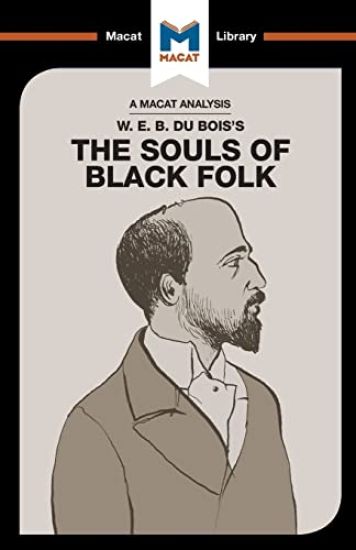
W.E.B Du Bois’ The Souls of Black Folk is a seminal work in the field of sociology, a classic of American literature – and a solid example of carefully-structured reasoning. One of the most important texts ever written on racism and black identity in America, the work contains powerful arguments that illustrate the problem of the position of black people in the US at the turn of the 20th-century. Du Bois identified three significant issues (‘the color line’; ‘double consciousness’; and ‘the veil’) that acted as roadblocks to true black emancipation, and showed how each of these in turn contributed to the problem of inequality.Du Bois carefully investigates all three problems, constructing clear explanations of their significance in shaping the consciousness of a community that has been systematically discriminated against, and dealing brilliantly with counter-arguments throughout. The Souls of Black Folk went on to profoundly influence the civil rights movement in the US, inspiring post-colonial thinking worldwide.
W.E.B Du Bois’ The Souls of Black Folk is a seminal work in the field of sociology, a classic of American literature – and a solid example of carefully-structured reasoning. One of the most important texts ever written on racism and black identity in America, the work contains powerful arguments that illustrate the problem of the position of black people in the US at the turn of the 20th-century. Du Bois identified three significant issues (‘the color line’; ‘double consciousness’; and ‘the veil’) that acted as roadblocks to true black emancipation, and showed how each of these in turn contributed to the problem of inequality.Du Bois carefully investigates all three problems, constructing clear explanations of their significance in shaping the consciousness of a community that has been systematically discriminated against, and dealing brilliantly with counter-arguments throughout. The Souls of Black Folk went on to profoundly influence the civil rights movement in the US, inspiring post-colonial thinking worldwide.
R.E.B.I.R.T.H is an acronym meaning Realizing Everyone Becomes Invincible Right Through Hurt. My work is a self-help guide that chronicles the stages of grief and healing one
*Includes pictures *Profiles the debate over the intention of Lee's orders to Stuart and who's to blame for what happened *Includes accounts of Stuart's operation written by his adjutant general and others *Includes online resources and a bibliography for further reading *Includes a table of contents "The failure to crush the Federal army in Pennsylvania in 1863, in the opinion of almost all of the officers of the Army of Northern Virginia, can be expressed in five words-the absence of the cavalry." - Confederate General Henry Heth As Robert E. Lee's army moved into Pennsylvania in June 1863, Stuart's cavalry screened his movements, thereby engaging in the more traditional cavalry roles, but it's widely believed he was hoping to remove the negative effect of Brandy Station by duplicating one of his now famous rides around the enemy army, much as he did to McClellan's Army of the Potomac during the Peninsula Campaign in 1862. This time, however, as Lee began his march north through the Shenandoah Valley in western Virginia, it is highly unlikely that is what he wanted or expected. Before setting out on June 25, the methodical Lee gave Stuart specific instructions as to the role he was to play in the Pennsylvania offensive. As the eyes of the army, the cavalry was to guard the mountain passes with part of his force while the Army of Northern Virginia was still south of the Potomac River, and then cross the river with the remainder of his army and screen the right flank of Confederate general Richard Stoddert Ewell's II Corps as it moved down the Shenandoah Valley, maintaining contact with Ewell's army as it advanced towards Harrisburg. Instead of taking the most direct route north near the Blue Ridge Mountains, however, Stuart chose a much more ambitious course of action. Stuart decided to march his three best brigades (under Generals Hampton, Fitzhugh Lee, and Col. John R. Chambliss) between the Union army and Washington, north through Rockville to Westminster, and then into Pennsylvania, a route that would allow them to capture supplies along the way and wreak havoc as they skirted Washington. To complicate matters even more, as Stuart set out on June 25 on what was probably a glory-seeking mission, he was unaware that his intended path was blocked by columns of Union infantry that would invariably force him to veer farther east than he or Lee had anticipated. Ultimately, his decision would prevent him from linking up with Ewell as ordered and deprive Lee of his primary cavalry force as he advanced deeper and deeper into unfamiliar enemy territory. According to Halsey Wigfall (son of Confederate States Senator Louis Wigfall) who was in Stuart's infantry, "Stuart and his cavalry left Lee's] army on June 24 and did not contact his] army again until the afternoon of July 2, the second day of the Gettysburg] battle." According to Stuart's own account, on June 29 his men clashed briefly with two companies of Union cavalry in Westminster, Maryland, overwhelming and chasing them "a long distance on the Baltimore road," causing a "great panic" in the city of Baltimore. On June 30, the head of Stuart's column then encountered General Judson Kilpatrick's cavalry as it passed through Hanover, during which they reportedly captured a wagon train and scattered the Union army before Kilpatrick's men were able to regroup and drive Stuart and his men out of town. Then, after a 20 mile trek in the dark, Stuart's exhausted men reached Dover, Pennsylvania on the morning of July 1. H.B. McClellan would point out in his book about Stuart that Lee's orders meant the army commander "was aware that under the most favorable circumstances Stuart must be separated from the army for at least three or four days." However, Stuart's cavalry would be gone for 7 days, and Stuart was too far removed from the Army of Northern Virginia to warn Lee of the Army of the Potomac's movements.
eloge de E.-J.-B. Bouillon-Lagrange, directeur de l'ecole de pharmacie de Paris, ... prononce le 6 novembre 1844 a la seance de rentree de l'ecole de pharmacie de Paris, par M. Henri Buignet, ...Date de l'edition originale: 1844Ce livre est la reproduction fidele d'une oeuvre publiee avant 1920 et fait partie d'une collection de livres reimprimes a la demande editee par Hachette Livre, dans le cadre d'un partenariat avec la Bibliotheque nationale de France, offrant l'opportunite d'acceder a des ouvrages anciens et souvent rares issus des fonds patrimoniaux de la BnF.Les oeuvres faisant partie de cette collection ont ete numerisees par la BnF et sont presentes sur Gallica, sa bibliotheque numerique.En entreprenant de redonner vie a ces ouvrages au travers d'une collection de livres reimprimes a la demande, nous leur donnons la possibilite de rencontrer un public elargi et participons a la transmission de connaissances et de savoirs parfois difficilement accessibles.Nous avons cherche a concilier la reproduction fidele d'un livre ancien a partir de sa version numerisee avec le souci d'un confort de lecture optimal. Nous esperons que les ouvrages de cette nouvelle collection vous apporteront entiere satisfaction.Pour plus d'informations, rendez-vous sur www.hachettebnf.fr