Kirjojen hintavertailu. Mukana 12 016 292 kirjaa ja 12 kauppaa.

Kirjahaku

Etsi kirjoja tekijän nimen, kirjan nimen tai ISBN:n perusteella.

1000 tulosta hakusanalla Edgar Wind

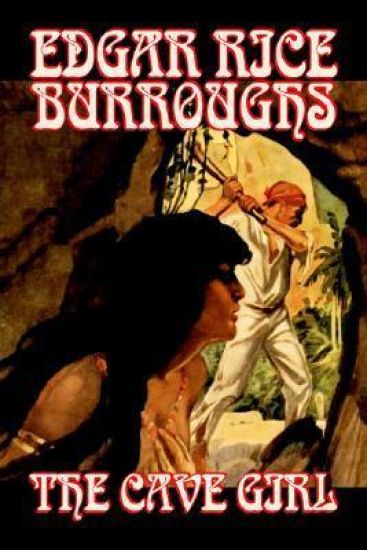
The Cave Girl by Edgar Rice Burroughs, Fiction, Literary
For the twenty-second time since the great wave had washed him from the steamer's deck and hurled him, choking and sputtering, upon this inhospitable shore, Waldo Emerson saw the sun sinking rapidly toward the western horizon. Suddenly Waldo became conscious from the corner of his eye that something was creeping upon him from behind out of the dark cave before which he had fought. Simultaneously with the realization of it he swung his cudgel in a wicked blow at this new enemy as he turned to meet it. The creature dodged back and the blow that would have crushed its skull grazed a hairbreadth from its face. Waldo struck no second blow and the cold sweat sprang to his forehead when he realized how nearly he had come to murdering a young girl. She crouched now in the mouth of the cave, eying him fearfully. Waldo removed his tattered cap, bowing low. "I crave your pardon," he said. "I had no idea that there was a lady here. I am very glad that I did not injure you." But now his attention was required by more pressing affairs -- the cave men were returning to the attack. They carried stones this time, and, while some of them threw the missiles at Waldo, the others attempted to rush his position. It was then that the girl hurried back into the cave, only to reappear a moment later carrying some stone utensils in her arms.
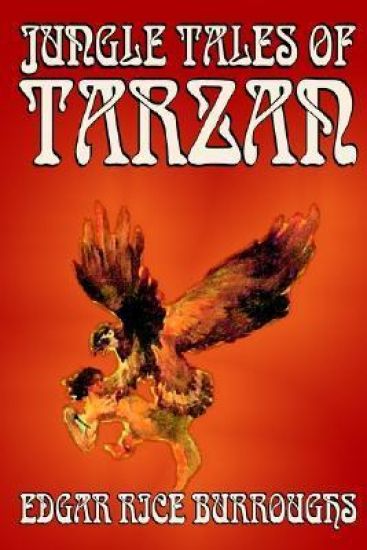
Jungle Tales of Tarzan by Edgar Rice Burroughs, Fiction, Literary, Action & Adventure
. . . . between Tarzan's avenging of his ape foster mother's death and his becoming leader of his ape tribe. In JUNGLE TALES OF TARZAN, Burroughs gives us an Ape-Man who might have fit in a television sitcom or a domestic drama. We see a Tarzan whose character is barely hinted at in the events of Tarzan on the Apes -- this is a collection of stories that take place in the same years as that first novel, but show us a very different aspect of Tarzan. We see "Tarzan's First Love," a tale of a teenage Tarzan with a distracting crush on a big-but-beautiful female gorilla called Teeka. The Ape-Man (well, boy, actually) declares his love for her and battles a childhood friend for her favor. But in the end he comes to understand that some things are Just Not Meant To Be, and forsakes his childhood heart-throb . . . In "The God of Tarzan," the Ape-Man asks himself the meaning of life -- and attempts to track down God in the same way that he would follow the spoor of a wounded deer. In "Tarzan Rescues the Moon," Tarzan sees a lunar eclipse and in his efforts to rescue the moon, shoots arrows into the moon until the moon re-emerges from the eclipse. In the end, it's Tarzan's struggle to find real meanings in the world around him that distinguish him from the apes who are his adoptive kin -- and make him as fascinating today as he was a hundred years ago.
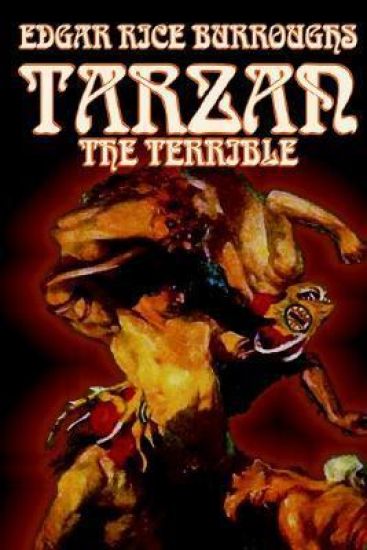
Tarzan the Terrible by Edgar Rice Burroughs, Fiction, Literary, Action & Adventure
In the previous volume, the Lord of the Jungle discovered the burnt corpse of his wife, Jane, after a visit to his African home by German soldiers. (One suspects that Burroughs never did like Jane; this sort of thing happened to her a lot.) In this volume, Tarzan learns that Jane was not murdered by the Germans but kidnaped -- and sets off in pursuit. As the novel begins, Tarzan has spent two months tracking his mate to Pal-ul-don ("Land of Men"), a hidden valley in Zaire, where he finds a land dinosaurs and men even stranger -- humanoids with tails. Ta-den is a hairless, white-skinned, Ho-don warrior; O-mat is a hairy, black skinned, Waz-don, chief of the tribe of Kor-ul-ja. In this new world Tarzan becomes a captive -- but he impresses his captors so well that they name him Tarzan-Jad-Guru ("Tarzan the Terrible"). Meanwhile, a second visitor has come to Pal-ul-don -- wearing only a loin cloth and carrying an Enfield rifle along and a long knife. Pal-ul-don is where Jane is being held captive, of course. . . .
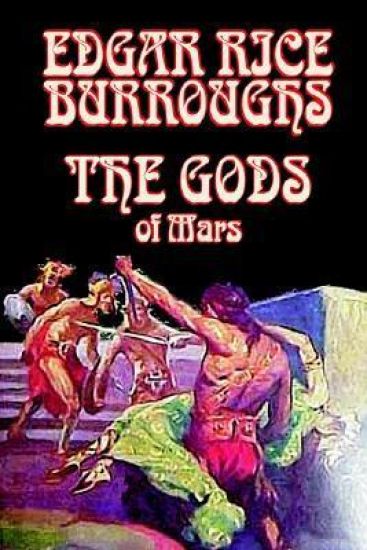
The Gods of Mars by Edgar Rice Burroughs, Science Fiction, Adventure
At the end of A PRINCESS OF MARS, the first volume in Burroughs's Mars series, John Carter managed to get the factory that produces oxygen for Barsoom working again -- and collapsed. When he came to, he found himself back on earth, and separated from his beloved Dejah Thoris, the Princess of Helium. It's a decade later when Carter returns to Barsoom, and he finds himself in that part of the planet that the natives consider to be "heaven" -- which is no heaven at all. Carter has to reunite with his friend the fierce green warrior Tars Tarkas, fight with plant men and the great white apes of Barsoom, violate some significant religious taboos, survive the affections of an evil goddess, foment a slave revolt, fight in an arena, and still save Dejah Thoris in the middle of a giant air battle between the red, green, black and white people of Barsoom. . . . High adventure, Martian style.
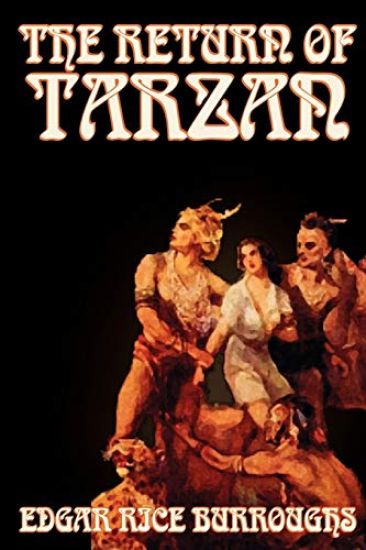
The Return of Tarzan by Edgar Rice Burroughs, Fiction, Literary, Action & Adventure
At the start of this volume, Tarzan knows his inheritance as an English lord, but is determined to hide that since he truly believes that his cousin, William Cecil Clayton, would make a better lord and husband for his beloved Jane. He gets involved with a married Russian countess (there's a plan -- oh, sure) who has issues with her criminal brother (Nicholas Rokoff -- a real villain, naturally, who becomes a regular in the series) and her older husband. As a consequence of his interaction with brother, Tarzan is lured into a room where he is attacked by a dozen Paris muggers. The scene that details this mugging is one of the great chapters in the literature of muggings. Tarzan fondly recalls his childhood and his foster ape mother with a friend, D'Arnot: "To you my friend, she would have appeared a hideous and ugly creature, but to me she was beautiful -- so gloriously does love transfigure its object."
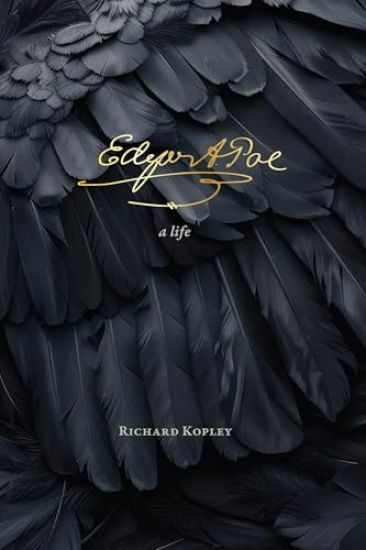
Edgar Allan Poe

Edgar Allan Poe

Richard Kopley

UNIVERSITY OF VIRGINIA PRESS
2025
sidottu
A ground-breaking exploration of one of America's most iconic and misunderstood authorsEdgar Allan Poe: A Life is the most comprehensive critical biography of Poe yet produced, exploring his fascinating life, his extraordinary work, and the vital relationship between the two. Best known for his tales of mystery and the macabre found in such works as The Raven, Annabel Lee, and The Tell-Tale Heart, this legendary American author continues to intrigue and enthral his devoted readers. Written by one of the world's leading Poe experts, this biography is a rich and rewarding study for the general reader as well as for the seasoned scholar. Richard Kopley combines a biographical narrative of Poe's enduring challenges—including his difficult foster father, his personal losses, his great struggles with depression and alcoholism, and the poverty that dogged his existence—with close readings of his work that focus not only on plot, character, and theme but also on language, allusion, and structure in a way that enhances our understanding of both. While incorporating past Poe scholarship, this volume also relates unknown stories of Poe culled from privately held letters unavailable to previous biographers, presenting a range of ground-breaking archival discoveries that illuminates the man and his oeuvre in ways never before possible.
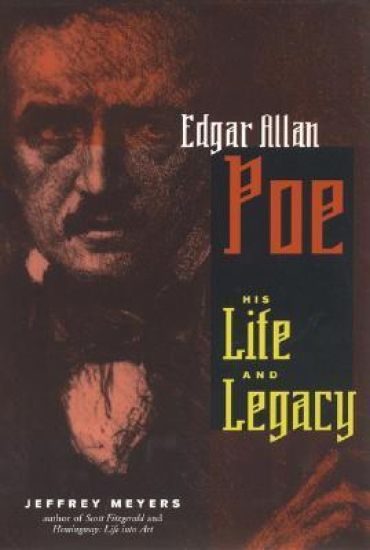
Edgar Allan Poe

Edgar Allan Poe

Jeffrey Meyers

Cooper Square Publishers Inc.,U.S.
2000
pokkari
This biography of Edgar Allan Poe (1809-1849), a giant of American literature who invented both the horror and detective genres, is a portrait of extremes: a disinherited heir, a brilliant but exploited author and editor, a man who veered radically from temperance to rampant debauchery, and an agnostic who sought a return to religion at the end of his life. Acclaimed biographer Jeffrey Meyers explores the writer's turbulent life and career, including his marriage and multiple, simultaneous romances, his literary feuds, and his death at an early age under bizarre and troubling circumstances.
Edgar Allan Poe - American Writers 89

Edgar Allan Poe - American Writers 89

Asselineau Roger

UNIVERSITY OF MINNESOTA PRESS
1970
nidottu
Edgar Allan Poe - American Writers 89 was first published in 1970. Minnesota Archive Editions uses digital technology to make long-unavailable books once again accessible, and are published unaltered from the original University of Minnesota Press editions.
Edgar Gardner Murphy

Edgar Gardner Murphy

Hugh Bailey

The University of Alabama Press
2003
nidottu
'Bailey's account is sharply focused on Murphy's public life and thought [and] the result is a well-researched, balanced, straightforward narrative that will serve as the standard authority.' -American Historical Review
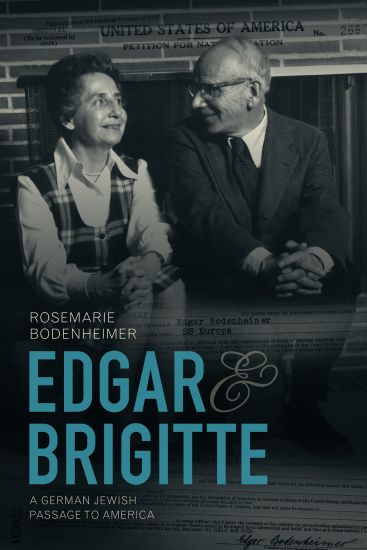
Edgar and Brigitte

Edgar and Brigitte

Rosemarie Bodenheimer

The University of Alabama Press
2016
sidottu
Edgar and Brigitte: A German Jewish Passage to America is the fruit of an extraordinary archive of personal journals, letters, speeches, and published writings left by Edgar and Brigitte Bodenheimer, who emigrated from Nazi Germany in 1933 and became American law professors. More German than Jewish, highly educated, and saturated to the core in the German cultural ideal of Bildung, Edgar and Brigitte embody many of the qualities of their generation of German Jews in the late nineteenth and early twentieth centuries. The couple’s encounters with the strange new dynamics of race, religion, and the workplace in their new American home offer a compelling account of the struggles that faced many immigrants with deep German roots. It is also an intimate portrait of a now-vanished German Jewish culture as it played out in the lives of Bodenheimer’s parents and her grandparents from the 1920s to the late 1960s, a story of emigration, assimilation, and the private struggles that accompany those forced shifts in orientation. The Bodenheimers’ letters and journals offer engaging perspectives into their personal lives that retrospective memories cannot match. Braiding intimate biography together with history and memoir, Edgar and Brigitte will appeal both to historians of the European Jewish diaspora and to readers interested in the struggles and resilience of people whose lives were upended by Hitler.
Edgar Allan Poe As Literary Critic

Edgar Allan Poe As Literary Critic

Edd Winfield Parks

University of Georgia Press
2010
pokkari
Edgar Allan Poe was one of the first major critics to develop and refine his critical theories through magazine articles and book reviews. Edgar Allan Poe as Literary Critic focuses on his interest in establishing an aesthetic for magazine literature, and Parks has examined Poe’s criticism at length. Poe’s efforts in the field of literary criticism have often been condemned as a rationalization of his own personal limitations as a writer, but this study contends that his critical theories far surpass such a narrow interpretation. Rather, Poe was “essentially a magazinist,” and therefore emphasized brevity, unity, and totality of effect and placed the highest value on literary types best suited to periodical literature.
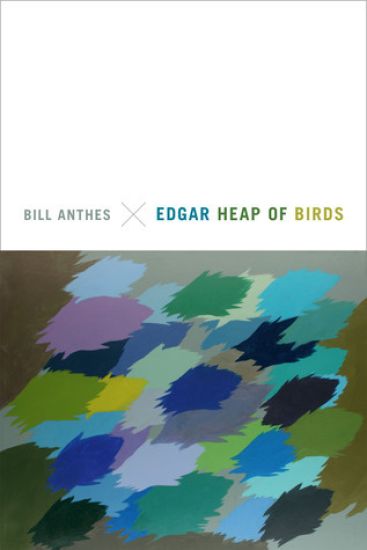
Edgar Heap of Birds

Edgar Heap of Birds

Bill Anthes

Duke University Press
2015
sidottu
For over three decades, contemporary Native American artist Hock E Aye Vi Edgar Heap of Birds has pursued a disciplined practice in multiple media, having shown his paintings, drawings, prints, and text-based conceptual art throughout numerous national and international galleries and public spaces. In the first book-length study of this important artist, Bill Anthes analyzes Heap of Birds's art and politics in relation to the international contemporary art scene, Native American history, and settler colonialism. Foregrounding how Heap of Birds roots his practice in Cheyenne spirituality and an indigenous way of seeing and being in the world, Anthes describes how Heap of Birds likens his art to "sharp rocks"-weapons delivering trenchant critiques of the loss of land, life, and autonomy endured by Native Americans. Whether appearing as interventions in public spaces or in a gallery, Heap of Birds's carefully honed artworks pose questions about time, modernity, identity, power, and the meaning and value of contemporary art in a global culture.
Edgar Heap of Birds

Edgar Heap of Birds

Bill Anthes

Duke University Press
2015
pokkari
For over three decades, contemporary Native American artist Hock E Aye Vi Edgar Heap of Birds has pursued a disciplined practice in multiple media, having shown his paintings, drawings, prints, and text-based conceptual art throughout numerous national and international galleries and public spaces. In the first book-length study of this important artist, Bill Anthes analyzes Heap of Birds's art and politics in relation to the international contemporary art scene, Native American history, and settler colonialism. Foregrounding how Heap of Birds roots his practice in Cheyenne spirituality and an indigenous way of seeing and being in the world, Anthes describes how Heap of Birds likens his art to "sharp rocks"-weapons delivering trenchant critiques of the loss of land, life, and autonomy endured by Native Americans. Whether appearing as interventions in public spaces or in a gallery, Heap of Birds's carefully honed artworks pose questions about time, modernity, identity, power, and the meaning and value of contemporary art in a global culture.