Kirjojen hintavertailu. Mukana 11 342 296 kirjaa ja 12 kauppaa.

Kirjahaku

Etsi kirjoja tekijän nimen, kirjan nimen tai ISBN:n perusteella.

1000 tulosta hakusanalla Elbert Perce

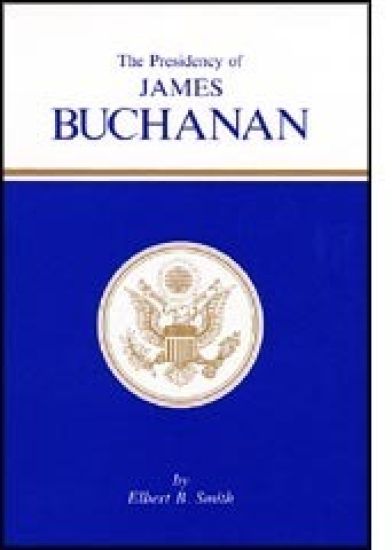
The Presidency of James Buchanan

The Presidency of James Buchanan

Elbert B. Smith

University Press of Kansas
1975
sidottu
This book offers conclusions that are very different from most of the traditional historical interpretations of the Buchanan presidency. Historians have either condemned Buchanan for weakness and vacillation or portrayed him as a president dedicated to peace who did everything constitutionally possible to avoid war. Under the scrutiny of Elbert B. Smith, Buchanan emerges as a strong figure who made vital contributions not to peace but to the accelerating animosities that produced the war. Historians who have considered the Civil War a necessary and justifiable price for the destruction of slavery should feel a debt to James Buchanan, Smith writes. Those who think the war could and should have been avoided owe him nothing. Most of the accounts of the era have concentrated on the Dred Scott Case, Bleeding Kansas and the Lecompton Constitution, the Lincoln-Douglas debates, John Brown, the rise of the Republicans and the disintegration of the Democrats, the election of 1860, and the bitter quarrels over slavery extension occasioned by these events. Buchanan has often appeared on a stage occupied by more important actors. Whether or not the war was already inevitable by March, 1857, cannot be proved. That a subsequent series of emotion-packed events filled both North and South with rage and fear, triggering secession and the war, is undebatable. It is Smith's theory that Buchanan, in leading the United States through these fateful years, added much to the war spirit that developed in both sections. Driven by affection and sympathy for the Southerners, he tried to satisfy their demands for slavery rights in the territories. This aroused bitter anti-South feelings throughout the North, which foiled his efforts and further convinced the Southerners that they could no longer have their way inside the Union. The one event that finally triggered the Southern secession was the election of a Republican president, and Buchanan's agreement with the Southern demands and his personal hatred for Stephen A. Douglas did much to accomplish this. Covering the most controversial period in American history, Smith presents important new evaluations for the consideration of students of both the Civil War and the presidency.
The Presidencies of Zachary Taylor and Millard Fillmore

The Presidencies of Zachary Taylor and Millard Fillmore

Elbert B. Smith

University Press of Kansas
1988
sidottu
In this book Elbert B. Smith disagrees sharply with traditional interpretations of Taylor and Fillmore, the twelfth and thirteenth presidents (from 1848 to 1853). He argues persuasively that the slaveholding Taylor--and not John C. Calhoun--was the realistic defender of southern slaveholding interests, and that Taylor did nothing to impede the Compromise of 1850. While Taylor opposed the combination of the issues into a single compromise bill that could not be passed without amendments to suit the extremists, he would have approved the different parts of the Compromise that were ultimately passed as separate measures. Most historians have written that Taylor's death and Fillmore's accession led to an abrupt change in presidential policy, but Smith believes that continuity predominated. Taylor wanted the controversies debated and acted upon as separate bills. Fillmore helped to accomplish this. Taylor was ready to defend New Mexico against Texas. Fillmore ordered 750 additional troops to New Mexico and announced publicly that he would do the same. Taylor had wanted statehood for California and New Mexico with self-determination on slavery. As separate measures, the Congress admitted California and preserved a viable New Mexico as a territory authorized to make its own decision on slavery. With secessionists pitted against moderates in the southern elections of 1851, Fillmore had to choose between his constitutional oath and his personal antipathy to the new fugitive slave law. He supported the law and thereby helped keep southern moderates in power for a few more years. In fact, however, his efforts did not recapture a single slave. In Smith's view, Fillmore's most serious mistake was refusing in 1852 to get himself nominated for another term. Smith argues that Taylor and Fillmore have been seriously misrepresented and underrated. They faced a terrible national crisis and accepted every responsibility without flinching or directing blame toward anyone else.