Kirjojen hintavertailu. Mukana 12 459 402 kirjaa ja 12 kauppaa.

Kirjahaku

Etsi kirjoja tekijän nimen, kirjan nimen tai ISBN:n perusteella.

1000 tulosta hakusanalla Elizabeth a Tower

A Matter of Discretion

A Matter of Discretion

Brian R. Calfano; Melissa R. Michelson; Elizabeth A. Oldmixon

Rowman Littlefield
2017
sidottu
Clergy are pillars of local religious communities, and Roman Catholic priests are perhaps the quintessential examples of pastors functioning as political elites. The political science literature demonstrates that priests (indeed, clergy more generally) are well-positioned to influence the faithful, even if this influence is somewhat inconsistent. At their core, priests are opinion leaders and representatives of their church to both the faithful and their local communities. But exactly how Catholic priests determine the political acts and attitudes associated with their elite role remains a puzzle. We suggest it is the product of an interactive institutional, social, and psychological milieu, the complexity of which has not been fully assessed in the extant literature. Though some might prefer to think of priests as profiles in courage operating above the political fray, the institutional and personal realities of priest life often forces them to deal with the political realm. In doing so, priests are variably responsive to different principals, or reference groups, that represent specific dimensions of their professional context. Drawing on a series of randomized experiments on samples of Roman Catholic priests in the US and Ireland, we find that priests cognitively draw on varying professional and personal cues in responding to their employer’s institutional preferences. Furthermore, how priests represent their church's political preferences to parishioners appears to be a matter of individual-level discretion.
Atlas of Gastrointestinal Pathology: A Pattern Based Approach to Neoplastic Biopsies

Atlas of Gastrointestinal Pathology: A Pattern Based Approach to Neoplastic Biopsies

Christina Arnold; Dora Lam-Himlin; Elizabeth A. Montgomery

Lippincott Williams and Wilkins
2019
sidottu
Selected as a Doody's Core Title for 2022 and 2023! Closely mirroring the daily sign-out process, Atlas of Gastrointestinal Pathology: A Pattern Based Approach to Neoplastic Biopsies is a highly illustrated, efficient guide to accurate diagnosis. This practical reference uses a proven, pattern-based approach to clearly explain how to interpret challenging cases by highlighting red flags in the clinical chart and locating hidden clues in the slides. Useful as a daily “scope-side guide,” it features numerous clinical and educational features that help you find pertinent information, reach a correct diagnosis, and assemble a thorough and streamlined pathology report. More than 1,600 high-quality photomicrographs capture the subtle morphologic spectrum of neoplastic processes of the tubular GI tract. Each image is captioned with key diagnostic considerations and includes call-outs showing subtle features and diagnostic clues. Practical tools throughout the text include: Tables that emphasize salient clinicopathologic features, management implications, and therapeutic options o Discussions of how and when to incorporate molecular tools o Checklists for key elements of the diagnostic approach and sample notes for inclusion in pathology reports Relevant endoscopic images, photographs of select gross specimens, and medical figures Brief reviews of normal histology that provide contrast to succeeding patterns “Pearls and Pitfalls” and “Near Misses” sections with lessons from real life sign-out experience “Frequently Asked Questions” sections that discuss common diagnostic dilemmas “Sample Note” sections that offer a template of how to synthesize complicated or especially challenging topics Quizzes in every chapter that provide experience with high-yield, board-style teaching topics Enhance Your eBook Reading Experience Read directly on your preferred device(s), such as computer, tablet, or smartphone. Easily convert to audiobook, powering your content with natural language text-to-speech.
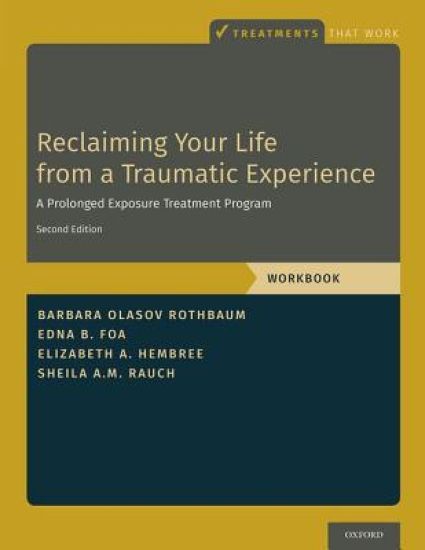
Reclaiming Your Life from a Traumatic Experience

Reclaiming Your Life from a Traumatic Experience

Barbara Olasov Rothbaum; Edna B. Foa; Elizabeth A. Hembree; Sheila A.M. Rauch

Oxford University Press Inc
2019
nidottu
Those who have experienced a traumatic event and are having trouble moving past feelings of fear, shame and guilt, or helplessness may be diagnosed with Posttraumatic Stress Disorder (PTSD). Reclaiming Your Life from a Traumatic Experience: A Prolonged Exposure Treatment Program can help readers to overcome and reclaim their lives from PTSD. Best used in combination with treatment by a mental health professional, the second edition of this Workbook, along with the accompanying Therapist Guide, will help readers work through PTSD regardless of the type of trauma experienced-be it a motor vehicle accident, physical or sexual assault, or combat-related event. The program outlined in this book will reduce anxiety and distress, teaching readers to face memories of trauma while processing their emotions about the event using a scientifically tested and proven technique called Prolonged Exposure Therapy. Instead of avoiding or escaping situations that provoke anxiety and other negative emotions, readers will learn how to reevaluate feelings and beliefs to think differently about their traumatic experiences. Complete with information on PTSD, as well as case examples, self-assessment tools, and homework assignments, Reclaiming Your Life from a Traumatic Experience is an invaluable tool on the road to recovery from PTSD.
Ta tillbaka ditt liv, 2 utg : Arbetsbok för återhämtning efter en traumatisk upplevelse (2:a utgåvan)

Ta tillbaka ditt liv, 2 utg : Arbetsbok för återhämtning efter en traumatisk upplevelse (2:a utgåvan)

Barbara Olasov Rothbaum; Edna B. Foa; Elizabeth A. Hembree; Sheila A.M. Rauch

Natur Kultur Läromedel och Akademi
2021
nidottu
Om du har upplevt en eller flera traumatiska händelser och utvecklat posttraumatiskt stressyndrom, ptsd, så kan du behöva hjälp med att återhämta dig från symtom som flashbacks, mardrömmar och lättskrämdhet. Behandlingsmetoden prolonged exposure, en form av kognitiv beteendeterapi, har visat sig vara en hjälpsam behandling för alla former av trauman. Den är vetenskapligt prövad under de senaste 30 åren och rekommenderas som förstahandsval vid ptsd. Författarna till denna arbetsbok har alla en djupgående kunskap om och klinisk erfarenhet av området.Ta tillbaka ditt liv riktar sig direkt till dig som varit med om en eller flera traumatiska händelser och fått diagnosen ptsd. Boken ska användas i en behandling där du samarbetar med din terapeut. Arbetsboken vägleder dig i att under trygga förhållanden stegvis möta minnesbilder och bearbeta de upplevelser som är kopplade till traumat – och att successivt återta ditt liv. På bokens hemsida finns formulär och arbetsblad för nedladdning.Svensk fackgranskning av Maria Bragesjö, leg. psykolog, leg. psykoterapeut, specialist i klinisk psykologi och utbildare i prolonged exposure.Barbara Olasov Rothbaum är professor i psykiatri vid Emory University School of Medicine.Edna B. Foa är professor i klinisk psykologi med inriktning mot psykiatri vid University of Pennsylvania.Elizabeth A. Hembree är biträdande professor i psykologi med inriktning mot psykiatri vid University of Pennsylvania, Perelman School of Medicine.Sheila A.M. Rauch är professor i psykiatri vid vid Emory University School of Medicine.
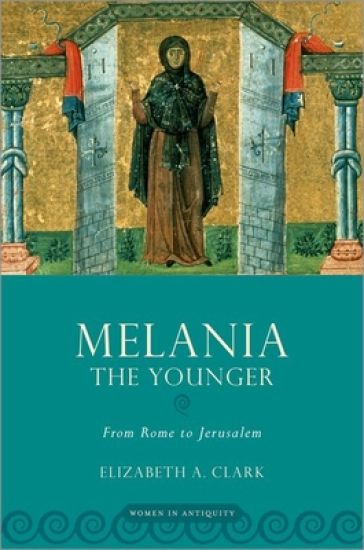
Melania the Younger

Melania the Younger

Elizabeth A. Clark

Oxford University Press Inc
2021
sidottu
Melania the Younger: From Rome to Jerusalem explores the richly detailed story of Melania, an early fifth-century Roman Christian aristocrat who renounced her staggering wealth to lead a life of ascetic renunciation. Hers is a tale of "riches to rags." Born to high Roman aristocracy in the late fourth century, Melania encountered numerous difficulties posed by family members, Roman officials, and historical circumstances in disposing of her wealth, property (spread across at least eight Roman provinces), and thousands of slaves. Leaving Rome with her entourage a few years before Alaric the Goth's sack of Rome in 410, she journeyed to Sicily, then to North Africa, finally settling in Jerusalem-all while founding monasteries along the way. Towards the end of her life, she traveled to Constantinople (present-day Istanbul) in an attempt to convert to Christianity her still-pagan uncle, who was on a state mission to the eastern Roman court. Throughout her life, she was accustomed to meet and be assisted by emperors and empresses, bishops, and other high dignitaries. Embracing a fairly extreme asceticism, Melania died in Jerusalem in 439. A new English translation of her Life, composed by a long-time assistant who succeeded her in the direction of the male and female monasteries in Jerusalem, accompanies this biographical study.
Melania the Younger

Melania the Younger

Elizabeth A. Clark

Oxford University Press Inc
2021
nidottu
Melania the Younger: From Rome to Jerusalem explores the richly detailed story of Melania, an early fifth-century Roman Christian aristocrat who renounced her staggering wealth to lead a life of ascetic renunciation. Hers is a tale of "riches to rags." Born to high Roman aristocracy in the late fourth century, Melania encountered numerous difficulties posed by family members, Roman officials, and historical circumstances in disposing of her wealth, property (spread across at least eight Roman provinces), and thousands of slaves. Leaving Rome with her entourage a few years before Alaric the Goth's sack of Rome in 410, she journeyed to Sicily, then to North Africa, finally settling in Jerusalem-all while founding monasteries along the way. Towards the end of her life, she traveled to Constantinople (present-day Istanbul) in an attempt to convert to Christianity her still-pagan uncle, who was on a state mission to the eastern Roman court. Throughout her life, she was accustomed to meet and be assisted by emperors and empresses, bishops, and other high dignitaries. Embracing a fairly extreme asceticism, Melania died in Jerusalem in 439. A new English translation of her Life, composed by a long-time assistant who succeeded her in the direction of the male and female monasteries in Jerusalem, accompanies this biographical study.
Phase 1 Cancer Clinical Trials

Phase 1 Cancer Clinical Trials

Elizabeth A Eisenhauer; Christopher Twelves; Marc Buyse

Oxford University Press
2006
nidottu
Phase I trials are a critical first step in the study of novel therapeutic approaches. They follow years of development in the laboratory, and precede Phase II and III trials where testing of the drug becomes more focused yet is conducted on a wider scale. The primary goals of Phase I trials are to identify the recommended dose, schedule and pharmacologic behaviour of new agents or new combinations of agents, and to describe the adverse effects of treatment. In cancer therapeutics, such studies have particular challenges. In general, because of the nature of the effects of treatment, most studies are conducted in patients with advanced malignancy, rather than in healthy volunteers. Furthermore, the endpoints of these trials are usually measures of adverse effects, but increasingly investigators are interested in assessment of the effects of new drugs on their molecular target. These factors render the design, conduct, analysis and ethical aspects of Phase I cancer clinical trials unique. This book provides a practical guide to Phase I cancer trials and is appropriate for oncology trainees or specialists interested in understanding cancer drug development. Topics covered include preclinical requirements needed for first-in-man investigation of new agents, principles and statistical design, ethical considerations of Phase I studies, pharmacokinetics, pharmacodynamics, and studies in special populations. Practical information on protocol development, study activation and conduct, as well as how to write reports of the results, are incorporated. Numerous appendices offer document templates to use in Phase I study development, and examples from actual Phase I trials are interspersed throughout, making this a true 'hands-on' guide. In an exciting time in cancer research, as the number and type of new potential anti-cancer drugs is increasing dramatically, this book provides much needed information on the first stage in getting a drug approved.
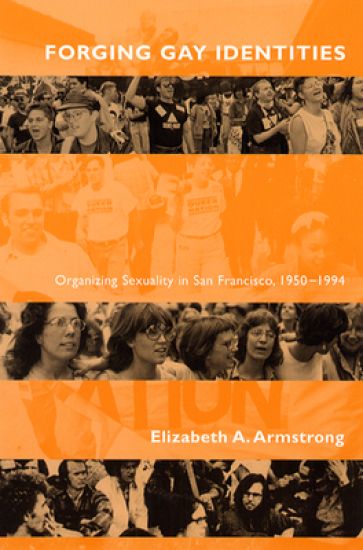
Forging Gay Identities

Forging Gay Identities

Elizabeth A. Armstrong

University of Chicago Press
2002
sidottu
Unlike many social movements, the gay and lesbian struggle for visibility and rights has succeeded in combining a unified group identity with the celebration of individual differences. In "Forging Gay Identities", Elizabeth Armstrong explores how this happened, developing a new approach that draws on both social movement and organizational theory. She traces the evolution of gay life, gay organizations and gay identity in San Francisco from the 1950s to the mid-1990s, identifying two events as pivotal in their evolution. First, in 1969 the encounter between early homophile organizing and the New Left produced gay liberation and its signature contribution - coming out. Second, the sudden decline of the New Left in the early 1970s reduced the viability of the radical gay-liberation goal of societal transformation and prompted gay activists to redirect their movement to the affirmation of gay identity and the pursuit of gay rights. "Forging Gay Identities" should be valuable for anyone studying social movements, culture, identity politics or ogranizational theory.
Forging Gay Identities

Forging Gay Identities

Elizabeth A. Armstrong

University of Chicago Press
2002
nidottu
Unlike many social movements, the gay and lesbian struggle for visibility and rights has succeeded in combining a unified group identity with the celebration of individual differences. In "Forging Gay Identities", Elizabeth Armstrong explores how this happened, developing a new approach that draws on both social movement and organizational theory. She traces the evolution of gay life, gay organizations and gay identity in San Francisco from the 1950s to the mid-1990s, identifying two events as pivotal in their evolution. First, in 1969 the encounter between early homophile organizing and the New Left produced gay liberation and its signature contribution - coming out. Second, the sudden decline of the New Left in the early 1970s reduced the viability of the radical gay-liberation goal of societal transformation and prompted gay activists to redirect their movement to the affirmation of gay identity and the pursuit of gay rights. "Forging Gay Identities" should be valuable for anyone studying social movements, culture, identity politics or ogranizational theory.
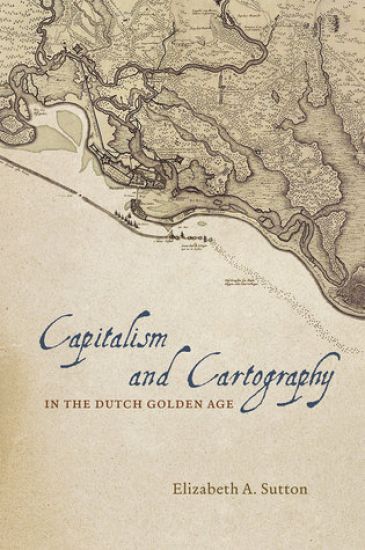
Capitalism and Cartography in the Dutch Golden Age

Capitalism and Cartography in the Dutch Golden Age

Elizabeth A. Sutton

University of Chicago Press
2015
sidottu
In Capitalism and Cartography in the Dutch Golden Age, Elizabeth A. Sutton explores the fascinating but previously neglected history of corporate cartography during the Dutch Golden Age, from ca. 1600 to 1650. She examines how maps were used as propaganda tools for the Dutch West India Company in order to encourage the commodification of land and an overall capitalist agenda. Building her exploration around the central figure of Claes Jansz Vischer, an Amsterdam-based publisher closely tied to the Dutch West India Company, Sutton shows how printed maps of Dutch Atlantic territories helped rationalize the Dutch Republic's global expansion. Maps of land reclamation projects in the Netherlands, as well as the Dutch territories of New Netherland (now New York) and New Holland (Dutch Brazil), reveal how print media were used both to increase investment and to project a common narrative of national unity. Maps of this era showed those boundaries, commodities, and topographical details that publishers-state-sponsored corporate bodies-and the Dutch West India Company merchants and governing Dutch elite deemed significant to their agenda. In the process, Sutton argues, they perpetuated and promoted modern state capitalism.
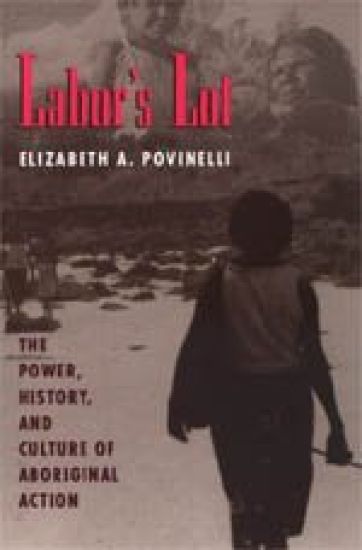
Labor's Lot

Labor's Lot

Elizabeth A. Povinelli

University of Chicago Press
1994
sidottu
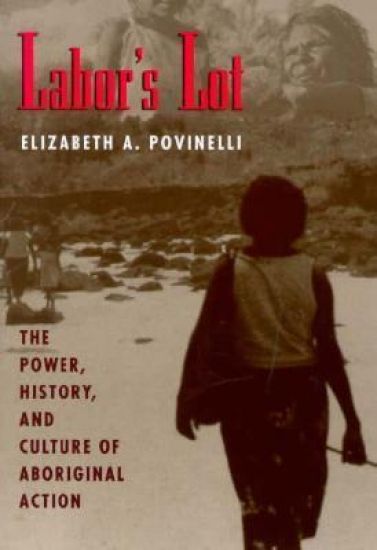
How does an Aboriginal community see itself, its work and its place on the land? Elizabeth Povinelli went to the Belyuen community of northern Australia to show how it draws identity from deep connections between labour, language and the landscape. Her findings challenge Western notions of "productive labour" and long-standing ideas about the role of culture in subsistence economies. In "Labor's Lot", Povinelli shows how everyday activities shape Aboriginal identity and provide cultural meaning. She focuses on the Belyuen women's interactions with the countryside and on Belyuen conflicts with the Australian government over control of local land. Her analysis raises serious questions about the validity of Western theories about labour and culture and their impact on Aboriginal society. Povinelli's focus on women's activities provides an important counterpoint to recent works centering on male roles in hunter-gatherer societies. Her "cultural economy" approach overcomes the dichotomy between the two standard approaches to these studies. "Labor's Lot" should engage anyone interested in indigenous peoples or in the relationship between culture and economy in contemporary social practice.
Labor's Lot

Labor's Lot

Elizabeth A. Povinelli

University of Chicago Press
1994
nidottu
How does an Aboriginal community see itself, its work and its place on the land? Elizabeth Povinelli went to the Belyuen community of northern Australia to show how it draws identity from deep connections between labour, language and the landscape. Her findings challenge Western notions of "productive labour" and long-standing ideas about the role of culture in subsistence economies. In "Labor's Lot", Povinelli shows how everyday activities shape Aboriginal identity and provide cultural meaning. She focuses on the Belyuen women's interactions with the countryside and on Belyuen conflicts with the Australian government over control of local land. Her analysis raises serious questions about the validity of Western theories about labour and culture and their impact on Aboriginal society. Povinelli's focus on women's activities provides an important counterpoint to recent works centering on male roles in hunter-gatherer societies. Her "cultural economy" approach overcomes the dichotomy between the two standard approaches to these studies. "Labor's Lot" should engage anyone interested in indigenous peoples or in the relationship between culture and economy in contemporary social practice.
Appetite and Its Discontents

Appetite and Its Discontents

Elizabeth A Williams

University of Chicago Press
2020
sidottu
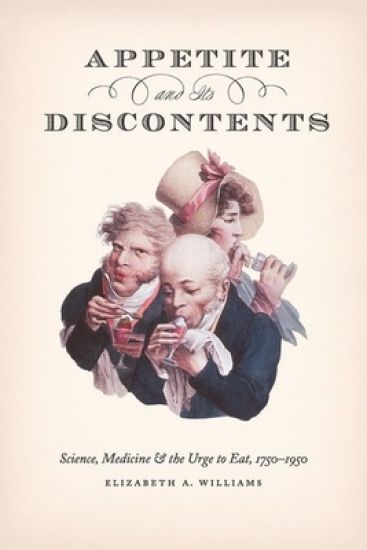
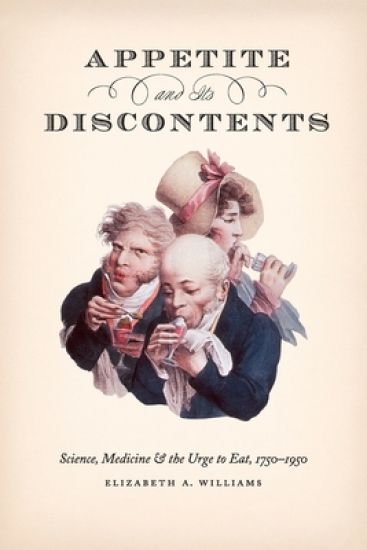
Why do we eat? Is it instinct, or some other impetus? Despite the necessity of food, anxieties about what and how to eat are widespread in our culture, and scientists and physicians continue to have shifting theories about the phenomenon of appetite and its causes and norms. In Appetite and Its Discontents, Elizabeth A. Williams charts the history of inquiry into appetite between 1750 and 1950, as scientific and medical concepts of appetite shifted alongside developments in physiology, natural history, psychology, and ethology. Williams argues that trust in appetite was undermined in the mid-eighteenth century, when researchers who investigated ingestion and digestion began claiming that science alone could say which ways of eating were healthy and which were not. Tracing nineteenth- and twentieth-century conflicts over the nature of appetite, Williams explores contemporary worries about eating through the lens of science and medicine to show us how appetite--once a matter of personal inclination--became an object of science.
Appetite and Its Discontents

Appetite and Its Discontents

Elizabeth A Williams

University of Chicago Press
2020
pokkari
Why do we eat? Is it instinct, or some other impetus? Despite the necessity of food, anxieties about what and how to eat are widespread in our culture, and scientists and physicians continue to have shifting theories about the phenomenon of appetite and its causes and norms. In Appetite and Its Discontents, Elizabeth A. Williams charts the history of inquiry into appetite between 1750 and 1950, as scientific and medical concepts of appetite shifted alongside developments in physiology, natural history, psychology, and ethology. Williams argues that trust in appetite was undermined in the mid-eighteenth century, when researchers who investigated ingestion and digestion began claiming that science alone could say which ways of eating were healthy and which were not. Tracing nineteenth- and twentieth-century conflicts over the nature of appetite, Williams explores contemporary worries about eating through the lens of science and medicine to show us how appetite--once a matter of personal inclination--became an object of science.
The Holy Spirit and Worship

The Holy Spirit and Worship

Elizabeth A. Welch

JAMES CLARKE CO LTD
2022
nidottu
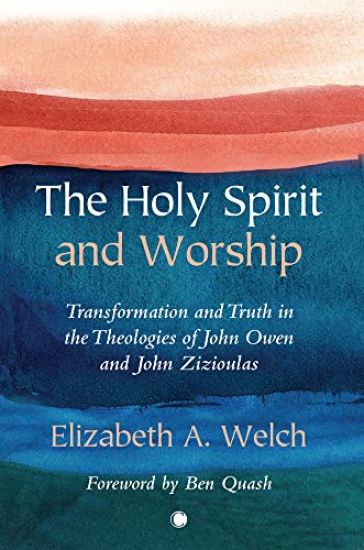
The Holy Spirit has become an object of greater attention in Trinitarian theology, and indeed in the broader life of the Church, since the rise of Pentecostalism at the beginning of the twentieth century. Different understandings of the Holy Spirit have had different impacts on worship; here, Elizabeth Welch examines four surprising overlaps in the thought of two radically different traditions of the church about the relationship between the Holy Spirit and worship. These traditions are represented by John Owen, from seventeenth-century England, and John Zizioulas, from contemporary Greece. Welch explores in turn the common themes of the personal and relational nature of the triune God, the immediacy of the encounter with God through the Holy Spirit in worship, the role of the Holy Spirit in leading people into truth, and the transformative nature of worship that draws people into sharing God's purpose for the world. In each, the insights of Owen and Zizioulas shed new light on the ongoing debate in the Church today.
National Animals

National Animals

Elizabeth A Jackson

Tellwell Talent
2023
pokkari
Spark your child's interests before a visit to the zoo Together, you can learn fun facts about animals and the country they represent. This volume will explore Australia, India and the United States of America. Children 7 years old and under will learn how far a kangaroo can jump, how fast a tiger can run, and how high an eagle can fly, along with colourful illustrations. More volumes to follow.
Staging the People

Staging the People

Elizabeth A. Osborne

Palgrave Macmillan
2011
sidottu
The Federal Theatre Project, a New Deal plan to fund theatre and other live artistic performances during the Great Depression, had the primary goal of employing out-of-work artists, writers, and directors, with the secondary aim of entertaining poor families and creating relevant art. These case studies explore the ties between the Federal Theatre Project and regional communities throughout the United States.
Threatening Property

Threatening Property

Elizabeth A. Herbin-Triant

Columbia University Press
2019
sidottu
White supremacists determined what African Americans could do and where they could go in the Jim Crow South, but they were less successful in deciding where black people could live because different groups of white supremacists did not agree on the question of residential segregation. In Threatening Property, Elizabeth A. Herbin-Triant investigates early-twentieth-century campaigns for residential segregation laws in North Carolina to show how the version of white supremacy supported by middle-class white people differed from that supported by the elites. Class divides prevented Jim Crow from expanding to the extent that it would require separate neighborhoods for black and white southerners as in apartheid South Africa.Herbin-Triant details the backlash against the economic successes of African Americans among middle-class whites, who claimed that they wished to protect property values and so campaigned for residential segregation laws both in the city and the countryside, where their actions were modeled on South Africa’s Natives Land Act. White elites blocked these efforts, primarily because it was against their financial interest to remove the black workers that they employed in their homes, farms, and factories. Herbin-Triant explores what the split over residential segregation laws reveals about competing versions of white supremacy and about the position of middling whites in a region dominated by elite planters and businessmen. An illuminating work of social and political history, Threatening Property puts class front and center in explaining conflict over the expansion of segregation laws into private property.
Threatening Property

Threatening Property

Elizabeth A. Herbin-Triant

Columbia University Press
2019
pokkari
White supremacists determined what African Americans could do and where they could go in the Jim Crow South, but they were less successful in deciding where black people could live because different groups of white supremacists did not agree on the question of residential segregation. In Threatening Property, Elizabeth A. Herbin-Triant investigates early-twentieth-century campaigns for residential segregation laws in North Carolina to show how the version of white supremacy supported by middle-class white people differed from that supported by the elites. Class divides prevented Jim Crow from expanding to the extent that it would require separate neighborhoods for black and white southerners as in apartheid South Africa.Herbin-Triant details the backlash against the economic successes of African Americans among middle-class whites, who claimed that they wished to protect property values and so campaigned for residential segregation laws both in the city and the countryside, where their actions were modeled on South Africa’s Natives Land Act. White elites blocked these efforts, primarily because it was against their financial interest to remove the black workers that they employed in their homes, farms, and factories. Herbin-Triant explores what the split over residential segregation laws reveals about competing versions of white supremacy and about the position of middling whites in a region dominated by elite planters and businessmen. An illuminating work of social and political history, Threatening Property puts class front and center in explaining conflict over the expansion of segregation laws into private property.
American Gamelan and the Ethnomusicological Imagination

American Gamelan and the Ethnomusicological Imagination

Elizabeth A. Clendinning

University of Illinois Press
2020
sidottu
Gamelan and American academic institutions have maintained their close association for more than sixty years. Elizabeth A. Clendinning illuminates what it means to devote one's life to world music ensemble education by examining the career and community surrounding the Balinese-American performer and teacher I Made Lasmawan. Weaving together stories of Indonesian and American practitioners, colleagues, and friends, Clendinning shows the impact of academic world music ensembles on the local and transnational communities devoted to education and the performing arts. While arguing for the importance of such ensembles, Clendinning also spotlights how performers and educators use them to create stable and rewarding artistic communities. Cross-cultural ensemble education emerges as a worthy goal for students and teachers alike, particularly at a time when people around the world express more enthusiasm about raising walls to keep others out rather than building bridges to invite them in.