Kirjojen hintavertailu. Mukana 12 595 353 kirjaa ja 12 kauppaa.

Kirjahaku

Etsi kirjoja tekijän nimen, kirjan nimen tai ISBN:n perusteella.

1000 tulosta hakusanalla Eric A.K. Middlemost

Climate Change Justice

Climate Change Justice

Eric A. Posner; David Weisbach

Princeton University Press
2010
sidottu
Climate change and justice are so closely associated that many people take it for granted that a global climate treaty should--indeed, must--directly address both issues together. But, in fact, this would be a serious mistake, one that, by dooming effective international limits on greenhouse gases, would actually make the world's poor and developing nations far worse off. This is the provocative and original argument of Climate Change Justice. Eric Posner and David Weisbach strongly favor both a climate change agreement and efforts to improve economic justice. But they make a powerful case that the best--and possibly only--way to get an effective climate treaty is to exclude measures designed to redistribute wealth or address historical wrongs against underdeveloped countries. In clear language, Climate Change Justice proposes four basic principles for designing the only kind of climate treaty that will work--a forward-looking agreement that requires every country to make greenhouse--gas reductions but still makes every country better off in its own view. This kind of treaty has the best chance of actually controlling climate change and improving the welfare of people around the world.
Climate Change Justice

Climate Change Justice

Eric A. Posner; David Weisbach

Princeton University Press
2015
pokkari
Climate change and justice are so closely associated that many people take it for granted that a global climate treaty should--indeed, must--directly address both issues together. But, in fact, this would be a serious mistake, one that, by dooming effective international limits on greenhouse gases, would actually make the world's poor and developing nations far worse off. This is the provocative and original argument of Climate Change Justice. Eric Posner and David Weisbach strongly favor both a climate change agreement and efforts to improve economic justice. But they make a powerful case that the best--and possibly only--way to get an effective climate treaty is to exclude measures designed to redistribute wealth or address historical wrongs against underdeveloped countries. In clear language, Climate Change Justice proposes four basic principles for designing the only kind of climate treaty that will work--a forward-looking agreement that requires every country to make greenhouse--gas reductions but still makes every country better off in its own view. This kind of treaty has the best chance of actually controlling climate change and improving the welfare of people around the world.
Radical Markets

Radical Markets

Eric A. Posner; Eric Glen Weyl; Vitalik Buterin; Jaron Lanier

PRINCETON UNIVERSITY PRESS
2018
sidottu
Revolutionary ideas on how to use markets to bring about fairness and prosperity for allMany blame today's economic inequality, stagnation, and political instability on the free market. The solution is to rein in the market, right? Radical Markets turns this thinking—and pretty much all conventional thinking about markets, both for and against—on its head. The book reveals bold new ways to organize markets for the good of everyone. It shows how the emancipatory force of genuinely open, free, and competitive markets can reawaken the dormant nineteenth-century spirit of liberal reform and lead to greater equality, prosperity, and cooperation.Eric Posner and Glen Weyl demonstrate why private property is inherently monopolistic, and how we would all be better off if private ownership were converted into a public auction for public benefit. They show how the principle of one person, one vote inhibits democracy, suggesting instead an ingenious way for voters to effectively influence the issues that matter most to them. They argue that every citizen of a host country should benefit from immigration—not just migrants and their capitalist employers. They propose leveraging antitrust laws to liberate markets from the grip of institutional investors and creating a data labor movement to force digital monopolies to compensate people for their electronic data.Only by radically expanding the scope of markets can we reduce inequality, restore robust economic growth, and resolve political conflicts. But to do that, we must replace our most sacred institutions with truly free and open competition—Radical Markets shows how.
Radical Markets

Radical Markets

Eric A. Posner; Eric Glen Weyl; Vitalik Buterin; Jaron Lanier

Princeton University Press
2019
pokkari
Revolutionary ideas on how to use markets to achieve fairness and prosperity for allMany blame today's economic inequality, stagnation, and political instability on the free market. The solution is to rein in the market, right? Radical Markets turns this thinking on its head. With a new foreword by Ethereum creator Vitalik Buterin and virtual reality pioneer Jaron Lanier as well as a new afterword by Eric Posner and Glen Weyl, this provocative book reveals bold new ways to organize markets for the good of everyone. It shows how the emancipatory force of genuinely open, free, and competitive markets can reawaken the dormant nineteenth-century spirit of liberal reform and lead to greater equality, prosperity, and cooperation.Only by radically expanding the scope of markets can we reduce inequality, restore robust economic growth, and resolve political conflicts. But to do that, we must replace our most sacred institutions with truly free and open competition—Radical Markets shows how.
Schoolhouses, Courthouses, and Statehouses

Schoolhouses, Courthouses, and Statehouses

Eric A. Hanushek; Alfred A. Lindseth

Princeton University Press
2020
pokkari
Improving public schools through performance-based fundingSpurred by court rulings requiring states to increase public-school funding, the United States now spends more per student on K-12 education than almost any other country. Yet American students still achieve less than their foreign counterparts, their performance has been flat for decades, millions of them are failing, and poor and minority students remain far behind their more advantaged peers. In this book, Eric Hanushek and Alfred Lindseth trace the history of reform efforts and conclude that the principal focus of both courts and legislatures on ever-increasing funding has done little to improve student achievement. Instead, Hanushek and Lindseth propose a new approach: a performance-based system that directly links funding to success in raising student achievement. This system would empower and motivate educators to make better, more cost-effective decisions about how to run their schools, ultimately leading to improved student performance. Hanushek and Lindseth have been important participants in the school funding debate for three decades. Here, they draw on their experience, as well as the best available research and data, to show why improving schools will require overhauling the way financing, incentives, and accountability work in public education.
To Balance or Not to Balance

To Balance or Not to Balance

Eric A. Miller

Ashgate Publishing Limited
2006
sidottu
With the collapse of the Soviet Union in 1991, fifteen newly independent states emerged from the imperial wreckage, some more ready than others to grasp their new found independence. This book tackles the seminal question related to these broader developments: why did some states choose to align with Russia, despite Moscow's overwhelming power advantage and recurrent neo-imperial ambitions? Eric A. Miller develops and tests a theoretical framework that extends traditional realist alignment theories to include domestic level political and economic variables critical to the study of the Commonwealth of Independent States (CIS). Specifically, Miller argues that internal political threats to CIS leaders and the extent of a country's economic dependence on Russia were the most influential factors in determining alignments. The volume is designed to meet the need for a thorough theoretical and scholarly assessment of the international and domestic politics of CIS countries.
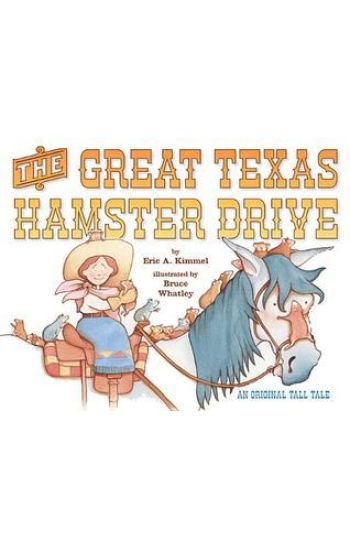
The Great Texas Hamster Drive

The Great Texas Hamster Drive

Eric A. Kimmel

Two Lions
2007
sidottu
One day, Pecos Bill’s daughter Sal announces she wants a pet hamster. Her father agrees to get her two, and before she knows it, the hamsters multiply. First there are five. Then fifteen. Then twenty-eight hamsters. Eventually thousands are running around the range. They eat all the grass. They drive the longhorns away from the waterholes. Something has to be done! Why not ship them off to Chicago as city pets? And so The Great Texas Hamster Drive takes off—and that’s just the beginning of more trouble for Pecos Bill, Sal, and the whole family. Bruce Whatley’s vibrant water color illustrations bring the Southwest to life in this endearing tale.
The Three Little Tamales

The Three Little Tamales

Eric A. Kimmel

Two Lions
2009
sidottu
“While three little tamales cool off on a windowsill, a tortilla rolls by. “You’ll be eaten. You’d better run!” he tells them. And so the tamales jump out the window. The first runs to the prairie and builds a house of sagebrush. The second runs to a cornfield and builds a house of cornstalks. The third runs to the desert and builds a house of cactus. Then who should come along but Señor Lobo, the Big Bad Wolf, who plans to blow their houses down. Valeria Docampo’s oil-and-pencil illustrations add zest and humor to this rollicking southwestern version of a popular tale.
Cactus Soup

Cactus Soup

Eric A. Kimmel

Two Lions
2011
pokkari
The Spanish edition of our Mexican-flavored Stone Soup story, Cactus Soup. When a group of hungry soldiers ride into San Miguel, the townspeople don’t want to share their food. They hide their tortillas, tamales, beans, and flour and put on torn clothes to look poor. But the Capitán is not fooled. He asks for a cactus thorn to make some cactus soup, and before long he has tricked the townspeople into giving him salt and chilies, vegetables, and a chicken as well! Whimsical watercolors by Phil Huling add to the humor in this southwestern twist on the classic Stone Soup tale.
The Three Cabritos

The Three Cabritos

Eric A. Kimmel

Two Lions
2012
pokkari
Once upon a time three cabritos (little goats) decide to go to a Mexican fiesta. But their mother is worried. She warns them about Chupacabra, the goat-sucker who lives beneath the bridge. And sure enough, as the goats cross the bridge, he jumps out! “Say your prayers. I’m going to eat you, he tells the goats. But they are clever. And they know how to play music—the kind that could make anyone dance, even a monster… An author’s note, glossary, and pronunciation guide are included.
Markets and Power

Markets and Power

Eric A. Schutz

Routledge
2001
sidottu
In what ways do the actions and economic behavior of today's multinational corporations resemble the functioning and processes of the old command economics of the Soviet Union? By ignoring questions about power relations in markets, mainstream neoclassically-oriented economists conclude that there are no significant power structures operating in market systems to control allocation and distribution. This book argues to the contrary that there are fundamental and systemic power structures - monopoly, access to information or finance, employer power, etc. - at work in market economies, which affects their ability to achieve real "competition" in much the same way as state-controlled, command economies hinder business activities. Thus, for example, the biggest firms at the hubs of financial "networks" wield a kind of "shaping power" upon large numbers of relatively autonomous firms, not only upon those that belong to the networks but also on the many firms outside them that are also affected.
Markets and Power

Markets and Power

Eric A. Schutz

Routledge
2001
nidottu
In what ways do the actions and economic behavior of today's multinational corporations resemble the functioning and processes of the old command economics of the Soviet Union? By ignoring questions about power relations in markets, mainstream neoclassically-oriented economists conclude that there are no significant power structures operating in market systems to control allocation and distribution. This book argues to the contrary that there are fundamental and systemic power structures - monopoly, access to information or finance, employer power, etc. - at work in market economies, which affects their ability to achieve real "competition" in much the same way as state-controlled, command economies hinder business activities. Thus, for example, the biggest firms at the hubs of financial "networks" wield a kind of "shaping power" upon large numbers of relatively autonomous firms, not only upon those that belong to the networks but also on the many firms outside them that are also affected.
The Quest for the Nazi Personality

The Quest for the Nazi Personality

Eric A. Zillmer; Molly Harrower; Barry A. Ritzler; Robert P. Archer

Routledge Member of the Taylor and Francis Group
1995
sidottu
Half a century after the collapse of the Nazi regime and the Third Reich, scholars from a range of fields continue to examine the causes of Nazi Germany. An increasing number of young Americans are attempting to understand the circumstances that led to the rise of the Nazi party and the subsequent Holocaust, as well as the implication such events may have for today as the world faces a resurgence of neo-Nazism, ethnic warfare, and genocide. In the months following World War II, extensive psychiatric and psychological testing was performed on over 200 Nazis in an effort to understand the key personalities of the Third Reich and of those individuals who "just followed orders." In addressing these issues, the current volume examines the strange history of over 200 Rorschach Inkblot protocols that were administered to Nazi war criminals and answers such questions as: * Why the long delay in publishing protocols? * What caused such jealousies among the principals? * How should the protocols be interpreted? * Were the Nazis monsters or ordinary human beings? This text delivers a definitive and comprehensive study of the psychological functioning of Nazi war criminals -- both the elite and the rank-and-file. In order to apply a fresh perspective to understanding the causes that created such antisocial behavior, these analyses lead to a discussion within the context of previous work done in social and clinical psychology. Subjects discussed include the authoritarian personality, altruism, obedience to authority, diffusion of responsibility, and moral indifference. The implications for current political events are also examined as Neo-Nazism, anti-Semitism, and ethnic hate are once again on the rise. While the book does contain some technical material relating to the psychological interpretations, it is intended to be a scholarly presentation written in a narrative style. No prior knowledge of psychological testing is necessary, but it should be of great benefit for those interested in the Rorschach Inkblot test, or with a special interest in psychological testing, personality assessment, and the history of psychology. It is also intended for readers with a broad interest in Nazi Germany.
Endangering Prosperity

Endangering Prosperity

Eric A. Hanushek; Paul E. Peterson; Ludger Woessmann

Brookings Institution
2013
nidottu
"The relative deficiencies of U.S. public schools are a serious concern to parents and policymakers. But they should be of concern to all Americans, as a globalizing world introduces new competition for talent, markets, capital, and opportunity. In Endangering Prosperity, a trio of experts on international education policy compares the performance of American schools against that of other nations. The net result is a mixed but largely disappointing picture that clearly shows where improvement is most needed. The authors' objective is not to explain the deep causes of past failures but to document how dramatically the U.S. school system has failed its students and its citizens. It is a wake-up call for structural reform. To move forward to a different and better future requires that we understand just how serious a situation America faces today.For example, the authors consider the Programme for International Student Assessment (PISA), an international mathematics examination. America is stuck in the middle of average scores, barely beating out European countries whose national economies are in the red zone. U.S. performance as measured against stronger economies is even weaker—in total, 32 nations outperformed the United States. The authors also delve into comparative reading scores. A mere 31 percent of U.S. students in the class of 2011 could perform at the ""proficient"" level as measured by the National Assessment of Educational Progress (NAEP) program, compared with South Korea's result of 47 percent. And while some observers may downplay the significance of cross-globe comparisons, they should note that Canadian students are dramatically outpacing their U.S. counterparts as well.Clearly something is wrong with this picture, and this book clearly explicates the costs of inaction. The time for incremental tweaking the system is long past—wider, deeper, and more courageous steps are needed, as this book amply demonstrates with accessible prose, supported with hard data that simply cannot be ignored."
Making Schools Work

Making Schools Work

Eric A. Hanushek

Brookings Institution
1994
nidottu
"Educational reform is a big business in the United States. Parents, educators, and policymakers generally agree that something must be done to improve schools, but the consensus ends there. The myriad of reform documents and policy discussions that have appeared over the past decade have not helped to pinpoint exactly what should be done.The case for investment in education is an economic one: schooling improves the productivity and earnings of individuals and promotes stronger economic growth and better functioning of society. Recent trends in schooling have, however, lessened the value of society's investments as costs have risen dramatically while student performance has stayed flat or even fallen. The task is to improve performance while controlling costs.This book is the culmination of extensive discussions among a panel of economists led by Eric Hanushek. They conclude that economic considerations have been entirely absent from the development of educational policies and that economic reality is sorely needed in discussions of new policies. The book outlines an improvement plan that emphasizes changing incentives in schools and gathering information about effective approaches. Available research and analysis demonstrates that current central decisionmaking has worked poorly. Concentrating on inputs such as pupil-teacher ratios or teacher graduate degrees appears quite inferior to systems that directly reward performance. Nonetheless, since experience with such alternatives is very limited, a program of extensive evaluation appears to be in order.Attempts to institute radical change on the basis of currently available information involve substantial risks of failure. Many people today find proposals such as charter schools, expanded use of merit pay, or educational vouchers to be appealing. Yet there is little evidence of their effectiveness, and widespread adoption of these proposals is sure to run into substantial problems of implementation. Instead of choosing the ""right"" approach, this book advocates a more systematic approach of experimentation, evaluation, and change.In addition to Hanushek, the contributors are Charles S. Benson, University of California, Berkeley; Richard B. Freeman, Harvard University; Dean T. Jamison, UCLA: Henry M. Levin, Stanford University; Rebecca A. Maynard, University of Pennsylvania; Richard J. Murnane, Harvard University; Steven G. Rivkin, Amherst College; Richard H. Sabot, Williams College; Lewis C. Solmon, Milken Institute for Job and Capital Formation; Anita A. Summers, University of Pennsylvania; Finis Welch, Texas A&M University; and Barbara L. Wolfe, University of Wisconsin."
Anansi and the Magic Stick

Anansi and the Magic Stick

Eric A. Kimmel

Holiday House
2002
nidottu
In a companion book to Anansi and the Talking Melon, Anansi the Spider steals Hyena's magic stick so he won't have to do the chores, but when the stick's magic won't stop, he gets more than he bargained for. Reprint.
Anansi's Party Time

Anansi's Party Time

Eric A. Kimmel

Holiday House
2009
nidottu
Anansi the Spider thinks he pulled a great prank on slow-moving Turtle. . . . but when Turtle throws a party of his own, Anansi is in for a surprise. "Dear Turtle, I'm having a party. You're invited." But when Turtle arrives, he learns Anansi forgot to mention it's a costume party--so he goes home to try on different outfits. Then he finds out he was supposed to bring a dish. . . and by the time he's all ready, Anansi tells him the party is already over. To get back at the Spider, Turtle throws his own party, with punch and cake and games. But when Anansi wins a game, the prize isn't what he expected. A Bank Street College Best Children's Book of the Year. Based on tales originating in West Africa and familiar in Caribbean culture, the five-book Anansi the Trickster series is full of slapstick humor and mischief. Eric A. Kimmel's imaginative retellings combined with Janet Stevens' expressive illustrations create the perfect silly stories for fun-loving kids.
Hanukkah Bear

Hanukkah Bear

Eric A. Kimmel

Holiday House Inc
2020
pahvisivuinen
Bubba Brayna's legendary latkes lure an unexpected visitor into her home in this playful Hanukkah tale from a master storyteller. Bubba Brayna makes the best latkes in the village, and on the first night of Hanukkah, the scent of her cooking wakes a hungry, adorable bear from his hibernation. He lumbers into town to investigate, and Bubba Brayna--who does not see or hear very well--mistakes him for her rabbi. She welcomes the bear inside to play the dreidel game, light the menorah, and enjoy a scrumptious meal. However, after her well-fed guest leaves, there's a knock at the door--it's the rabbi, and all of Brayna's other friends, arriving for dinner. But there are no latkes left--and together, they finally figure out who really ate them. Lively illustrations by Mike Wohnoutka, portraying the sprightly Bubba Brayna and her very hungry guest, accompany this instant family favorite, a humorous reworking of Eric A. Kimmel's earlier classic tale, The Chanukkah Guest. A traditional recipe for latkes is included in the back matter, along with interesting, digestible facts about the history and traditions of Hanukkah. A 2013 National Jewish Book Award Winner, this book is perfect for a holiday story time with children-- either in the classroom or at home, as an introduction for young readers to the traditions and customs of Hanukkah, and as a classic to return to year after year.