Impact of Tectonic Activity on Ancient Civilizations: Recurrent Shakeups, Tenacity, Resilience, and Change observes a remarkable spatial correspondence of zones of active tectonism (i.e. plate boundaries in the earth’s crust) with the most complex cultures of antiquity (“great ancient civilizations”), and continues to explore the meaning of this relationship from a number of independent angles. Due to resulting site damage, this distribution is counter-intuitive. Nevertheless, systematic differences between “tectonic” and “quiescent” cultures show that tectonic activity corresponded in antiquity with more cultural dynamism. Data of several independent types support direct cultural influence of tectonism, including vignettes of the impact of tectonism in specific ancient cultures. An expectation of change seems to be a feature such tectonic cultures shared, and led to an acceleration of development. These dynamics continue though much obscured in the present day.
The Cross and Reaganomics: Conservative Christians Defending Ronald Reagan, by Eric R. Crouse, offers important insights on why Reaganomics was a major reason conservative Christians supported Reagan at the polls. On election night in November 1980, Americans witnessed the victory of a conservative to the presidency. With the United States experiencing economic stagnation and high inflation, many were hopeful of Ronald Reagan’s deeds matching his optimistic rhetoric of America’s potential. What followed was a decade of economic transformation, military buildup, and a political awakening of conservatism. One story that has not received much attention is the relationship between conservative Christians and Ronald Reagan’s economic policies. Crouse argues that conservative Christians were among the strongest champions of limited government, free enterprise (particularly small business), and anticommunism. A surprising number of conservative Christian leaders discussed the works of major free market economists. Conservative Christians embraced and tapped into the traditional American values of individual opportunity, personal responsibility, and human freedom—all themes they believed were front and center in Reaganomics. Although American pluralism prevented any plan to Christianize the nation by politics, in the sphere of economics conservative Christians did witness political and cultural gains.
This Colorful New Book Marries A Lyrical Form Of Poetry Together With Memes, Creating A New Style Which I Proudly Present To You In This Enlightening And Entertaining Compilation Of Poems.Insightful And Intriguing, The Poems Are Designed Specifically For Today's Hectic Pace And Gets To The Punch Line Quickly And With A Force You Can Feel.Poetry Is Meant To Be Enjoyed And Not Esoterically Either. Therefore This Collection Is Written For The Sake Of Just Plain Old Entertainment In A Musical Style Of Cadence That The Ancient Israelites Called A Rhymeme.The Poet Becomes A Sage When The Philosopher Escapes The Maze. My Experience In Life Leads Me To Share In Stories And Rhymes, Everything I've Learned In My Unconventional Times.
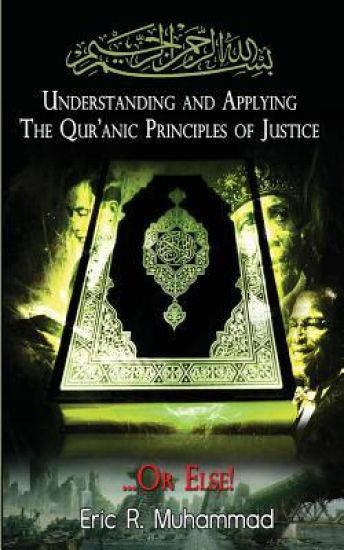
This book gives us insight into the Arabic words used for Justice in the Holy Qur'an. When you read the Holy Qur'an in English, the reader only gets the English term "Justice". Where Allah gives us different Arabic words for Justice that have different meanings. This book offers those Arabic words and their contextual meanings. A Must Read
This is an introductory text for those interested in fiber optic communications. This text provides a frame-work on which the student can organize additional, detailed know-ledge. It is not designed to be comprehensive. The words in bold print are the important technical terms. Recognition of these terms is essential to understanding the subtleties of this powerful and exciting technology.This text is a result of this author's 38 years in fiber optic communications. During this time, this author has trained more than 8800 people in more than 530 presentations. This experience has shown this author the concepts that people understand easily. These are the concepts in this text. Enjoy.
In April 2013, Eric LeFurge received a phone call that turned his life upside down. His father had succumbed to cancer, leaving his wife without her husband of forty-plus years, and he and his sister without their hero. Now his father would never ride his Harley-Davidson, play with his grandchildren, or fulfill any of the adventures he had planned. In the eyes of mortals, his death was a tragedy. But in heaven, it was a celebration. In this poignant memoir, LeFurge shares a glimpse into his fathers life and dreams as well as his own relationship with his dad from an early age to the final days. From Boy Scout excursions into the back woods to family vacations around Michigan to helping his dad build a pole barn and to working with him to restore a 1981 Plymouth Turismo, LeFurge leads others through his recollections of a unique father-son relationship that sometimes tested their patience but most often offered comfort, unconditional love, unyielding support, and most importantly, a shared faith in a loving God. Dad: My Hero, Our Journey shares a touching story of a sons journey through his memories as cancer takes away his hero father and inspires the ones left behind.
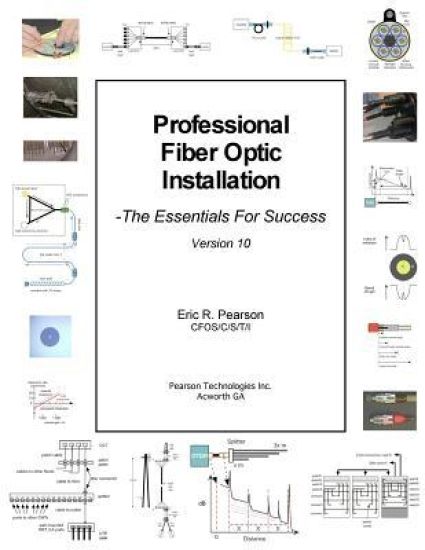
Depending on one's goals, v10 is: a guidebook for becoming a professional fiber installer, a training and reference manual for trainers and field supervisors, a manual for field installers, a study guide for passing basic and advanced certification examinations from the Fiber Optic Association FOA], and an educational book for those interested in fiber optic communications. The information in PFOIv10 applies to data networks, data centers, telephone networks, fiber to the home networks, optical LANs, fiber to the antenna, distributed antenna systems, and CATV systems. This comprehensive manual supports achieving the five goals of installation for cables, connectors, splices, passive devices, and optoelectronics. This well-written and highly organized, 35 chapter, 496 page manual presents the concepts, numbers, product advantages, and installation and testing procedures required to achieve and verify the five goals of installation: low cost (do it right the first time), lowest possible optical power loss, low reflectance, short installation time, and high reliability. Chapters 1-9 detail essential information on available products, their most important performance parameters, and advantages of product types. This information sensitizes the installer to the capabilities and limitations of the products he installs. With this sensitivity, the installer understands how his actions influence power loss, reflectance, and reliability. Chapters 10-13 present the principles and methods of installation, through which the installer achieves the five goals. Chapters 14-20 detail testing and inspection principles and methods, which enable the installer to verify proper and reliable installation. Chapters 20-28 provide detailed, cookbook-like instructions for performing installation, inspection, and testing activities. By following the instructions in these 9 chapters, the installer develops 38 critical skills and abilities essential to achieving the five goals of a professional installer.Chapters 29-35 focus information in previous chapters on 7 applications: outside plant, fiber to the antenna, distributed antenna systems, fiber to the home PON], data centers, optical LANs, and fiber characterization. Chapters 1-20 enable installers to pass the FOA CFOT basic certification examination. Chapters 10-17 and 29-35 enable installers to pass 10 of the FOA advanced certification CFOS] examinations. PFOIv10 provides the trainer with tools for effective training: modular organization, 35 focused chapters, 749 review questions, 651 figures, and 75 tables. The modular organization facilitates training programs with multiple goals: basic skill development, advanced skill development, connector installation, splicing, inspection and testing. Finally, PFOIv10 includes 10 chapters of hands-on activities.PFOIv10 is based on the author's extensive field and training experience, which includes: Mr. Pearson has the following credentials: 39 years in fiber optics, 27 years of training manual development, 554 fiber presentations, 8886 fiber trainees, 49,728 connectors installed or supervised, 104,256 insertion loss tests supervised, 30,266 OTDR traces made or supervised, and 12 years as a Director of the FOA and developer of certification examinations. The author has been recognized as a Master Instructor by the FOA and, for 15 years, was a BICSI Master Instructor. He has degrees from Massachusetts Institute of Technology BS] and Case-Western University MS]. Both degrees are in Metallurgy and Materials Science.