With promises of wealth elsewhere, Ferdinand Magellan left his homeland in search of a more fortunate life. He went on to spend three fateful years at sea. Find out about the challenges of Magellan’s journey in this adventurous title for reluctant readers!
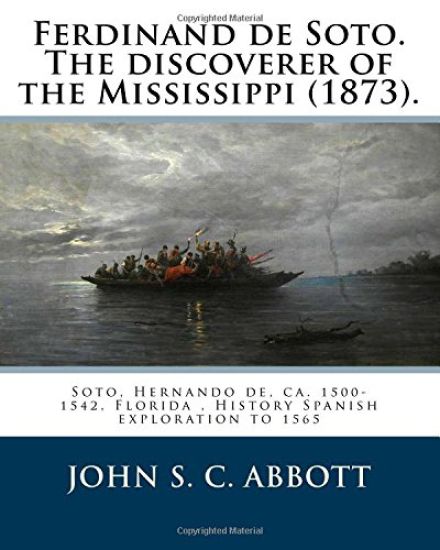
"Careful investigation has revealed De Soto to me as by no means so bad a man as I had supposed him to have been. And I think that the candid reader will admit that there was much, in his heroic but melancholy career, which calls for charitable construction and sympathy." -John S.C. Abbott, Preface, 1873American historian John S.C. Abbott wrote Ferdinand de Soto-The Discoverer of the Mississippi (1873) as part of his American Pioneers and Patriots series. Ferdinand (aka Hernando) de Soto (1500-1542) was a Spanish explorer and conquistador who was involved in expeditions in Central America and in the conquest of the Inca Empire in Peru. While exploring current southeastern United States, he discovered the Mississippi River and is the first European documented as having crossed this river.
In this book, Ferdinand learns about the great professor Richard Feynman's method of understanding a new topic He and his friend Freya learn about how to make sure that they can absorb new information quickly and clearly. Most importantly, they will learn how to defeat their blind spots -- the things that they didn't know that they didn't know I'm Learning... is a children's book series aimed at teaching children essential learning skills, inside and out of the classroom. For more, visit bigbarnpress.com
In this book, Ferdinand learns about the great professor Richard Feynman's method of understanding a new topic He and his friend Freya learn about how to make sure that they can absorb new information quickly and clearly. Most importantly, they will learn how to defeat their blind spots -- the things that they didn't know that they didn't know I'm Learning... is a children's book series aimed at teaching children essential learning skills, inside and out of the classroom. For more, visit bigbarnpress.com
A lonely dragon lives hidden in a cave, camouflaged by a thick layer of snow. Ferdinand is a Christmas dragon and the last of his kind. To be honest, he still has three siblings, but they have been slumbering in magic dragon eggs for centuries. Ferdinand cannot wake his siblings alone. He has lost his magic because people no longer believe in him and so he sinks into a deep sadness.One day an unfortunate bat, Hugo, plops into Ferdinand s cave. Hugo has run away from home and no longer wants to be a bat. Together with Hugo, Ferdinand explores the night. Perhaps there is someone out there who will believe in him and give him back his magic? And what does Marge the hen have to do with any of this? Find out and accompany Ferdinand on what is probably the most important adventure of his life.
As the son of a disgraced army deserter, Dex Kevan has struggled to escape the dark shadow of his father's past and his own bad attitude. An air cargo specialist for the US Air Force he spends his days counting crates, filling out paperwork, and trying to hold onto his girlfriend as his career prospects crumble. It's 1986, and the Philippines is undergoing the ouster of kleptocrat Ferdinand Marcos. While Dex quietly continues his work at the Andersen Air Force Base, Guam, he's oblivious of the maelstrom taking place across the sea. When an unexpected flight arrives carrying a weary flight crew and a colossal secret -a cache of stolen gold bars - a series of events finds Dex and his associates embroiled in a plot that puts a bullseye on their backs. Tempted by the wealth and a future full of riches blinding them, the four Airmen commit to sneaking a portion of the treasure off the plane.Unknown to them, the plunder belongs to Col. Talan Madul s, the head of a secret death squad. But the conspirators fail to consider what kind of person would steal and then smuggle such a treasure, and what lengths might they go to, to get it back. Madul s' bloody reign is over, his president fleeing. When his gold nest egg is stolen, he doesn't hesitate to step back into his dark skills to hunt down the thieves. Based on an incredible true story, Dex Kevan and his fellow thieves will learn that a man's thirst for revenge can be just as dangerous as his greed and that no amount of wealth is worth an early grave.
Get ready to join Ferdinand with the Extra Toes on his latest escapade - SCHOOL Our favorite feline friend is about to meet new pals, explore new ideas and lend a paw to a shy classmate."Ferdinand teaches us what it is like to embrace our unique differences. In this book, Ferdinand meets Emerald, although their differences are similar, they are still unique from each other, the same as you and me This kitty with extra toes is on a mission to help us all embrace what makes us different, makes us great " - Abby Scherzer
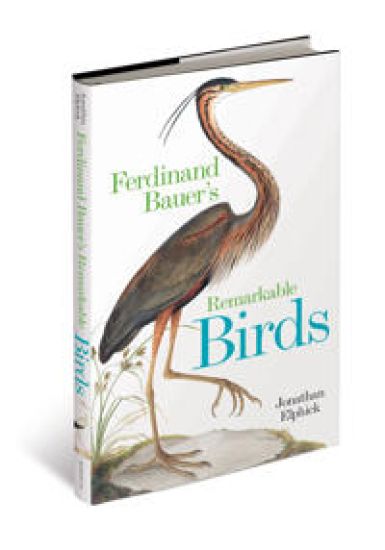
In 1786, the renowned Austrian natural history artist Ferdinand Bauer travelled to Italy and the Levant with his employer John Sibthorp, Oxford Professor of Botany. The exquisite watercolours he subsequently created from meticulous drawings made during the trip are among the finest examples of natural history illustration. Bauer’s botanical paintings, published eventually in the unrivalled Flora Graeca, are well known. But this extraordinarily industrious artist also made stunning illustrations of over a hundred different bird species, only a very few of which have been published until now. A general introduction describes Bauer’s early life and achievements, and his experiences of travelling for fifteen months, often facing perilous conditions due to adverse weather, illness, bandits and pirates. It also details his method of recording the precise colours of the birds on his pencil drawings in the field by employing his remarkable scheme of colouring by numbers, each representing a specific hue, to be used as reference when he returned to Oxford to prepare the watercolour paintings. Each illustration is reproduced here alongside a facing page of vivid expert text describing the characteristics of each bird, interwoven with aspects of their ornithological and cultural history as well as comments on Bauer’s depictions. Not widely seen since they were painted some 230 years ago, and now reproduced in their entirety, these beautiful paintings represent one of the finest collections of late eighteenth-century ornithological art.
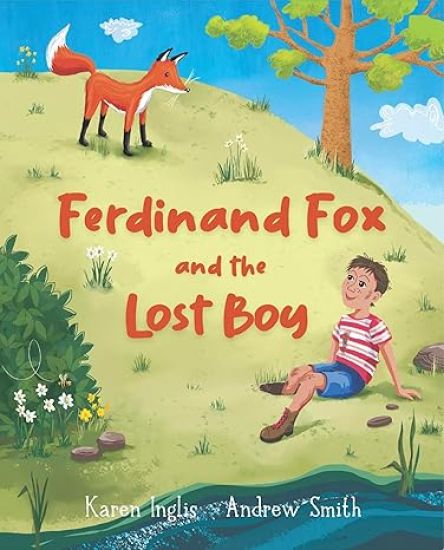
A heartwarming picture book about bravery, unexpected friendship and helping others, for ages 3-6"Next to the track by the railway bridge line, Ferdinand Fox sat biding his time. A few moments later, the sound he well knew; the 6.10 from London, approaching on cue..."When Ferdinand Fox hears a cry for help near the railway track, he leads rescuers to a lost little boy. But will anyone realise who the real hero is? This charming rhyming story from the international bestselling author of The Secret Lake shows young readers that heroes come in all shapes, sizes – and species!Brought to life with vibrant illustrations, and perfect for bedtime stories, classroom reading, or independent reading for confident early readers, this book offers:Fun storytelling in verse, perfect for reading aloud to children and grandchildrenA touching tale that shows young children the meaning of kindnessA simple yet powerful message about courage, unexpected friendship, and unsung heroesDelightful pictures that will spark young imaginationsAvailable in print or to read as an eBook on a Kindle Fire or on any tablet, mobile phone or eReader using the Kindle App.
Hernando de Soto (c. 1495 - May 21, 1542) was a Spanish explorer and conquistador who led the first European expedition deep into the territory of the modern-day United States (Florida, Georgia, Mississippi, Alabama and most likely Arkansas). He is the first European documented as having crossed the Mississippi River. 4] De Soto's North American expedition was a vast undertaking. It ranged throughout the southeastern United States, both searching for gold, reported by various Indian tribes and earlier explorers, and a passage to China or the Pacific coast. De Soto died in 1542 on the banks of the Mississippi River 5] in what is now Guachoya, Arkansas or Ferriday, Louisiana...... John Stevens Cabot Abbott (September 19, 1805 - June 17, 1877), an American historian, pastor, and pedagogical writer, was born in Brunswick, Maine to Jacob and Betsey Abbott.John Stevens Cabot Abbott (September 19, 1805 - June 17, 1877), an American historian, pastor, and pedagogical writer, was born in Brunswick, Maine to Jacob and Betsey Abbott. Early life He was a brother of Jacob Abbott, and was associated with him in the management of Abbott's Institute, New York City, and in the preparation of his series of brief historical biographies. Dr. Abbott graduated at Bowdoin College in 1825, prepared for the ministry at Andover Theological Seminary, and between 1830 and 1844, when he retired from the ministry in the Congregational Church, preached successively at Worcester, Roxbury and Nantucket, all in Massachusetts. 1] Literary career Owing to the success of a little work, The Mother at Home, he devoted himself, from 1844 onwards, to literature. He was a voluminous writer of books on Christian ethics, and of popular histories, which were credited with cultivating a popular interest in history. He is best known as the author of the widely popular History of Napoleon Bonaparte (1855), in which the various elements and episodes in Napoleon's career are described. Abbott takes a very favourable view towards his subject throughout. Also among his principal works are: History of the Civil War in America (1863-1866), and The History of Frederick II, Called Frederick the Great (New York, 1871). He also did a forward to a book called Life of Boone by W.M. Bogart, about Daniel Boone in 1876. In general, except that he did not write juvenile fiction, his work in subject and style closely resembles that of his brother, Jacob Abbott. Marriage and children On August 17, 1835 he married Jane Williams Bourne, daughter of Abner Bourne and Abagail Williams. John and Jane had issue: John Brown Abbott (November 29, 1831 - May 24, 1839) Jane Maria Abbott (born November 25, 1833) Waldo Abbott (September 8, 1836 - July 7, 1864) Harriet Vaughan Abbott (born February 18, 1838) Ellen Williams Abbott(born January 11, 1840) Laura Sallucia Abbott (born October 30, 1843) Elizabeth Ballister Abbott (March 15, 1847 - February 23, 1864) Emma Susan Abbott (born July 12, 1849) Gorham Dummer Abbott (born March 29, 1851) As a part of the 1872 Iwakura Mission Mr. Abbott was given guardianship of Shige Nagai, a Japanese girl sent to the United States to be educated. John Stevens Cabot Abbott died at Fair Haven, Connecticut. In 1910, a series of twenty short biographies of historical characters by J. S. C. and Jacob Abbott, was published. Their brother, Gorham Dummer Abbott, was also an author. Abbott's grandson, Willis Abbott, was a Christian Scientist and an editor of the Christian Science Monitor.................